
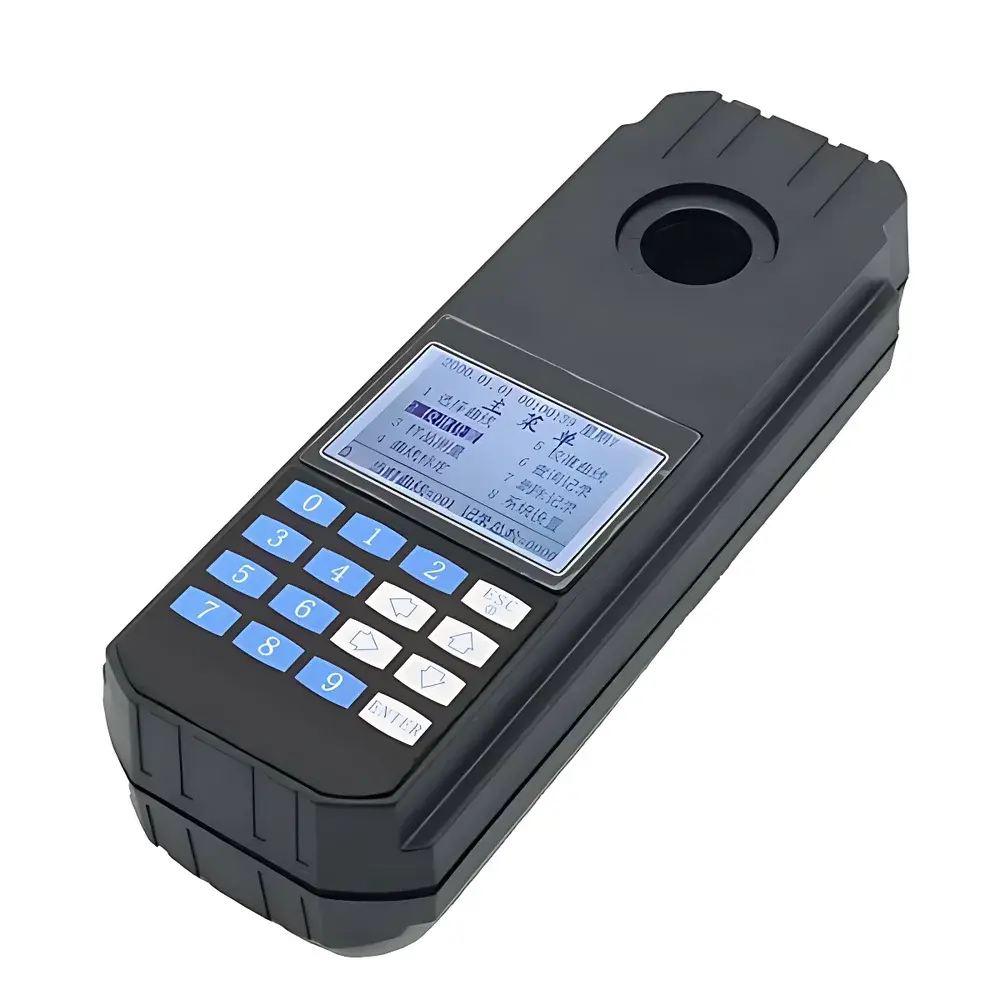
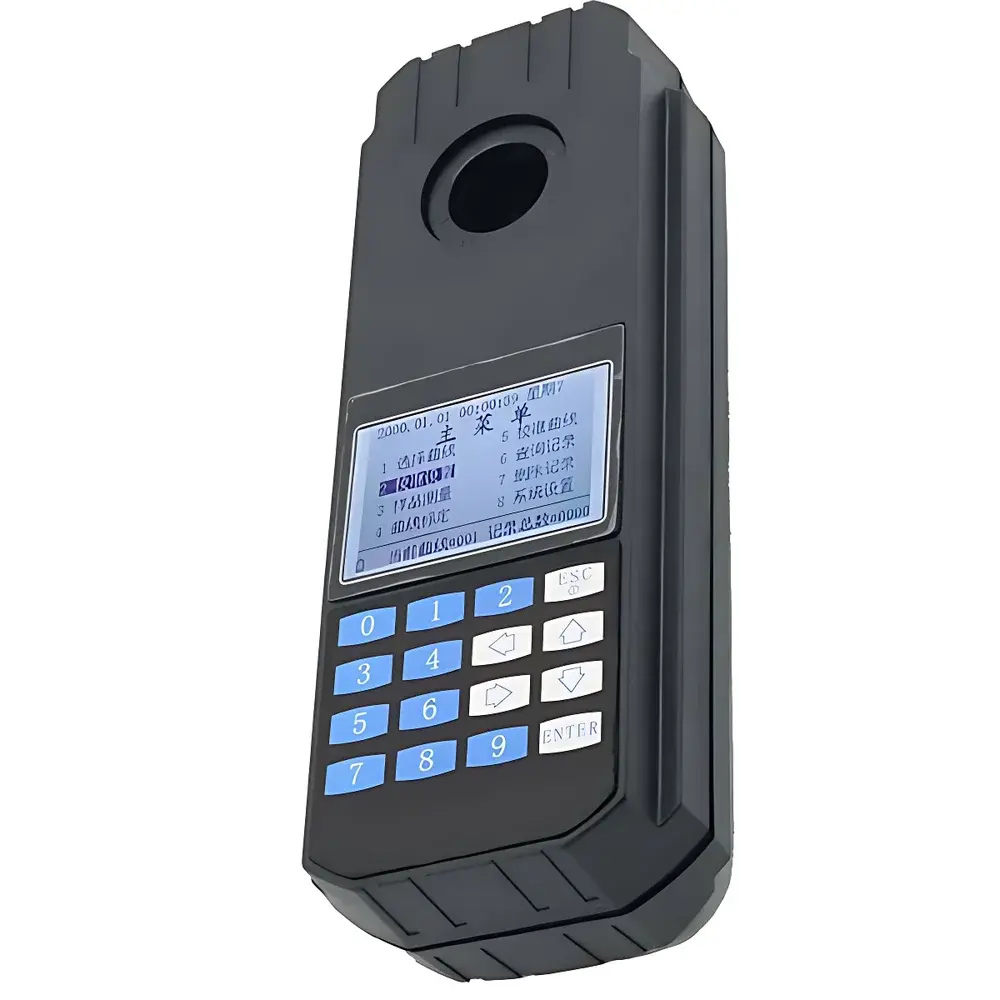
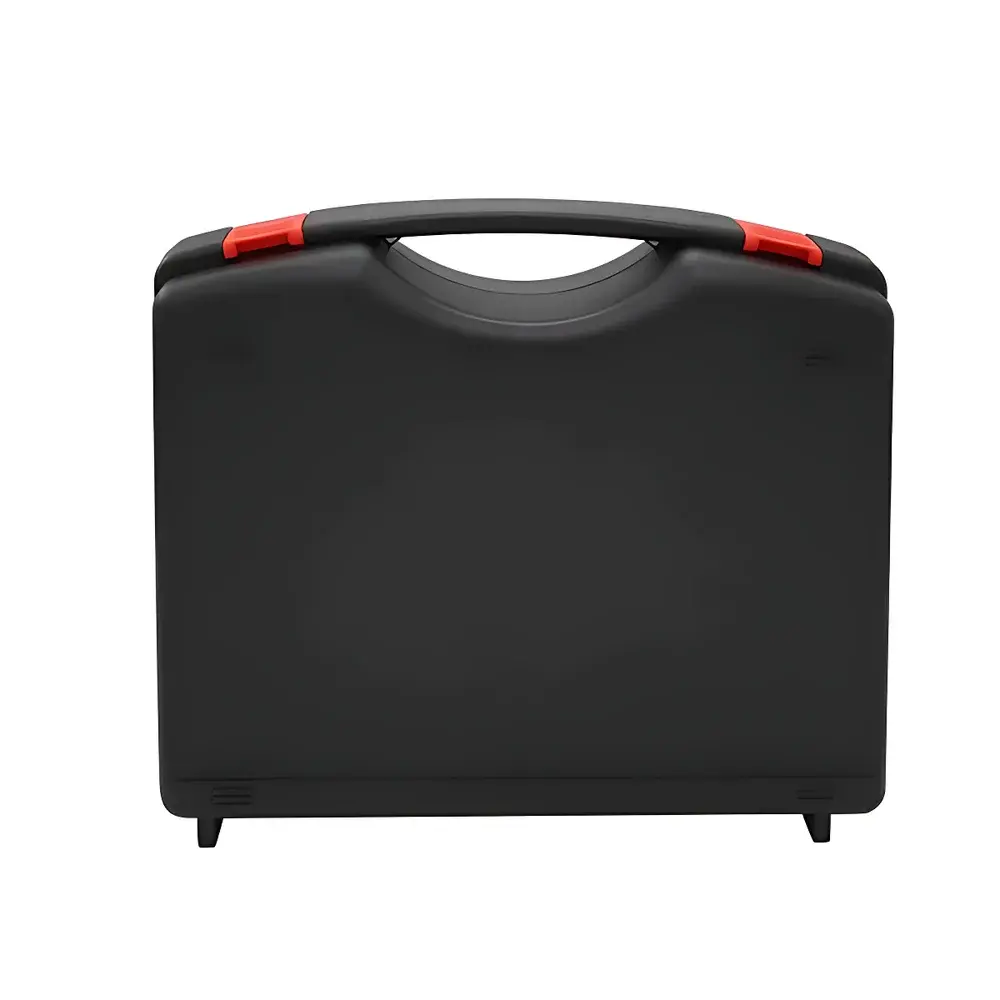
Shenchanghong CHBE-182 Portable Beryllium Photometric Analyzer
| Brand | Shenchanghong |
|---|---|
| Origin | Guangdong, China |
| Manufacturer Type | Direct Manufacturer |
| Region Classification | Domestic (China) |
| Model | CHBE-182 |
| Instrument Type | Portable |
| Detection Principle | Photometry |
| Target Analyte | Beryllium (Be) in aqueous matrices |
| Analysis Time | 20 min |
| Accuracy | ±5% of Full Scale (F.S.) |
| Precision (Repeatability) | ≤3% RSD |
| Measurement Range | 0.001–1.028 mg/L |
| Optical Stability | Drift < 0.002 A within 20 min |
| Resolution | 0.001 mg/L |
| Weight | < 1 kg |
| Dimensions (H×W×D) | 130 mm × 266 mm × 200 mm |
| Operating Temperature | 5–40 °C |
| Relative Humidity | ≤85% RH |
| Power Supply | AC 220 V ±10%, 50 Hz ±0.5 Hz |
| Environmental Requirements | Low vibration, minimal electromagnetic interference, no direct sunlight |
Overview
The Shenchanghong CHBE-182 Portable Beryllium Photometric Analyzer is a field-deployable, laboratory-grade instrument engineered for quantitative determination of dissolved beryllium (Be²⁺) in environmental water samples—including surface water, groundwater, wastewater effluents, and drinking water sources. It operates on the principle of visible-light photometry, where beryllium forms a stable, colored complex with a selective chromogenic reagent (e.g., alizarin red S or eriochrome cyanine R under controlled pH and masking conditions). The intensity of absorbance at a defined wavelength—typically within the 520–580 nm range—is linearly proportional to beryllium concentration, enabling trace-level quantification via Beer–Lambert law calibration. Designed for compliance-driven monitoring programs, the CHBE-182 delivers metrologically traceable results without reliance on centralized lab infrastructure, supporting rapid response during regulatory inspections, site remediation verification, or emergency spill assessments.
Key Features
- High-stability optical architecture featuring imported long-life, high-luminance LED light source and narrow-band interference filter (<±2 nm bandwidth), minimizing spectral interference from coexisting ions (e.g., Al³⁺, Fe³⁺, Cu²⁺) when appropriate masking agents are applied.
- Integrated 16-bit low-power microcontroller platform ensures consistent signal processing, real-time background correction, and temperature-compensated absorbance calculation—critical for maintaining accuracy across variable ambient conditions (5–40 °C).
- Backlit monochrome LCD display with intuitive Chinese-language menu navigation; supports both factory-preloaded calibration curves and user-defined multi-point calibration protocols (up to 10 points), facilitating method validation per ISO/IEC 17025 requirements.
- Rugged housing constructed from post-molded ABS polymer with enhanced chemical resistance to common reagents (e.g., nitric acid, ammonium acetate buffers) and field handling stress.
- Optical stability verified at <0.002 A drift over 20 minutes—meeting ASTM D3559-22 Annex A1 criteria for photometric precision in portable heavy metal analyzers.
- Compact form factor (<1 kg, 266 × 200 × 130 mm) enables single-hand operation and integration into mobile environmental sampling kits, including EPA Region 4–certified field deployment configurations.
Sample Compatibility & Compliance
The CHBE-182 is validated for use with clarified, filtered (0.45 µm membrane), and acid-preserved (HNO₃, pH <2) aqueous samples. It accommodates standard 10–25 mL sample volumes and is compatible with EPA Method 200.7 (ICP-OES reference) and ISO 11929:2019 (determination of measurement uncertainty) frameworks. While not certified to USP / or FDA 21 CFR Part 11 out-of-the-box, its data logging capability (with timestamped measurement records) supports GLP-compliant documentation when paired with auditable chain-of-custody logs. The ±5% F.S. accuracy and ≤3% repeatability meet minimum performance thresholds specified in China’s HJ 557–2010 (Standard Methods for Beryllium Determination in Water) and align with EU WFD (2000/60/EC) environmental quality standard (EQS) verification requirements for Be (0.005 mg/L annual average).
Software & Data Management
Instrument firmware stores up to 500 measurement records locally, each containing sample ID, date/time stamp, calibration curve ID, raw absorbance value, calculated concentration, operator code, and QC flag status. Data export is supported via USB 2.0 interface to CSV-compatible spreadsheet software. No proprietary cloud platform or remote connectivity is embedded—ensuring data sovereignty and compatibility with air-gapped government or industrial networks. Firmware updates are performed offline using signed binary files, preserving integrity under NIST SP 800-53 Rev. 5 configuration management controls.
Applications
- Regulatory compliance monitoring for beryllium discharge limits in industrial wastewater (e.g., aerospace alloy manufacturing, nuclear component fabrication).
- Baseline and post-remediation assessment of Be contamination at legacy sites (e.g., former beryllium-copper machining facilities).
- Field screening of potable water supplies near mining or refining operations where beryllium-bearing minerals (e.g., bertrandite, beryl) may leach into aquifers.
- Research-grade quantification in hydrogeochemical studies evaluating Be as a tracer for silicate weathering rates or atmospheric dust deposition.
- Emergency response triage during accidental releases, enabling same-day decision-making for public health advisories or treatment system adjustments.
FAQ
What sample pretreatment is required prior to analysis?
Samples must be filtered through a 0.45 µm membrane syringe filter and preserved with ultrapure nitric acid to pH <2 within 24 hours of collection. High-turbidity or organic-rich matrices require digestion per EPA Method 3015A prior to analysis.
Does the CHBE-182 support calibration verification standards?
Yes—the instrument includes dedicated QC mode for running certified reference materials (CRMs) such as NIST SRM 1643e (Trace Elements in Natural Water) or custom in-house standards traceable to NIM (National Institute of Metrology, China).
Can the device be used for other metals besides beryllium?
No—the optical path, reagent chemistry, and calibration algorithms are specifically optimized for Be²⁺ detection. Cross-reactivity with other metals is minimized by selective chelation and pH control; simultaneous multi-metal analysis is not supported.
Is the instrument suitable for ISO/IEC 17025-accredited laboratories?
It serves as a valid field screening tool within accredited scopes when operated under documented SOPs, with periodic verification against ICP-MS or ICP-OES reference methods and full uncertainty budgeting per GUM (JCGM 100:2008).
What maintenance is required to sustain optical accuracy?
Annual verification of LED output intensity and filter center wavelength is recommended using NIST-traceable photometric standards; cleaning of cuvette compartment and optical windows with lint-free wipes and isopropanol is advised after each field day.







