
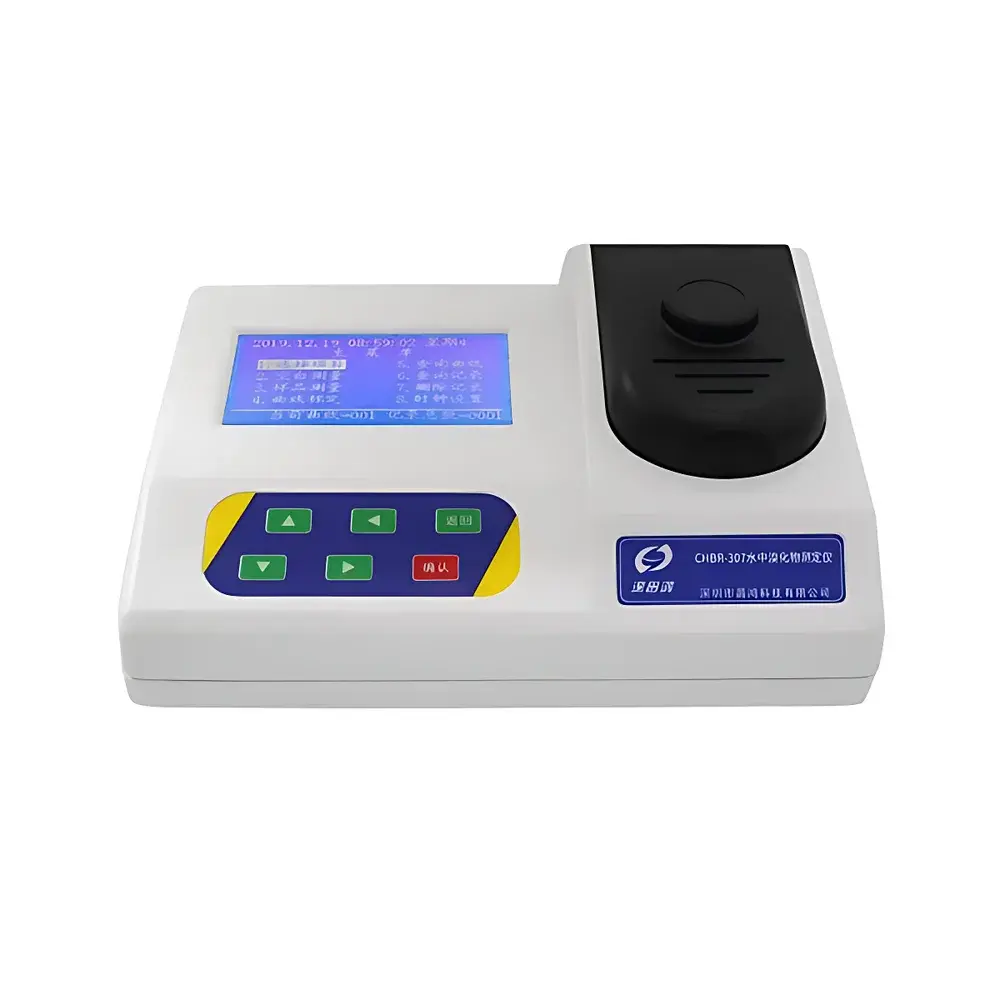
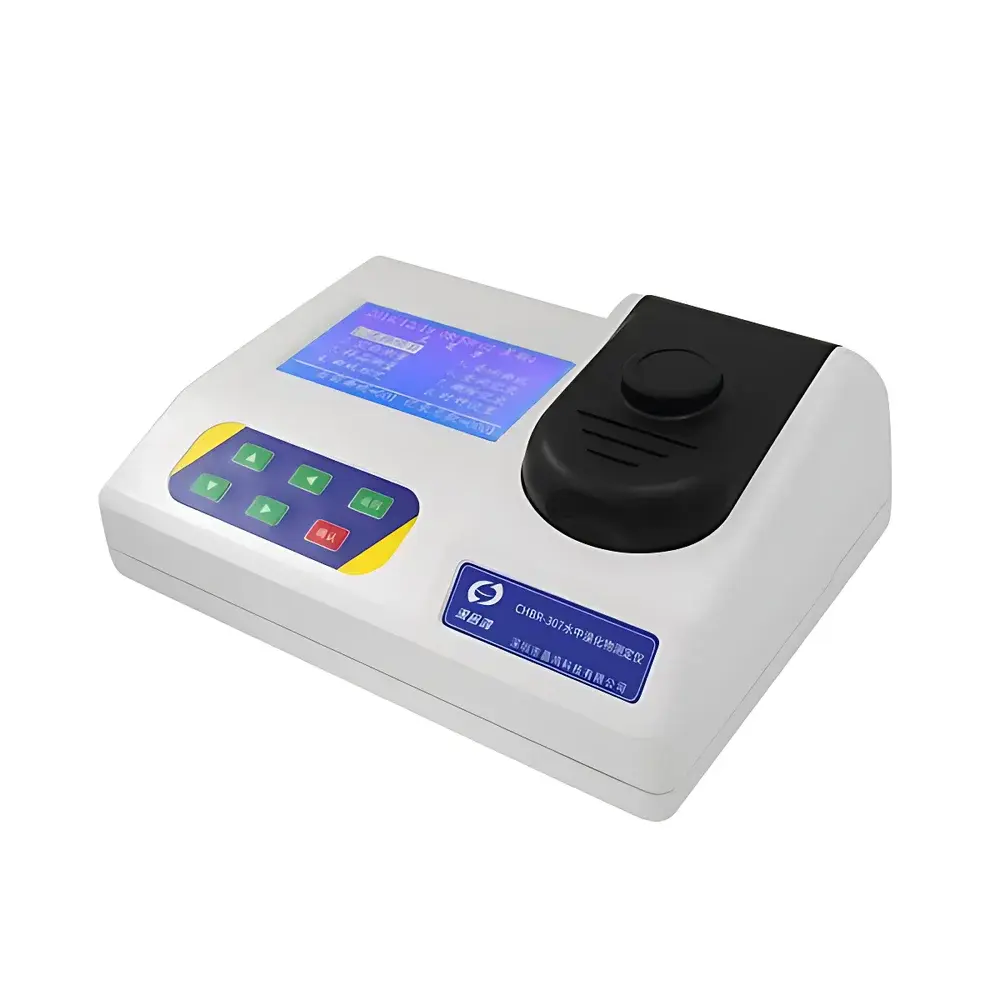
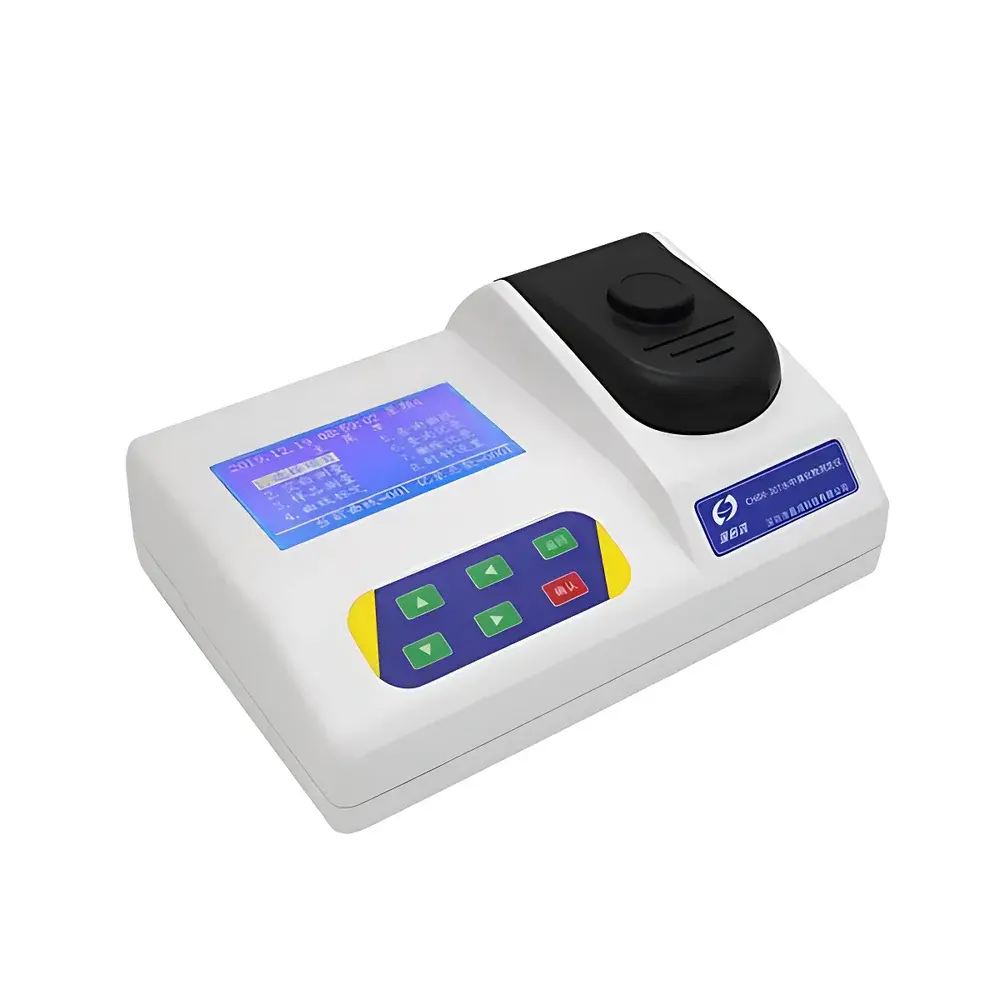
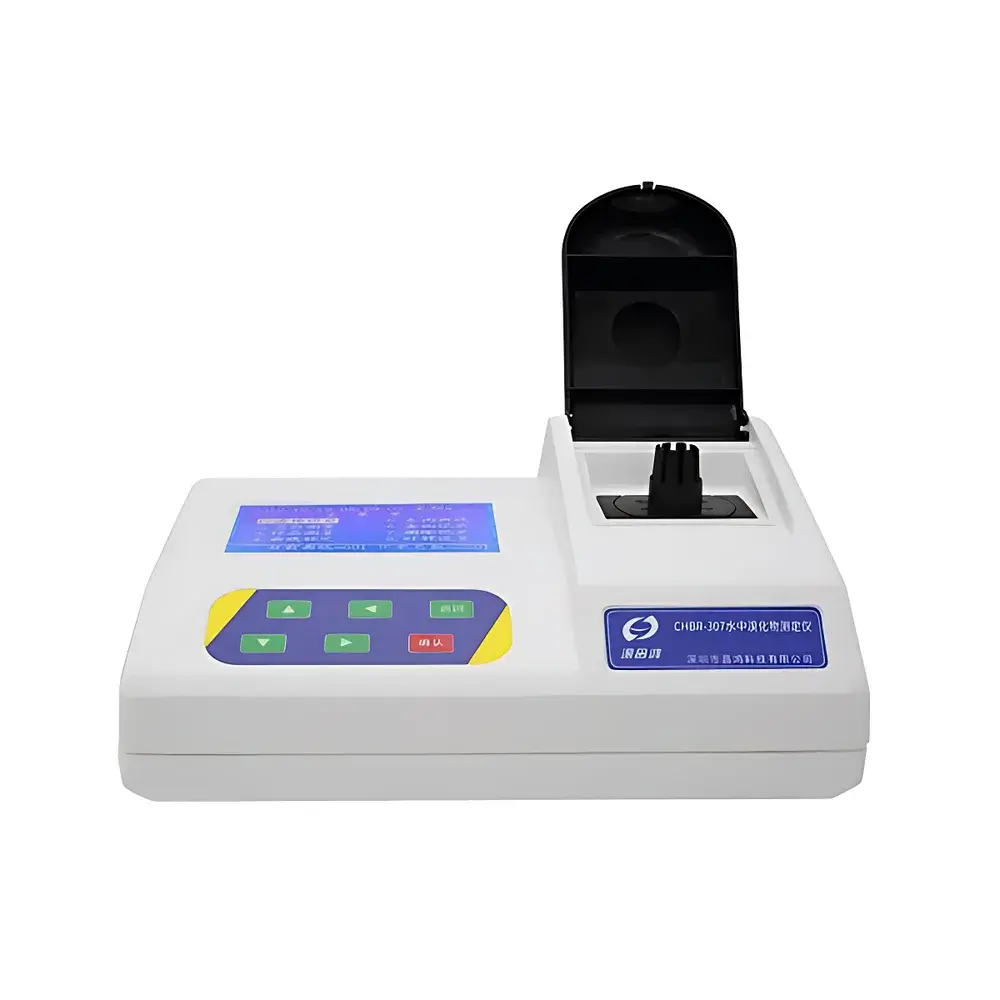
Shenchanghong CHBR-307 Bromide Ion Analyzer for Water
| Brand | Shenchanghong |
|---|---|
| Model | CHBR-307 |
| Measurement Range | 0.10–5.00 mg/L Br⁻ |
| Resolution | 0.01 mg/L |
| Accuracy | ≤5% FS |
| Repeatability | ≤3% |
| Optical Stability | ≤0.002 A/20 min |
| Dimensions (W×D×H) | 266 × 200 × 130 mm |
| Weight | <1 kg |
| Power Consumption | 30 W |
| Light Source | High-brightness monochromatic cold LED (100,000 h lifetime) |
| Filter System | Narrow-band interference filter |
| Display | LCD with Chinese menu interface |
| Data Storage | Onboard memory for measurement records |
| Calibration | Factory-preloaded and user-definable calibration curves |
| Housing Material | Corrosion-resistant ABS polymer |
| Compliance | Designed for laboratory-based water quality testing per standard methods for bromide quantification (e.g., APHA 4500-Br⁻ B, ISO 10304-1) |
Overview
The Shenchanghong CHBR-307 Bromide Ion Analyzer is a dedicated benchtop photometric instrument engineered for the quantitative determination of bromide ions (Br⁻) in aqueous matrices. It operates on the principle of spectrophotometric analysis using a stable monochromatic cold LED light source centered at a wavelength optimized for the colorimetric reaction between bromide and a selective reagent—typically involving oxidation to bromine followed by coupling with a chromogenic agent (e.g., phenol red or methyl orange derivatives) under controlled acidic conditions. The resulting absorbance is linearly proportional to bromide concentration within the specified range (0.10–5.00 mg/L), enabling direct digital readout without manual interpolation. Designed specifically for routine laboratory use in environmental monitoring laboratories, water treatment facilities, and regulatory compliance units, the CHBR-307 delivers consistent performance under ambient lab conditions while maintaining compatibility with standard method workflows.
Key Features
- High-stability optical architecture featuring a 100,000-hour lifetime monochromatic cold LED light source coupled with a precision narrow-band interference filter—minimizing spectral drift and external light interference.
- Integrated 16-bit low-power microcontroller system ensures robust signal processing, real-time correction for background absorbance, and thermal stability during extended operation.
- Large backlit LCD display with full Chinese-language menu navigation—designed for intuitive operation by technicians without advanced programming training.
- Onboard data storage supports retention of multiple measurement sessions; calibration curves include both factory-default and user-customizable profiles for method flexibility.
- Chemically resistant ABS polymer housing provides mechanical durability and protection against incidental splashes of common reagents including acids, oxidants, and organic solvents used in bromide pretreatment protocols.
- Compact footprint (266 × 200 × 130 mm) and sub-1 kg mass facilitate placement on crowded analytical benches or transport between satellite labs and field deployment sites with minimal logistical overhead.
Sample Compatibility & Compliance
The CHBR-307 is validated for use with clarified, non-turbid aqueous samples including drinking water, surface water, groundwater, municipal wastewater, and industrial effluents. Prior sample conditioning—such as filtration (0.45 µm membrane), pH adjustment, and removal of interfering anions (e.g., chloride via masking agents or selective ion exchange)—must be performed in accordance with established reference methods (e.g., APHA Standard Method 4500-Br⁻ B or ISO 10304-1). While the instrument itself does not carry formal ISO/IEC 17025 accreditation, its design aligns with GLP principles for trace-level anion analysis: optical stability ≤0.002 A/20 min supports reproducible daily calibration verification, and digital data logging enables audit-ready recordkeeping when paired with laboratory information management systems (LIMS). It is not intended for unfiltered or high-suspended-solid samples without prior pretreatment.
Software & Data Management
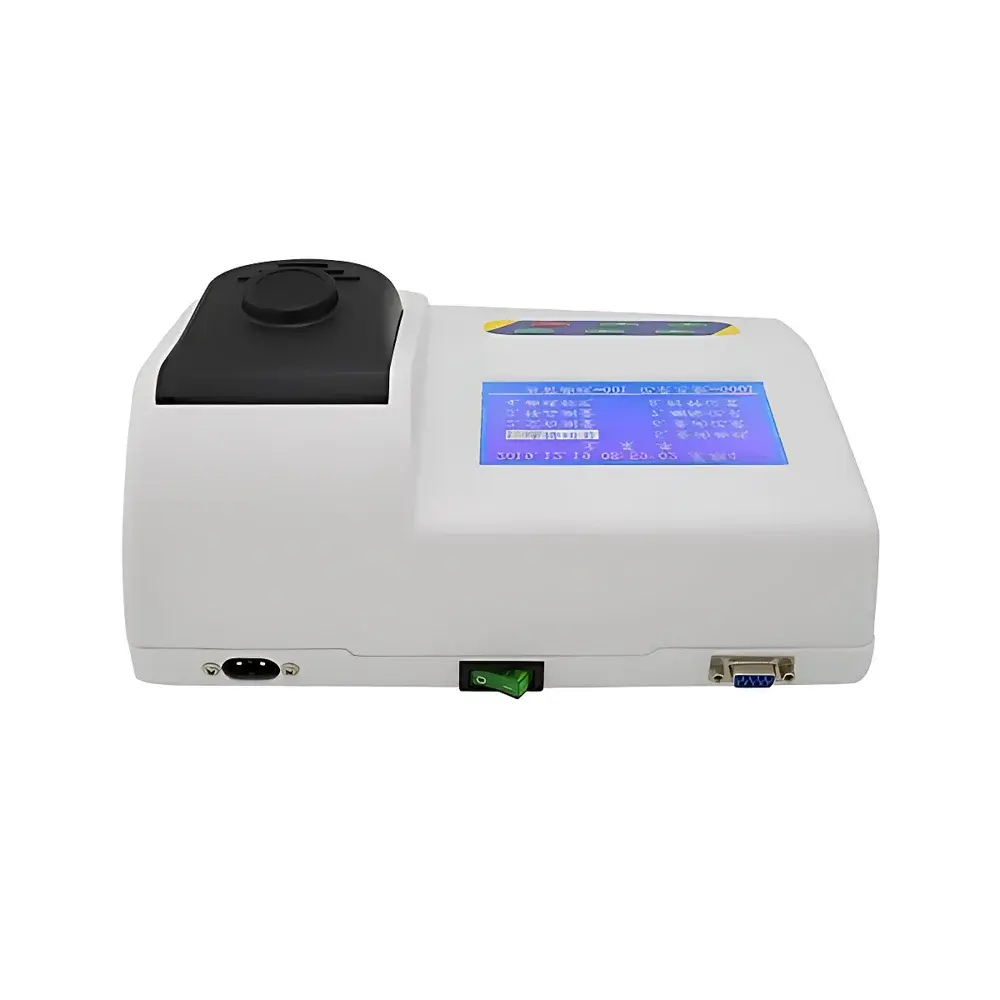
The CHBR-307 employs embedded firmware—not PC-dependent software—to execute all measurement routines, calibration curve fitting (linear regression), and concentration calculation. Measurement data—including date/time stamp, sample ID (user-entered), absorbance value, and final Br⁻ concentration—are stored internally and can be reviewed directly on the LCD interface. Export functionality is not provided natively; however, values may be manually transcribed or captured via optional RS-232 or USB-to-serial adapters (sold separately) for integration into compliant data acquisition environments. For regulated environments requiring electronic record integrity, users are advised to implement supplementary procedural controls—including dual-operator verification, periodic calibration checks, and printed hardcopy logs—to satisfy FDA 21 CFR Part 11 or EU Annex 11 expectations where applicable.
Applications
- Regulatory compliance monitoring of bromide in public drinking water supplies, particularly where ozone disinfection or bromide-rich source waters pose risk of bromate formation.
- Process control in desalination plants and zero-liquid-discharge (ZLD) systems where bromide accumulation affects membrane integrity and downstream oxidation chemistry.
- Environmental impact assessment of coal-fired power plant discharges, oilfield produced water, and pharmaceutical manufacturing effluents.
- Research applications in aquatic geochemistry investigating halide cycling, redox speciation, and anthropogenic bromide loading in watershed studies.
- Quality assurance in bottled water production and beverage manufacturing where bromide serves as an indicator of raw water treatment efficacy.
FAQ
What sample preparation is required prior to analysis?
Samples must be filtered through a 0.45 µm membrane filter and adjusted to the specified pH range (typically 3.5–4.5) using dilute HNO₃ or H₂SO₄. High chloride concentrations (>200 mg/L) may require masking with mercuric nitrate or selective separation prior to analysis.
Can the CHBR-307 measure bromide in seawater?
No—direct analysis is not feasible due to extreme chloride interference and matrix effects; seawater requires pre-concentration and chloride removal via ion chromatography or solvent extraction before photometric determination.
Is the instrument compatible with international standard methods?
Yes—the optical configuration and measurement range conform to the operational parameters described in APHA Standard Method 4500-Br⁻ B and ISO 10304-1 for spectrophotometric bromide quantification in freshwater and wastewater.
How often should calibration verification be performed?
Calibration standards should be verified at the start of each analytical batch and after every 10 samples—or more frequently if ambient temperature fluctuates >2°C—to ensure adherence to ≤5% FS accuracy specification.
Does the CHBR-307 support multi-point calibration?
Yes—up to five user-defined calibration points can be entered to generate a custom linear calibration curve, supporting method-specific validation requirements beyond the factory default two-point curve.
Related Products







