
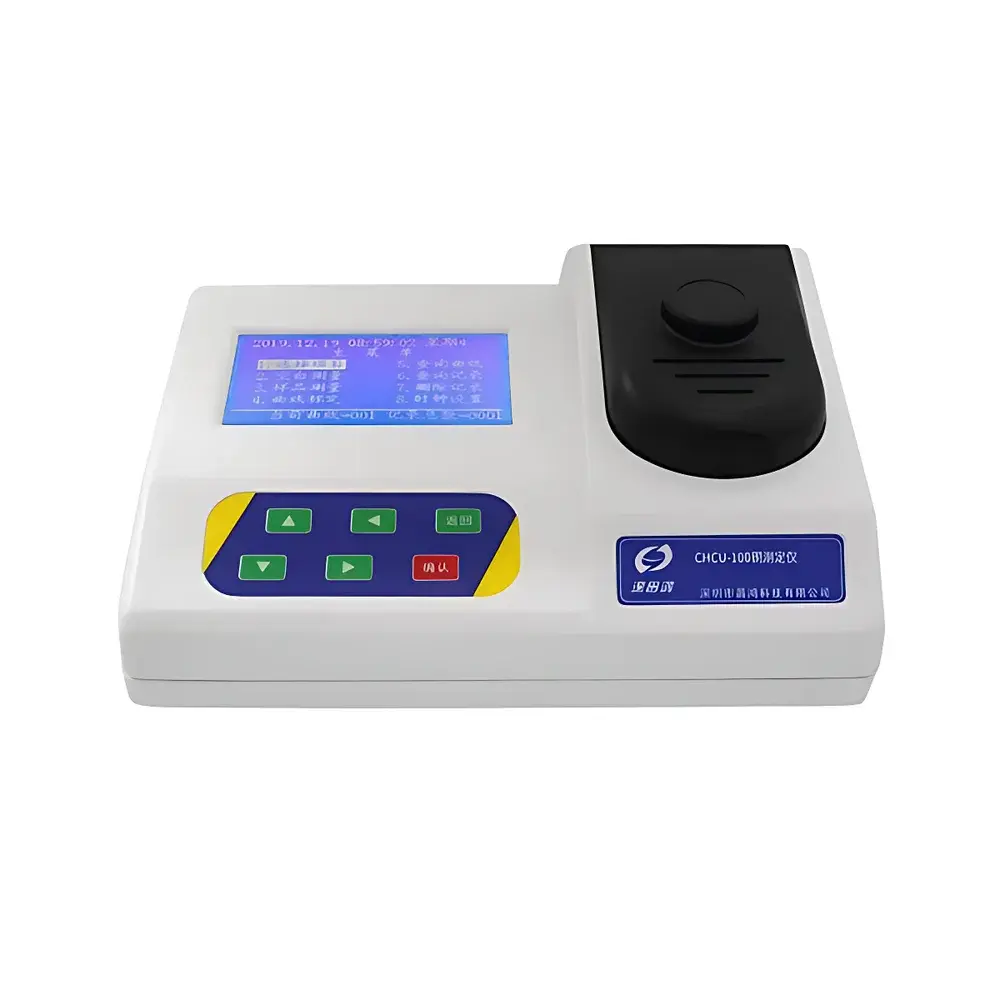
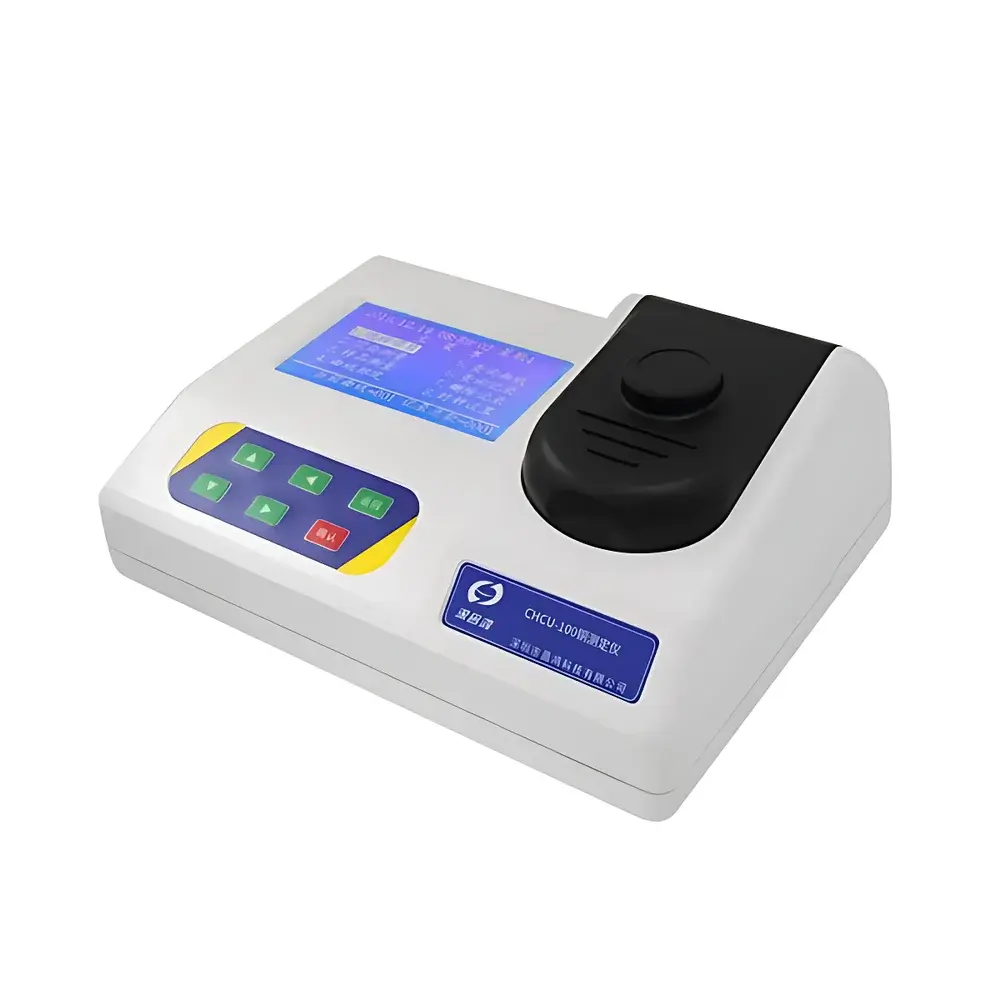
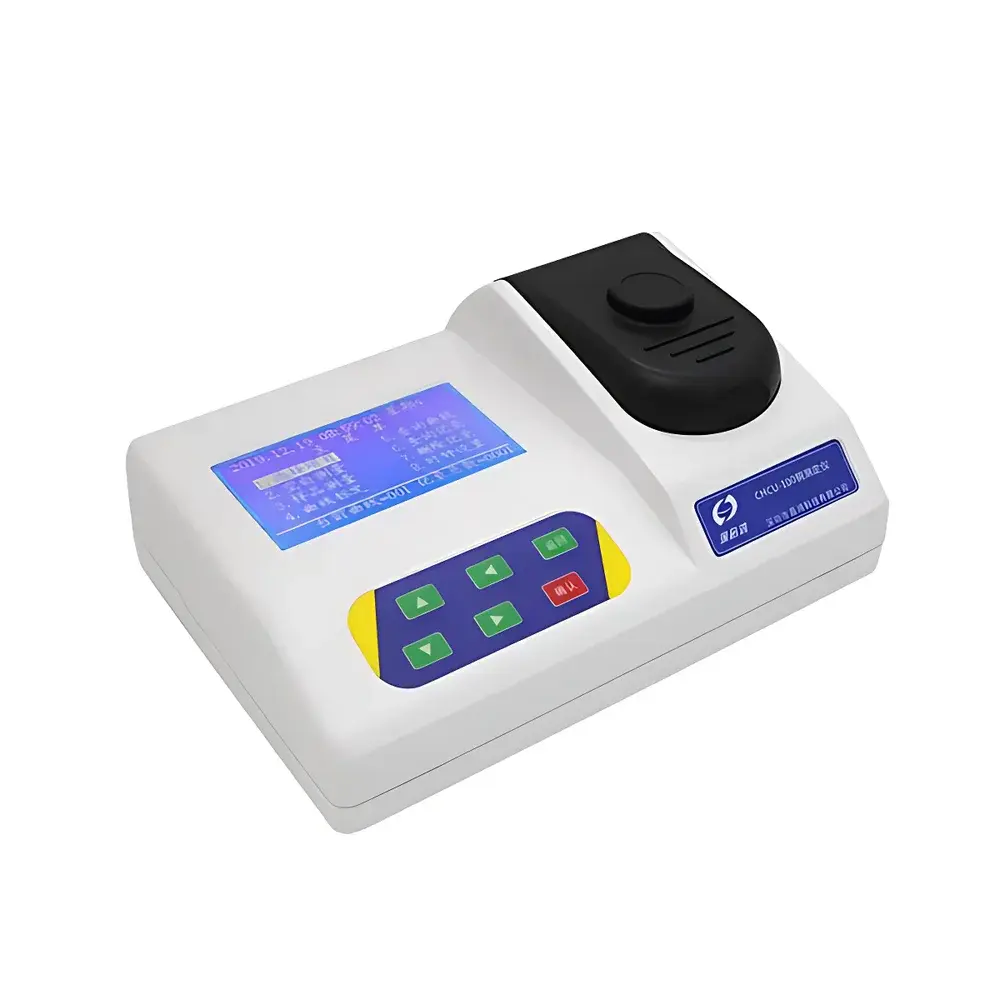
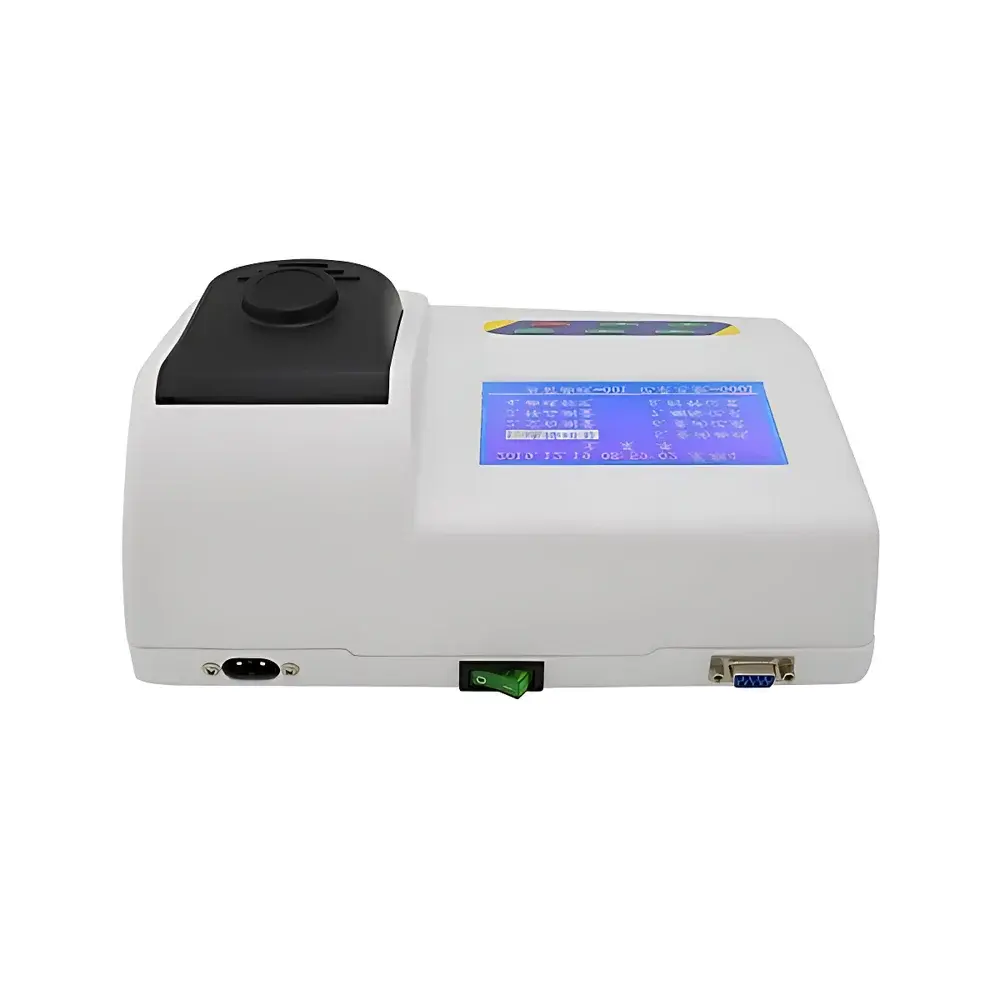
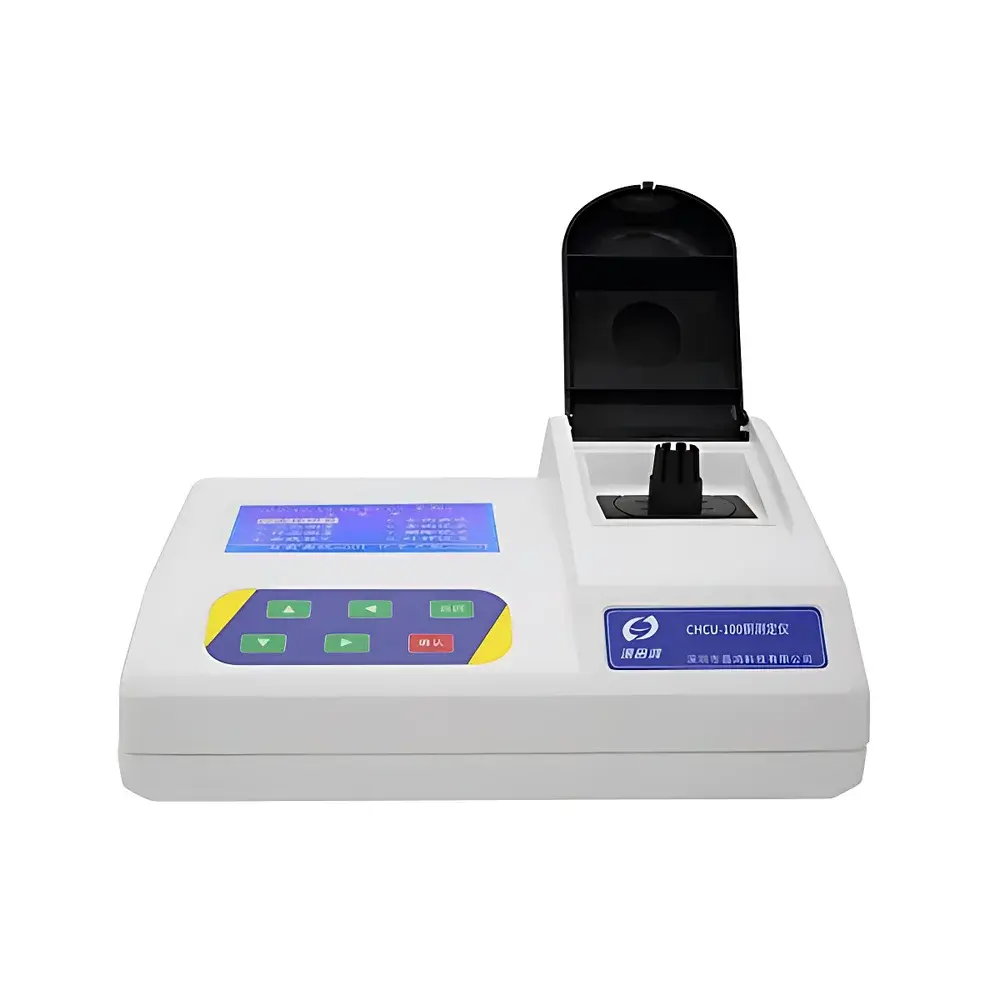
Shenchanghong CHCU-100 Copper Analyzer for Water Quality
| Brand | Shenchanghong |
|---|---|
| Model | CHCU-100 |
| Instrument Type | Benchtop Laboratory Analyzer |
| Detection Principle | Photometric Method (Visible Spectrophotometry) |
| Target Analyte | Copper (Cu²⁺) |
| Measurement Range | 0.02–1.00 mg/L and 1.00–10.00 mg/L (dual-range) |
| Resolution | 0.01 mg/L |
| Accuracy | ≤ ±3% of reading (water samples) |
| Repeatability | ≤ 3% RSD |
| Optical Stability | Absorbance drift < 0.002 A within 20 min |
| Dimensions | 266 × 200 × 130 mm |
| Weight | < 1 kg |
| Operating Temperature | 5–40 °C |
| Relative Humidity | ≤ 85% |
| Power Supply | AC 220 V ± 10%, 50 Hz |
| Detection Time | 20 min per sample |
Overview
The Shenchanghong CHCU-100 Copper Analyzer is a dedicated benchtop photometric instrument engineered for accurate, reliable quantification of dissolved copper (Cu²⁺) in aqueous environmental matrices. It operates on the principle of visible-spectrum spectrophotometry—specifically, the colorimetric reaction between copper ions and a selective chromogenic reagent (e.g., neocuproine or bathocuproine disulfonate), forming a stable colored complex whose absorbance is linearly proportional to copper concentration at a defined wavelength (typically 450–470 nm). The analyzer integrates a high-stability monochromatic cold light source, precision narrow-band optical filtering, and a temperature-compensated photodetector system to minimize baseline drift and interferences from turbidity or background color. Designed for routine compliance monitoring and laboratory verification, the CHCU-100 delivers trace-level sensitivity (detection limit ~0.02 mg/L) with metrological traceability aligned with standard methods such as ISO 8575:2021 (Water quality — Determination of copper — Spectrophotometric method) and EPA Method 200.7 (ICP-AES, with photometric alternatives referenced for screening).
Key Features
- Optimized optical architecture featuring imported long-life, high-luminance cold light source and thermally stabilized narrow-band interference filters for superior photometric reproducibility (absorbance drift < 0.002 A over 20 min).
- Dual-range measurement capability (0.02–1.00 mg/L and 1.00–10.00 mg/L) enables precise quantification across regulatory thresholds—from drinking water limits (e.g., WHO guideline: 2.0 mg/L; US EPA MCL: 1.3 mg/L) to industrial effluent discharge standards.
- Embedded 16-bit low-power microcontroller with real-time calibration compensation, supporting both factory-preloaded calibration curves and user-defined multi-point calibration protocols.
- Large-backlit LCD display with intuitive Chinese-language menu navigation—designed for operational efficiency in municipal labs, third-party testing facilities, and industrial QA/QC environments where bilingual interface support is required.
- Robust housing fabricated from post-molded ABS polymer with enhanced chemical resistance to common reagents (e.g., nitric acid digestates, chelating buffers) and environmental humidity exposure.
- Compliance-ready data handling: All measurements are timestamped and stored internally with non-volatile memory capable of retaining ≥500 sample records, including raw absorbance values, calculated concentrations, and operator ID fields.
Sample Compatibility & Compliance
The CHCU-100 is validated for direct analysis of clarified, filtered water samples—including potable water, surface water, groundwater, municipal wastewater, and treated industrial effluents—without requiring digestion when copper is present in soluble ionic form. For total recoverable copper determination, users must perform standardized acid digestion (per ISO 11969 or EPA 200.2) prior to analysis. The instrument meets functional requirements for GLP-aligned laboratories: its optical stability, repeatability (≤3% RSD), and accuracy (≤±3%) satisfy internal QA criteria for Level 2 screening instruments under ISO/IEC 17025:2017 Clause 7.7. While not certified to IEC 61326-1 for EMC or IEC 61010-1 for safety, it operates within Class II laboratory environmental specifications (IEC 60721-3-3: 3K3, 3M3) and is routinely deployed in accredited Chinese environmental monitoring stations (CMA-certified per CNAS-CL01:2018).
Software & Data Management
Data export is supported via USB interface to standard FAT32-formatted flash drives, generating CSV files compliant with LIMS ingestion protocols. Each record includes sample ID, measurement date/time, operator code, measured absorbance, applied calibration curve identifier, and final Cu concentration (mg/L). Internal firmware implements audit-trail functionality: all calibration updates, range switches, and zero-point adjustments are logged with timestamps and require password-protected access—meeting foundational expectations for FDA 21 CFR Part 11 “electronic records” controls in regulated environments. No proprietary software installation is required; exported datasets integrate natively with Excel, LabWare LIMS, and OpenLAB CDS.
Applications
- Regulatory compliance monitoring of copper in drinking water distribution systems per GB/T 5750.6–2023 (China) and EU Directive 98/83/EC Annex I parametric value (2.0 mg/L).
- Routine QC testing of electroplating rinse waters, PCB manufacturing effluents, and mining leachate streams where copper exceeds 1 mg/L.
- Field-deployable lab verification for portable XRF or anodic stripping voltammetry (ASV) field instruments—serving as a reference method for method validation studies.
- Educational use in university environmental chemistry laboratories for teaching spectrophotometric assay development, Beer–Lambert law verification, and matrix interference assessment (e.g., effects of Fe³⁺, Zn²⁺, or humic substances).
- Pre-screening tool in emergency response scenarios (e.g., pipeline corrosion events or accidental spills) to triage samples prior to ICP-MS confirmation.
FAQ
What sample pretreatment is required before analysis?
Clarified, particulate-free samples may be analyzed directly. For total copper, EPA 200.2-compliant hot nitric-peroxide digestion is mandatory prior to colorimetric measurement.
Can the CHCU-100 measure other heavy metals?
No—it is a single-analyte instrument optimized exclusively for copper using a fixed-wavelength photometric configuration. Separate analyzers are required for lead, cadmium, or chromium.
Is the calibration curve linear across the full range?
Linearity is maintained separately within each range (R² ≥ 0.999 for 0.02–1.00 mg/L; R² ≥ 0.995 for 1.00–10.00 mg/L), consistent with ISO 8466-1:1990 requirements for univariate calibration models.
How often must the instrument be recalibrated?
Daily zero-point verification is recommended; full multi-point calibration is required after reagent lot changes, every 8 hours of continuous operation, or following maintenance per the manufacturer’s preventive service schedule.
Does the device support GLP-compliant electronic signatures?
It supports operator authentication via password-protected access but does not implement biometric or digital certificate-based electronic signatures; manual signature logs are advised for full GLP adherence.
Related Products







