
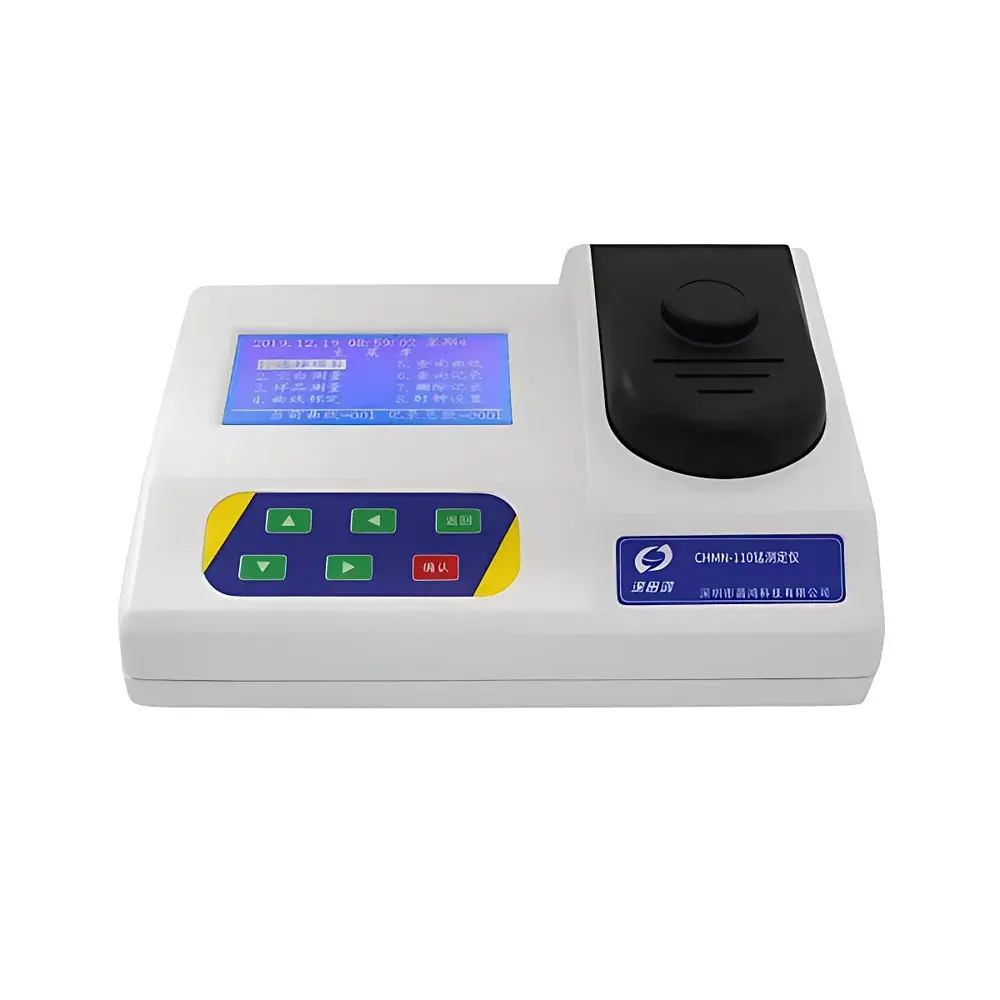
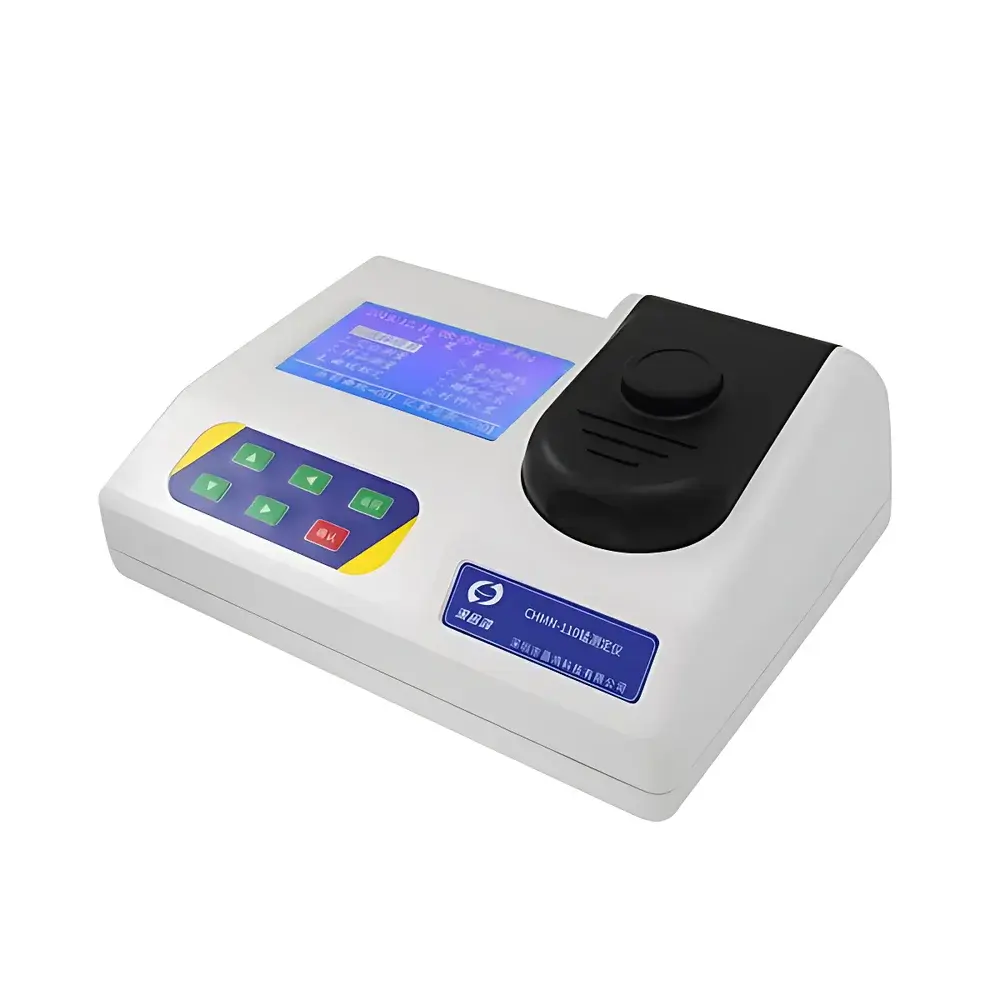
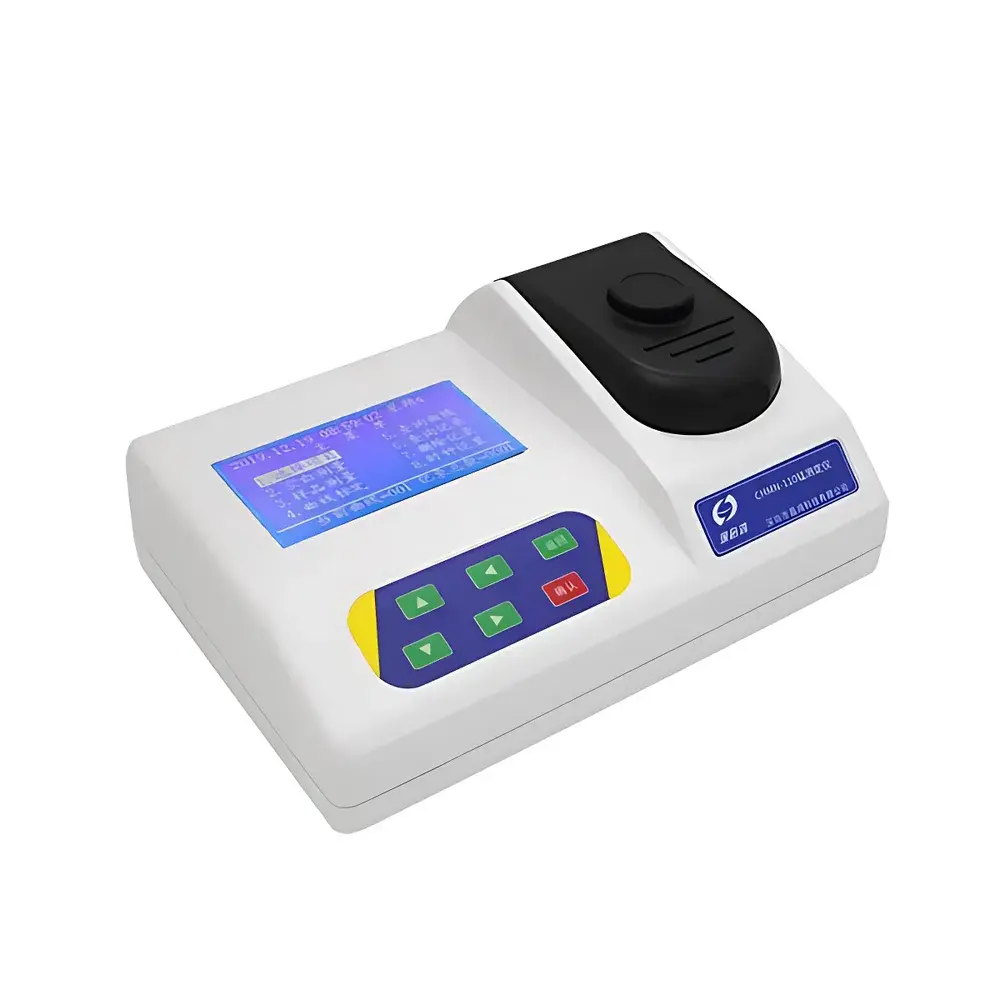
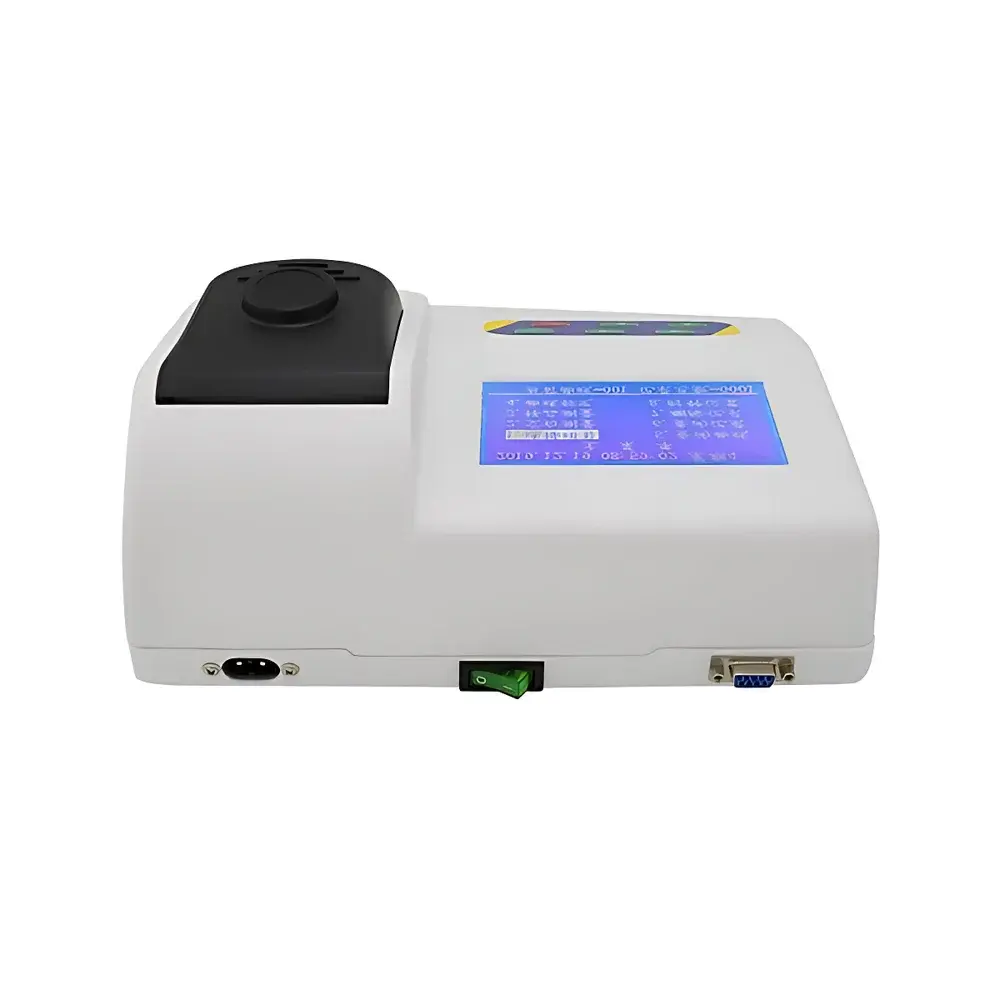
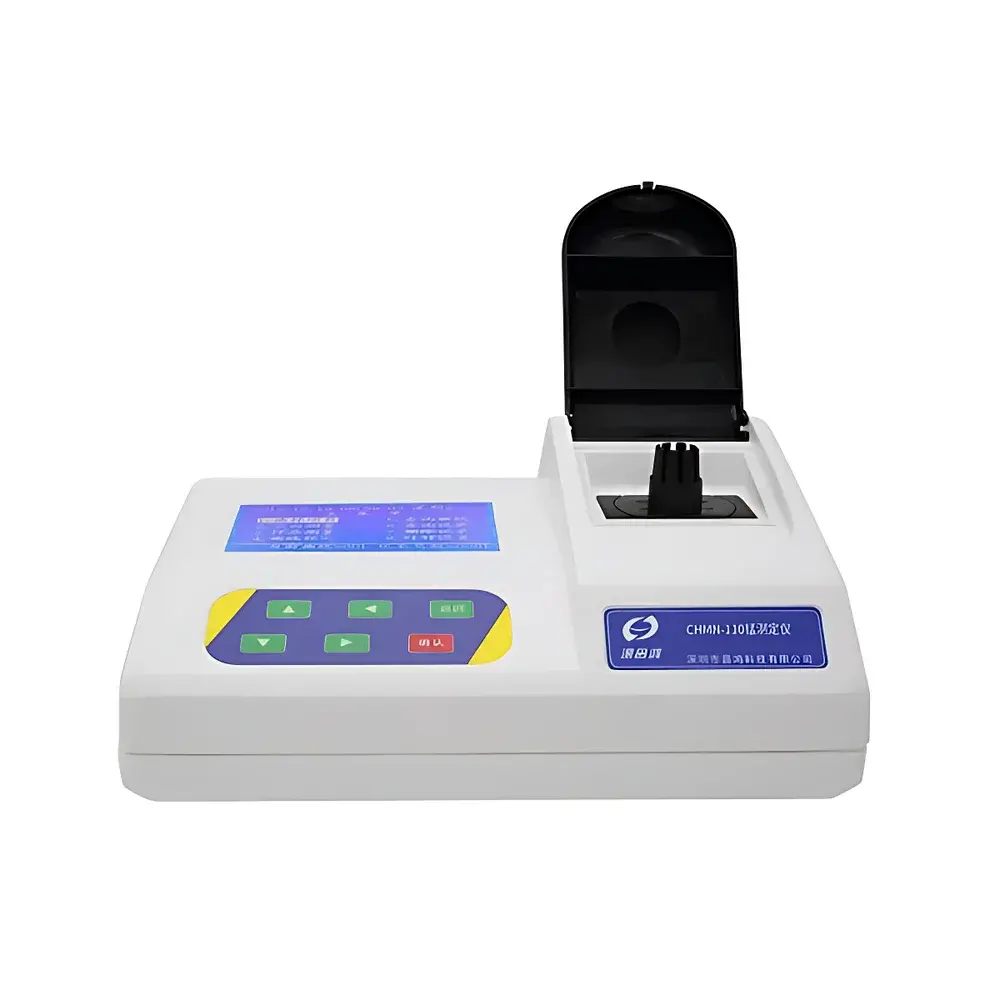
Shenchanghong CHMN-110 Manganese Analyzer
| Brand | Shenchanghong |
|---|---|
| Origin | Guangdong, China |
| Manufacturer Type | Direct Manufacturer |
| Product Origin | Domestic (China) |
| Model | CHMN-110 |
| Instrument Type | Benchtop Laboratory Analyzer |
| Detection Principle | Photometric Method (Colorimetric Absorption at 525 nm) |
| Target Analyte | Manganese (Mn²⁺) |
| Analysis Time | 20 min per sample |
| Accuracy | ≤ ±5% for aqueous samples |
| Precision (Repeatability) | ≤ 3% RSD |
| Resolution | 0.01 mg/L |
| Measurement Range | 0.02–5.00 mg/L |
| Optical Stability | Absorbance drift < 0.002 A over 20 min |
| Dimensions (W×D×H) | 266 × 200 × 130 mm |
| Weight | 1.0 kg |
| Operating Temperature | 5–40 °C |
| Relative Humidity | ≤85% RH |
| Power Supply | AC 220 V ±10%, 50 Hz ±0.5 Hz |
| Environmental Requirements | Low-vibration, low-EMI environment |
Overview
The Shenchanghong CHMN-110 Manganese Analyzer is a benchtop photometric instrument engineered for precise, routine quantification of dissolved manganese (Mn²⁺) in water matrices using standardized colorimetric methodology. It operates on the principle of spectrophotometric absorption—specifically, the formation of a stable pink-colored complex between Mn²⁺ and formaldoxime under controlled pH and oxidizing conditions, with absorbance measured at 525 nm. This method aligns with established protocols referenced in ISO 8692 (water quality — determination of manganese — photometric method) and ASTM D1068–22 (Standard Test Methods for Manganese in Water), enabling trace-level detection down to 0.02 mg/L with high reproducibility across heterogeneous sample types. Designed for laboratory environments where regulatory compliance and method traceability are critical, the CHMN-110 integrates optical stability, thermal management, and digital signal processing to minimize instrumental drift and ensure consistent calibration integrity over extended operational cycles.
Key Features
- Stable monochromatic cold-light source (LED-based, 525 nm peak emission) eliminates spectral interference from ambient light and ensures long-term photometric repeatability.
- Integrated microprocessor-controlled data acquisition system with V/F (voltage-to-frequency) conversion and software-based anti-interference algorithms—including redundancy handling and trap routines—for robust operation in electromagnetically noisy lab settings.
- Large backlit LCD display with full Chinese-language interface (configurable firmware supports English localization upon request), enabling unified access to calibration, measurement, curve storage, and result review within a single UI environment.
- Onboard memory stores up to 10 user-defined calibration curves and 99 measurement records with timestamping; all data retained during power interruption via non-volatile EEPROM.
- Compact ABS polymer housing with chemical-resistant surface finish, optimized for durability in wet-lab workflows involving frequent reagent handling and cleaning procedures.
- Self-contained optical path design with fixed-pathlength cuvette holder (10 mm standard), minimizing alignment sensitivity and reducing operator-dependent variability.
Sample Compatibility & Compliance
The CHMN-110 is validated for use with potable water, surface water, groundwater, municipal wastewater, and industrial effluents—provided samples undergo appropriate pretreatment (e.g., acid digestion for particulate-bound Mn or filtration for turbid matrices). It conforms to fundamental performance criteria outlined in ISO/IEC 17025:2017 for testing laboratories, particularly regarding measurement uncertainty estimation, calibration traceability to NIST-traceable standards, and documented verification of linearity, limit of detection (LOD ≈ 0.015 mg/L), and spike recovery (typically 92–105%). While not pre-certified for GLP or FDA 21 CFR Part 11 compliance, its audit-ready data logging architecture supports integration into LIMS environments requiring electronic record retention and operator authentication workflows.
Software & Data Management
The analyzer operates autonomously without external PC dependency; however, optional RS-232 or USB-to-serial interface modules enable bidirectional communication with laboratory information systems. Exported data files follow plain-text CSV format with columns for sample ID, date/time stamp, absorbance value, concentration (mg/L), and associated calibration curve ID. Firmware supports manual zero-point adjustment, multi-point calibration (2–6 points), and automatic blank subtraction. All calibration events—including slope, intercept, correlation coefficient (r ≥ 0.999), and date—are logged internally and retrievable for internal QA audits or regulatory review.
Applications
- Regulatory monitoring of Mn in drinking water per WHO Guidelines (0.05 mg/L provisional guideline) and US EPA Secondary Maximum Contaminant Level (SMCL) of 0.05 mg/L.
- Process control in water treatment plants evaluating Mn removal efficiency across oxidation-filtration or ion exchange units.
- Environmental field labs conducting baseline surveys of Mn contamination near mining operations or electroplating facilities.
- Educational laboratories teaching principles of spectrophotometric analysis, Beer-Lambert law validation, and method validation parameters (accuracy, precision, LOD/LOQ).
- Industrial QC labs verifying Mn content in boiler feedwater, cooling tower make-up, or rinse water streams where Mn-induced scaling or microbiological growth is a concern.
FAQ
What is the recommended sample pretreatment for turbid or colored water?
Centrifugation (3000 rpm, 10 min) followed by 0.45 µm membrane filtration is advised prior to analysis to remove suspended solids and humic interferences.
Can the CHMN-110 measure other metals besides manganese?
No—the optical filter and reagent formulation are specifically optimized for Mn²⁺; cross-reactivity with Fe²⁺ or Ni²⁺ may occur without selective masking agents.
Is the instrument compatible with international calibration standards?
Yes—calibration solutions prepared from certified reference materials (CRMs) traceable to NIST SRM 3132a or equivalent are fully supported.
How often should the optical system be verified?
Absorbance stability should be confirmed daily using a neutral density filter or sealed reference standard; full photometric verification recommended quarterly.
Does the device support GLP-compliant audit trails?
While native firmware does not include electronic signatures or role-based access control, exported logs meet minimum ALCOA+ (Attributable, Legible, Contemporaneous, Original, Accurate) requirements when paired with procedural documentation.
Related Products







