
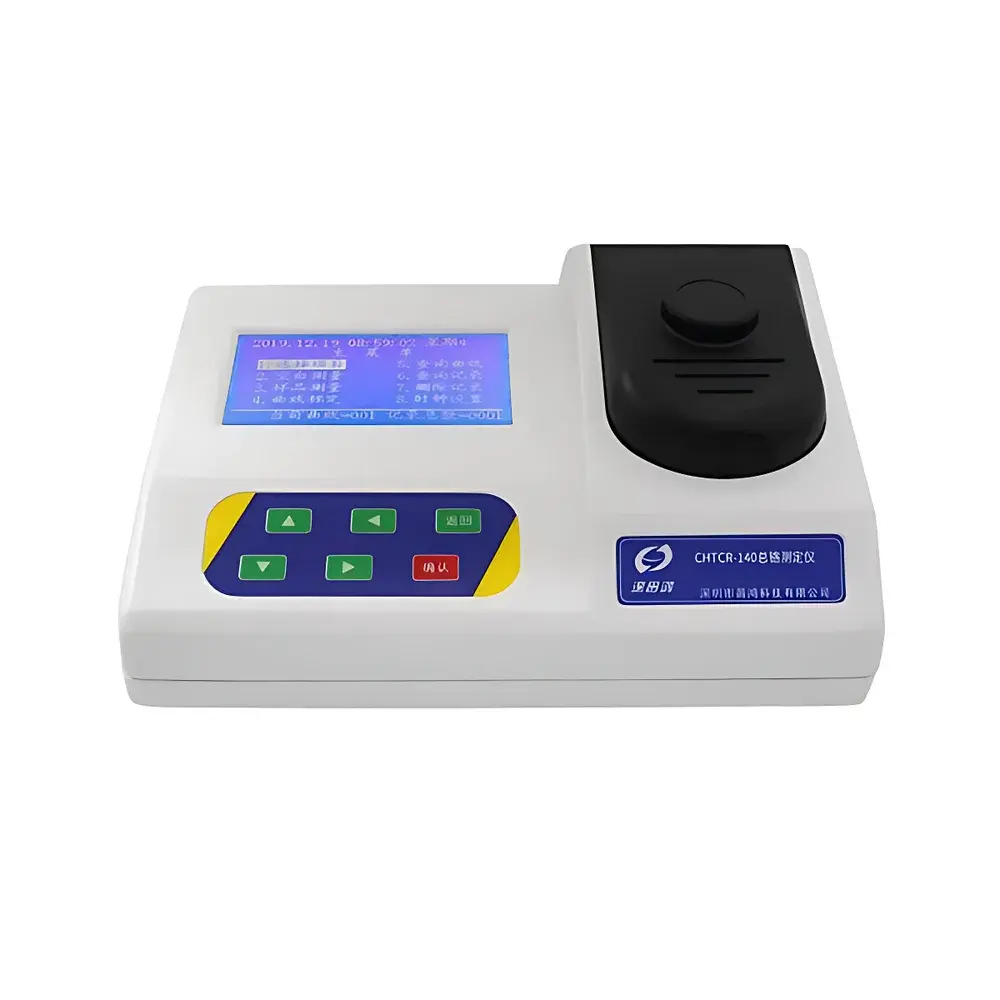
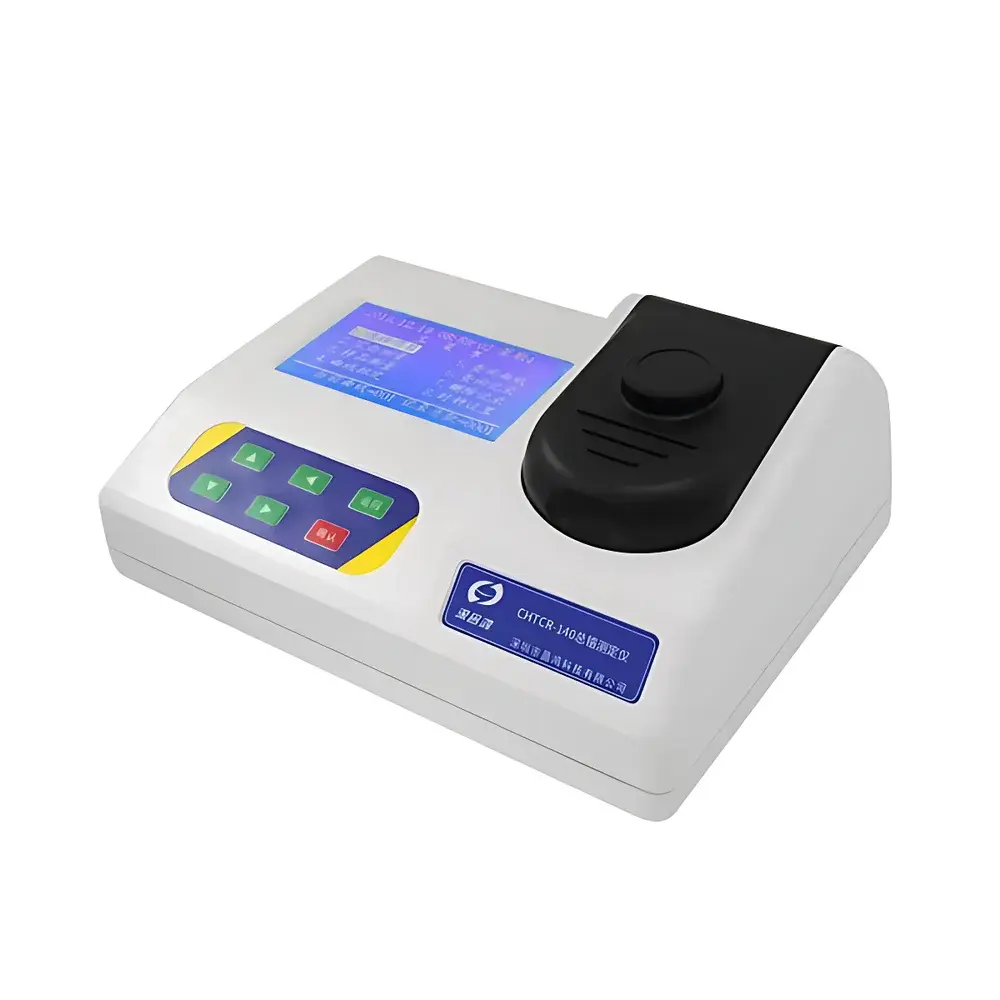
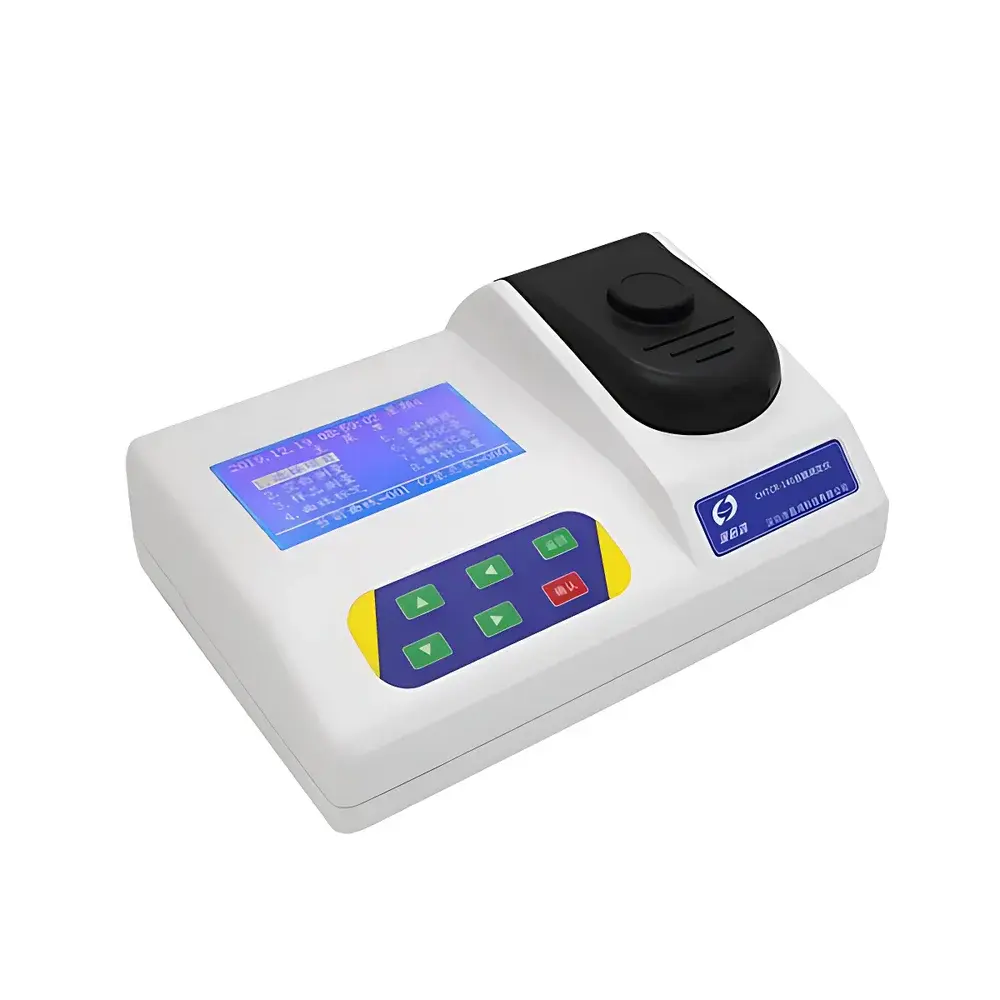
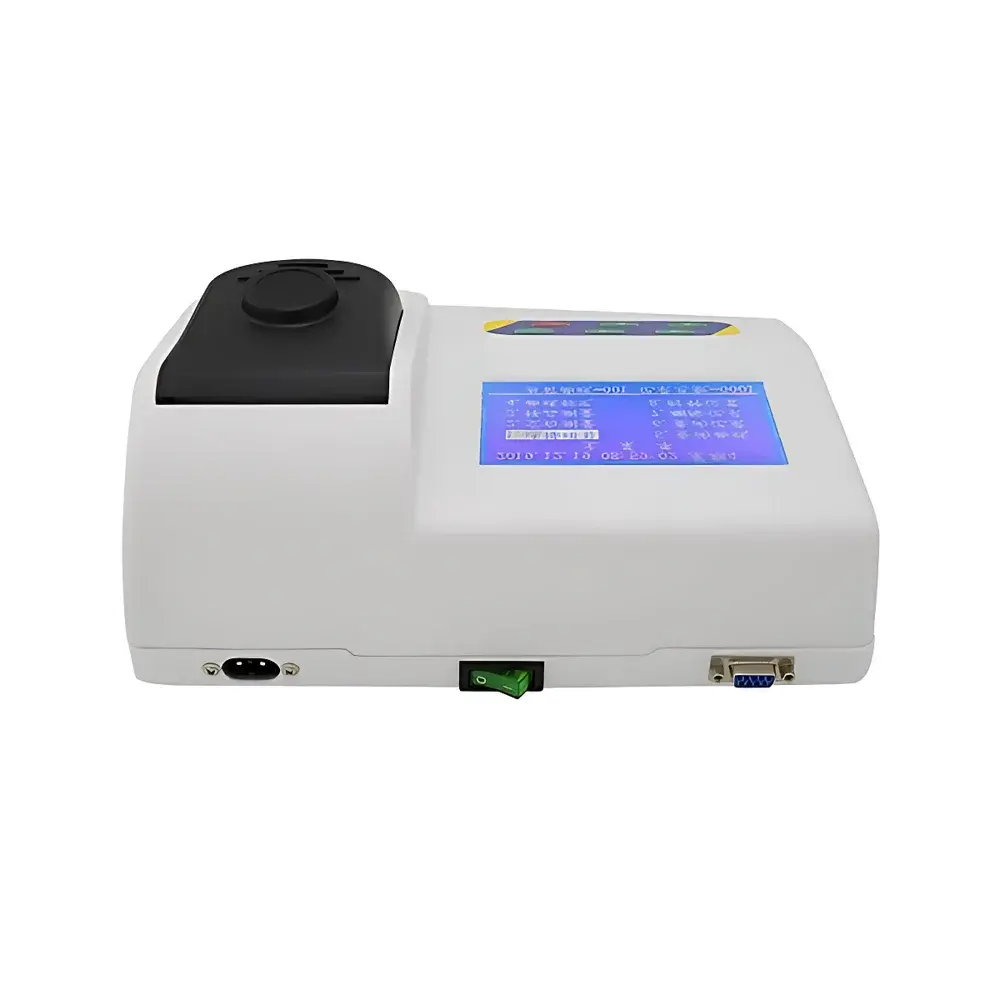
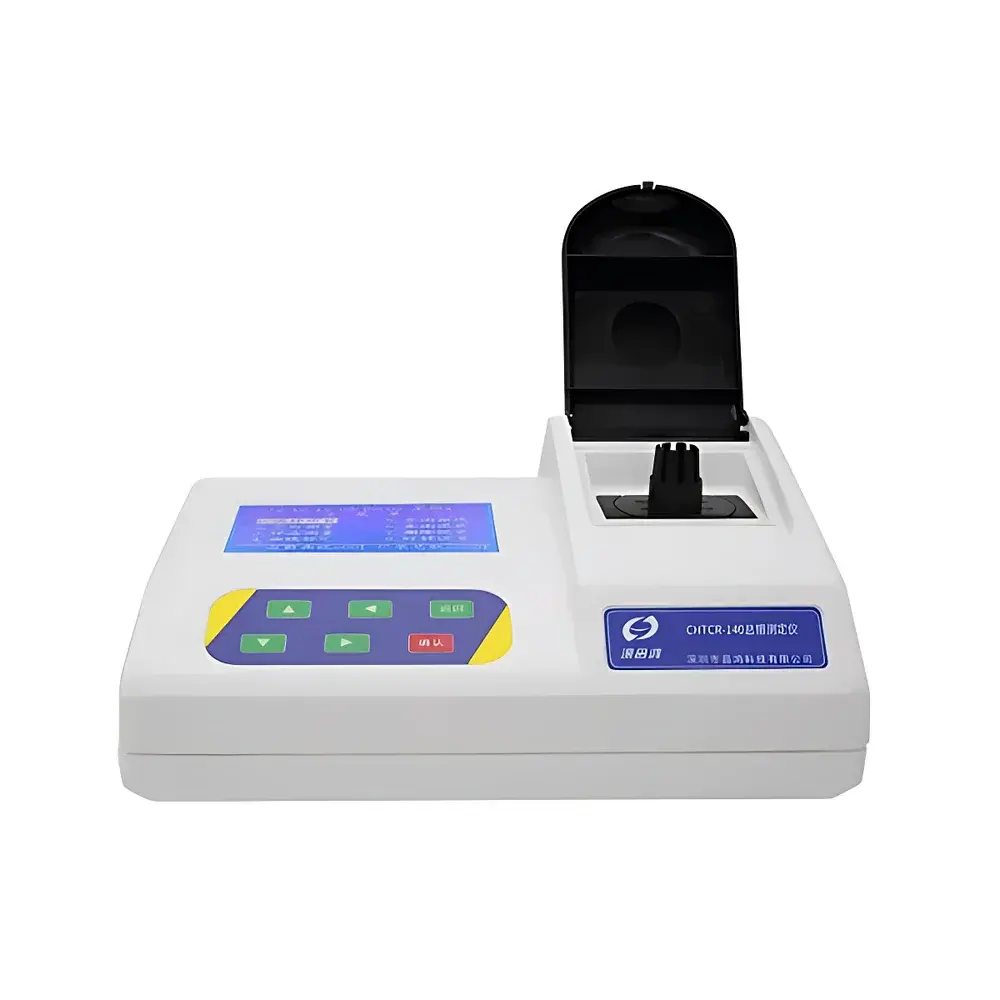
Shenchanghong CHTCR-140 Total Chromium Analyzer
| Brand | Shenchanghong |
|---|---|
| Origin | Guangdong, China |
| Manufacturer Type | Direct Manufacturer |
| Region of Origin | Domestic (China) |
| Model | CHTCR-140 |
| Instrument Type | Benchtop Laboratory Analyzer |
| Detection Principle | Photometric Method (Diphenylcarbazide Colorimetry) |
| Target Analyte | Total Chromium (Cr(VI) + Cr(III) after digestion) |
| Analysis Time | 20 min (post-digestion) |
| Accuracy | ≤ ±5% |
| Repeatability | ≤ 3% |
| Optical Drift | < 0.002 A in 20 min |
| Measurement Range | 0.02–1.00 mg/L Cr |
| Resolution | 0.02 mg/L |
| Digestion Temperature | 120 °C (adjustable 25–200 °C) |
| Temperature Control Accuracy | ±1 °C |
| Digestion Time | 30 min (adjustable 1–9999 min) |
| Sample Throughput | 16 samples per batch |
| Dimensions (Analyzer) | 266 × 200 × 130 mm |
| Dimensions (Digestion Unit DIS-16B) | 355 × 260 × 135 mm |
| Weight (Analyzer) | 1.0 kg |
| Weight (Digestion Unit) | 5.5 kg |
| Power Consumption | < 500 W |
| Operating Environment | 5–40 °C, RH ≤ 85%, AC 220 V ± 10%, 50 Hz ± 0.5 Hz, low electromagnetic interference, no direct sunlight |
Overview
The Shenchanghong CHTCR-140 Total Chromium Analyzer is a dedicated benchtop photometric system engineered for the quantitative determination of total chromium (sum of Cr(III) and Cr(VI)) in water matrices, including surface water, groundwater, wastewater, and industrial effluents. It integrates a precision photometer with a dedicated 16-position digital digestion unit (DIS-16B), enabling full compliance with standard methods such as EPA Method 7196A and ISO 11085:1993, which require acid digestion (e.g., using HNO₃/H₂SO₄/KMnO₄ or HNO₃/HF/H₃PO₄) to oxidize Cr(III) to Cr(VI) prior to colorimetric detection. The analyzer employs the established diphenylcarbazide (DPC) method: Cr(VI) reacts under acidic conditions to form a stable violet-colored complex with maximum absorbance at 540 nm. This reaction is highly selective for hexavalent chromium; therefore, the instrument’s total chromium capability relies on complete and reproducible oxidative digestion—achieved via its PID-controlled heating module and calibrated thermal profile. Designed for routine environmental laboratories, the CHTCR-140 delivers trace-level sensitivity (detection limit ≈ 0.02 mg/L), high optical stability (<0.002 A drift over 20 min), and robust performance under variable ambient conditions (5–40 °C, ≤85% RH).
Key Features
- Benchtop modular architecture: Independent photometer and digestion unit eliminate thermal crosstalk, preserving optical path integrity and long-term baseline stability.
- High-stability optical system: Features a 100,000-hour lifetime high-brightness LED light source coupled with narrow-band interference filters (centered at 540 nm), minimizing stray light and spectral interference from colored or turbid samples.
- Precision thermal management: DIS-16B digestion module offers PID-controlled temperature regulation (25–200 °C, ±1 °C accuracy) and programmable timing (1–9999 min), optimized for standardized 120 °C/30 min chromium digestion protocols.
- Intuitive human interface: Backlit LCD display with full Chinese menu navigation—designed for operators in municipal and industrial QA/QC labs where multilingual support enhances procedural adherence.
- Data integrity architecture: Stores up to 10 user-defined calibration curves and 199 measurement records with non-volatile memory; all data retained during power interruption.
- Durable mechanical design: Housing fabricated from post-molded ABS with enhanced chemical resistance to common digestants (HNO₃, H₂SO₄, HF) and cleaning agents.
- Low-power embedded control: 16-bit microcontroller platform ensures deterministic response, minimal thermal generation, and stable analog signal acquisition for absorbance measurement.
Sample Compatibility & Compliance
The CHTCR-140 is validated for use with clarified, filtered aqueous samples meeting standard pretreatment requirements outlined in EPA 7196A, ISO 11085, and GB/T 7466-1987 (Chinese national standard for total chromium in water). It supports sample volumes of 10–25 mL in standard 16-mm borosilicate digestion tubes. Interference mitigation includes built-in correction for moderate turbidity (via dual-wavelength referencing capability in advanced firmware versions) and tolerance for chloride concentrations up to 1000 mg/L when using appropriate masking agents. While not FDA 21 CFR Part 11–compliant out-of-the-box, the system supports GLP/GMP-aligned workflows through manual audit trails, printed calibration logs, and controlled access to curve editing functions. All hardware components conform to IEC 61010-1 safety standards for laboratory electrical equipment.
Software & Data Management
The analyzer operates without external PC dependency: onboard firmware manages calibration (single-point and multi-point), concentration calculation (linear or polynomial fit), unit conversion (mg/L, ppm), and result export via RS-232 serial interface (optional USB-to-serial adapter). Calibration curves may be generated using NIST-traceable Cr standard solutions (e.g., 1000 mg/L Cr stock, diluted to 0.1–1.0 mg/L range). Stored curves include date/time stamps, operator ID fields (manually entered), and slope/intercept metadata. Measurement records contain sample ID, date/time, absorbance value, calculated concentration, and deviation from calibration mean—exportable as CSV-compatible text files for LIMS integration or regulatory reporting.
Applications
- Regulatory compliance monitoring for chromium discharge limits under local environmental protection statutes (e.g., China’s GB 8978-1996, EU Industrial Emissions Directive).
- Wastewater treatment plant (WWTP) influent/effluent quality control, particularly for electroplating, leather tanning, and pigment manufacturing facilities.
- Drinking water source surveillance in regions with historical chromite mining or industrial legacy contamination.
- Environmental site assessment (ESA) and remediation verification, supporting chain-of-custody documentation for field-collected samples processed in fixed labs.
- Educational laboratories conducting AP Environmental Science or undergraduate analytical chemistry experiments on redox-based metal quantification.
FAQ
What digestion reagents are required for total chromium analysis?
Sulfuric acid (H₂SO₄), nitric acid (HNO₃), and potassium permanganate (KMnO₄) are recommended for oxidation of Cr(III) to Cr(VI); alternative protocols using hydrofluoric acid (HF) may be used for silicate-rich samples—always follow institutional chemical hygiene plans.
Can the instrument measure Cr(VI) only, without digestion?
Yes—the photometer module can be operated independently using direct DPC addition to filtered samples; however, this measures only hexavalent chromium and must be clearly documented as “Cr(VI) only” in reports.
Is method validation support provided?
Shenchanghong supplies application notes detailing spike recovery studies, LOD/LOQ determination per ISO 11843, and inter-laboratory comparison templates aligned with ISO/IEC 17025 requirements.
How often should the optical system be verified?
We recommend daily blank verification (deionized water) and weekly calibration check with a mid-range Cr standard (e.g., 0.5 mg/L); annual verification by authorized service technician is advised for ISO 17025-accredited labs.
Are replacement digestion tubes and filters available?
Yes—certified borosilicate digestion tubes (16 mm OD, 100 mm length) and 540 nm interference filters are stocked items with full traceable certification (lot-specific transmittance data).
Related Products







