
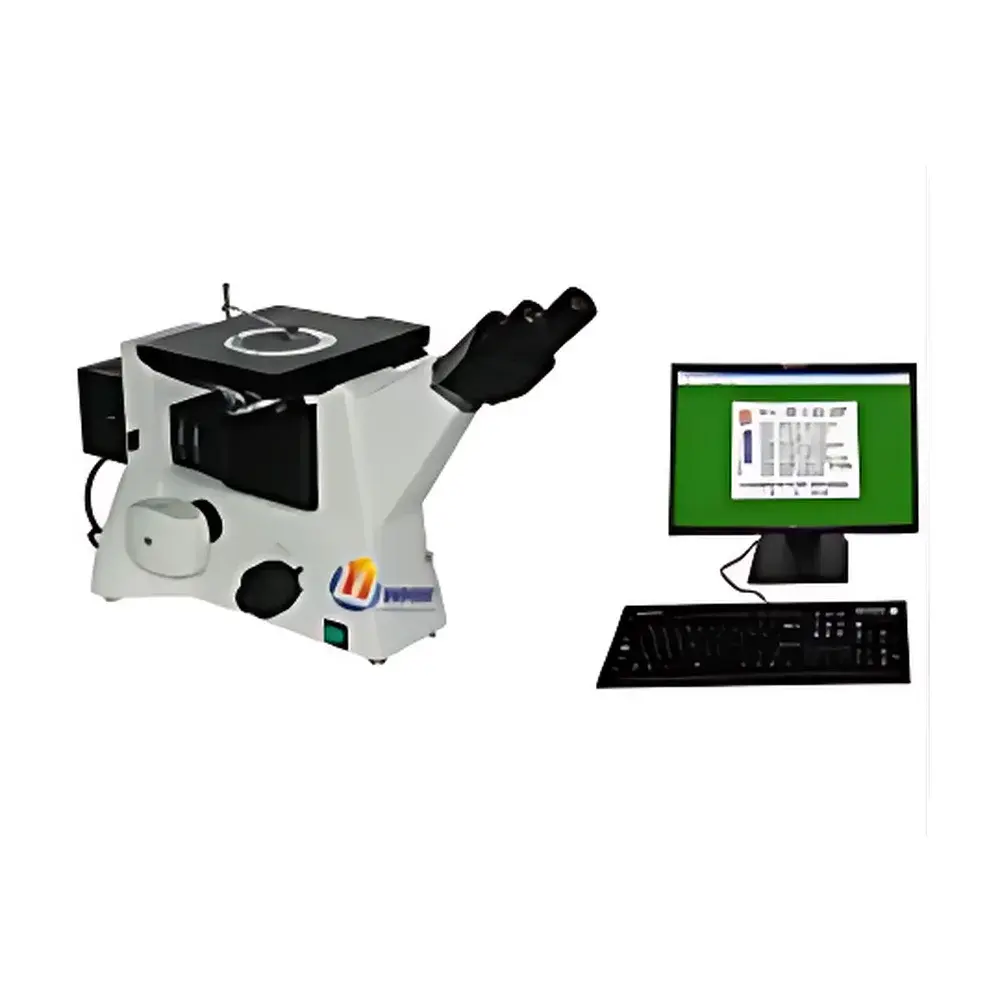
YANRUN MMAS-20 Inverted Polarized Metallurgical Microscope with Integrated Image Analysis System
| Brand | YANRUN |
|---|---|
| Origin | Shanghai, China |
| Manufacturer Type | OEM Manufacturer |
| Product Type | Inverted |
| Image Analysis System Included | Yes |
| Total Magnification Range | 100× to 1000× |
| Eyepieces | Wide-Field WF10X (Φ22 mm) |
| Objective Lenses | 10×, 20×, 50×, 100× (oil-immersion capable) |
Overview
The YANRUN MMAS-20 is an inverted polarized metallurgical microscope engineered for high-precision microstructural characterization of opaque materials—primarily metals, alloys, ceramics, and geological specimens. Built upon an infinity-corrected optical pathway, the system supports modular expansion for advanced contrast modalities including polarized light microscopy (PLM), darkfield illumination, and differential interference contrast (DIC)—when configured with optional accessories. Its rigid, vibration-damped inverted architecture positions the objective lenses beneath the specimen stage, enabling stable observation of large, heavy, or sectioned samples—including bulk metallographic mounts, heat-treated components, and coated substrates—without requiring sample inversion or re-mounting. The optical design complies with ISO 8578:2017 (microscopy — terminology and definitions) and supports quantitative analysis in accordance with ASTM E3-22 (Standard Guide for Preparation of Metallographic Specimens) and ISO 643:2019 (steel — micrographic determination of ferrite grain size). The system integrates a dedicated MOS (Metallurgical Optical System) platform optimized for high numerical aperture (NA) imaging across the visible spectrum (400–700 nm), minimizing chromatic aberration and ensuring consistent resolution at all magnifications.
Key Features
- Inverted configuration with reinforced cast-aluminum main frame and anti-vibration base plate for operational stability during extended imaging sessions.
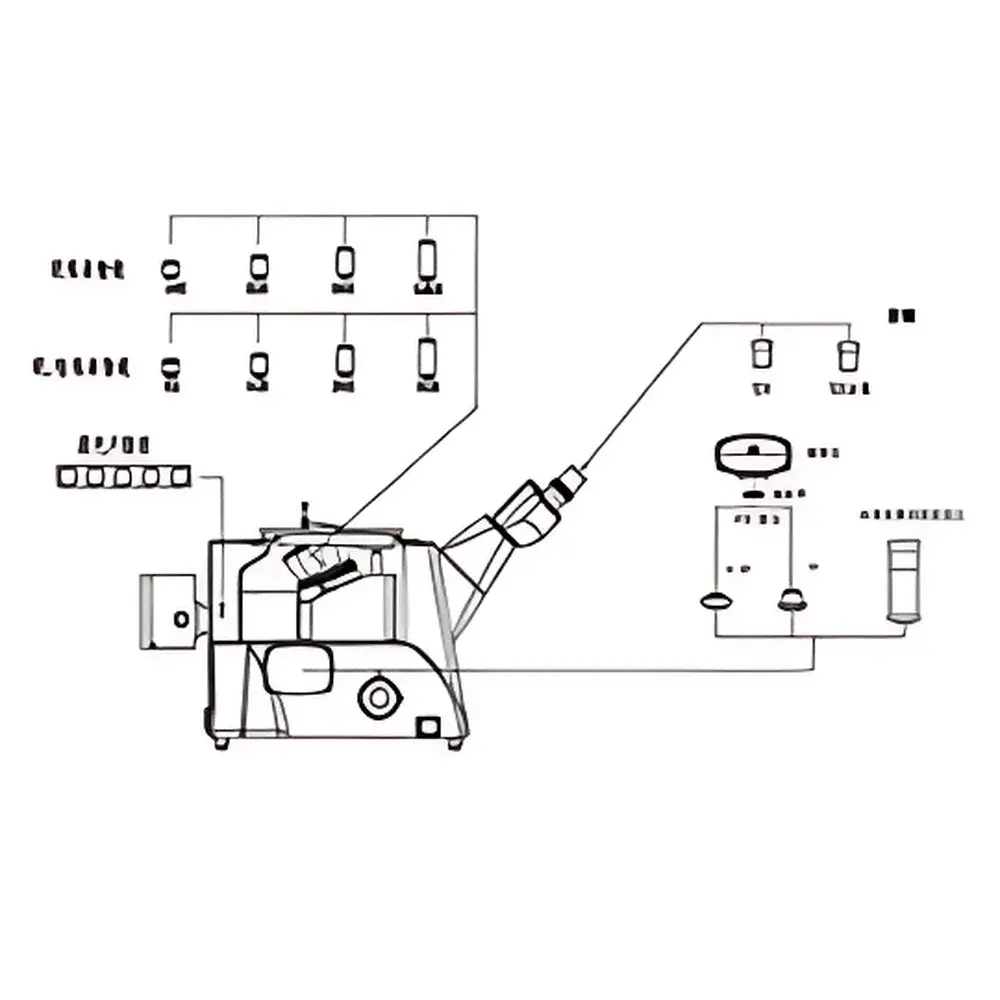
- Infinity-corrected plan-apochromat objectives (10×/0.25, 20×/0.40, 50×/0.70, 100×/0.85 oil) delivering flat-field, high-contrast imaging with working distances ranging from 0.4 mm (100× oil) to 8.8 mm (20× dry), facilitating ease of focus and immersion medium handling.
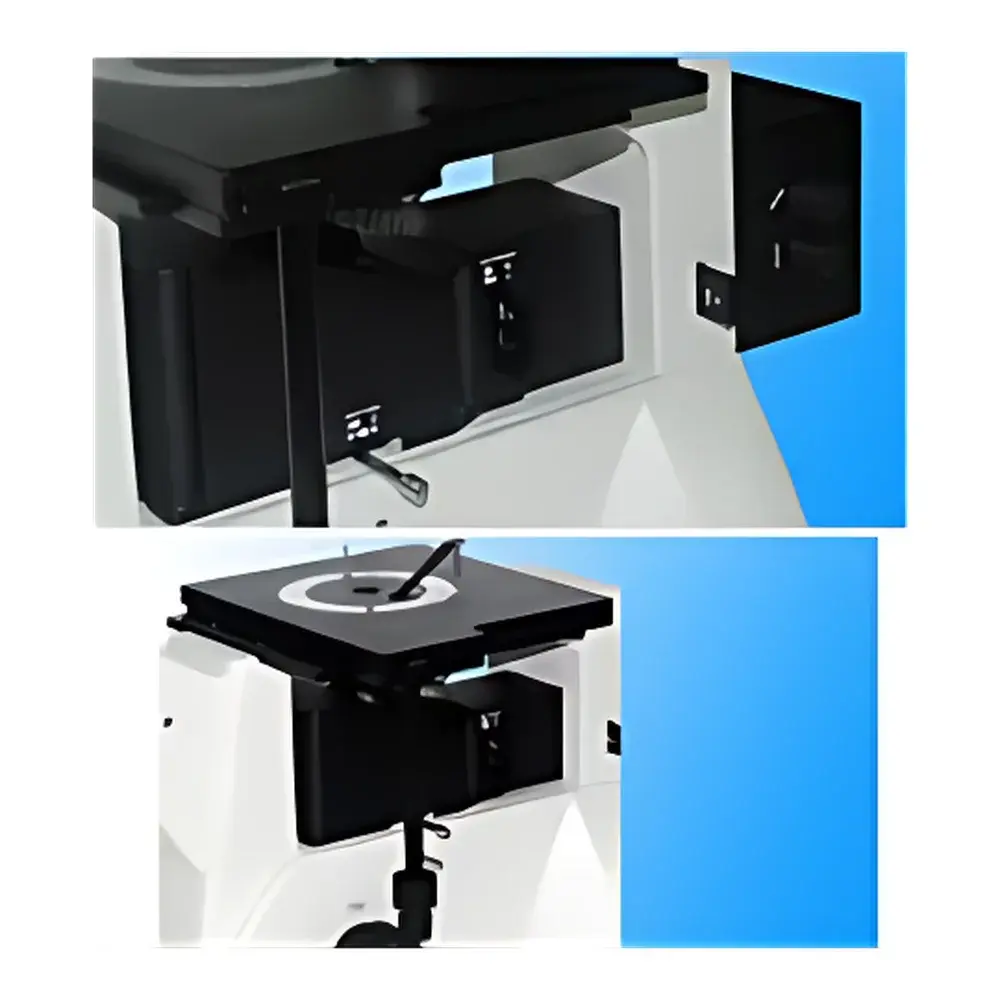
- Rotatable circular specimen stage (Ø130 mm max, Ø<20 mm central aperture) with 30 × 30 mm mechanical X–Y translation—engineered to meet polarized light requirements, including precise rotation indexing for extinction angle measurement and birefringence quantification.
- Köhler illumination system with 12 V / 50 W halogen lamp, adjustable field and aperture diaphragms, integrated graduated polarizer (0–360° rotation), and selectable green/yellow/blue interference filters for wavelength-specific contrast enhancement.
- Coaxial coarse/fine focusing mechanism with 2 µm fine-focus graduation, tension-adjustable coarse drive, upper/lower travel limit stops, and mechanical lock for reproducible Z-positioning during multi-field acquisitions.
- Five-position objective turret with precision ball-bearing internal centering for repeatable lens alignment and minimal parfocality drift between magnifications.
Sample Compatibility & Compliance
The MMAS-20 accommodates standard metallographic specimens up to 30 mm in height and 130 mm in diameter, supporting both polished and etched cross-sections, as-cast surfaces, fracture replicas, and thin-sectioned mineralogical samples. Its inverted geometry eliminates interference from specimen holders or clamps during high-magnification work, making it suitable for in-process QC inspection of weld zones, coating thickness evaluation, and inclusion analysis per ASTM E45-23 (determining inclusion content in steel). The system’s optical path and illumination design conform to ISO/IEC 17025:2017 requirements for calibration traceability when used with NIST-traceable stage micrometers and reference standards. All mechanical and optical components are manufactured to RoHS-compliant specifications, and the instrument housing meets IEC 61000-6-2 electromagnetic immunity standards for laboratory environments.
Software & Data Management
The bundled MMAS Image Analysis Software (v5.x) is a validated, Windows-based application designed for regulated metallurgical laboratories. It supports FDA 21 CFR Part 11 compliance through configurable user roles, electronic signatures, full audit trail logging (including image metadata, operator ID, timestamp, and parameter changes), and encrypted database storage. Core analytical modules include automated grain size classification (ASTM E112, ISO 643), phase fraction quantification (point counting, threshold segmentation), inclusion rating (ASTM E45, ISO 4967), and linear intercept measurements. Additional capabilities encompass geometric annotation (distance, area, angle, polygonal ROI), multi-image stitching for large-area mapping, focus stacking via z-series acquisition (with compatible motorized focus controller), and depth-encoded 3D topographic reconstruction using structured-light-assisted profilometry algorithms (optional module). Reports are exportable in PDF/A-1b, TIFF, and CSV formats, with customizable templates aligned to ISO/IEC 17025 documentation requirements.
Applications
- Quantitative metallography: grain boundary delineation, carbide/martensite volume fraction analysis, and intergranular corrosion assessment in stainless steels and superalloys.
- Polarized light characterization: identification of anisotropic phases (e.g., graphite flakes in cast iron, quartz in rock thin sections), stress-induced birefringence mapping in tempered glass or polymer composites.
- Failure analysis: crack propagation path tracing, fatigue striation measurement, and void nucleation density estimation in additively manufactured parts.
- Quality control in heat treatment facilities: verification of austenite transformation, decarburization depth, and case-hardening uniformity per SAE AMS 2750.
- Research-grade microstructure–property correlation studies in academic and industrial R&D labs, supporting publications compliant with MRS Bulletin reporting guidelines.
FAQ
Does the MMAS-20 support DIC or phase contrast?
No—DIC and phase contrast require specialized condensers and objective prisms not included in the base configuration. However, the infinity-corrected optical train allows integration of third-party DIC modules compatible with standard RMS-threaded ports.
Is the software validated for GMP/GLP environments?
Yes—the MMAS software includes 21 CFR Part 11-compliant features (audit trail, e-signature, role-based access) and can be installed in IQ/OQ/PQ-validated configurations upon request.
Can the system be upgraded to motorized focus or automated stage control?
Yes—YANRUN offers optional motorized Z-drive and programmable XY stage modules with TTL-triggered synchronization to camera acquisition.
What is the maximum specimen weight supported on the stage?
The dual-layer mechanical stage supports loads up to 5 kg without compromising positional accuracy or focus repeatability.
Are calibration certificates provided with the microscope?
A factory-issued calibration report (covering magnification accuracy, stage linearity, and eyepiece graticule verification) is supplied with each unit; NIST-traceable certification is available as an add-on service.





