

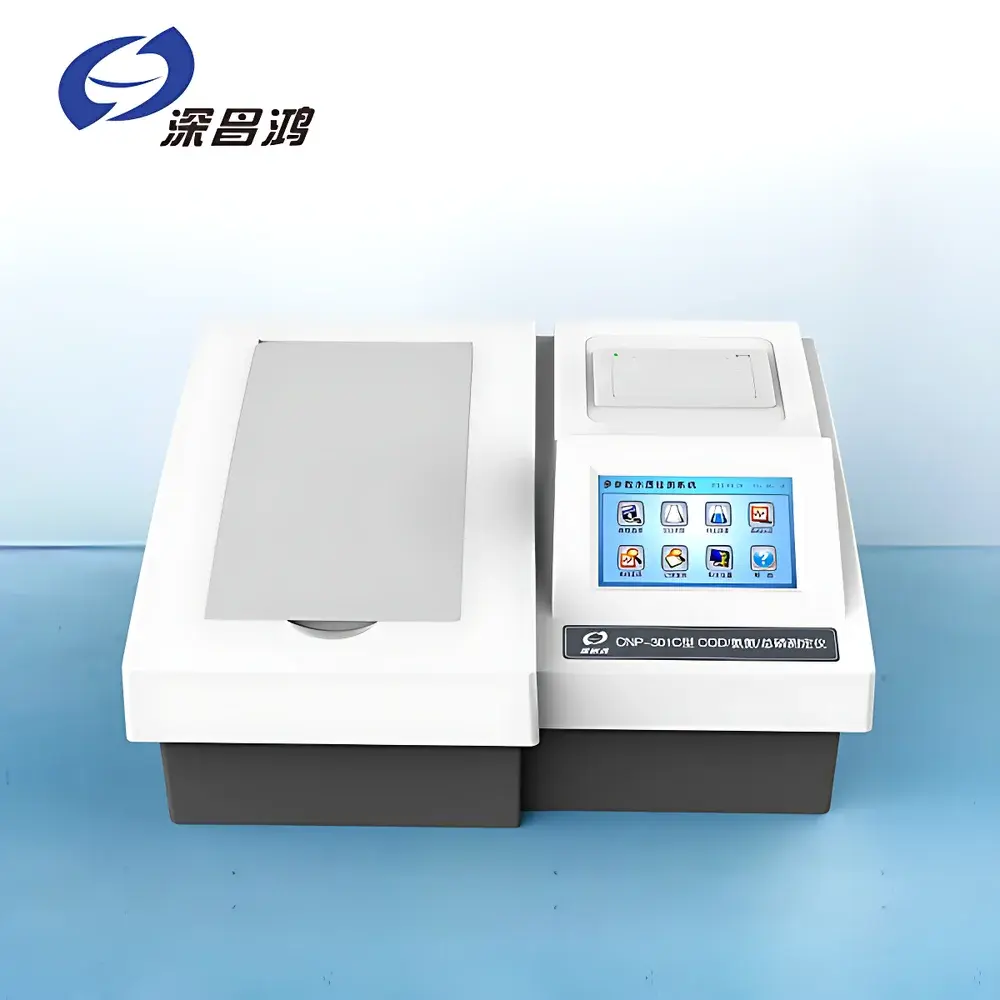
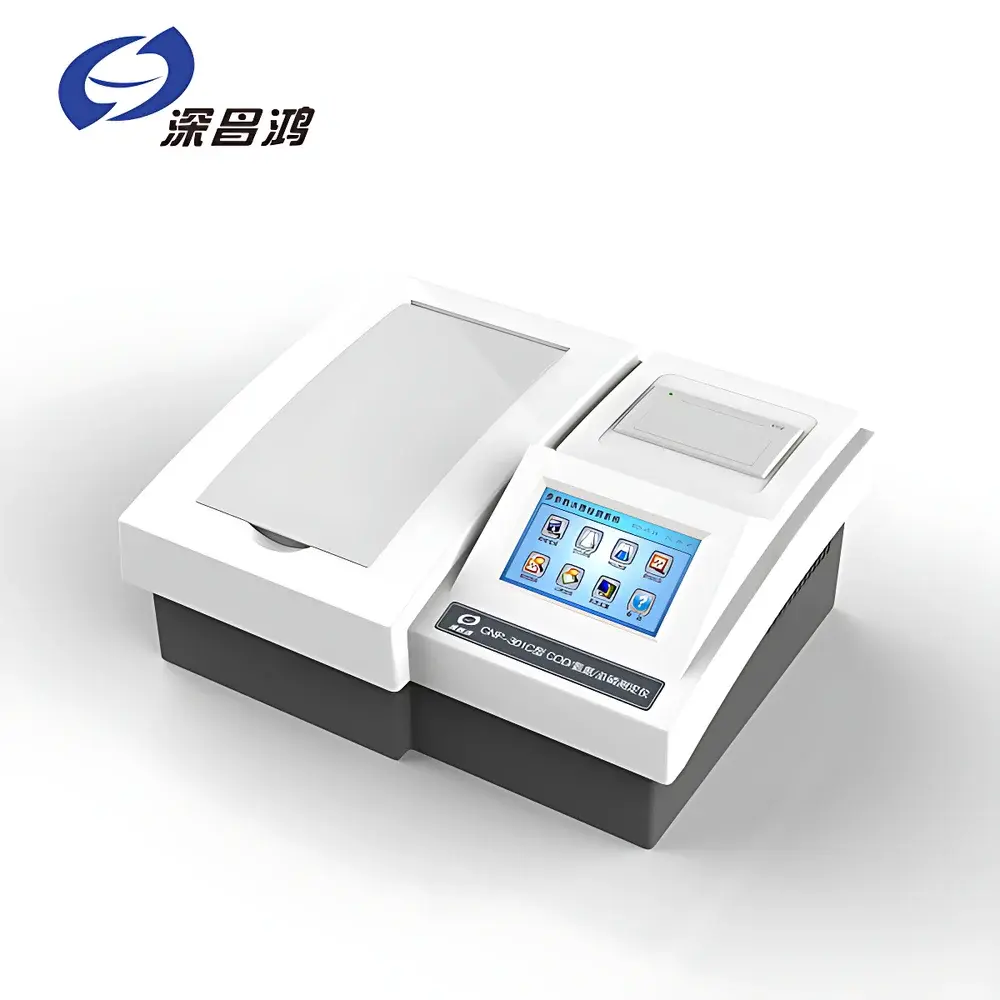
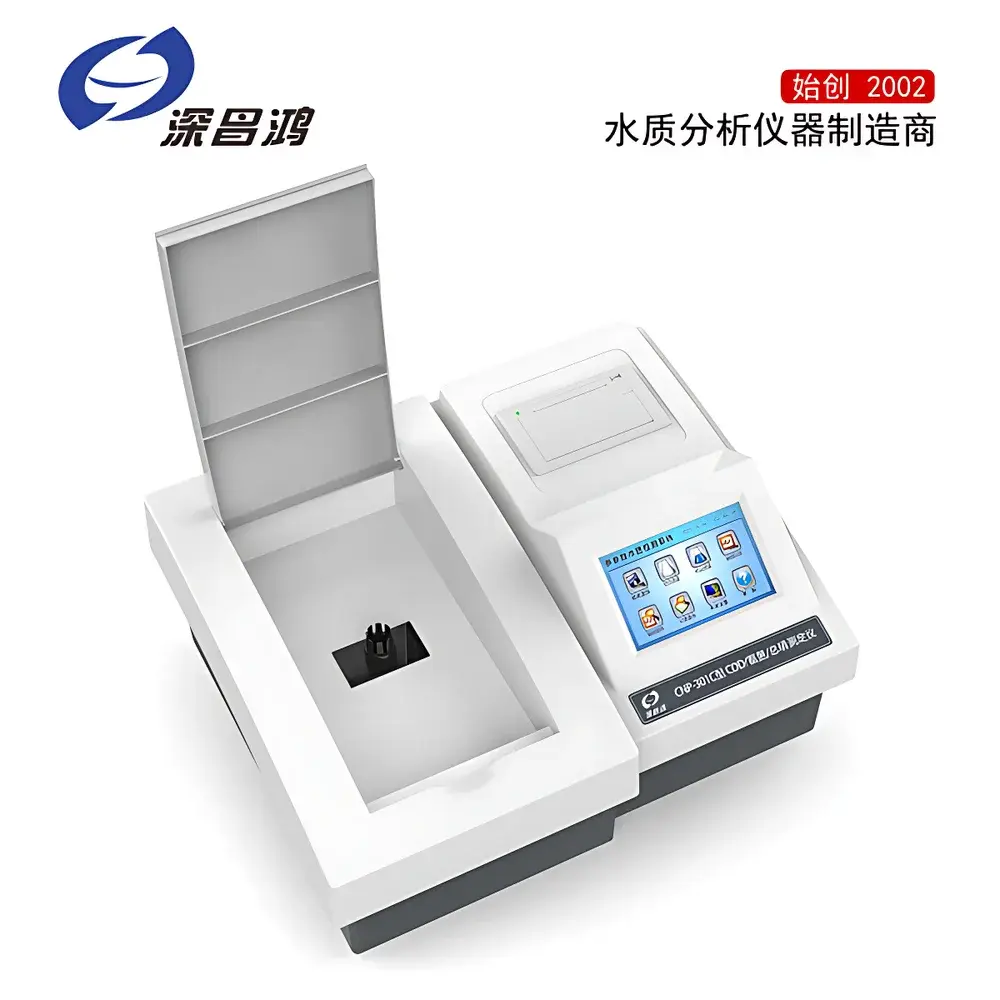
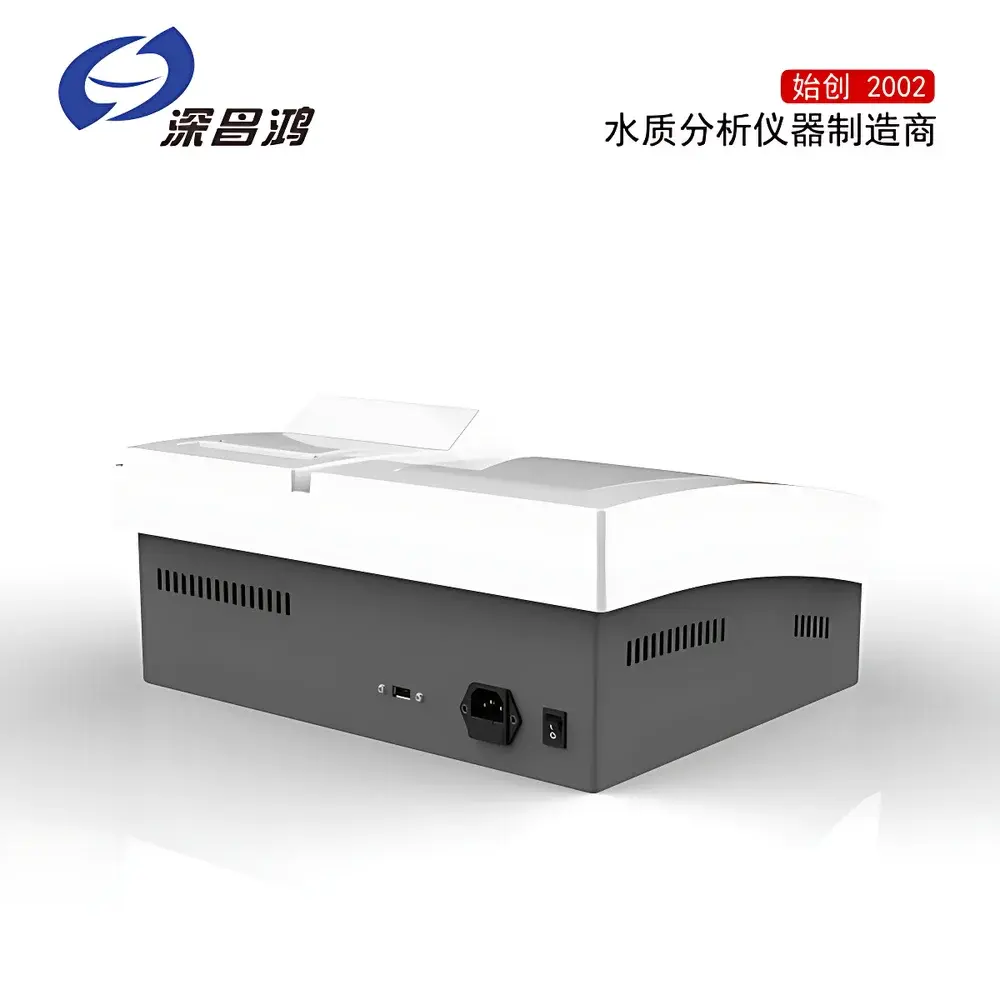
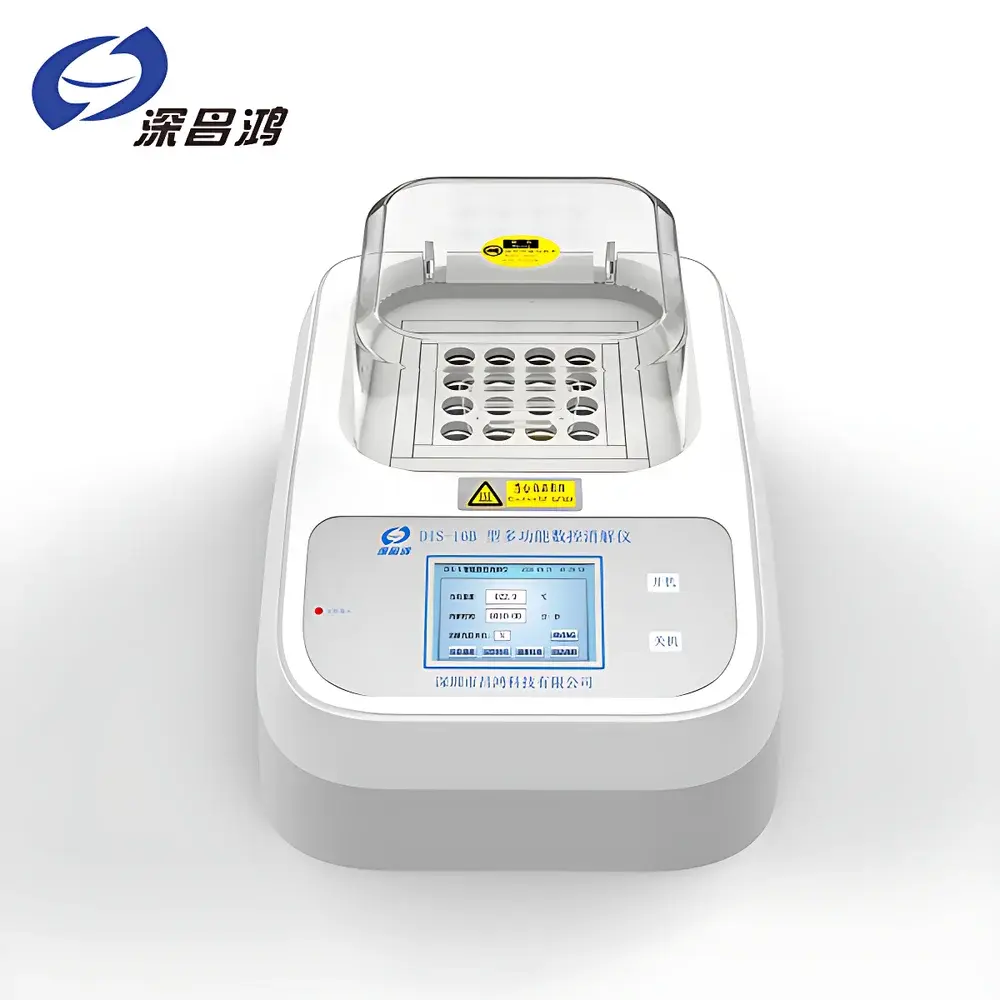
Shenchanghong CNP-301C COD, Ammonia Nitrogen & Total Phosphorus Water Quality Analyzer
| Brand | Shenchanghong |
|---|---|
| Origin | Guangdong, China |
| Manufacturer Type | Direct Manufacturer |
| Country of Origin | China |
| Model | CNP-301C |
| Price Range | USD 1,400–4,200 |
| Instrument Type | Benchtop Laboratory Water Quality Analyzer |
| Measured Parameters | Chemical Oxygen Demand (COD), Ammonia Nitrogen (NH₃-N), Total Phosphorus (TP) |
| COD Range | 5–2,000 mg/L (extendable to 20,000 mg/L) |
| NH₃-N Range | 0.02–25 mg/L |
| TP Range | 0.00–10 mg/L |
| COD Accuracy | ≤±5% FS |
| NH₃-N Accuracy | ≤±3% FS |
| TP Accuracy | ≤±5% FS |
| Chloride Interference Tolerance (COD) | ≤2,000 mg/L |
| COD Digestion Temp | 165°C |
| NH₃-N Digestion Temp | Not required (Nesslerization) |
| TP Digestion Temp | 120°C |
| COD Digestion Time | 15 min |
| TP Digestion Time | 30 min |
| Temperature Control Range | Ambient to 200°C |
| Temp Control Precision | ≤±1.0°C |
| Optical Stability | ≤0.002 A/20 min |
| Repeatability | ≤±3% |
| Sample Throughput | 16 samples per batch (optional 20/25/36-position blocks) |
| Digestion Unit Display | Color touchscreen with bilingual (CN/EN) UI |
| Main Unit Dimensions | 340 × 250 × 130 mm |
| Digestion Unit Dimensions (w/o shield) | 260 × 355 × 135 mm |
| Main Unit Weight | 4 kg |
| Digestion Unit Weight | 5.5 kg |
| Data Interface | USB port |
| Output | Built-in thermal printer |
| Power Backup | Auto-save and power-fail recovery |
Overview
The Shenchanghong CNP-301C is a dedicated benchtop water quality analyzer engineered for simultaneous, standardized quantification of three critical parameters in environmental and municipal wastewater testing: Chemical Oxygen Demand (COD), Ammonia Nitrogen (NH₃-N), and Total Phosphorus (TP). It implements established spectrophotometric methods compliant with Chinese national standards (e.g., HJ 399–2017 for COD, HJ 535–2009 for NH₃-N, and GB 11893–1989 for TP), and aligns methodologically with internationally recognized protocols including ISO 6060 (COD), ISO 7150-1 (NH₃-N), and ISO 6878 (TP). The system employs a modular architecture—separating the digestion module from the photometric measurement unit—to preserve optical integrity and minimize thermal drift during analysis. COD determination follows a rapid closed-vessel digestion using potassium dichromate under acidic conditions at 165°C for 15 minutes, followed by measurement at 610 nm via dichromate reduction absorbance. Ammonia nitrogen is quantified using the Nessler reagent method (absorbance at 420 nm), requiring no digestion step. Total phosphorus is determined after persulfate oxidation at 120°C for 30 minutes, followed by formation of the phosphomolybdenum blue complex and measurement at 700 nm. All optical measurements utilize a stable cold light source and narrow-band interference filters to ensure long-term photometric fidelity.
Key Features
- Modular design isolates digestion heating from the optical path, enhancing baseline stability and measurement reproducibility.
- PID-controlled digital temperature regulation in the digestion module ensures ±1.0°C accuracy across a 0–200°C range, supporting method flexibility beyond standard protocols.
- Pre-loaded calibration curves: up to 20 user-selectable standard curves stored internally for COD, NH₃-N, and TP—enabling rapid method switching without recalibration.
- High-capacity data storage: retains up to 1,000 test records with timestamp, parameter ID, and concentration values; supports export via USB to external PCs for LIMS integration.
- Dual-function digestion–colorimetric tubes: borosilicate glass tubes rated for repeated high-temperature use (up to 200°C), eliminating disposable consumables and reducing operational cost.
- Integrated thermal printer enables immediate hardcopy output of results, compliance logs, and QC checks—critical for GLP-aligned laboratories.
- Large backlit LCD interface with intuitive menu navigation and bilingual (English/Chinese) on-screen prompts simplifies operation for multi-language technical staff.
- Power-fail recovery function automatically saves active method settings and untransmitted data, preventing loss during unexpected outages.
Sample Compatibility & Compliance
The CNP-301C is validated for use with surface water, groundwater, domestic sewage, industrial effluents, and treated wastewater. It accommodates sample volumes of 2.5–5.0 mL and tolerates chloride concentrations up to 2,000 mg/L in COD analysis—mitigating common interferences in saline or mixed-waste streams. All analytical procedures adhere to the metrological requirements outlined in JJG 975–2002 (Chinese verification regulation for water quality analyzers) and support traceability to national reference materials (e.g., CRM 8013a for COD, GBW(E)080259 for NH₃-N). While not FDA 21 CFR Part 11 certified out-of-the-box, the instrument’s audit-trail-capable data logging (via optional PC software) and immutable record timestamps meet foundational GxP documentation prerequisites for environmental monitoring under ISO/IEC 17025-accredited labs.
Software & Data Management
Data generated by the CNP-301C is stored internally with full metadata: date/time stamp, operator ID (manual entry), method name, calibration curve version, raw absorbance, and calculated concentration. USB connectivity allows bulk export in CSV format for post-processing in Excel or laboratory information management systems (LIMS). Optional PC-based software provides graphical trend analysis, QC charting (X-bar/R charts), automated report generation (PDF/Excel), and electronic signature support for method validation documentation. All exported files retain embedded instrument serial number and firmware version—ensuring data provenance and regulatory defensibility.
Applications
- Environmental monitoring stations performing routine compliance testing against discharge limits (e.g., China’s GB 8978–1996 or EU Urban Wastewater Treatment Directive).
- Municipal wastewater treatment plants conducting influent/effluent process control and sludge digestion optimization.
- Industrial QA/QC labs verifying pretreatment efficiency for electroplating, food processing, or pharmaceutical manufacturing effluents.
- Academic and research institutions executing water pollution studies, nutrient cycling experiments, or method validation projects.
- Third-party testing laboratories accredited to CNAS (China National Accreditation Service) or equivalent international bodies requiring auditable, repeatable multi-parameter analysis.
FAQ
Is the CNP-301C suitable for field deployment?
No—it is designed exclusively as a benchtop laboratory instrument. Its precision optics, thermal digestion module, and integrated printer require stable AC power and controlled ambient conditions.
Can the instrument be calibrated with third-party standard solutions?
Yes. The system accepts user-defined calibration points and supports manual curve entry using NIST-traceable or certified reference materials (CRMs) for all three parameters.
Does it support automatic dilution for out-of-range samples?
No—sample dilution must be performed manually prior to analysis. However, the extended COD range (up to 20,000 mg/L) reduces the need for pre-dilution in most high-strength wastewaters.
What maintenance is required for long-term reliability?
Routine cleaning of optical windows and digestion block surfaces is recommended after each batch. Annual verification of temperature uniformity across the digestion block and photometric linearity (using neutral density filters) is advised for ISO/IEC 17025 compliance.
Is firmware upgrade supported?
Yes—firmware updates are delivered via USB stick and installed through the instrument’s service menu, enabling method enhancements and bug fixes without hardware modification.
Related Products







