
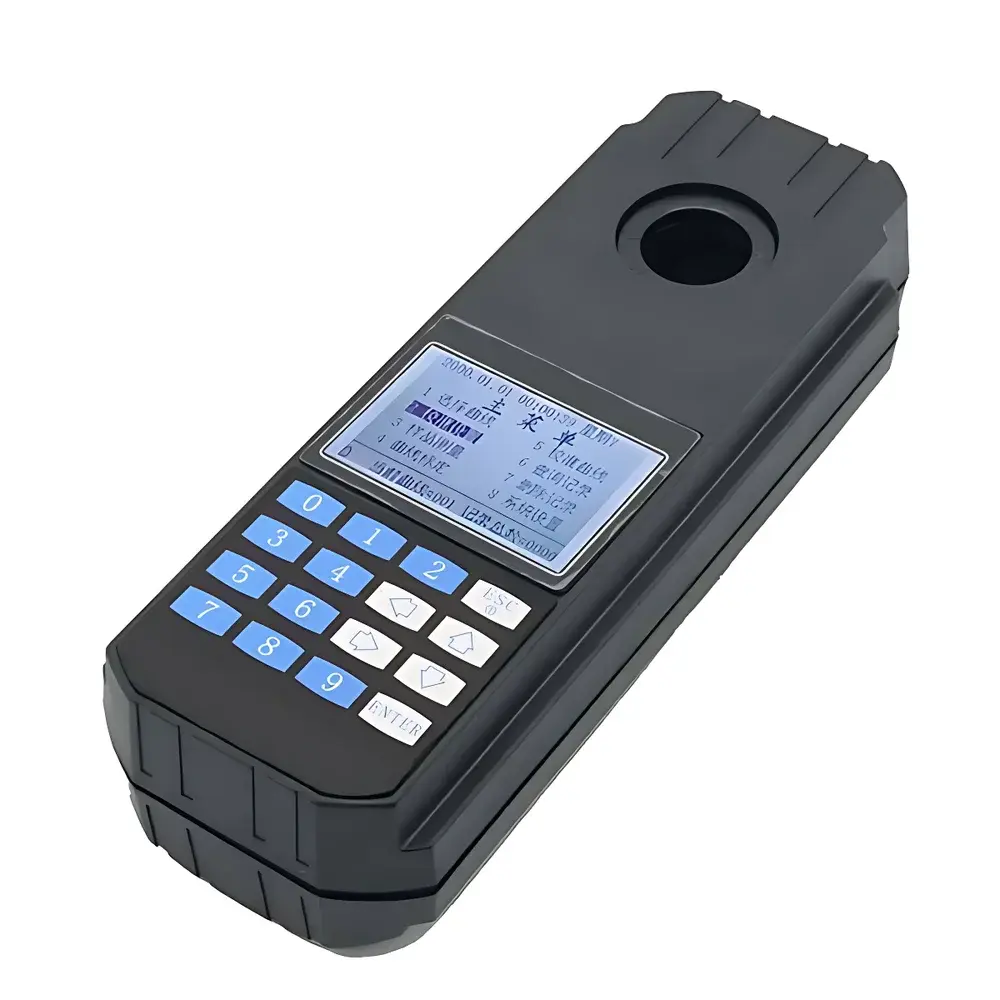
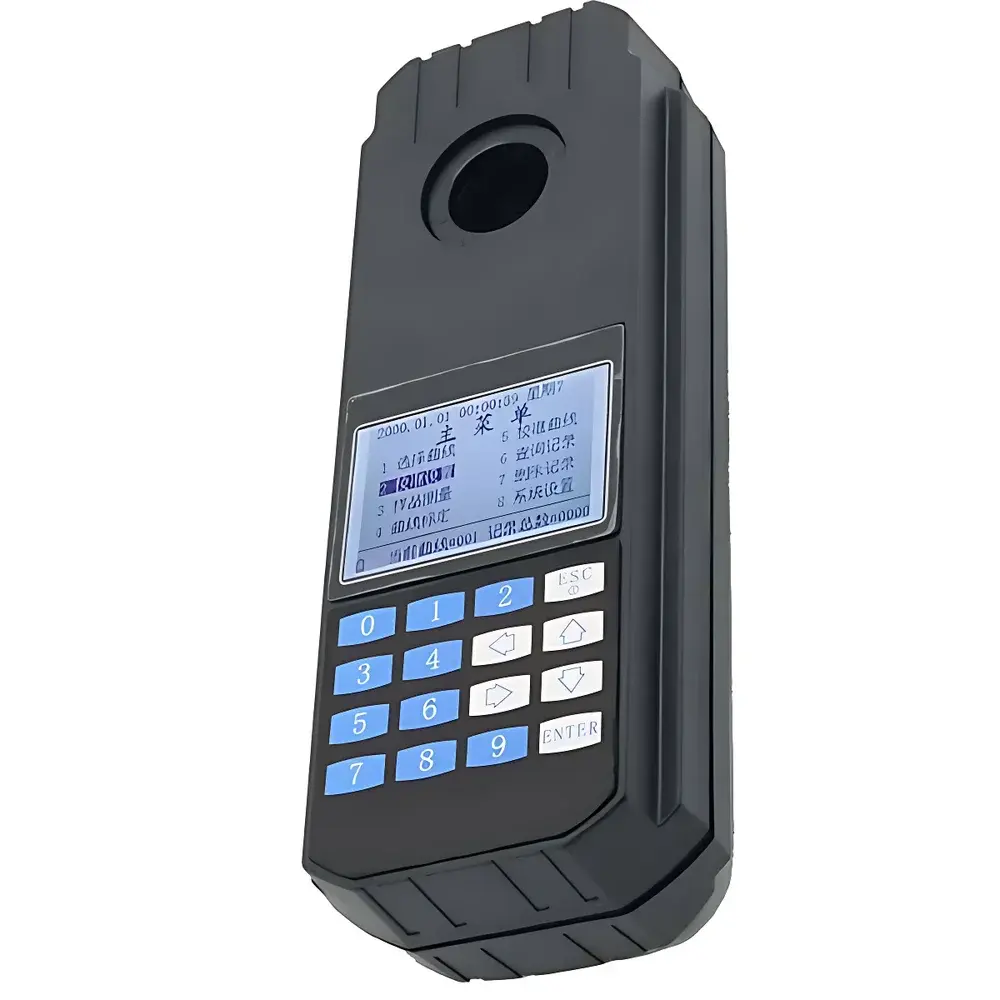
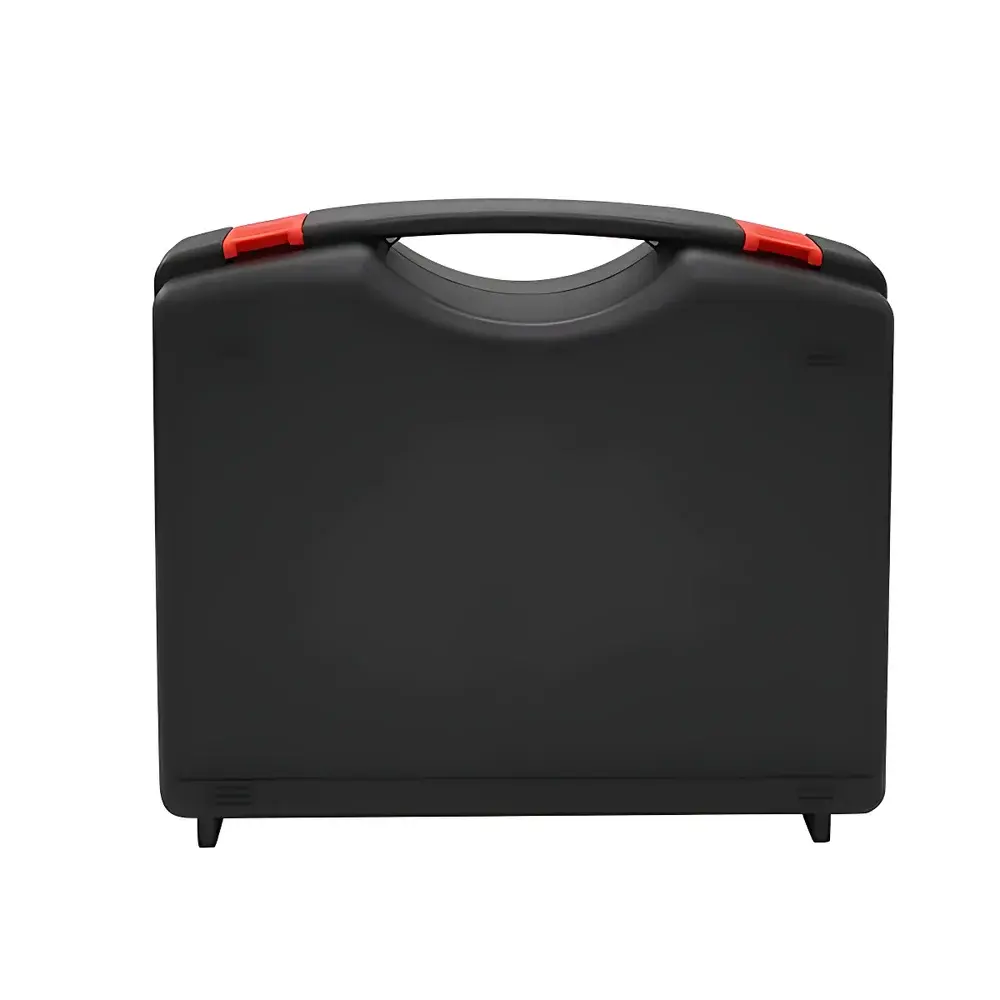
Shenchanghong PCHCR6-140 Portable Hexavalent Chromium (Cr(VI)) Photometer
| Brand | Shenchanghong |
|---|---|
| Origin | Shenzhen, China |
| Manufacturer Type | Direct Manufacturer |
| Instrument Type | Portable |
| Detection Principle | Spectrophotometric (Absorption at 540 nm) |
| Target Analyte | Chromium (VI) |
| Measurement Range | 0.00–1.00 mg/L |
| Accuracy | ±5% of Full Scale |
| Repeatability | ≤3% RSD |
| Resolution | 0.00 mg/L |
| Response Time | 20 min per sample |
| Power Supply | 4 × AA batteries (up to 6 months standby) |
| Dimensions | 80 × 230 × 55 mm |
| Weight | 500 g |
| Environmental Operating Range | 5–40 °C, ≤85% RH |
| Protection Rating | IP65 |
| Data Storage | 20 calibration curves + 199 timestamped results (concentration, absorbance, transmittance with YYYY-MM-DD hh:mm:ss) |
Overview
The Shenchanghong PCHCR6-140 is a field-deployable, battery-powered photometer engineered for quantitative determination of hexavalent chromium (Cr(VI)) in aqueous environmental samples—primarily surface water, groundwater, wastewater effluents, and drinking water sources. It operates on the established spectrophotometric principle: Cr(VI) reacts with 1,5-diphenylcarbazide under acidic conditions to form a stable violet-colored complex with maximum absorbance at 540 nm. The instrument measures absorbance via a high-stability optical path and converts it to concentration using pre-programmed or user-defined calibration curves. Designed for compliance with standard methods including EPA Method 7196A and ISO 11084:1994, the PCHCR6-140 delivers trace-level quantification within the regulatory range relevant to WHO, EU Drinking Water Directive, and China’s GB/T 5750.6–2023 requirements.
Key Features
- High-integrity optical architecture featuring a long-life (100,000-hour), high-luminance imported LED source coupled with a narrow-band interference filter centered at 540 nm—minimizing spectral drift and ambient light interference.
- Embedded 16-bit low-power microcontroller enabling precise analog-to-digital conversion, temperature-compensated signal processing, and extended battery life (up to 6 months in standby mode).
- Rugged handheld form factor constructed from impact-resistant ABS polymer with IP65-rated ingress protection—certified against dust ingress and water jets, suitable for uncontrolled outdoor environments.
- Integrated data logging system storing up to 20 user-editable calibration curves and 199 full measurement records, each stamped with complete UTC timestamp (year, month, day, hour, minute, second), absorbance, transmittance, and derived Cr(VI) concentration (mg/L).
- Ergonomic design with intuitive single-button navigation, backlit LCD display, and integrated carry handle—optimized for one-handed operation wearing gloves in field conditions.
Sample Compatibility & Compliance
The PCHCR6-140 is validated for use with clarified, non-turbid aqueous matrices meeting standard pretreatment criteria: samples must be filtered (0.45 µm membrane), pH-adjusted if necessary, and free of strong oxidants or reducing agents that interfere with the diphenylcarbazide reaction. It complies with methodological requirements of national and international standards including GB/T 5750.6–2023 (China), EPA 7196A (U.S.), and ISO 11084:1994 (International). While not inherently 21 CFR Part 11-compliant, its audit-trail-capable data storage supports GLP-aligned field documentation when paired with controlled SOPs and manual logbook cross-referencing. No external PC interface is required for routine operation; however, optional USB export enables traceable data transfer for QA/QC review.
Software & Data Management
The device runs firmware with embedded calibration management logic supporting both factory-default and user-generated curves (linear or polynomial). All calibration parameters—including slope, intercept, correlation coefficient (r²), and validity date—are stored non-volatilely. Each measurement record includes raw absorbance (A), percent transmittance (%T), calculated concentration (mg/L), and full timestamp—enabling retrospective verification and statistical evaluation (e.g., control charting, recovery assessment). Data export is supported via optional USB-C adapter (sold separately); exported CSV files conform to ISO/IEC 17025 documentation requirements for environmental testing laboratories. Firmware updates are performed offline via SD card to maintain field independence and cybersecurity integrity.
Applications
- Regulatory monitoring of Cr(VI) discharge limits at industrial outfalls (e.g., electroplating, leather tanning, pigment manufacturing).
- Field screening of contaminated sites during Phase I/II environmental site assessments (ESAs) and brownfield investigations.
- Emergency response testing following suspected chromium spills or leaching events near landfills or chromite ore processing residues (COPR) deposits.
- Compliance verification for municipal water utilities performing routine Cr(VI) surveillance per national drinking water standards.
- Educational and training applications in environmental science laboratories requiring robust, low-maintenance instrumentation for method validation exercises.
FAQ
What is the detection limit of the PCHCR6-140 for Cr(VI)?
The instrument achieves a practical quantitation limit (PQL) of 0.02 mg/L based on a signal-to-noise ratio ≥10 and three times the standard deviation of blank measurements—within the stated 0.00–1.00 mg/L linear range.
Can the PCHCR6-140 measure total chromium?
No. This instrument is specifically optimized for Cr(VI) via the selective diphenylcarbazide reaction. Total chromium requires prior oxidation of Cr(III) to Cr(VI) using UV digestion or persulfate treatment, which is outside the scope of this portable platform.
Is reagent kit compatibility standardized across batches?
Yes. All reagents supplied by Shenchanghong undergo lot-specific certification for molar absorptivity (ε₅₄₀) and shelf-life stability (24 months unopened at 2–8 °C), with batch-specific calibration offsets programmable into the device.
How is instrument performance verified in the field?
A certified reference material (CRM) solution (e.g., NIST SRM 3142a or equivalent Cr(VI) standard traceable to NMI) is recommended for daily verification; deviation beyond ±5% F.S. triggers recalibration or troubleshooting per the included QC checklist.
Does the device support multi-point calibration?
Yes. Users may define up to 8-point calibration curves using certified standard solutions; the firmware automatically calculates and validates linearity (r² ≥ 0.999) and stores all coefficients with metadata.







