
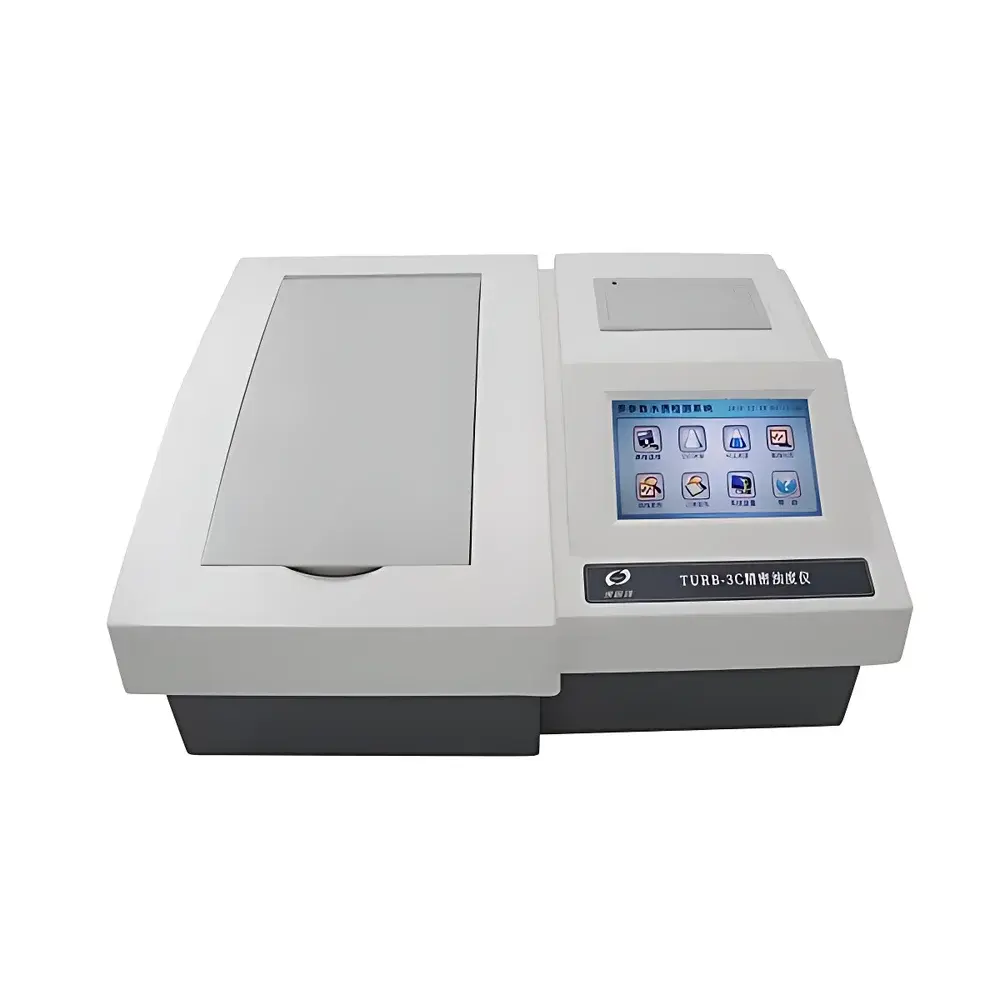
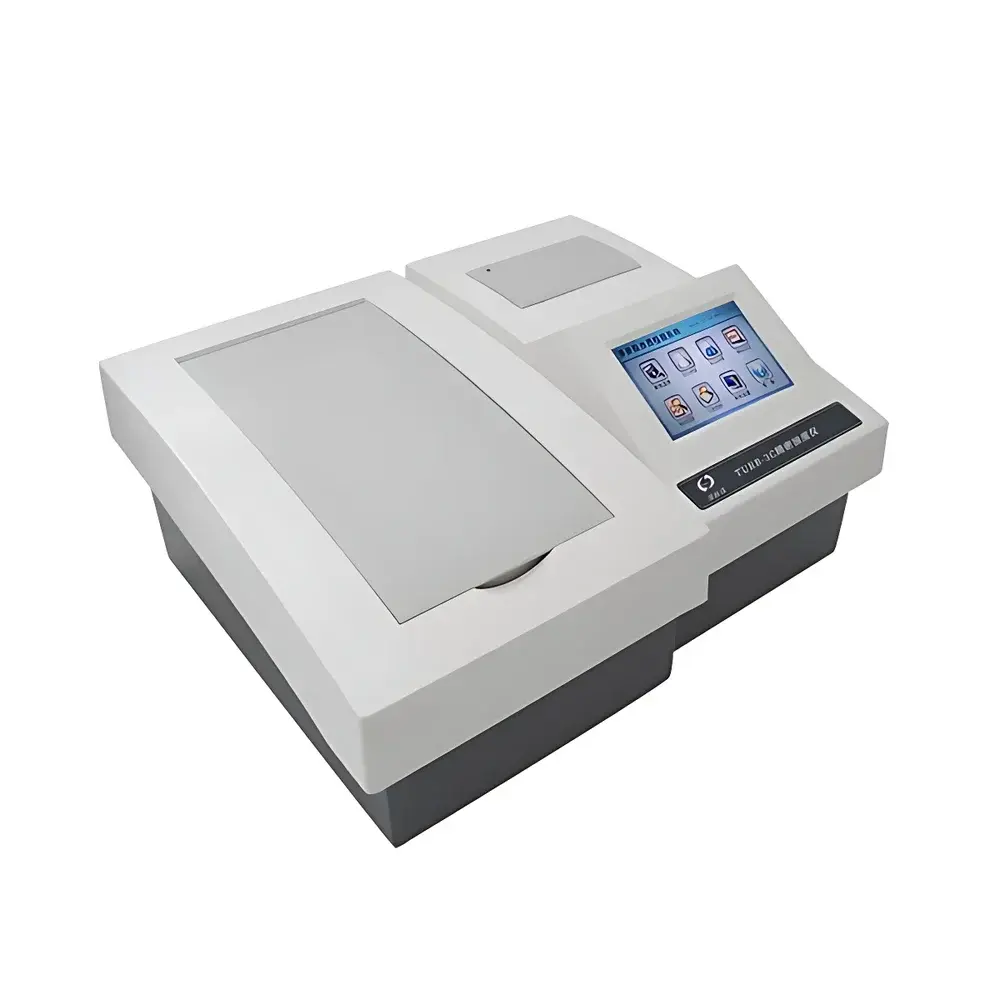
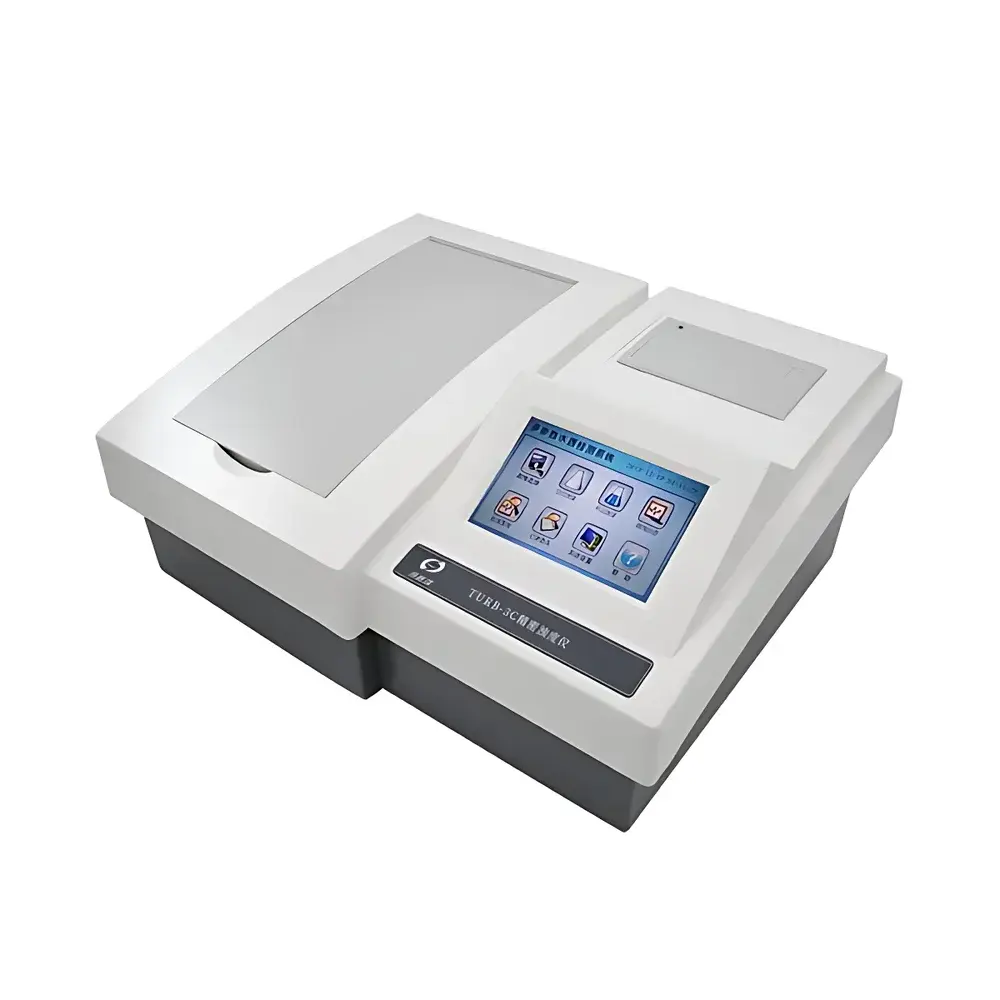
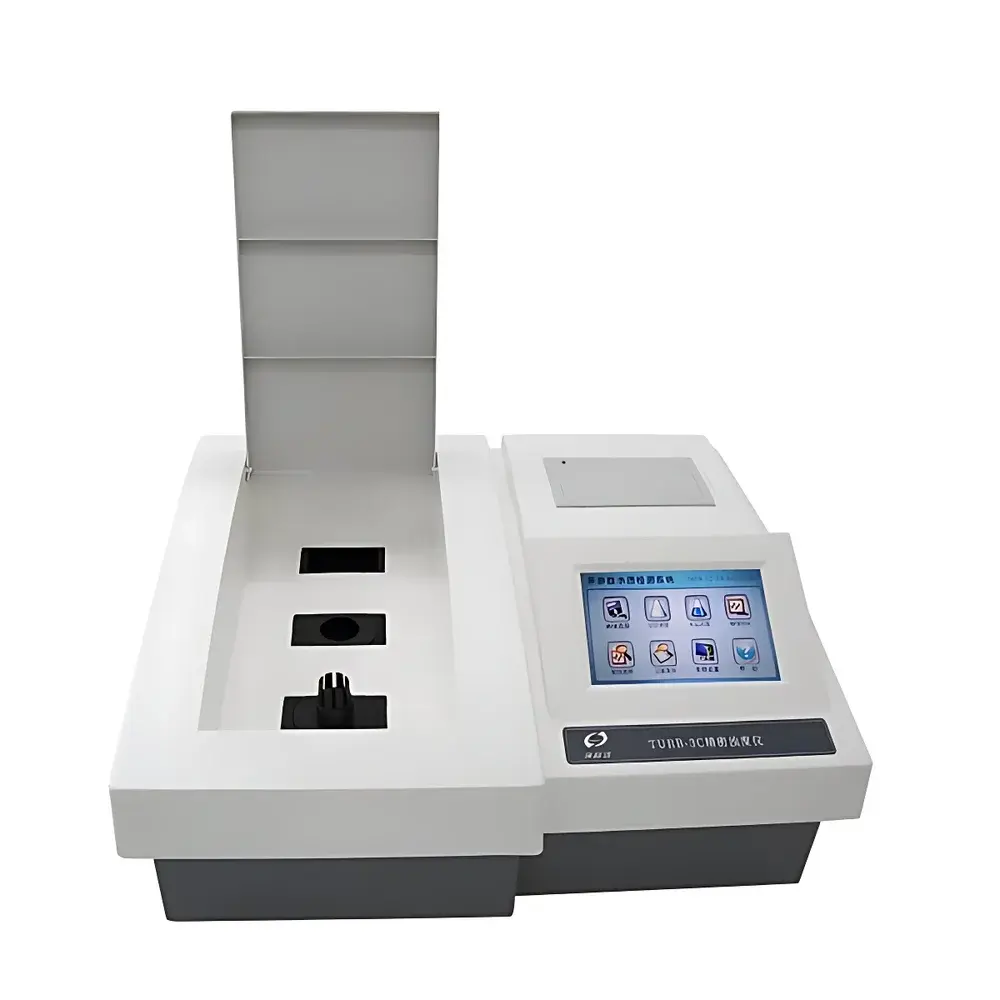
Shenchanghong TURB-3C Precision Turbidimeter
| Brand | Shenchanghong |
|---|---|
| Origin | Guangdong, China |
| Manufacturer Type | Direct Manufacturer |
| Country of Origin | China |
| Model | TURB-3C |
| Pricing | Available Upon Request |
| Measurement Range | 0–400 NTU |
| Accuracy | ≤ ±2% FS |
| Repeatability | ≤ ±2% FS |
| Minimum Resolution | 0.01 NTU |
| Drift | < 0.1 NTU/h |
| Dimensions | 400 mm × 310 mm × 158 mm |
| Weight | 5 kg |
| Operating Temperature | 5–40 °C |
| Relative Humidity | ≤70% RH |
| Power Supply | AC (220 ±10%) V, 50 Hz |
| Display | 5-inch color TFT touchscreen with bilingual (Chinese/English) UI |
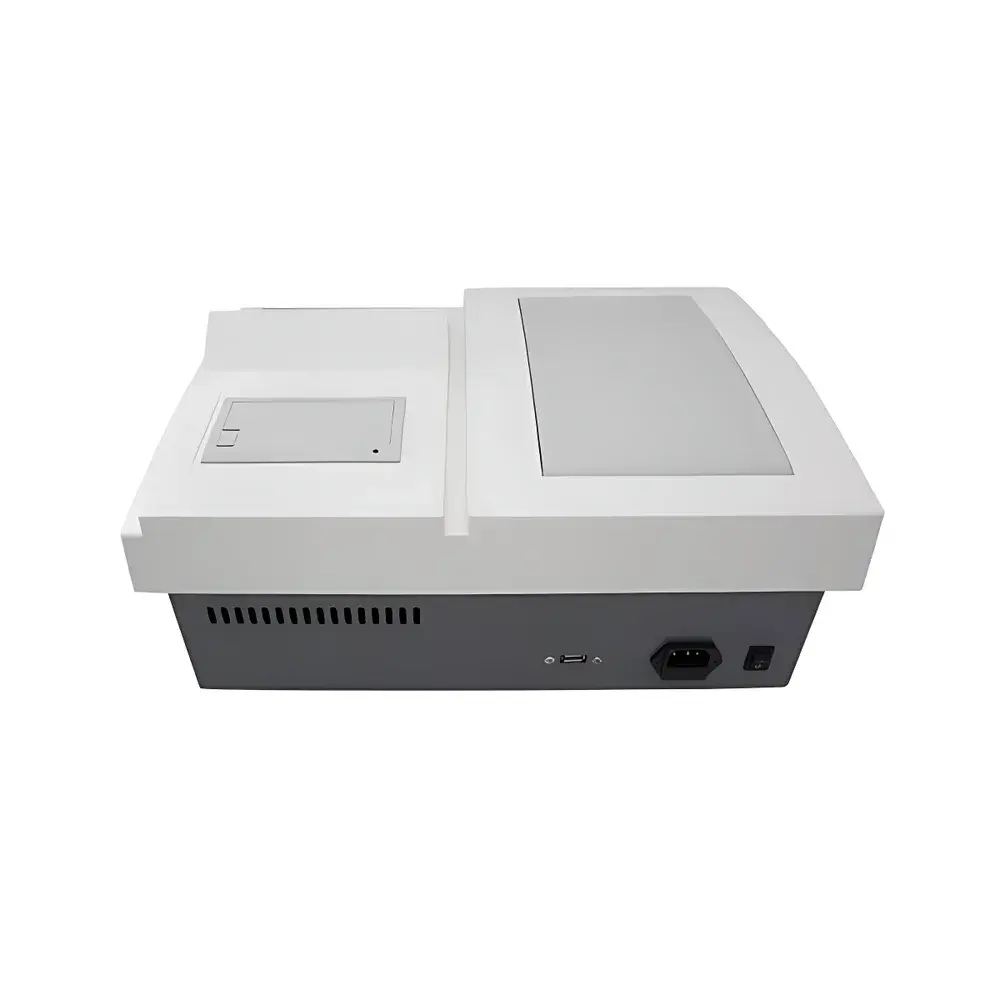
| Data Interface | USB port for data export and PC connectivity |
| Calibration | Onboard self-calibration function |
| Memory Capacity | 300 calibration curves, 1,000 measurement records (non-volatile) |
| Security | Password-protected system settings and startup |
| Recovery | One-click system restore |
| Optical System | High-stability imported LED light source with narrow-band interference filter |
Overview
The Shenchanghong TURB-3C Precision Turbidimeter is a laboratory-grade optical instrument engineered for accurate, reproducible turbidity measurement in accordance with ISO 7027 and EPA Method 180.1 principles. It employs the nephelometric technique—measuring the intensity of scattered light at 90° relative to the incident beam—using a high-luminance, long-life LED source and a precision narrow-band optical filter centered at 850 nm. This design minimizes spectral interference from sample color or ambient light, ensuring compliance with international standards for drinking water, wastewater, and process water quality monitoring. The instrument operates on the principle that suspended particles in aqueous samples scatter incident light proportionally to their concentration and size distribution, enabling quantification in Nephelometric Turbidity Units (NTU). Its robust architecture supports continuous operation after a 30-minute warm-up period under controlled environmental conditions (5–40 °C, ≤70% RH), making it suitable for routine QC labs, municipal water treatment facilities, and environmental testing centers requiring GLP-aligned instrumentation.
Key Features
- 5-inch full-color TFT capacitive touchscreen with intuitive bilingual (English/Chinese) graphical interface and responsive navigation
- Integrated thermal printer for immediate hardcopy output of measurement results, calibration logs, and system reports
- USB 2.0 interface compliant with standard mass-storage class protocols—enables direct file transfer of measurement records and calibration curves to Windows/macOS/Linux PCs without proprietary drivers
- Onboard self-calibration routine using factory-traceable standard suspensions (e.g., Formazin or StablCal®), mitigating long-term drift and supporting daily verification per ISO/IEC 17025 internal quality control requirements
- Non-volatile flash memory storing up to 300 user-defined calibration curves and 1,000 timestamped measurement records—including date, time, operator ID (if assigned), NTU value, and temperature compensation flag
- Multi-layer security architecture: password protection for system configuration, calibration access, and data deletion functions—supports role-based operational integrity in regulated environments
- One-click system recovery restores firmware, factory defaults, and UI language settings without external tools or service intervention
- Optomechanical housing fabricated from injection-molded ABS with UV-stabilized and chemical-resistant surface finish—designed for durability in humid or reagent-exposed lab environments
- Low-power 16-bit microcontroller platform ensures stable real-time signal processing, minimal thermal noise, and extended service life under continuous duty cycles
Sample Compatibility & Compliance
The TURB-3C accepts standard 25-mm round glass or quartz cuvettes (10-mm path length) and accommodates samples with turbidity values spanning 0–400 NTU—covering raw surface water, clarified effluent, filtered potable water, and low-turbidity ultrapure water applications. It complies with optical alignment tolerances specified in ISO 7027:2016 and exhibits negligible interference from absorbance up to 0.1 AU at 850 nm. Instrument validation documentation includes traceable calibration certificates aligned with NIST-traceable Formazin standards. While not pre-certified for FDA 21 CFR Part 11, its audit-ready data logging structure—including immutable timestamps, operator identifiers, and version-stamped calibration events—facilitates integration into GMP/GLP workflows when paired with validated laboratory information management systems (LIMS).
Software & Data Management
No dedicated desktop software is required; data export occurs via standard USB mass storage mode—records are saved as CSV files with UTF-8 encoding and ISO 8601 timestamps (YYYY-MM-DD HH:MM:SS). Each exported dataset includes column headers: “Record_ID”, “Date_Time”, “NTU_Value”, “Temperature_C”, “Calibration_ID”, “Operator_Code”, and “Instrument_Serial”. Internal firmware supports firmware updates via USB drive, with SHA-256 checksum verification. All stored data persists through power loss or unexpected shutdowns due to EEPROM-backed memory architecture. Optional third-party LIMS integration is achievable using generic serial or USB-HID emulation profiles.
Applications
- Drinking water quality assurance per WHO Guidelines and national regulatory frameworks (e.g., China’s GB 5749-2022)
- Wastewater treatment plant effluent monitoring in compliance with discharge permits (e.g., EU Urban Wastewater Treatment Directive)
- Pharmaceutical water system validation (PW, WFI) where turbidity serves as an indicator of particulate contamination
- Educational laboratories conducting ASTM D6695 or APHA Standard Methods 2130B experiments
- Environmental field labs performing rapid screening of lake, river, and reservoir samples during seasonal bloom assessments
- Industrial process water monitoring in food & beverage, semiconductor, and power generation facilities
FAQ
Does the TURB-3C support automatic temperature compensation?
Yes—it integrates a calibrated NTC thermistor within the sample chamber, applying algorithmic correction based on the temperature-dependent scattering coefficient of Formazin reference standards.
Can calibration curves be exported or backed up externally?
Yes—calibration curve parameters (slope, intercept, R², date stamp) are included in USB-exported CSV files and can be archived independently of measurement records.
Is the instrument compatible with non-Formazin standards such as AMCO-AE or StablCal?
Yes—users may manually enter slope/intercept values derived from alternative primary standards; the system retains all entered coefficients with metadata tagging.
What maintenance is required beyond routine cleaning and calibration verification?
Annual optical path inspection and LED intensity verification are recommended; no consumable parts (e.g., lamps or filters) require scheduled replacement within the first five years of operation.
How does the one-click restore function affect stored measurement data?
System restore resets configuration parameters and UI settings only—it preserves all measurement records and calibration curves stored in non-volatile memory.
Related Products







