
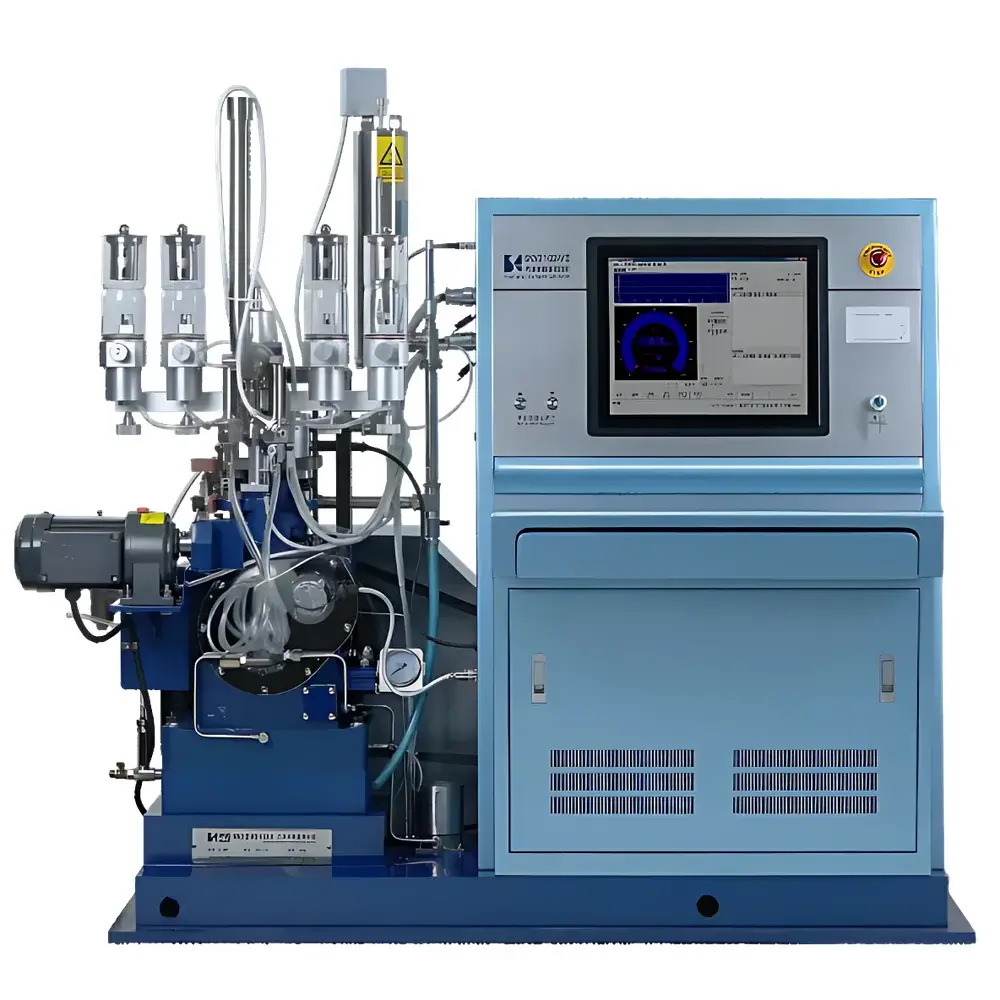
Shenkai SKY2102-VII Gasoline Octane Number Analyzer (Motor and Research Method)
| Brand | Shenkai |
|---|---|
| Origin | Shanghai, China |
| Model | SKY2102-VII |
| Measurement Range | 40–120 O.N. |
| Test Methods | ASTM D2699 (RON), ASTM D2700 (MON), GB/T 5487, GB/T 503, IP 236, IP 237, EN ISO 5163, EN ISO 5164 |
| Engine Type | Single-cylinder, variable compression ratio (4:1–18:1) |
| Rated Speed | 600 rpm (RON), 900 rpm (MON) |
| Cylinder Bore | 82.55 mm |
| Stroke | 114.30 mm |
| Displacement | 0.61 L |
| Cooling System | Stainless-steel jacketed water tower with dual-circuit air conditioner (ice tower) |
| Ignition | Hall-effect magnetic sensor ignition (repeatability < ±0.2 O.N.) |
| Detonation Detection | Magnetostrictive knock sensor |
| Data Interface | USB, LIMS-compatible output, optional Wi-Fi/printer |
| Power Supply | AC 380 V ±10%, 50 Hz / AC 220 V ±10%, 50 Hz |
| Dimensions | 1650 × 820 × 1480 mm (W×D×H) |
| Net Weight | 900 kg |
| Operating Environment | 5–35 °C, 20–90% RH |
| Compliance | Fully aligned with ASTM, ISO, IP, and GB test standards for octane rating |
Overview
The Shenkai SKY2102-VII Gasoline Octane Number Analyzer is a precision-engineered, single-cylinder, variable-compression-ratio engine-based instrument designed for the standardized determination of research octane number (RON) and motor octane number (MON) of gasoline fuels. It operates on the fundamental principle of controlled combustion detonation measurement under defined thermodynamic conditions—replicating the physical behavior of spark-ignition engines in accordance with internationally recognized reference methods. Unlike correlation-based spectroscopic or electrochemical surrogates, this analyzer delivers primary-standard-grade results by directly measuring knock intensity as a function of compression ratio, engine speed, intake mixture temperature, and ignition timing. Its dual-method capability enables rapid switching between RON (600 rpm, 52 °C intake air) and MON (900 rpm, 38 °C intake air + preheated mixture) protocols without hardware reconfiguration—ensuring traceability to ASTM D2699, ASTM D2700, GB/T 5487, GB/T 503, IP 236/237, and EN ISO 5163/5164.
Key Features
- Variable compression ratio engine (4:1 to 18:1) fabricated from high-strength cast iron with precision-machined cylinder bore (82.55 mm) and stroke (114.30 mm), delivering stable thermal-mechanical response across full octane range (40–120 O.N.)
- Hall-effect magnetic ignition system with real-time spark advance control—providing < ±0.2 O.N. repeatability per ASTM D2700 Annex A4 requirements
- Magnetostrictive detonation sensor optimized for signal-to-noise ratio and electromagnetic immunity, ensuring consistent knock waveform capture under varying load and ambient conditions
- Four-cup drop-level carburetor with micro-adjustable float chamber—enabling precise, reproducible fuel-air mixture preparation and maximum knock level identification
- Stainless-steel jacketed cooling tower and dual-circuit air conditioning (ice tower) system—maintaining cylinder jacket temperature at 100 °C ±1.5 °C and supporting stable heat rejection during extended testing cycles
- Integrated environmental compensation: real-time barometric pressure correction via embedded algorithm and calibrated curve—eliminating manual look-up tables per ASTM D2699 Section 7.2.3
- Industrial 17-inch Windows-based touchscreen HMI with proprietary software; compliant workflow navigation, audit-trail-enabled test sequencing, and auto-saved raw sensor logs (time-stamped, user-ID tagged)
- Robust mechanical architecture: two-stage oil filtration with auxiliary preheating, laser displacement-controlled piston positioning with hard-limit safety interlock, and segregated power/signal cabling to suppress EMI
Sample Compatibility & Compliance
The SKY2102-VII accepts neat gasoline samples—including automotive unleaded gasoline, oxygenated blends (e.g., MTBE, ethanol), and aviation gasoline (avgas)—in accordance with ASTM D1655 and DEF STAN 91-91 specifications. It excludes diesel, jet fuel, or non-volatile hydrocarbons. All operational parameters—including intake air temperature, lubricant pressure (172–207 kPa), coolant temperature (100 °C ±1.5 °C), and valve lash (0.20 mm ±0.025 mm)—are actively monitored and logged to verify conformance with method-defined tolerances. The system supports GLP-compliant data integrity through timestamped digital records, electronic signatures (per 21 CFR Part 11 readiness), and configurable LIMS export (ASTM E1482, ISO/IEC 17025-aligned metadata tagging). Routine calibration verification uses certified primary reference fuels (PRFs) traceable to NIST SRM 2710a and ISO 5164 Annex B.
Software & Data Management
The embedded Windows OS hosts a purpose-built application developed in C# with deterministic real-time I/O handling. It implements fully automated test sequences per ASTM D2699/D2700—guiding operators through fuel priming, compression ratio ramping, knock threshold detection, and interpolation against built-in PRF calibration curves. All sensor inputs (coolant temp, lube oil temp, intake air temp, RPM, knock amplitude, spark advance) are sampled at ≥1 kHz and stored in HDF5 format with SHA-256 checksums. Data export supports CSV, XML (ASTM E1394), and direct LIMS push via TCP/IP or USB mass storage. Audit trails record operator login/logout, parameter changes, calibration events, and emergency stop triggers—with immutable timestamps and role-based access control. Firmware updates are signed and verified prior to installation.
Applications
This analyzer serves as a reference-grade platform in refinery QC laboratories, fuel certification bodies (e.g., CNAS-accredited labs), petroleum standards development organizations (e.g., SAC/TC 280), and OEM engine development facilities. Typical use cases include: batch release testing of reformulated gasoline; evaluation of antiknock additive efficacy (e.g., MMT, ferrocene); validation of surrogate fuel formulations for combustion modeling; regulatory compliance reporting for national fuel specifications (e.g., China VI, Euro 5); and interlaboratory proficiency testing under ISO/IEC 17043. Its mechanical fidelity makes it suitable for method transfer studies where correlation instruments require periodic verification against primary engine-based standards.
FAQ
Does the SKY2102-VII support both RON and MON testing on a single platform?
Yes—hardware configuration remains identical; method selection is executed via software-controlled actuation of the combined pulley system and heater assembly, enabling sub-5-minute transition between RON and MON modes.
Is atmospheric pressure compensation automated?
Yes—the integrated barometric sensor feeds real-time data into a validated compensation algorithm per ASTM D2699 Section 7.2.3, dynamically adjusting test parameters without manual intervention.
What maintenance intervals are recommended for long-term stability?
Oil filter replacement every 200 hours; spark plug inspection every 500 hours; carburetor cleaning every 1,000 hours; annual calibration using certified PRFs and NIST-traceable thermocouples.
Can test data be exported to enterprise LIMS systems?
Yes—via configurable TCP/IP socket interface or USB drive export in ASTM E1394-compliant XML format, including full metadata (operator ID, instrument serial, environmental logs, raw waveforms).
Is the system compliant with FDA 21 CFR Part 11 requirements?
The software architecture supports electronic signatures, audit trail generation, and data immutability—meeting foundational technical controls; full Part 11 implementation requires site-specific validation documentation and procedural SOPs.



