
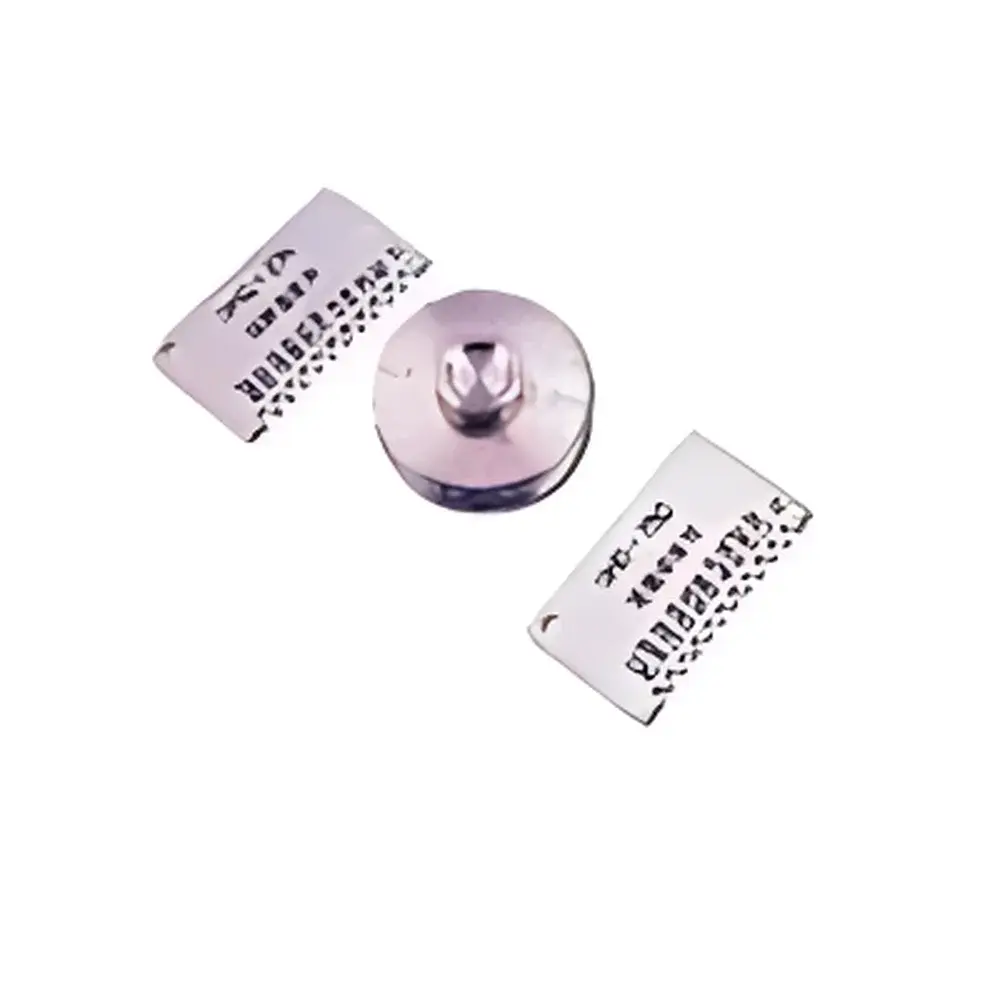
SHG Series Wet Film Thickness Gauge (Comb-Type)
| Origin | Shanghai, China |
|---|---|
| Manufacturer Type | Authorized Distributor |
| Product Origin | Domestic (China) |
| Model | SHG-100, SHG-200, SHG-700, SHG-750, YQH-200, YQH-700 |
| Measuring Range | 10–100 µm, 20–200 µm, 50–750 µm, 250–700 µm, 0–100 µm, 200–700 µm |
| Dimensions | 65 × 36 × 1.5 mm, 65 × 43 × 1.5 mm, Φ50 × 27 mm |
Overview
The SHG Series Wet Film Thickness Gauge (Comb-Type) is a precision-engineered manual instrument designed for immediate, non-destructive measurement of wet film thickness during the application of liquid coatings—including architectural paints, industrial enamels, automotive primers, marine antifoulings, and protective polymer coatings. Based on the comb-gauge principle, it operates via direct physical contact: the gauge is placed perpendicularly onto a freshly applied, uncured coating surface; protruding teeth—each marked with incremental depth values—penetrate the wet film until the base plate rests flush against the substrate. The highest tooth fully embedded in the film indicates the wet film thickness (WFT), expressed in micrometers (µm). This method complies with internationally recognized test standards including ASTM D1212 – Standard Test Methods for Measurement of Wet Film Thickness of Organic Coatings and ISO 2808:2019 – Paints and Varnishes — Determination of Film Thickness. Its simplicity, portability, and lack of power requirements make it indispensable for field technicians, QC inspectors, and production line supervisors requiring rapid verification prior to curing or drying.
Key Features
- Multiple calibrated models covering broad wet film thickness ranges: SHG-100 (10–100 µm), SHG-200 (20–200 µm), SHG-700 (250–700 µm), SHG-750 (50–750 µm), YQH-200 (0–100 µm), and YQH-700 (200–700 µm) — enabling selection based on specific coating viscosity and application method (e.g., brush, roller, spray).
- High-precision laser-cut stainless steel construction ensures dimensional stability, corrosion resistance, and long-term repeatability across repeated use in humid or solvent-rich environments.
- Ergonomic low-profile design: flat-base variants (65 × 36 × 1.5 mm and 65 × 43 × 1.5 mm) provide stable registration on planar substrates; circular YQH-series gauges (Φ50 × 27 mm) offer enhanced maneuverability on curved or confined surfaces.
- Permanently etched depth markings with high-contrast black-on-silver finish ensure legibility under variable lighting conditions—including factory floor, outdoor scaffolding, or shipyard decks.
- No calibration required prior to use; traceable to national metrological standards via manufacturer’s certificate of conformity (available upon request).
Sample Compatibility & Compliance
The SHG comb gauge is compatible with all Newtonian and mildly non-Newtonian liquid coatings exhibiting sufficient cohesion to retain tooth impressions without sagging or rebound. It is routinely used for waterborne acrylics, solvent-based epoxies, polyurethanes, alkyds, and zinc-rich primers. While not suitable for highly thixotropic gels or ultra-low-viscosity lacquers (<15 cP), its performance is validated per ASTM D1212 Section 5.1 (comb-type gauge procedure) and aligns with ISO 2808 Clause 6.2. All models meet CE marking requirements for general-purpose measuring instruments and are documented for inclusion in GLP-compliant quality records. For regulated industries (e.g., aerospace finishing per AMS 2400 or pharmaceutical cleanroom coatings), the gauge supports audit-ready documentation when paired with controlled logbooks and operator training records.
Software & Data Management
As a purely mechanical, analog measurement tool, the SHG Wet Film Thickness Gauge does not incorporate embedded electronics, firmware, or digital connectivity. Consequently, it requires no software installation, driver configuration, or cybersecurity validation. All readings are manually recorded—enabling seamless integration into paper-based QA checklists, LIMS entries, or Excel-based statistical process control (SPC) sheets. Optional accessories include calibrated reference shims (traceable to NIST standards) for periodic verification of tooth geometry integrity, and indexed log templates compliant with ISO 9001:2015 clause 8.5.2 (Identification and traceability). No FDA 21 CFR Part 11 compliance is applicable, as no electronic records are generated.
Applications
- Real-time adjustment of spray gun parameters (fluid pressure, fan width, pass speed) during automotive OEM paint shop operations.
- Verification of DFT (dry film thickness) prediction accuracy using standard WFT-to-DFT conversion ratios (e.g., 2.5:1 for epoxy mastic systems).
- On-site inspection of protective coatings on offshore platforms, pipelines, and wind turbine towers per NORSOK M-501 and SSPC-PA 2 protocols.
- Batch release testing in coil coating lines where wet film uniformity directly correlates with final gloss and corrosion resistance.
- Educational use in polymer science laboratories for teaching fundamental relationships between rheology, film formation, and solvent evaporation kinetics.
FAQ
How often should a comb-type wet film gauge be cleaned?
Clean after each use with lint-free cloth and compatible solvent (e.g., xylene for solvent-borne systems, isopropanol for waterborne coatings) to prevent dried residue from altering tooth geometry.
Can this gauge be used on vertical or overhead surfaces?
Yes—provided the coating exhibits adequate green strength and the gauge is held steadily perpendicular for <2 seconds; avoid dragging or tilting during placement.
Is traceable calibration available?
While the gauge itself is not field-calibratable, optional NIST-traceable verification reports (including uncertainty budgets) can be supplied by authorized metrology labs upon request.
What is the expected service life under routine industrial use?
With proper handling and cleaning, stainless steel comb gauges typically exceed 10 years of reliable service without degradation in measurement fidelity.
Does the SHG series comply with ISO/IEC 17025 requirements?
The instrument satisfies the “equipment suitability” clause (5.5.1) when used within its specified range and maintained per manufacturer guidelines; formal accreditation applies to the testing laboratory—not the gauge itself.



