
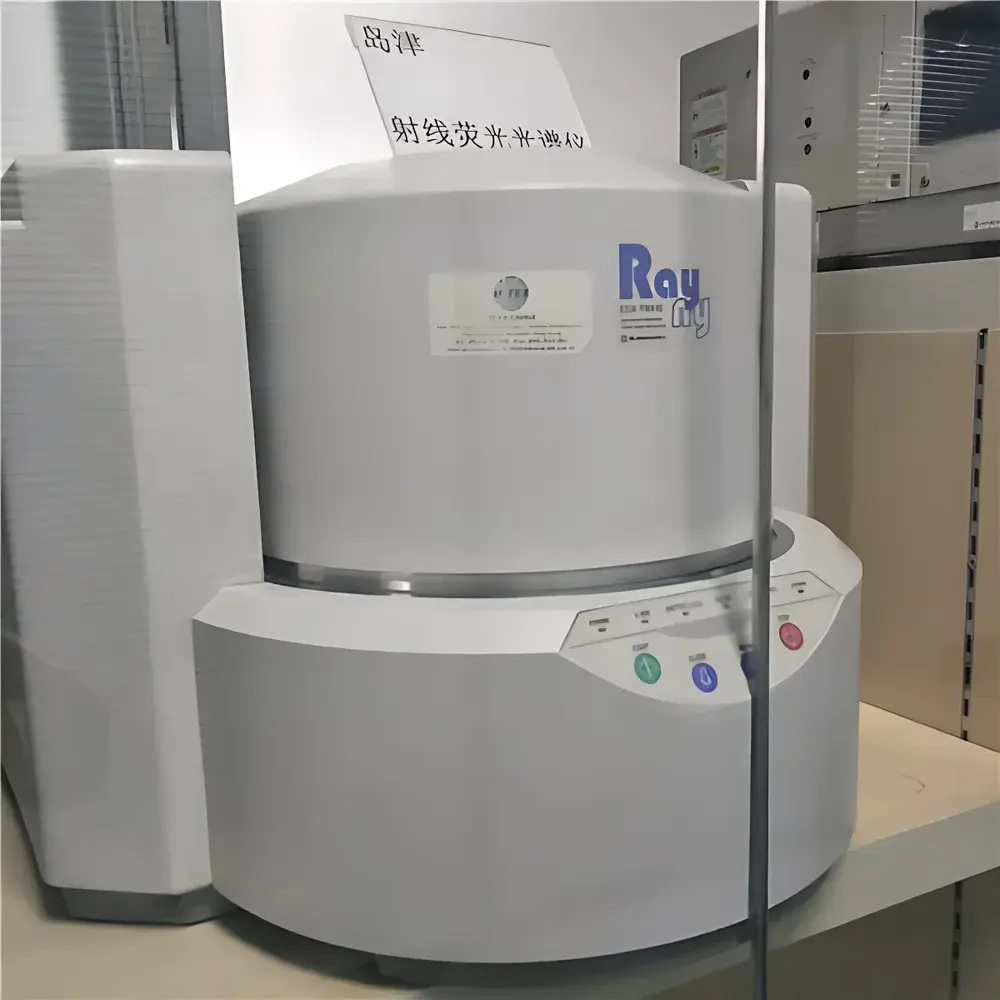
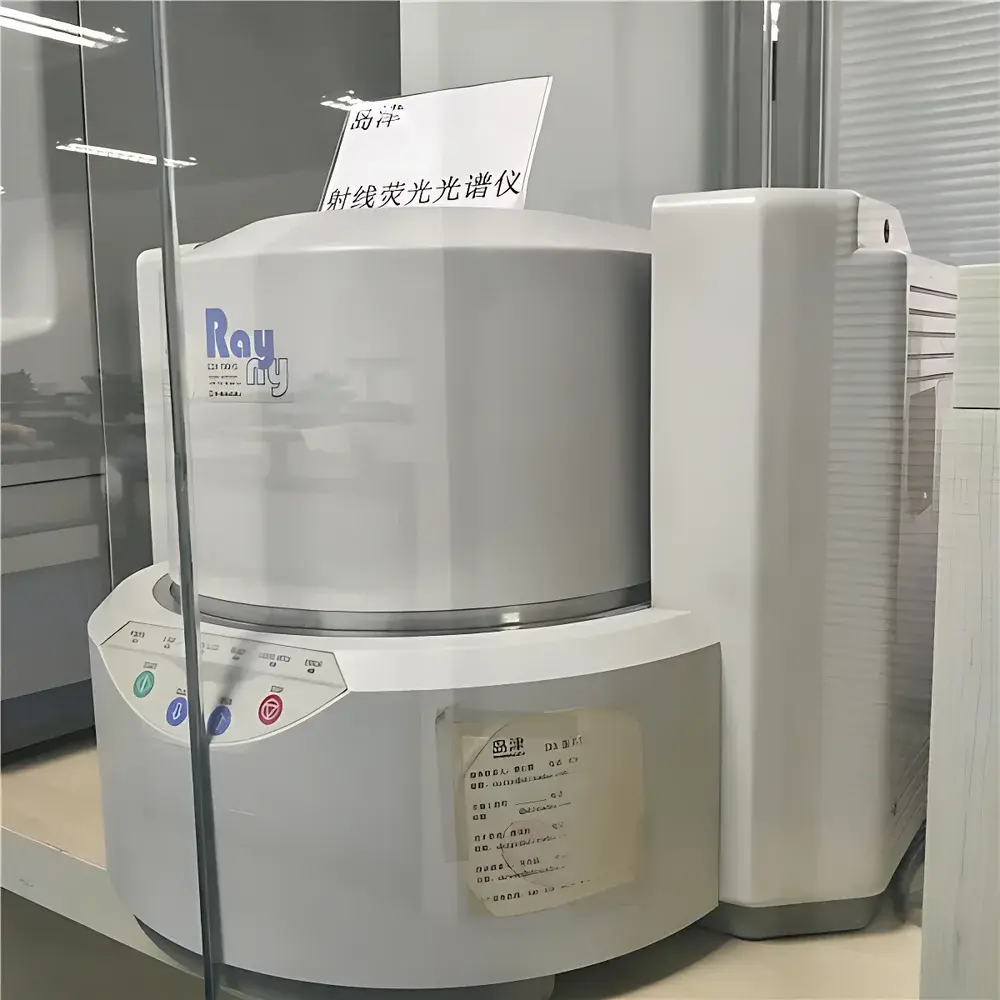
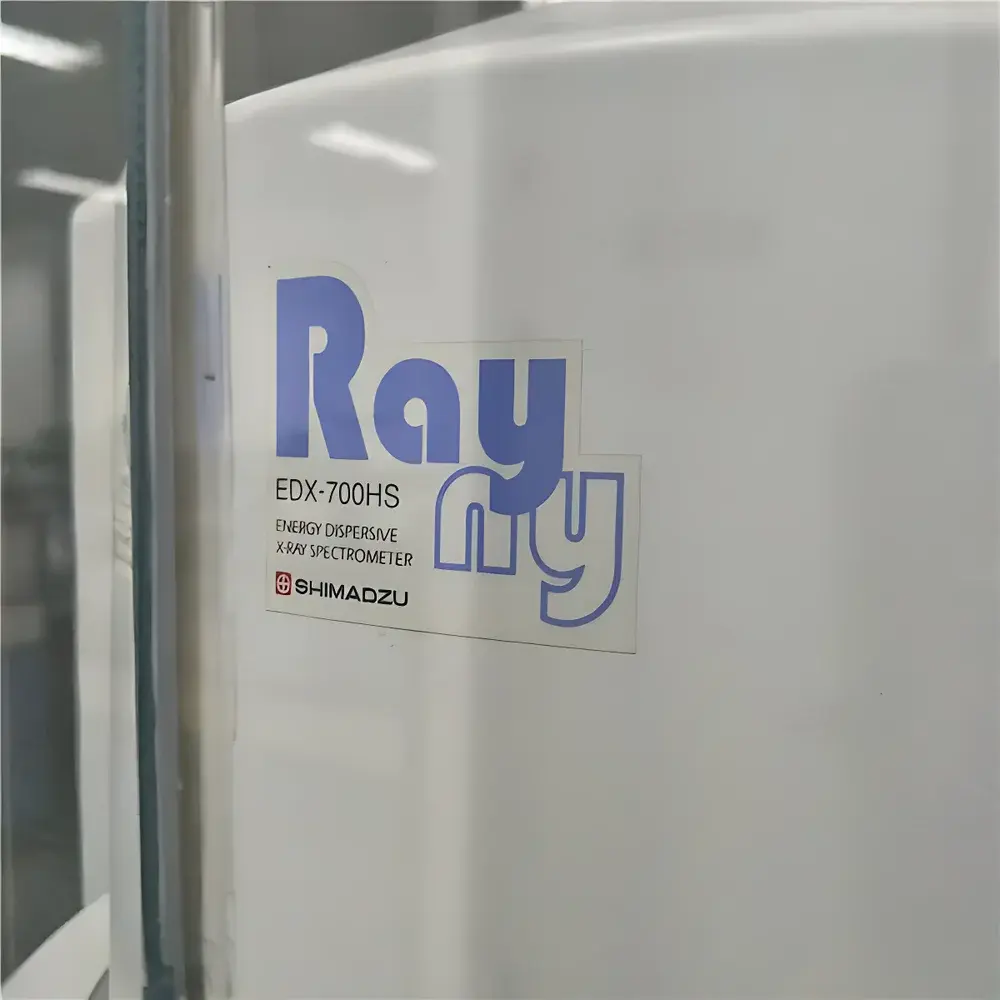
Shimadzu EDX-700HS Energy Dispersive X-Ray Fluorescence Spectrometer (Refurbished)
| Brand | Shimadzu |
|---|---|
| Origin | Japan |
| Model | EDX-700HS |
| Element Range | Na (11) to U (92) |
| Detection Range | 1 ppm – 99.99% |
| Energy Resolution | <140 eV |
| Repeatability | 0.1% |
| Configuration | Benchtop / Floor-standing |
| Application Focus | Geological & Mineralogical Analysis |
| Primary Excitation | Rh anode X-ray tube (5–50 kV, 1–1000 µA) |
| Sample Chamber | Ø300 mm × H150 mm |
| Beam Spot Size | 50 µm φ (with polycapillary lens) |
| Detector | Liquid-nitrogen-cooled Si(Li) |
| CCD Imaging | Dual-magnification optical system |
| Filter Exchange | Automated 5-position primary filter changer |
| Quantitative Methods | Fundamental Parameters (FP), Thin-Film FP, Background-corrected FP (BG-FP) |
| Mapping | Simultaneous multi-element scanning imaging |
Overview
The Shimadzu EDX-700HS is a refurbished, high-performance energy dispersive X-ray fluorescence (EDXRF) spectrometer engineered for micro-area elemental analysis in geological, mineralogical, and materials science laboratories. It operates on the principle of X-ray fluorescence emission: when a sample is irradiated with high-energy X-rays from a rhodium-target tube, inner-shell electrons are ejected from constituent atoms; subsequent electron transitions emit characteristic secondary X-rays whose energies are element-specific. The EDX-700HS leverages Shimadzu’s proprietary polycapillary X-ray focusing optics to concentrate the primary beam into a precise 50 µm diameter spot—enabling spatially resolved analysis without vacuum requirements or destructive sample preparation. Its atmospheric operation supports rapid screening of bulk rocks, ore fragments, polished sections, and heterogeneous geological specimens while maintaining detection sensitivity down to 1 ppm across the full Na–U range.
Key Features
- Polycapillary X-ray focusing lens delivering a 50 µm micro-beam for high-spatial-resolution mapping and trace-element quantification.
- Automated 5-position primary X-ray filter changer—selecting optimal filters per element group to suppress Bremsstrahlung background and enhance peak-to-background ratios.
- Liquid-nitrogen-cooled Si(Li) detector with <140 eV energy resolution at Mn Kα, ensuring minimal spectral overlap between adjacent elements (e.g., Sb L-lines vs. Pb M-lines; Br Kα vs. Pb Lα).
- Dual-magnification CCD optical imaging system enabling real-time visual correlation between sample morphology and analytical position—critical for targeting mineral inclusions, vein structures, or alteration zones in petrographic samples.
- High-stability X-ray generator (±0.01% output stability under ±10% line voltage fluctuation) with continuously adjustable kV (5–50 kV) and µA (1–1000 µA) settings, optimized for light-element excitation (e.g., Na, Mg, Al at ≤15 kV) or heavy-metal detection (e.g., Pb, U at 50 kV).
- Benchtop/floor-standing modular design accommodating samples up to Ø300 mm × 150 mm height—eliminating the need for sectioning of large drill cores, slabbed rock specimens, or industrial mineral aggregates.
Sample Compatibility & Compliance
The EDX-700HS is validated for direct analysis of solid geological matrices—including silicates, carbonates, sulfides, and oxide ores—in ambient air. Its large chamber accommodates irregularly shaped samples, polished thin sections, and unprepared field specimens. No conductive coating or vacuum pumping is required, preserving native surface chemistry and minimizing preparation artifacts. The instrument complies with JIS Z 4901:2017 and GBZ 188-2014 radiation safety standards for X-ray analytical equipment, featuring interlocked automatic shuttering and dose-controlled exposure protocols. While not certified for GLP/GMP-regulated environments out-of-the-box, its hardware architecture supports audit-ready data logging when integrated with compliant laboratory information management systems (LIMS).
Software & Data Management
Shimadzu’s proprietary analysis software provides three fundamental parameter-based quantification engines: standardless FP for unknowns, thin-film FP for layered geological coatings (e.g., weathering rinds, hydrothermal alteration halos), and BG-FP for polymer-embedded or matrix-absorbing samples. All methods include automated spectral deconvolution, peak interference correction, and matrix-effect modeling using physical constants (mass absorption coefficients, fluorescence yields). Spectral data are stored in vendor-neutral .spe format; mapping datasets export as TIFF stacks with embedded elemental concentration grids. Software supports ASTM E1621–22 (Standard Guide for XRF Elemental Analysis of Geological Samples) workflows and includes calibration verification tools aligned with ISO 18504:2016 (XRF—Quantitative analysis procedures).
Applications
- Geochemical fingerprinting of igneous, metamorphic, and sedimentary rocks via major- and trace-element profiling (SiO₂, Al₂O₃, FeO, MgO, CaO, Na₂O, K₂O, TiO₂, P₂O₅, MnO, Cr, Ni, Zn, Rb, Sr, Y, Zr, Nb, Ba, La, Ce, Nd, Th, U).
- Mineral phase identification and association analysis through elemental co-localization mapping (e.g., As–Sb–Pb correlations in sulfide-rich veins; REE partitioning in monazite vs. apatite).
- Quantitative assessment of metal contamination in soils and tailings (Cd, Pb, Hg, As, Cr(VI) surrogates) per EPA Method 6200.
- Non-destructive evaluation of archaeological ceramics, obsidian sourcing, and provenance studies using trace-element “chemical signatures.”
- Quality control of industrial minerals (e.g., kaolin whiteness index via Fe/Ti content; phosphate rock grade estimation from Ca/P ratio).
FAQ
Is the EDX-700HS suitable for light-element analysis (Na–F)?
Yes—its Rh anode tube, low-kV capability (down to 5 kV), and optimized polycapillary optics enable reliable detection of Na (11) and Mg (12) in geological matrices, though atmospheric O₂/N₂ absorption necessitates careful background modeling.
Does the system require liquid nitrogen during routine operation?
Yes—the Si(Li) detector requires continuous liquid nitrogen cooling (≤1 L/day consumption) to maintain specified energy resolution and long-term spectral stability.
Can the instrument perform depth-profiling or layer-thickness measurement?
It supports thin-film FP analysis for single-layer or bilayer structures (e.g., oxidation films on mineral surfaces), but lacks angle-resolved or variable-kV depth-sensing capabilities of dedicated TXRF or GIXRF systems.
What maintenance is required for the refurbished unit?
Annual recalibration of X-ray generator output, detector resolution verification using Mn Kα, and optical alignment checks of the polycapillary lens and CCD focus are recommended per Shimadzu Technical Bulletin EDX-700HS-MNT-2021.
Is remote operation or network integration supported?
The system features Ethernet connectivity and OPC-UA-compatible data export, allowing integration with enterprise LIMS and centralized instrument monitoring platforms under IT-administered network policies.





