
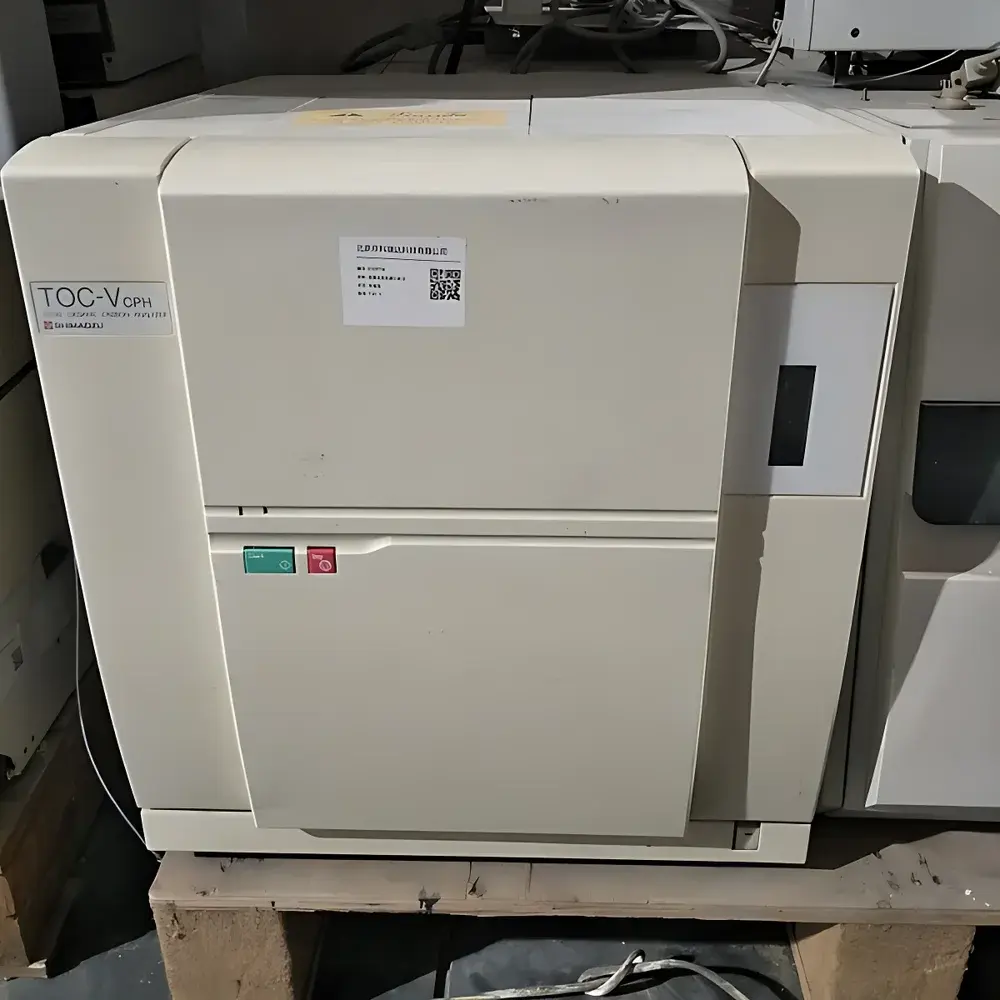
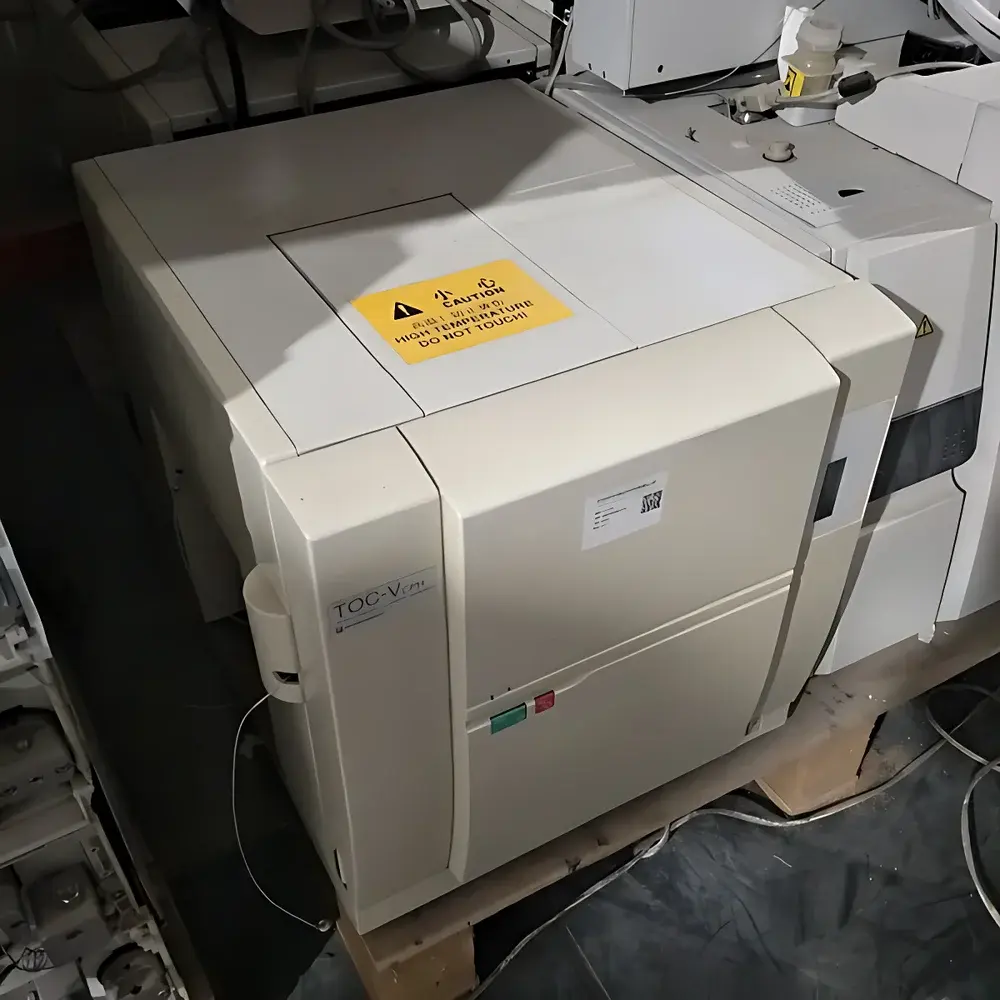
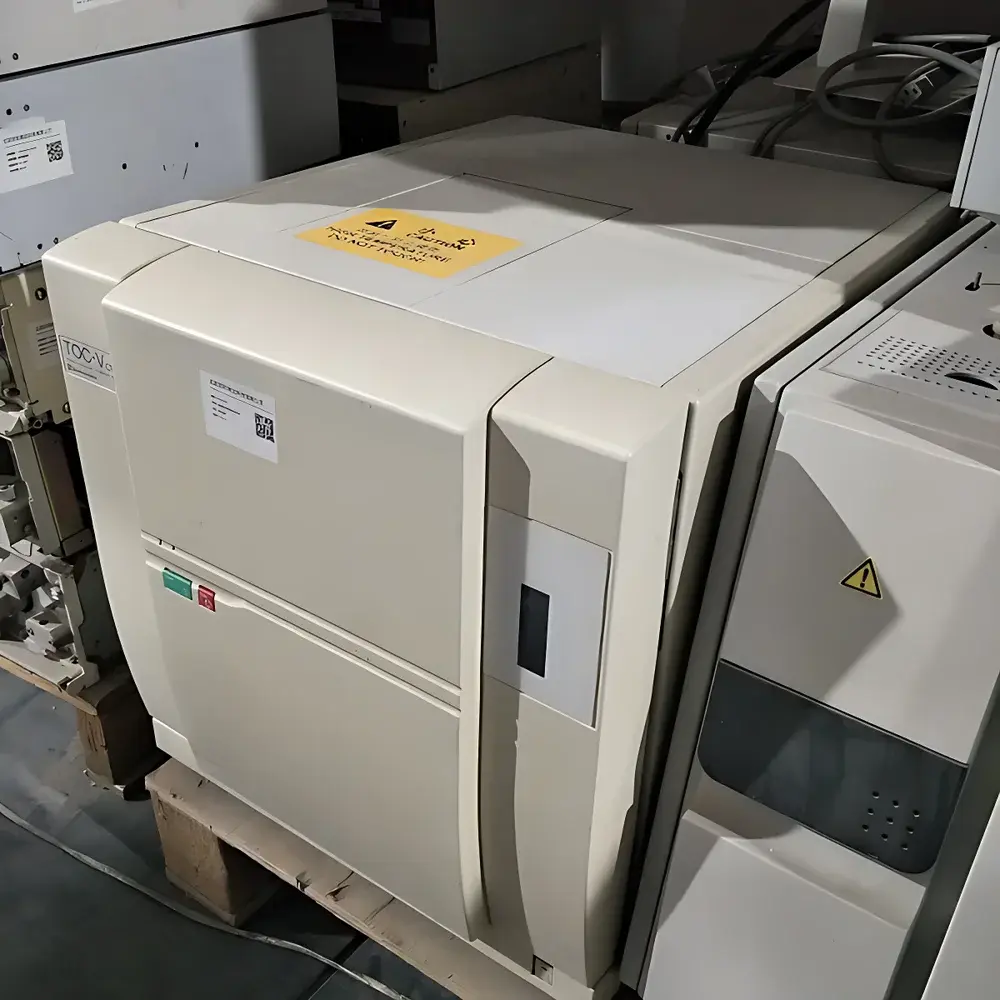
Shimadzu TOC-V Series Total Organic Carbon Analyzer (Refurbished)
| Brand | Shimadzu |
|---|---|
| Origin | Japan |
| Model | TOC-V |
| Instrument Type | Laboratory TOC Analyzer |
| Oxidation Method | High-Temperature Catalytic Combustion at 680 °C |
| Measurement Range | 0–50,000 ppm C |
| Accuracy | ±4% |
| Resolution | 0.001 ppb C |
| Detection Limit | 0.005 ppm C |
| Repeatability | ≤3% RSD |
| Detection Principle | Catalytic Combustion Oxidation + NDIR Detection |
| Sample Introduction | Programmable 8-Channel Syringe Pump |
| IC Removal | Automated Acidification + Sparging (NPOC Mode) |
| Blank Water Generation | Onboard Deionized Water Purification System |
| Compliance | Designed to support ASTM D7573, ISO 8245, USP <643>, and EPA Method 415.3 workflows |
Overview
The Shimadzu TOC-V Series Total Organic Carbon Analyzer is a laboratory-grade, refurbished analytical system engineered for precise, reproducible quantification of organic carbon in aqueous matrices—including ultrapure water, pharmaceutical process streams, wastewater effluents, and environmental surface waters. It operates on the principle of high-temperature catalytic combustion oxidation (680 °C) followed by non-dispersive infrared (NDIR) detection of evolved CO₂. This method ensures complete oxidation of refractory and particulate-bound carbon species, delivering robust performance across diverse sample types without manual temperature adjustment. The fixed 680 °C platinum-catalyzed furnace eliminates variability associated with variable-temperature protocols, while its corrosion-resistant design significantly extends catalyst and combustion tube service life—particularly critical when analyzing high-salinity or chloride-rich samples common in coastal monitoring or industrial discharge testing.
Key Features
- Fixed-temperature 680 °C catalytic combustion system with Pt-based catalyst, enabling full oxidation of recalcitrant organics without operator-setpoint tuning
- Integrated 8-channel syringe pump for fully automated sample introduction, acid addition, and sparging—supporting both TC/IC/TOC/NPOC measurement modes without manual intervention
- Onboard zero-water generator producing carbon-free deionized water for real-time instrument blank verification and background subtraction
- NDIR detector with high stability and low drift, calibrated against certified potassium hydrogen phthalate (KHP) standards traceable to NIST
- Modular architecture supporting optional accessories: auto-samplers (up to 120 positions), solid-sample combustion modules, gas-phase injection kits, POC (Purgeable Organic Carbon) configurations, and total nitrogen (TN) add-ons
- Robust mechanical design compliant with IEC 61000-6-2 (immunity) and IEC 61000-6-3 (emissions) for stable operation in shared laboratory environments
Sample Compatibility & Compliance
The TOC-V accommodates liquid samples ranging from ultrapure water (resistivity ≥18.2 MΩ·cm) to wastewater with TDS up to 50,000 ppm. Its salt-tolerant combustion chamber enables direct analysis of seawater, brine, and desalination reject streams without dilution or pre-treatment. The system supports regulatory compliance frameworks including EPA Method 415.3 (drinking water), ASTM D7573 (wastewater), ISO 8245 (general water quality), and USP (pharmaceutical water). Data integrity features—including user-access logs, audit trails, and electronic signature support—align with FDA 21 CFR Part 11 requirements when operated with validated software configurations. Routine calibration verification meets GLP/GMP documentation standards for QC laboratories.
Software & Data Management
Control and data acquisition are managed via Shimadzu’s TOC-L Series software (v3.x or later), compatible with Windows 10/11 platforms. The interface provides real-time chromatogram visualization, peak integration, multi-point calibration curve generation (linear/logarithmic), and automatic report export in PDF, CSV, or XML formats. All measurement events—including calibration runs, system suitability tests, blank injections, and sample analyses—are timestamped and logged with operator ID, method name, and instrument configuration metadata. Audit trail functionality records all parameter modifications and data deletions, satisfying traceability requirements under ISO/IEC 17025 and pharmaceutical quality systems.
Applications
- Pharmaceutical water systems: PW, WFI, and pure steam condensate monitoring per USP and EU Annex 1
- Environmental compliance: Surface water, groundwater, and wastewater TOC reporting for NPDES permits and ISO 14001 programs
- Power generation: Boiler feedwater and condensate purity assessment to prevent turbine fouling
- Microelectronics: Ultrapure water validation in semiconductor fab rinse processes
- Research laboratories: Kinetic studies of organic degradation, carbon mass balance in bioreactors, and leachate characterization
FAQ
What oxidation method does the TOC-V use, and why is 680 °C significant?
It employs high-temperature catalytic combustion at a fixed 680 °C using a platinum catalyst. This temperature ensures quantitative oxidation of >99% of organic carbon forms—including humic substances, amino acids, and chlorinated hydrocarbons—without requiring method-specific temperature ramping.
Can the TOC-V measure total nitrogen (TN) alongside TOC?
Yes—when equipped with the optional TN module, it performs simultaneous TOC/TN analysis using thermal persulfate oxidation and chemiluminescent detection, supporting C:N ratio calculations critical in wastewater treatment optimization.
Is the refurbished unit supplied with calibration certificates and maintenance history?
Each refurbished TOC-V undergoes full functional validation, including detector linearity, oxidation efficiency, and carryover testing. A Certificate of Inspection and full service log (including last catalyst replacement date and furnace inspection record) are provided prior to shipment.
Does the system support unattended overnight operation?
Yes—the integrated autosampler and onboard blank water generator enable fully automated sequences of up to 120 samples with scheduled start times, system wash cycles, and periodic recalibration checks.
What consumables require regular replacement, and what is their typical service life?
The Pt catalyst and quartz combustion tube are rated for ≥10,000 injections under normal use; NDIR detector desiccant cartridges require replacement every 6 months; acid reagent (phosphoric) and carrier gas (high-purity air or O₂) must be replenished per usage volume.
Related Products







