
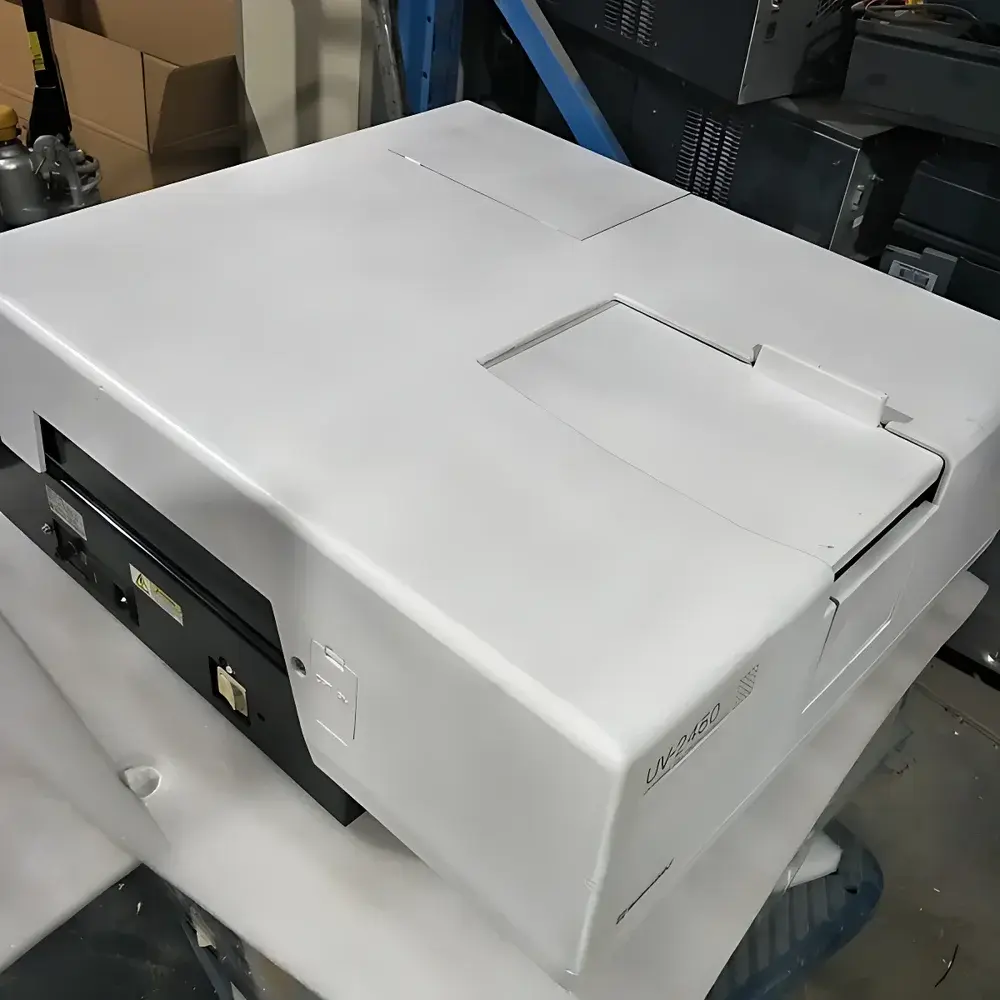
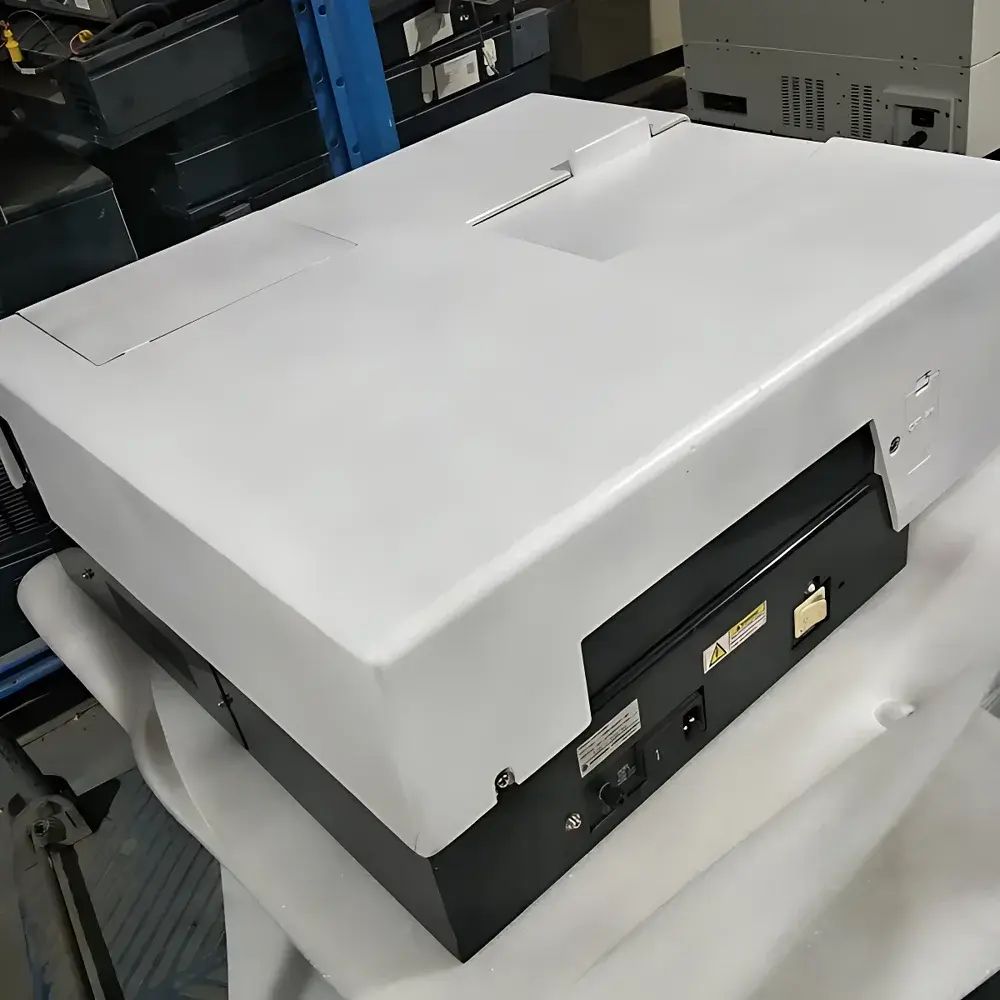
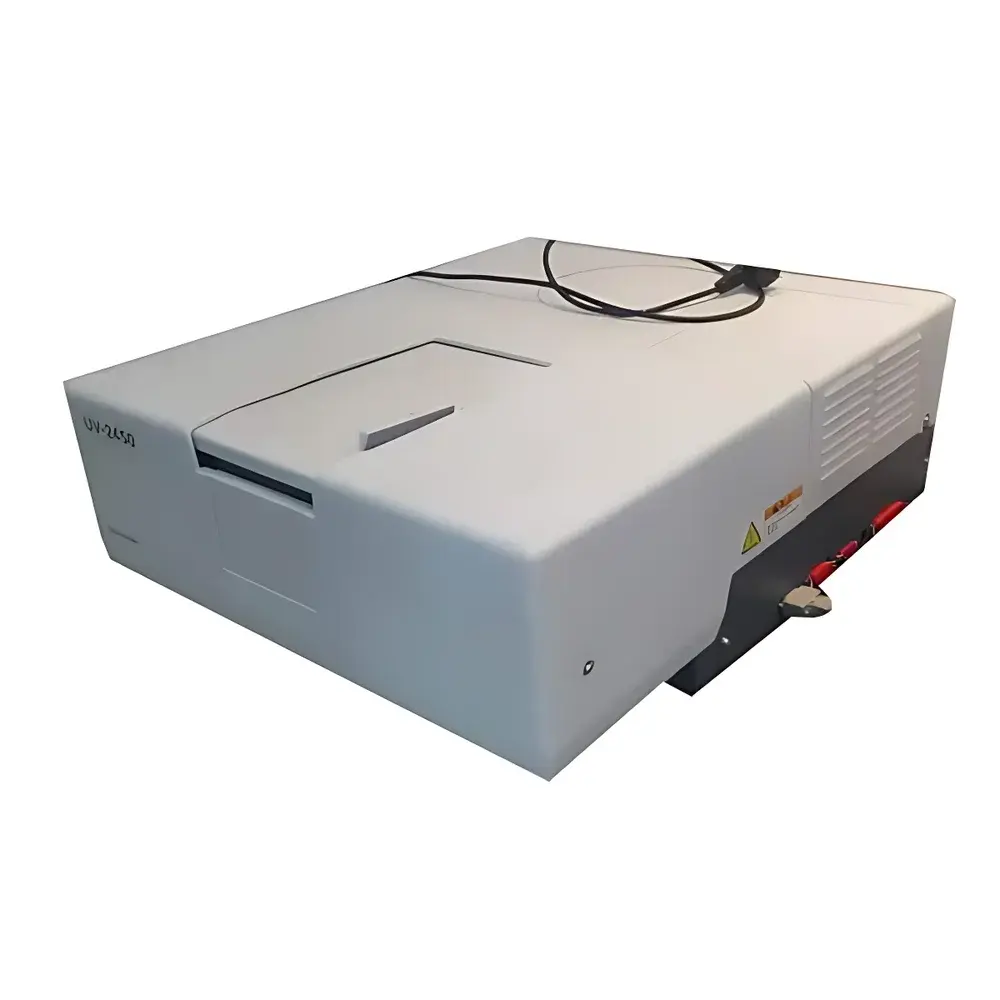
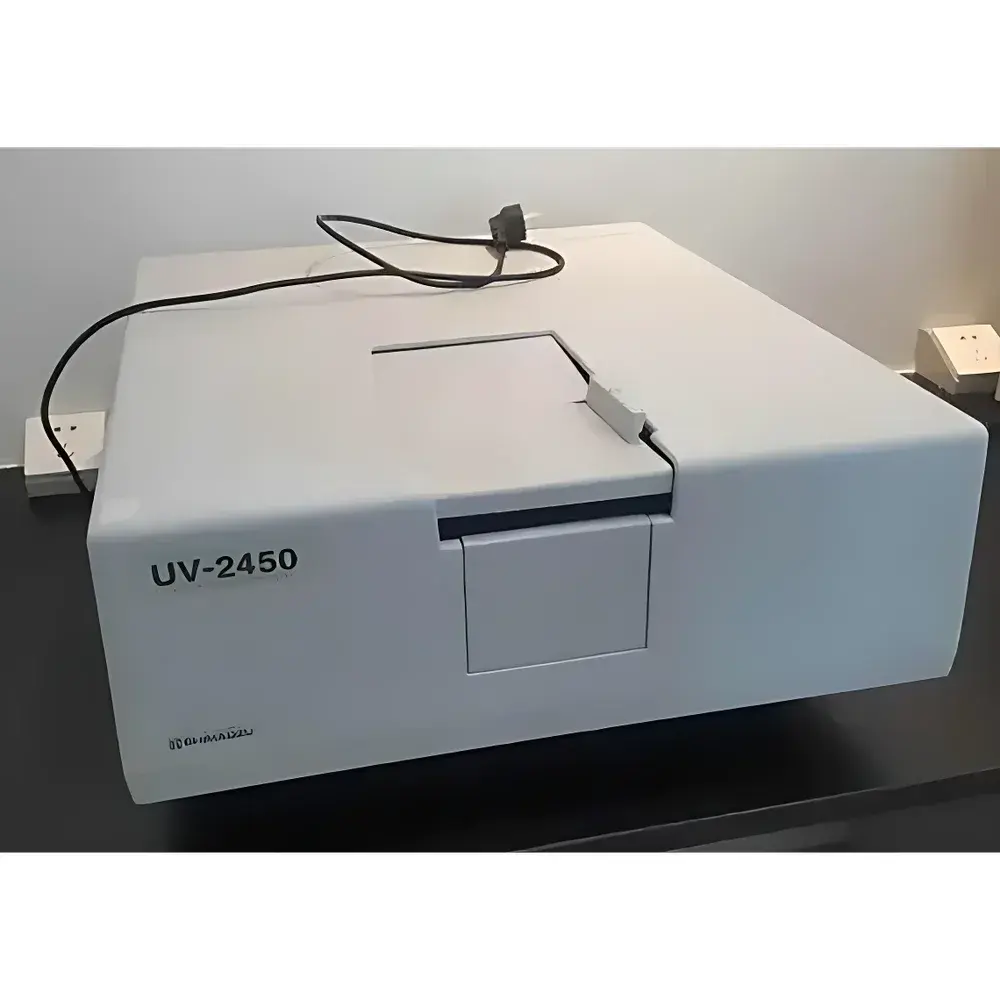
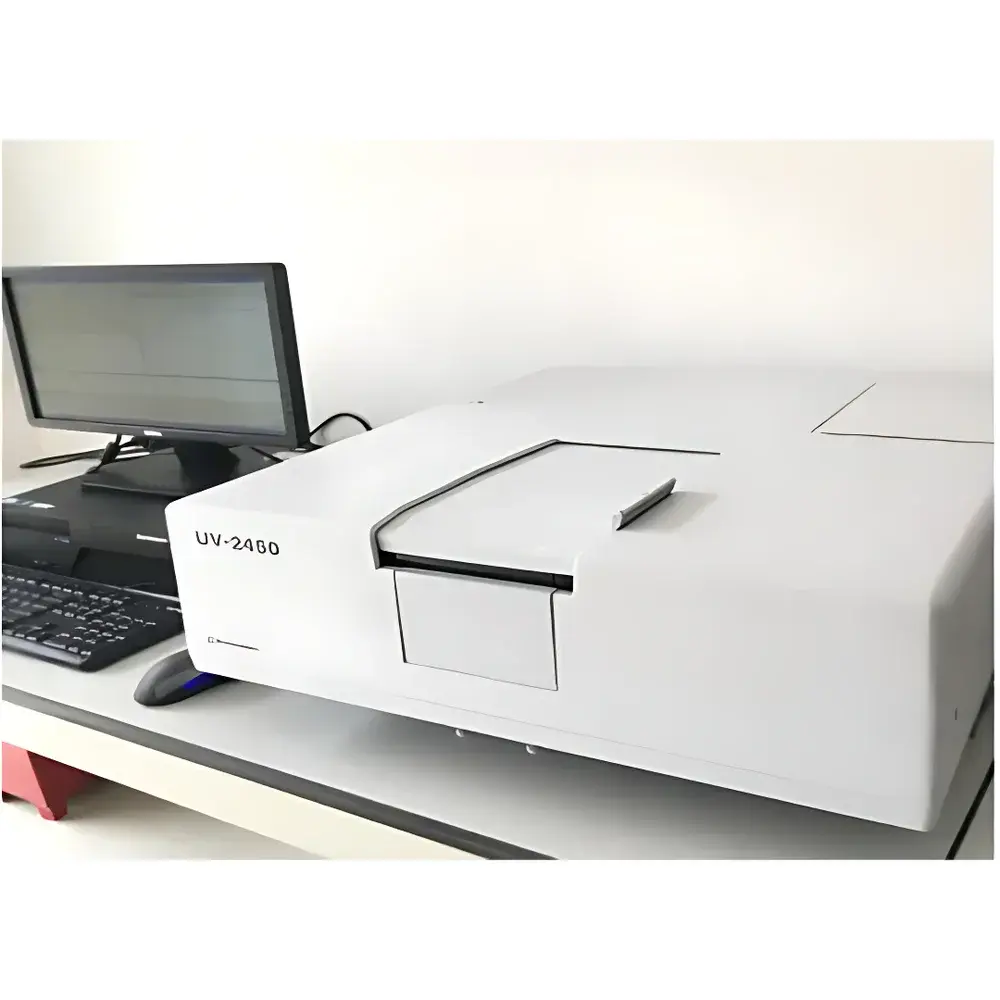
Shimadzu UV-2450 Used UV-Vis Spectrophotometer
| Brand | Shimadzu |
|---|---|
| Origin | Japan |
| Model | UV-2450 |
| Optical System | Pseudo-double-beam |
| Detector | Photodiode Array (PDA) |
| Wavelength Range | 190–900 nm |
| Wavelength Accuracy | ±2.0 nm |
| Spectral Bandwidth | 4 nm |
| Stray Light | ≤0.01% T |
| Automation Level | Automatic Wavelength Scanning |
| Import Category | Imported Instrument |
Overview
The Shimadzu UV-2450 is a high-performance, pseudo-double-beam ultraviolet-visible (UV-Vis) spectrophotometer originally engineered for routine and research-grade quantitative and qualitative analysis in regulated and academic laboratories. Its optical architecture employs a monochromator-based design with a fixed grating and slit-controlled spectral bandwidth, delivering stable photometric response across the full 190–900 nm spectral range. The instrument utilizes a photodiode array (PDA) detector, enabling rapid full-spectrum acquisition without mechanical scanning—critical for kinetic studies, method development, and high-throughput sample screening. Designed and manufactured in Japan, the UV-2450 conforms to fundamental optical engineering standards for linearity, photometric accuracy, and long-term baseline stability. As a pre-owned unit, each system undergoes comprehensive functional verification—including wavelength calibration traceable to NIST-traceable standards, stray light assessment per ASTM E387, and photometric linearity validation—ensuring operational integrity prior to deployment.
Key Features
- Pseudo-double-beam optical path compensates for source intensity drift and environmental fluctuations, improving measurement reproducibility over extended acquisition periods.
- Photodiode array detector enables simultaneous multi-wavelength detection with scan speeds up to 2,800 nm/min, supporting time-resolved absorbance monitoring and spectral library matching.
- Fixed 4 nm spectral bandwidth ensures consistent resolution across the UV-Vis range, meeting requirements for pharmacopeial methods (e.g., USP <857>) and ISO 6425-compliant absorbance measurements.
- Wavelength accuracy of ±2.0 nm (verified at Hg emission lines: 253.7, 365.0, 404.7, 435.8, 546.1, and 577.0 nm) supports compliance with ISO 17025 method validation criteria.
- Stray light performance ≤0.01% T at 220 nm (NaI solution) and 340 nm (NaNO₂ solution), satisfying ICH Q2(R2) sensitivity thresholds for low-absorbance quantitation.
- Integrated automatic wavelength scanning and programmable measurement protocols reduce operator dependency and support GLP-aligned workflow documentation.
Sample Compatibility & Compliance
The UV-2450 accommodates standard 10 mm pathlength quartz, glass, or disposable cuvettes (including matched pairs for ratio-based referencing). It supports liquid-phase analysis of aqueous, organic, and mixed-solvent systems—common in pharmaceutical dissolution testing, enzyme kinetics, polymer characterization, and environmental water quality assessment. The instrument’s hardware and firmware architecture are compatible with post-acquisition data processing under FDA 21 CFR Part 11-compliant software environments when paired with validated third-party applications (e.g., LabSolutions UV-Vis or custom Python-based analysis pipelines with audit trail logging). While the base unit does not include embedded electronic signatures or user-level access controls, its analog/digital output interfaces (RS-232, USB) enable integration into validated laboratory information management systems (LIMS) for full traceability.
Software & Data Management
Data acquisition and preliminary analysis are performed via Shimadzu’s proprietary UVProbe software (v3.x or later), which provides spectral overlay, derivative spectroscopy, multi-component quantitation (using simultaneous equation or curve-fitting algorithms), and time-course profiling. Raw absorbance, transmittance, and energy spectra are exportable in ASCII, CSV, and JCAMP-DX formats—ensuring interoperability with MATLAB, OriginLab, and open-source chemometrics tools. All spectral datasets retain embedded metadata including date/time stamp, lamp status, slit width, and cuvette position—facilitating retrospective review during internal audits or regulatory inspections. Instrument logs (lamp usage hours, error codes, calibration history) are stored locally and can be archived externally for GMP documentation retention.
Applications
- Pharmaceutical QC: Active pharmaceutical ingredient (API) assay, excipient compatibility screening, and cleaning validation residue detection (e.g., residual solvents in equipment swabs).
- Environmental monitoring: Nitrate/nitrite quantification in surface water, COD estimation via dichromate oxidation, and chlorophyll-a concentration in algal bloom studies.
- Food & beverage safety: Colorant concentration analysis (e.g., tartrazine, sunset yellow), antioxidant capacity (FRAP/TEAC assays), and adulteration detection via spectral fingerprinting.
- Academic research: Ligand-binding stoichiometry determination, protein denaturation thermodynamics (via temperature-controlled cell holders), and nanoparticle size estimation using Mie scattering models.
- Chemical synthesis: Real-time reaction monitoring (e.g., azo-coupling, oxidation of alcohols), catalyst activity profiling, and purity assessment of intermediates.
FAQ
Is the UV-2450 compliant with current regulatory requirements for GxP laboratories?
Yes—when operated within a validated environment and supported by documented calibration, maintenance, and user training records, the UV-2450 meets technical prerequisites for use in GLP, GMP, and ISO 17025 settings.
What verification documentation accompanies the instrument?
Each unit ships with a Certificate of Functional Verification, including wavelength accuracy test report, stray light assessment, photometric linearity data, and lamp energy profile.
Can the UV-2450 be integrated with modern LIMS or ELN platforms?
Yes—via RS-232 or USB-to-serial interface, using middleware that supports ASTM E1384 or HL7-compatible data exchange protocols.
Does the system include a deuterium and tungsten-halogen lamp assembly?
Yes—both lamps are included, inspected for remaining lifetime (>1,000 h typical), and replaced if below 80% nominal intensity.
Is UVProbe software license transferable?
Shimadzu permits license reassignment to the new owner upon formal request and proof of purchase; legacy versions remain fully functional for data reprocessing.




