
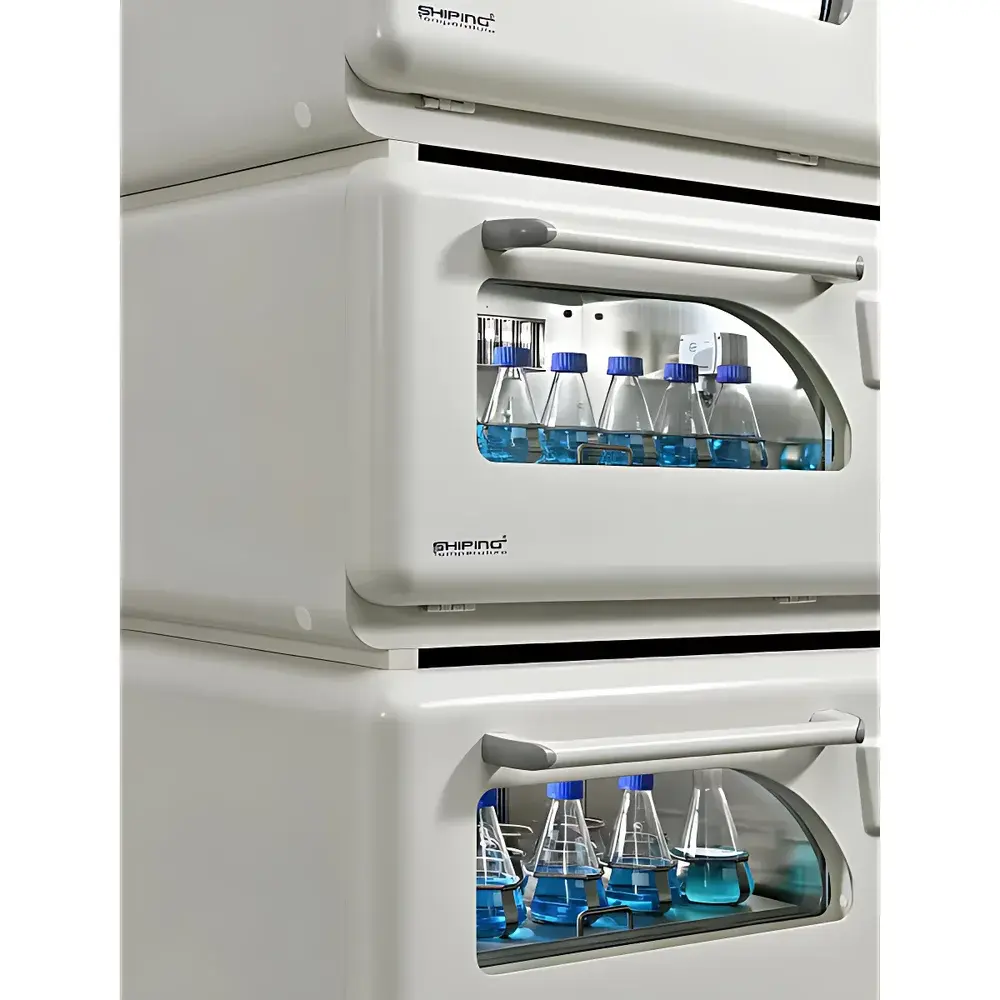
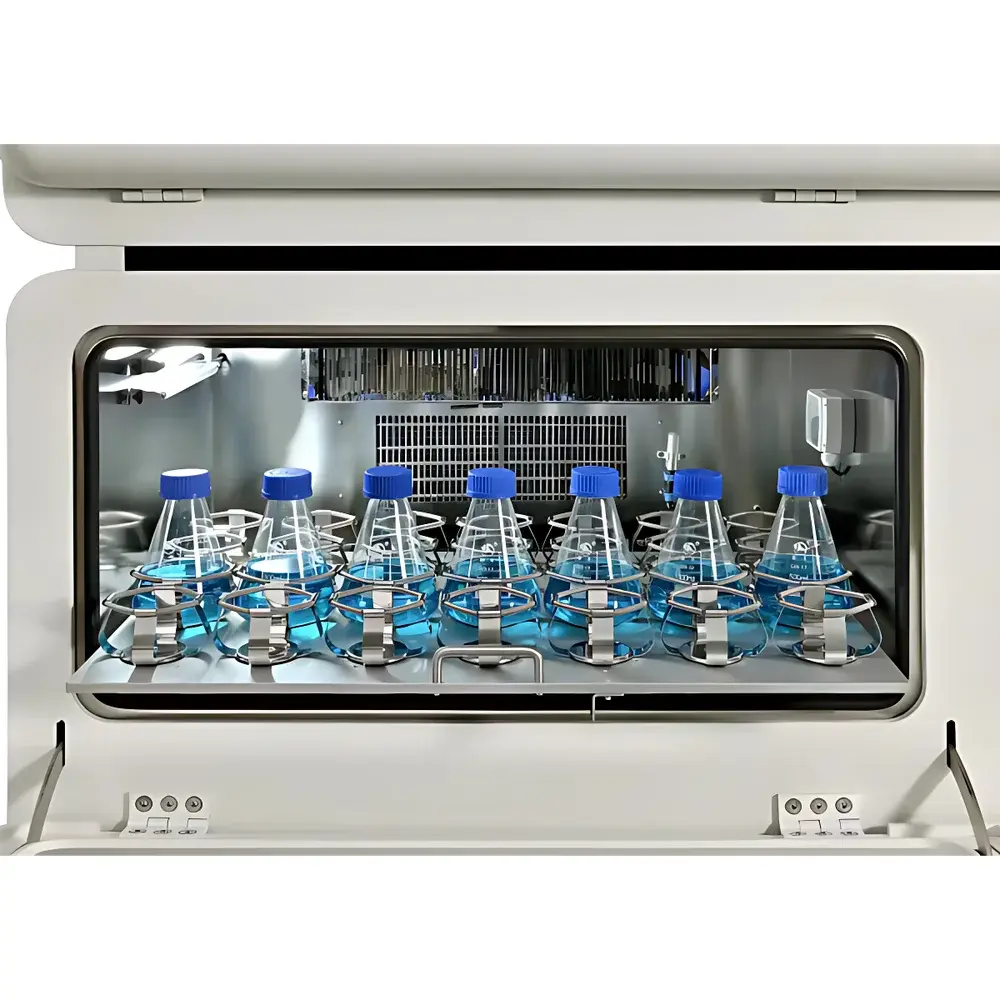
ShiPing Master-JX 2023R Plus CO₂-Regulated Temperature-Controlled Orbital Shaker Incubator
| Brand | ShiPing |
|---|---|
| Origin | Shanghai, China |
| Manufacturer Type | Direct Manufacturer |
| Instrument Type | CO₂-Regulated Temperature-Controlled Orbital Shaker Incubator |
| Model | Master-JX 2023R Plus |
| Timer Range | 0–9999 min |
| Orbital Speed | 0–300 rpm |
| Orbit Diameter | Φ25 mm or Φ50 mm (selectable) |
| Temperature Range | 4°C to 60°C (ambient ≥ −18°C |
| Number of Shaking Platforms | 1 |
| Chamber Volume | 282 L |
| Internal Dimensions | 1030 × 595 × 460 mm (W×D×H) |
| Platform Size | 920 × 540 mm |
| Max Capacity | 60 × 250 mL, 40 × 500 mL, 24 × 1000 mL, 15 × 2000 mL, or 7 × 5000 mL flasks |
| CO₂ Range | 0–20% |
| CO₂ Control Accuracy | ±0.1% |
| CO₂ Stability | ±0.1% |
| CO₂ Sensor | Imported NDIR infrared sensor |
| Humidity | Natural humidification (optional active humidification) |
| Temp Uniformity | ≤ ±0.5°C at 37°C |
| Temp Accuracy | ±0.1°C |
| Temp Recovery Time | ≤ 10 min after door opening (30 s) |
| Noise Level | < 45 dB(A) |
| Power | Heating 1300 W / Cooling 195 W / Motor 250 W |
| Net Weight | 431 kg |
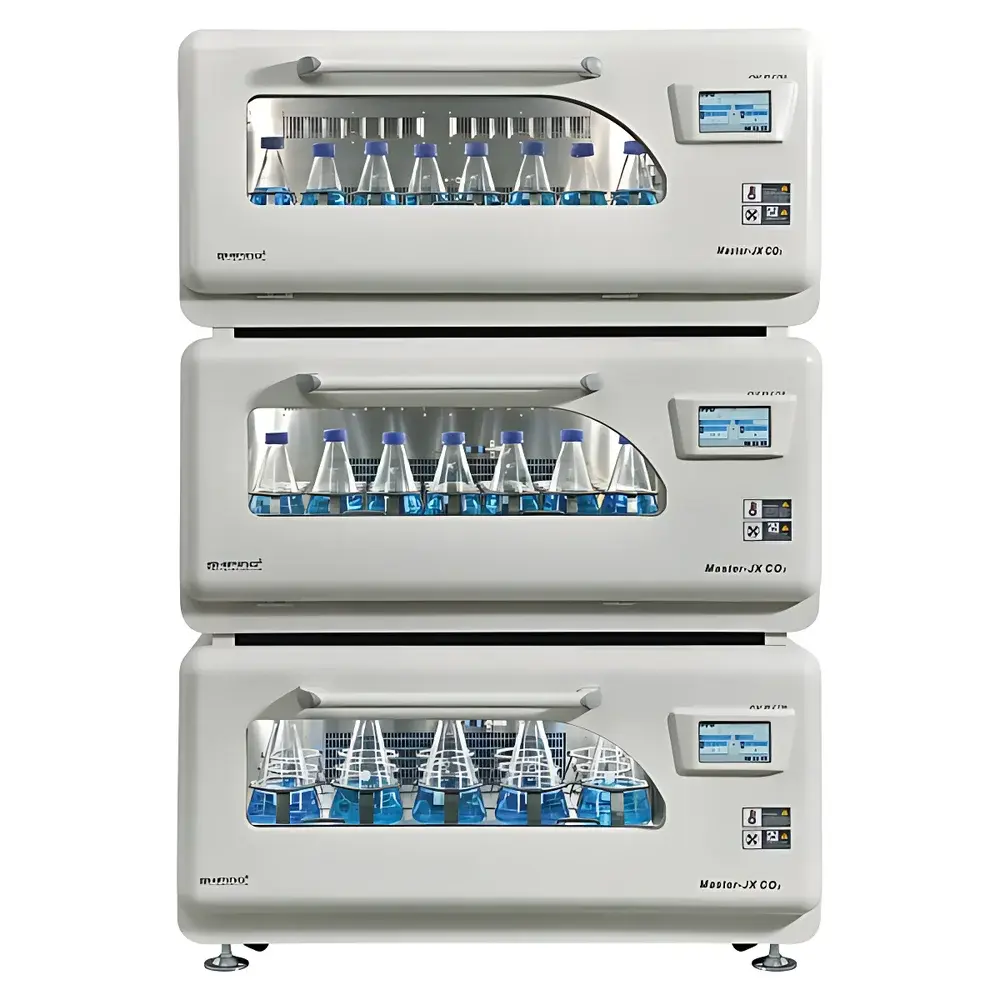
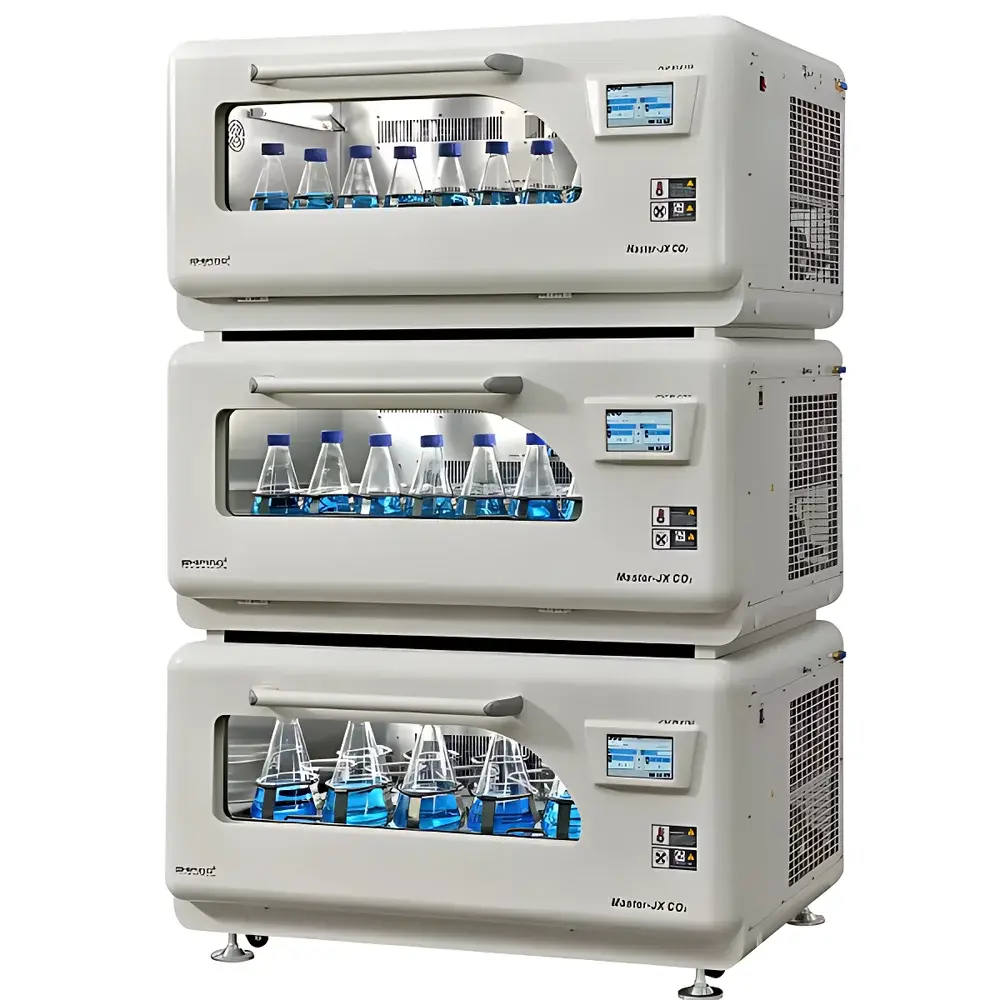
| Stackable | Up to 3 units |
| Compliance | GMP-aligned design, 3Q validation support available, FDA 21 CFR Part 11–ready data logging (audit trail, user permissions, electronic signatures) |
Overview
The ShiPing Master-JX 2023R Plus CO₂-Regulated Temperature-Controlled Orbital Shaker Incubator is an integrated life science platform engineered for precise, reproducible, and contamination-controlled cultivation of suspension-based biological systems under dynamically regulated gas, temperature, and agitation conditions. It combines orbital shaking mechanics with dual-loop environmental control—simultaneous regulation of CO₂ concentration (via NDIR infrared sensing), chamber temperature (via variable-frequency compressor and PID-driven air circulation), and rotational motion (via servo-motor-driven single-axis balanced drive)—to maintain physiologically relevant microenvironments for sensitive cell lines. Unlike static incubators or standalone shakers, this system eliminates thermal stratification and CO₂ gradient formation through forced convection airflow and real-time feedback compensation. Its design conforms to fundamental requirements for GLP-compliant bioprocessing workflows, including traceable parameter logging, multi-tier access control, and hardware-level safeguards against thermal runaway, motor overspeed, and electrical fault conditions.
Key Features
- Single-axis balanced orbital drive mechanism—patented parallelogram dynamic equilibrium architecture with five-point support geometry—ensures vibration-free operation (< 45 dB[A]) across full speed range (0–300 rpm), even with asymmetric flask loading.
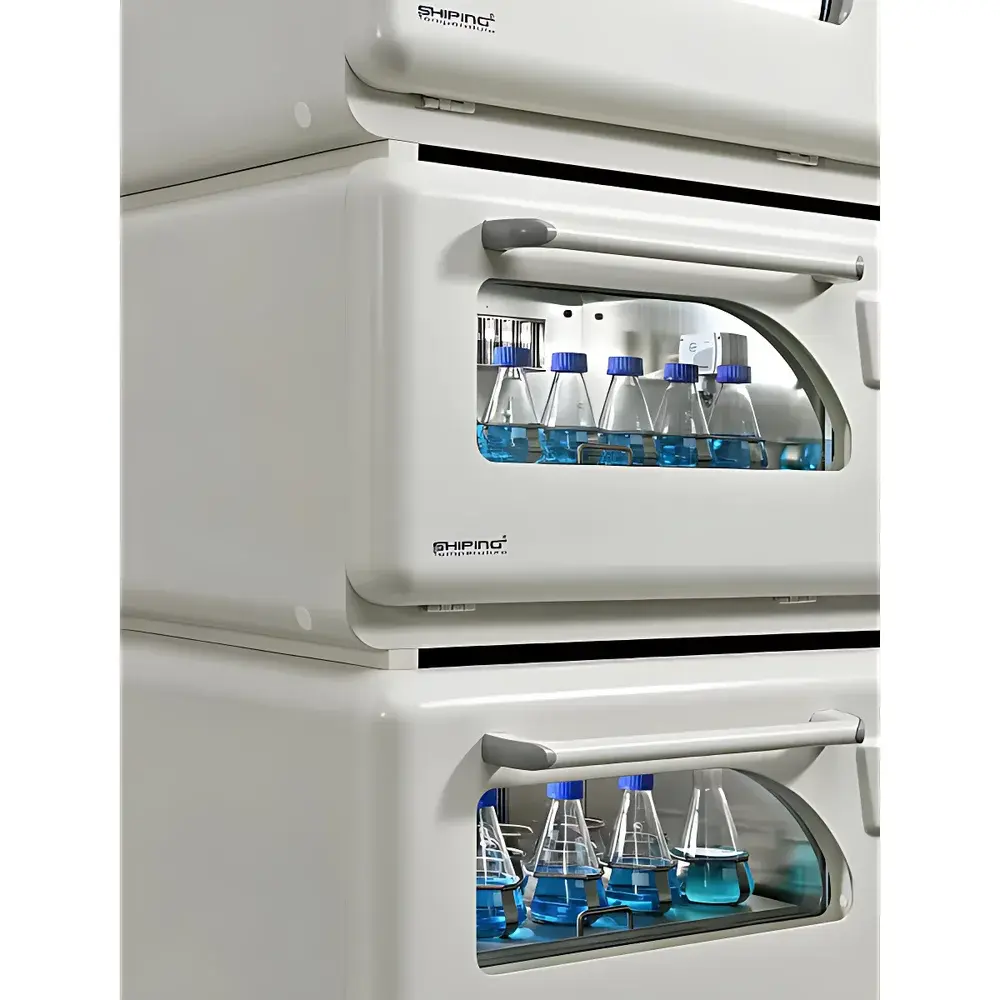
- GMP-aligned stainless-steel interior (SUS304, radius-rounded corners) and fully sealed mechanical compartment prevent microbial ingress and facilitate autoclave-compatible cleaning protocols.
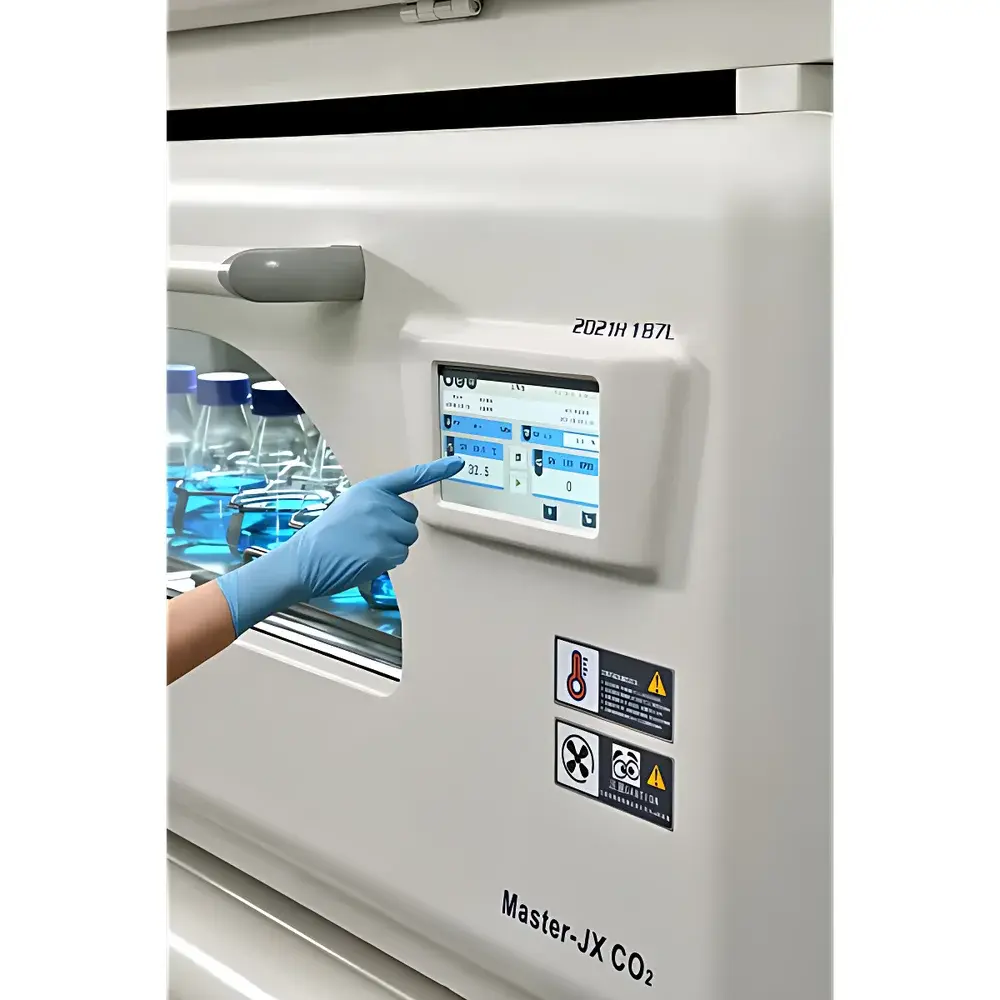
- True-color 7-inch capacitive touchscreen interface with glove-compatible operation, bilingual (English/Chinese) UI, and real-time multi-parameter visualization—including live CO₂ concentration, temperature curve, RPM, and elapsed time.
- Triple-layer safety architecture: (1) personnel protection via leakage current cutoff; (2) sample protection via overspeed shutdown with audible/visual alarm; (3) equipment protection via independent overtemperature cut-off circuitry.
- Advanced environmental recovery: CO₂ concentration recovers to setpoint within ≤5 minutes after 30-second door opening; temperature stabilizes within ≤10 minutes (±0.1°C accuracy, ±0.5°C uniformity at 37°C).
- Modular expandability: Optional active humidification (external heated water reservoir), programmable lighting (white/UV), gas inlet port for N₂/O₂/N₂O blending, and remote monitoring via Ethernet/WiFi-enabled SCADA integration.
Sample Compatibility & Compliance
The Master-JX 2023R Plus accommodates standard culture vessels—from 250 mL Erlenmeyer flasks to 5 L bioreactor bottles—on a single 920 × 540 mm platform with Φ25 mm or Φ50 mm orbit selection. Its large internal volume (282 L) and flexible stacking configuration (up to three units) support high-throughput screening and scale-up studies without compromising sterility integrity. All wetted surfaces comply with ISO 14644-1 Class 5 cleanroom material specifications. The system supports full 3Q validation (IQ/OQ/PQ) documentation packages upon request and meets structural and functional prerequisites for FDA 21 CFR Part 11 compliance—including electronic audit trails, role-based user permissions (three-tier access), and non-erasable data storage (15 million records, ≥5 years). UV sterilization cycles (8 W lamp) and 0.2 µm in-line HEPA filtration of incoming air further ensure biosafety for mammalian, insect, and plant cell cultures.
Software & Data Management
Embedded firmware implements ISO/IEC 17025-aligned data governance: all operational parameters—including CO₂ %, temperature setpoint/actual, RPM, timer status, door-open events, and alarm triggers—are timestamped and stored locally on encrypted internal memory. USB export enables CSV-formatted data transfer for external analysis (e.g., Excel, MATLAB, JMP). Historical trend plots (real-time and retrospective) are viewable directly on the touchscreen with zoom/pan functionality. The controller retains settings during power interruption (“power-loss memory”) and resumes scheduled runs automatically. Audit logs record user login/logout, parameter changes, and system alerts with immutable timestamps—supporting traceability requirements under GLP, GMP, and ISO 9001 quality management systems.
Applications
This instrument serves as a core platform for applications demanding simultaneous control of gas composition, thermal stability, and gentle agitation: suspension culture of CHO, HEK293, and hybridoma cells; recombinant protein expression in *E. coli* and yeast; insect cell propagation for baculovirus production; plant protoplast and callus suspension culture; microbial growth kinetics under defined O₂/CO₂ ratios; and pre-fermentation seed train expansion. Its stable CO₂ regulation (0–20%, ±0.1% precision) makes it suitable for pH-sensitive applications where bicarbonate buffering is employed. Optional lighting modules enable photobioreactor-mode experiments with algae or cyanobacteria, while active humidification extends utility to long-term tissue explant culture.
FAQ
Does the system support validation documentation for regulated environments?
Yes—3Q (IQ/OQ/PQ) validation templates and executed reports are available upon request. System architecture includes electronic signature capability, audit trail, and user permission levels required for FDA 21 CFR Part 11 compliance.
Can the shaker operate at 4°C with CO₂ control enabled?
Yes—the refrigeration system (inverter-driven compressor) maintains stable temperature down to 4°C while sustaining CO₂ setpoints within specification; ambient temperature must remain ≥ −18°C.
Is the platform compatible with microplates or deep-well plates?
While optimized for Erlenmeyer flasks and culture bottles, optional adhesive platforms (silicone-based, UV-resistant) allow secure mounting of standard SBS-format microplates without clamps.
How is condensation managed during low-temperature operation?
The double-glazed tempered glass door incorporates insulating air gap technology, minimizing surface condensation. Internal chamber drainage channels direct residual moisture toward dedicated outlet ports for safe disposal.
What maintenance intervals are recommended for long-term reliability?
Compressor oil and refrigerant charge require no routine servicing; annual verification of CO₂ sensor calibration (using certified gas standards) and HEPA filter replacement are advised per ISO 13485 maintenance protocols.



