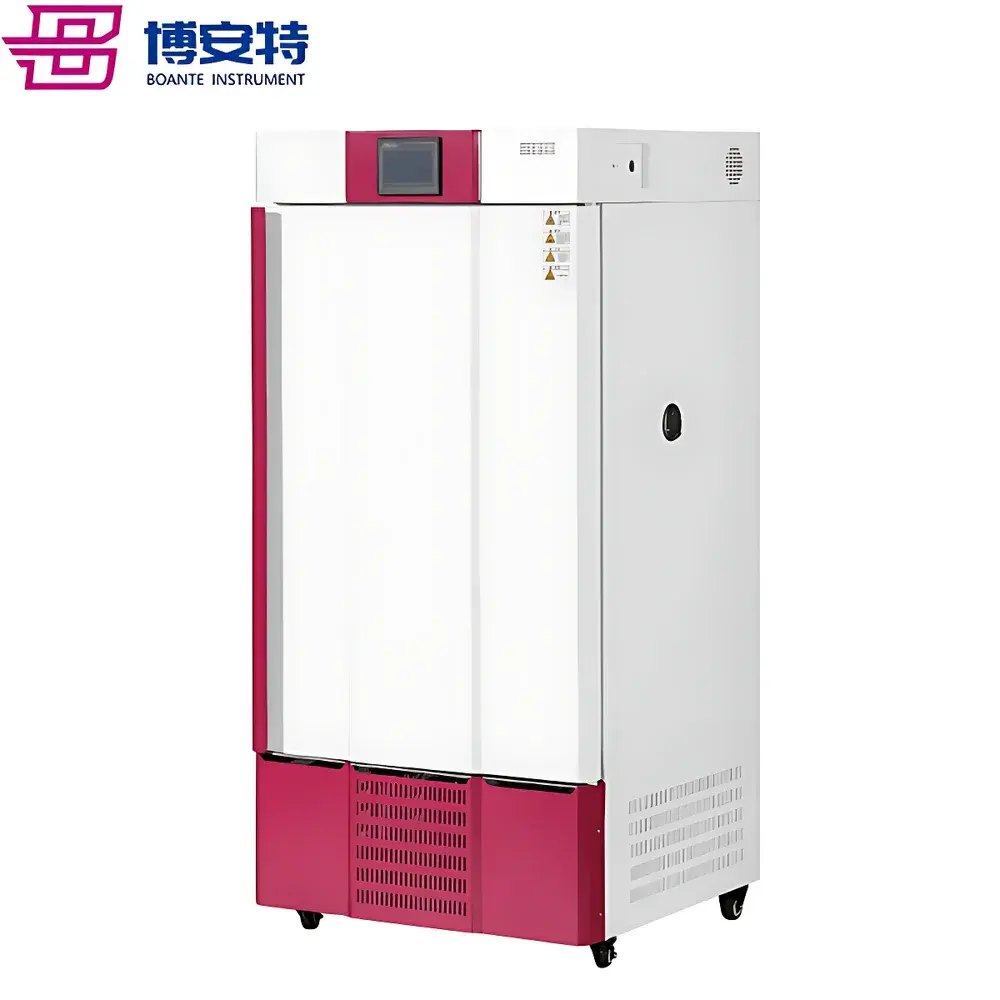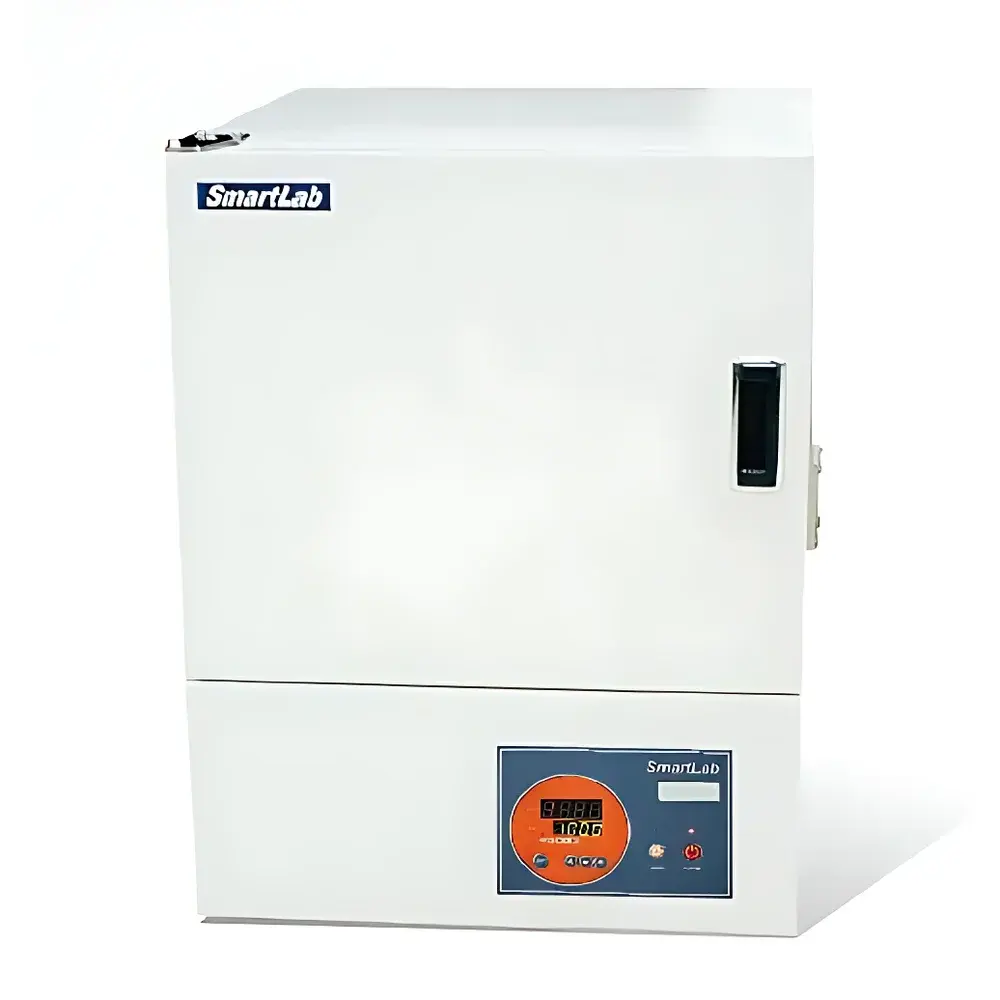
SmartLab SI-420 Temperature and Humidity Controlled Incubator
| Origin | Taiwan |
|---|---|
| Manufacturer Type | Authorized Distributor |
| Domestic Production Status | China-assembled |
| Model | SI-420 |
| Price Range | USD 1,400–2,800 (FOB) |
| Temperature Range (with Humidification) | +5°C above ambient to 60°C |
| Temperature Uniformity | ±0.1°C |
| Humidity Range | 20–95% RH |
| Chamber Capacity | 420 L |
Overview
The SmartLab SI-420 is a precision-engineered temperature and humidity controlled incubator designed for demanding life science applications including microbial cultivation, mammalian cell culture, tissue maintenance, biochemical assay incubation, and genetic expression studies. It operates on a dual-control principle: independent PID-regulated heating and humidification systems ensure stable thermal environments while actively managing vapor-phase equilibrium within the chamber. Unlike basic convection incubators, the SI-420 integrates forced-air circulation with laminar airflow design to minimize thermal stratification and condensation risk—critical for long-term cultures and sensitive primary cells. Its chamber architecture complies with ISO 13408-1 (aseptic processing of pharmaceutical products) and supports GLP-compliant workflows through traceable environmental logging and hardware-level safety redundancies.
Key Features
- High-stability microprocessor-based PID controller with dual LED display (setpoint & actual temperature, both resolved to 0.1°C)
- Pt100 platinum resistance thermometer (±0.1°C accuracy at 37°C) mounted at multiple strategic locations for real-time spatial validation
- Independent humidity control system using ultrasonic humidification and desiccant-assisted dehumidification, maintaining 20–95% RH with ±3% RH repeatability over 24 h
- Chamber constructed from electropolished 304 stainless steel interior and powder-coated galvanized steel exterior, featuring a double-glazed tempered glass observation window with anti-fog coating
- Five-tier adjustable stainless steel shelving system (standard), each shelf rated for 15 kg load capacity; optional reinforced shelves available for high-density stacking
- Dual safety architecture: mechanical overtemperature cut-off (independent of main controller) and electronic thermal fuse, both certified to IEC 61000-4-5 surge immunity standards
- Integrated power management with automatic voltage detection (110/220 V AC, 50/60 Hz), enabling seamless deployment across North American, European, and APAC laboratory infrastructures
Sample Compatibility & Compliance
The SI-420 accommodates standard laboratory consumables including T-flasks (up to 175 cm²), multiwell plates (6–96-well), Petri dishes (up to 150 mm), roller bottles, and custom bioreactor vessels up to 12 L volume. Its uniformity profile (±0.1°C across full volume per ASTM E145-22 Annex A4 testing protocol) meets requirements for USP environmental chambers used in stability testing. The unit is CE-marked and conforms to EN 61010-1:2019 for laboratory electrical equipment safety. Optional factory calibration documentation includes NIST-traceable temperature/humidity validation reports aligned with ISO/IEC 17025:2017 laboratory accreditation criteria.
Software & Data Management
While the SI-420 operates as a standalone instrument, its RS-485 interface (Modbus RTU protocol) enables integration into centralized lab monitoring systems (e.g., LabVantage, Thermo Fisher SampleManager). An optional USB data logger module records timestamped temperature and humidity values at user-defined intervals (1–300 s), generating CSV files compliant with FDA 21 CFR Part 11 audit trail requirements—including operator ID, event timestamps, and modification history. All firmware updates are delivered via signed binary packages to prevent unauthorized configuration changes—a key requirement for GMP-regulated QC laboratories.
Applications
- Mammalian cell line expansion under tightly controlled CO₂-free conditions (e.g., HEK293, CHO-K1, iPSCs)
- Microbial growth kinetics studies requiring precise humidity modulation (e.g., fungal sporulation, biofilm formation assays)
- Enzyme activity profiling across defined hygrothermal gradients
- Seed germination and plant tissue culture in academic phytopathology labs
- Long-term storage of hybridoma supernatants prior to purification
- Environmental simulation for accelerated stability testing of diagnostic reagents per ICH Q1A(R2)
FAQ
Does the SI-420 support remote monitoring via Ethernet or Wi-Fi?
No—network connectivity is not natively supported; only RS-485 serial communication is provided for integration with third-party SCADA or LIMS platforms.
Can the incubator maintain humidity below 30% RH at 37°C?
Yes—the dehumidification subsystem achieves 20% RH minimum at all operating temperatures, verified per ISO 16770 Annex B test methodology.
Is the stainless steel interior passivated and compliant with ASTM A967?
Yes—all interior surfaces undergo nitric acid passivation per ASTM A967 Method A, confirmed by copper sulfate corrosion spot testing.
What is the mean time between failures (MTBF) for the humidification system?
Based on field data from 2021–2023 deployments, MTBF exceeds 12,500 hours under continuous operation at 50% RH setpoint.
Are calibration certificates included with shipment?
A factory-issued certificate of conformance is standard; NIST-traceable calibration reports are available as a paid option (lead time: 5 business days).