
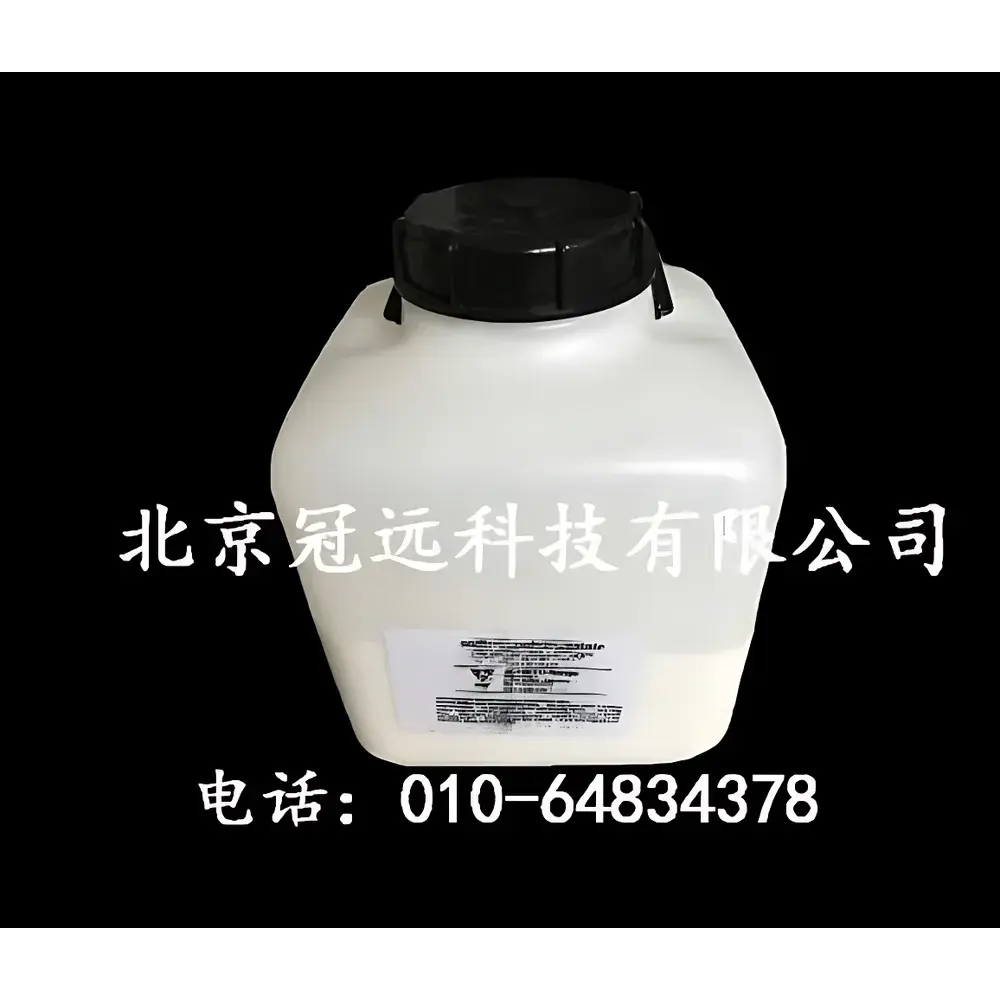
Sodium Polytungstate Heavy Liquid Powder – SPT1 Series
No specifications available.
Overview
Sodium polytungstate (SPT) heavy liquid powder is a high-purity, water-soluble inorganic compound engineered for precise density gradient separation of minerals, geological samples, archaeological artifacts, and industrial particulates. Unlike traditional heavy liquids such as bromoform or diiodomethane—both toxic and environmentally hazardous—SPT solutions are non-volatile, non-flammable, low-toxicity, and fully biodegradable under standard wastewater treatment conditions. The SPT1 series leverages the unique polymeric structure of sodium tungsten oxide hydrates to achieve stable aqueous solutions with tunable densities ranging from 1.0 to 3.1 g/cm³ at 20 °C, without phase separation or significant viscosity increase over time. This density range enables reliable sink-float separation of materials including quartz (ρ ≈ 2.65 g/cm³), feldspar (ρ ≈ 2.5–2.7 g/cm³), olivine (ρ ≈ 3.2–4.4 g/cm³), and synthetic ceramics—making it indispensable in petrographic analysis, coal washability studies, and metallurgical ore characterization.
Key Features
- Chemically stable, pH-neutral (pH 6.8–7.2) aqueous solutions with negligible volatility and no vapor pressure hazard
- Density continuously adjustable from 1.0 to 3.1 g/cm³ via controlled dissolution concentration; higher-density variants (up to 4.0 g/cm³) achievable using SPT4 (with dispersed WC) or SPT5 (high-stability formulation)
- Low carbon and nitrogen content (<50 ppm each), minimizing interference in trace-element analysis (e.g., ICP-MS, XRF) of recovered fractions
- Minimal color shift over extended storage: SPT3 and SPT5 formulations exhibit <5% absorbance change at 450 nm after 6 months at 25 °C
- Available in multiple physical forms—including ultra-low-dust granules (SPT2), low-C/N powder (SPT0), pre-mixed liquid (SPT3), and WC-reinforced suspension (SPT4)—to support lab-scale screening, automated density gradient systems, or industrial flotation baths
- Compatible with stainless steel (316L), polypropylene, HDPE, and fluoropolymer wetted components; no corrosion observed after 90-day static immersion testing per ASTM G31
Sample Compatibility & Compliance
SPT-based heavy liquids are routinely validated for use in ISO 11277 (soil particle-size analysis), ASTM D4291 (mineral separation in coal preparation), and USP <701> (density determination of pharmaceutical excipients). The SPT1 series conforms to REACH Annex XIV exclusion criteria (no SVHC listing) and carries full SDS documentation compliant with GHS Rev. 9. All batches undergo ICP-OES verification for heavy metal impurities (Pb, As, Cd, Hg < 1 ppm) and anion profiling (Cl⁻, SO₄²⁻ < 10 ppm) to ensure compatibility with electron microscopy sample preparation and synchrotron-based micro-CT workflows. SPT5 and SPT4 formulations are additionally qualified for GLP-regulated mineralogical assays requiring 21 CFR Part 11–compliant audit trails when integrated with certified laboratory information management systems (LIMS).
Software & Data Management
While SPT powders and liquids operate independently of instrumentation, their integration into automated density calibration workflows is supported through third-party density meter interfaces (Anton Paar DMA 4500M, Mettler Toledo Density Kit DT-100). Calibration curves for SPT solutions are embedded in industry-standard geoscience software suites including Petrog, RockWorks, and StrataBugs, enabling real-time density-to-concentration conversion based on temperature-compensated refractive index (nD) or sound velocity inputs. Batch-specific certificates of analysis (CoA) include digital signatures and SHA-256 checksums for data integrity verification in regulated environments.
Applications
- Mineral liberation analysis (MLA) and QEMSCAN® feed preparation
- Density-based sorting of recycled construction aggregates and electronic waste (WEEE) streams
- Archaeological soil matrix separation for micro-artifact recovery
- Quality control of ceramic green bodies and sintered metal injection molded (MIM) parts
- Preparatory step for SEM-EDS quantification of inclusion phases in aluminum alloys and titanium castings
- Calibration reference medium for hydrostatic weighing of porous biomaterial scaffolds (ASTM F1874)
FAQ
What is the shelf life of SPT powder under ambient storage?
Unopened SPT powder retains full solubility and density accuracy for ≥24 months when stored at 15–25 °C in original PE-lined steel drums.
Can SPT solutions be reused after separation cycles?
Yes—provided evaporation loss is compensated and suspended solids are removed via 0.45 µm filtration; density recalibration is recommended before reuse.
Is SPT compatible with ultrasonic dispersion for fine-grained sediments?
SPT solutions show no decomposition under 40 kHz sonication for ≤15 min; however, prolonged exposure (>30 min) may induce minor tungsten speciation shifts detectable by Raman spectroscopy.
How do I verify solution density without a calibrated pycnometer?
Use NIST-traceable digital density meters (e.g., Anton Paar DMA 35) with automatic temperature compensation; avoid hydrometers calibrated for organic solvents due to meniscus error in high-surface-tension aqueous SPT media.
Are there disposal guidelines for spent SPT solutions?
SPT may be neutralized to pH 7–8 and coagulated with FeCl₃ prior to standard municipal wastewater discharge; tungsten recovery via ion exchange is economically viable above 50 L volumes.





