
Solinst Waterloo Groundwater Remediation Emitter Model 703
| Brand | Solinst |
|---|---|
| Origin | Canada |
| Manufacturer Type | Authorized Distributor |
| Origin Category | Imported |
| Model | 703 |
| Price | USD 1 (Reference Only) |
Overview
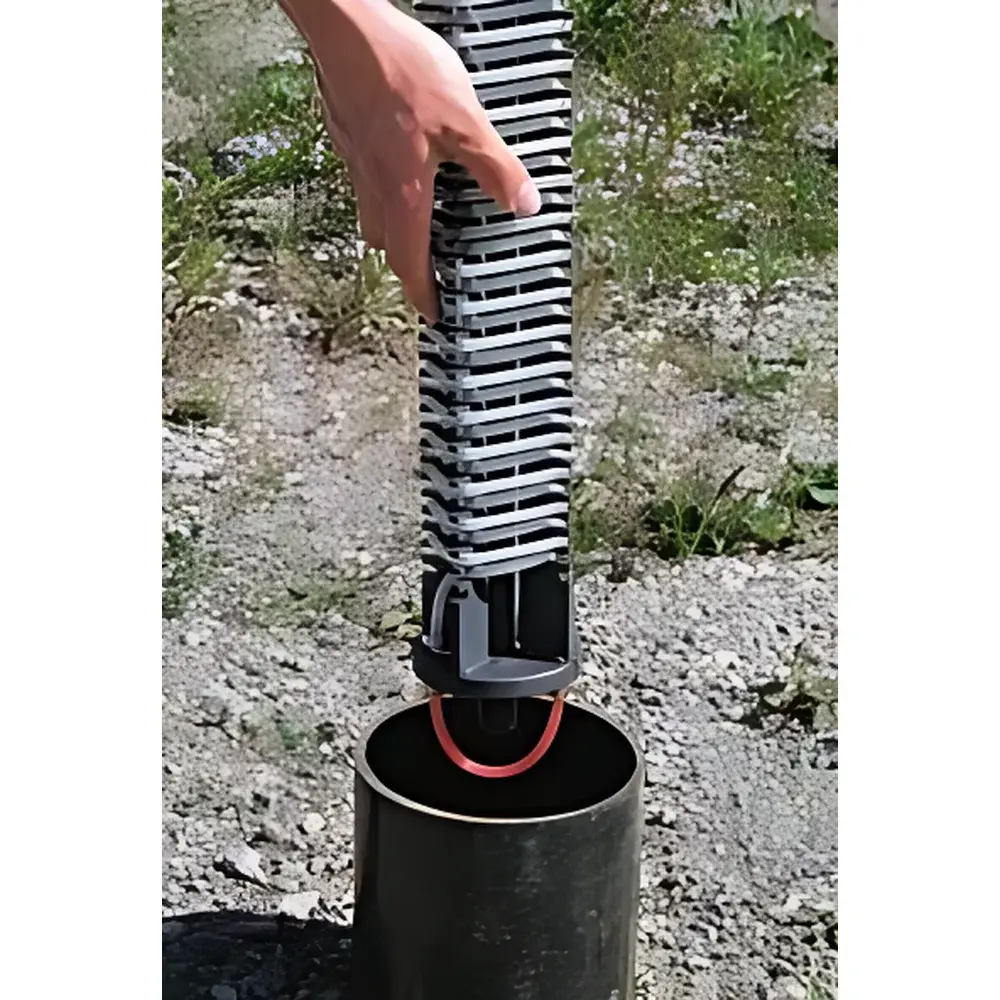
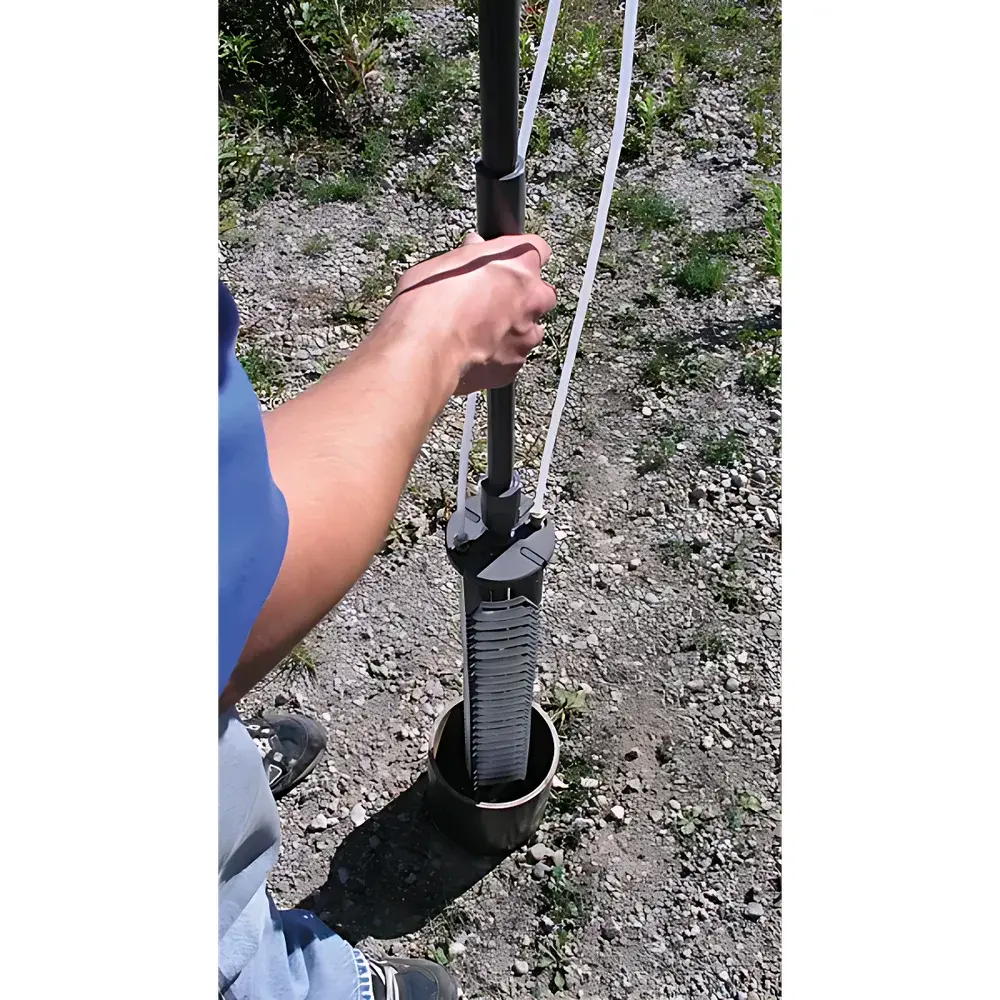
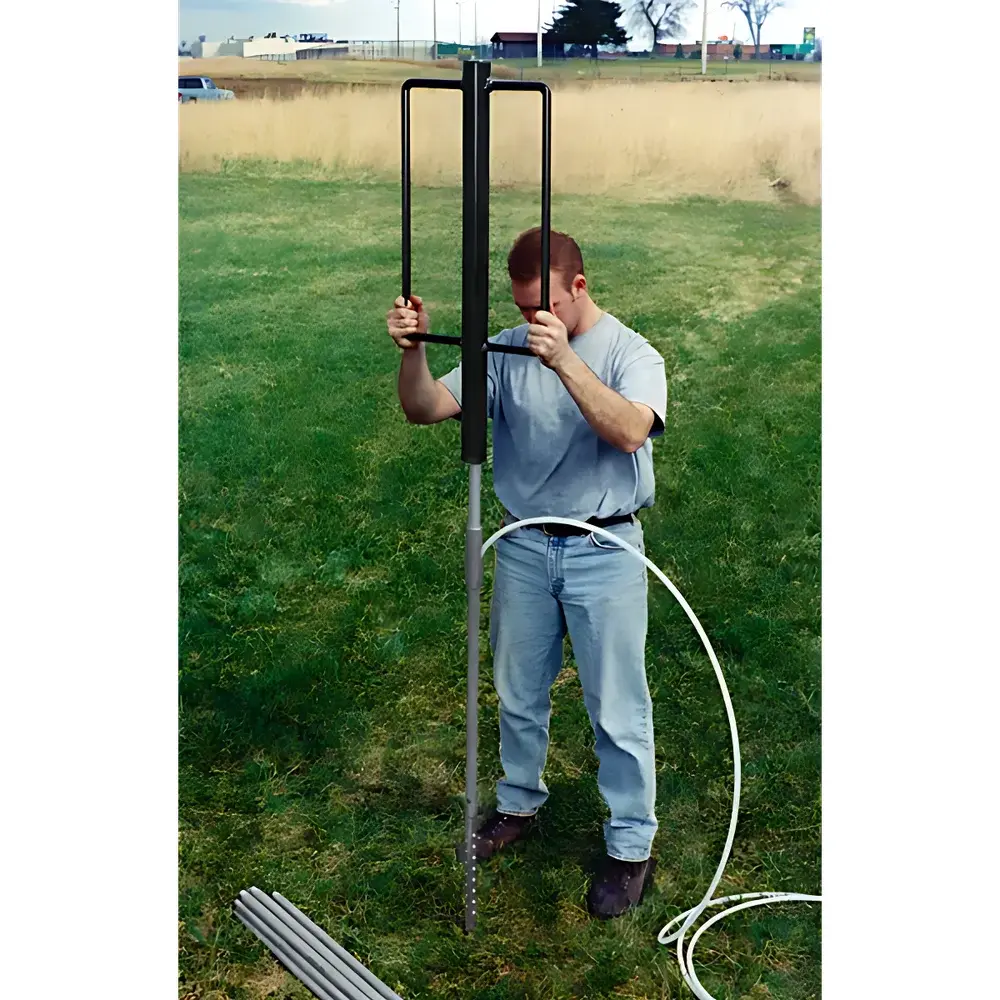
The Solinst Waterloo Groundwater Remediation Emitter Model 703 is a passive, diffusion-based in-situ delivery system engineered for the controlled and sustained release of gaseous or dissolved remedial agents—including molecular oxygen (O₂), hydrogen (H₂), carbon dioxide (CO₂), sulfur hexafluoride (SF₆), argon (Ar), or light alkanes—into saturated and unsaturated zones of contaminated aquifers. Unlike conventional injection or sparging systems, the Model 703 operates on Fick’s first law of diffusion: a concentration gradient is established across the wall of a pressurized silicone rubber or low-density polyethylene (LDPE) diffusion tube coiled around a rigid PVC support frame. This gradient drives continuous, bubble-free mass transfer of the agent directly into surrounding groundwater without hydraulic forcing, gas entrapment, or plume disruption. The emitter requires no power supply, pumps, valves, or electronic controls—making it inherently robust, field-deployable, and compliant with long-term monitored natural attenuation (MNA) and enhanced bioremediation frameworks. Its design eliminates gas channeling, preferential flow paths, and reagent loss via volatilization or ebullition—ensuring high bioavailability of delivered agents for aerobic biodegradation of BTEX (benzene, toluene, ethylbenzene, xylenes) and MTBE (methyl tert-butyl ether), anaerobic reductive dechlorination of chlorinated solvents, pH modulation, hydrolysis enhancement, and tracer studies.
Key Features
- Passive diffusion mechanism—no external pressure head, pump, or energy input required
- Three standard diameters (1.8″, 3.8″, and 5.8″) compatible with 2″, 4″, and 6″ (50 mm, 100 mm, 150 mm) monitoring or treatment wells
- 130 cm (51″) total length—enables vertical stacking for full plume coverage or horizontal placement in trenches or slotted wells
- Modular PVC support structure accommodates integrated water-level sensors, multi-level samplers, or CMT-style continuous monitoring tools
- Chemically inert silicone rubber or LDPE diffusion tubing—resistant to oxidation, hydrolysis, and common groundwater contaminants
- Zero bubble formation—prevents gas bypass, localized supersaturation, and loss of dosing precision
- Scalable deployment: multiple emitters can be daisy-chained to a single regulated gas source (e.g., compressed O₂ or H₂ cylinder)
- Maintenance interval: 1–2 weeks for manual purge or continuous replenishment via needle valve
Sample Compatibility & Compliance
The Model 703 is compatible with a broad spectrum of aqueous and gaseous remedial agents, including but not limited to O₂, H₂, CO₂, SF₆, Ar, CH₄, C₂H₆, and NH₃. Its material composition complies with ASTM D5119 (Standard Specification for Polyethylene (PE) Pipe and Tubing for Underground Applications) and ISO 15874 (Plastics piping systems for hot and cold water installations). While the device itself does not require regulatory certification as an active treatment unit, its use supports compliance with U.S. EPA guidance documents such as OSWER Directive 9200.1-115 (In Situ Bioremediation) and ASTM D6707 (Standard Guide for In Situ Bioremediation of Petroleum Hydrocarbons). When deployed within a formal remediation action plan, data collected using co-located Solinst Leveloggers or Waterloo Multilevel Systems may be archived in accordance with GLP (Good Laboratory Practice) and 21 CFR Part 11–compliant environmental data management platforms.
Software & Data Management
The Model 703 is hardware-only and does not incorporate embedded firmware or onboard software. However, it is fully interoperable with Solinst’s suite of digital monitoring instrumentation—including the Levelogger Edge, AquaTracer, and Waterloo Multilevel System (MLS) data loggers—which support time-series logging, remote telemetry (via cellular or satellite modems), and export to CSV, Excel, or GIS-compatible formats. Field data from redox potential (Eh), dissolved oxygen (DO), pH, conductivity, and volatile organic compound (VOC) concentrations—collected before, during, and after emitter activation—can be correlated spatially and temporally to quantify diffusion rates, plume stabilization, and biodegradation kinetics. All exported datasets are traceable, timestamped, and support audit-ready documentation for regulatory reporting under RCRA, CERCLA, or provincial environmental protection acts.
Applications
- Aerobic biodegradation of BTEX and MTBE via sustained O₂ delivery
- Enhanced reductive dechlorination of PCE, TCE, and cis-DCE using H₂ as electron donor
- pH buffering and carbonate system control via CO₂ infusion
- Tracer studies using inert gases (SF₆, Ar) for groundwater velocity and dispersion modeling
- Metabolic priming for MTBE biodegradation using ethane or propane
- Plume containment barriers—installed perpendicular to flow direction to create localized redox gradients
- Polishing step following primary pump-and-treat or soil vapor extraction (SVE) operations
FAQ
Does the Model 703 require a minimum hydraulic head to function?
No. Its diffusion-driven operation is independent of groundwater elevation or hydraulic gradient.
Can multiple emitters be supplied from a single gas cylinder?
Yes—emitters can be connected in series using regulated manifold systems; pressure and flow are balanced via inline needle valves.
How often must the diffusion tube be purged or replaced?
Typical maintenance interval is 1–2 weeks for manual purge; continuous replenishment via calibrated needle valve extends service life indefinitely.
Is the Model 703 suitable for fractured bedrock or low-permeability clay aquifers?
Yes—its passive diffusion mechanism ensures effective agent delivery even in low-Darcy environments where convective transport is limited.
Can the emitter be used for both aerobic and anaerobic remediation strategies?
Yes—by selecting appropriate agents (e.g., O₂ for aerobic metabolism; H₂ for sulfate reduction or dehalorespiration), the same physical unit serves dual redox regimes.







