
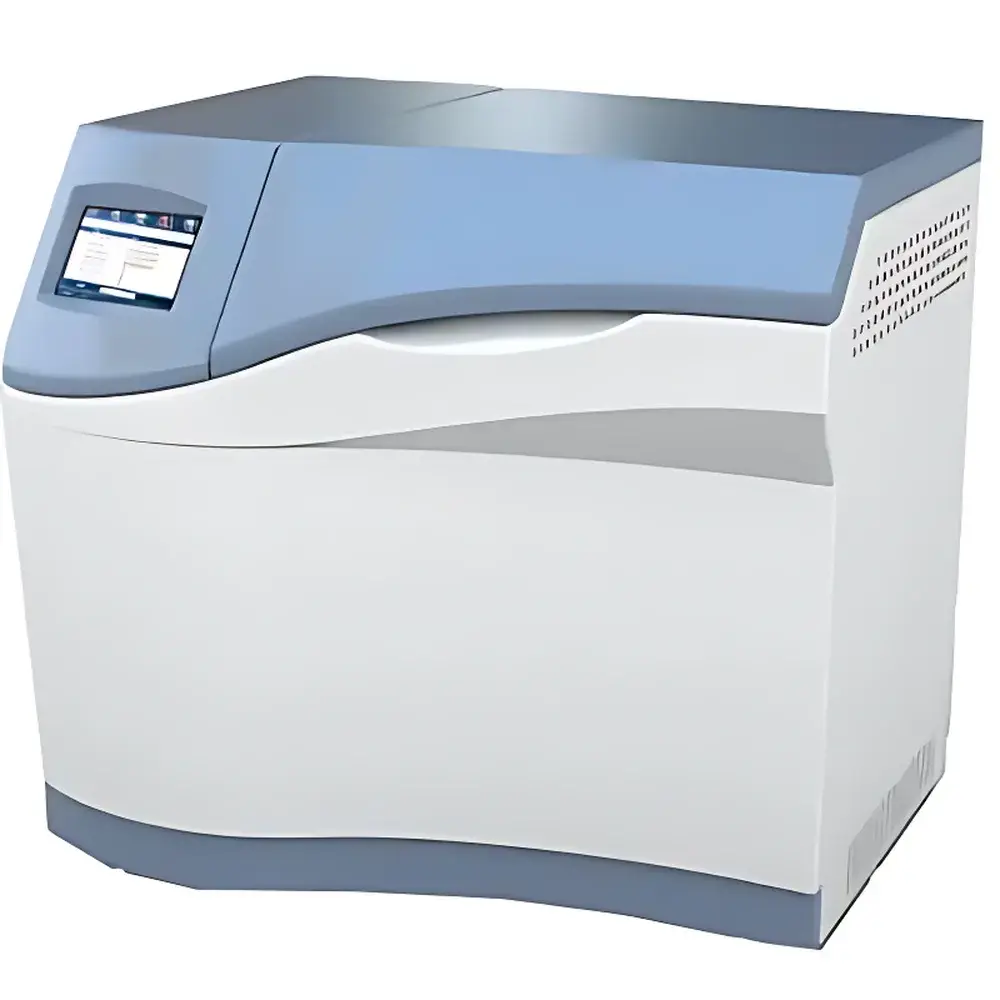
Sonnen F22 Fully Automated Fiber Analyzer
| Brand | Sonnen |
|---|---|
| Model | F22 |
| Application | Crude Fiber, Neutral Detergent Fiber (NDF), Acid Detergent Fiber (ADF), Acid Detergent Lignin (ADL), and Insoluble Dietary Fiber analysis |
| Principle | Standardized acid-base digestion (AOAC 978.10, AOAC 2002.04, ISO 13906, GB/T 6434–2022) |
| Filtration Technology | 25 µm pore-size filter bags (optional 15 µm or 10 µm) |
| Batch Capacity | 30 samples per run |
| Temperature Range | Ambient to 100 °C |
| Sample Mass per Bag | 0.1–5.0 g |
| Repeatability | ≤0.5% RSD |
| Temperature Control Accuracy | ±0.1 °C |
| Power Supply | AC 220 V / 50 Hz |
| Dimensions (W×D×H) | 373 × 500 × 450 mm |
| Weight | 25 kg |
| Safety | High-pressure sealed digestion chamber, no cooling water required, no glass components, operational in standard lab environment without fume hood |
Overview
The Sonnen F22 Fully Automated Fiber Analyzer is an engineered solution for precise, high-throughput determination of structural fiber fractions in feed, food, and beverage matrices. It implements standardized acid-base digestion protocols—fully compliant with AOAC Official Methods 978.10 (crude fiber), 2002.04 (NDF/ADF/ADL), and ISO 13906—as well as China’s GB/T 6434–2022. Unlike manual or semi-automated systems, the F22 executes complete digestion workflows within a sealed, pressure-rated reaction chamber, eliminating solvent exposure, operator intervention, and variability introduced by inconsistent manual stirring or timing. Its core architecture integrates gravimetric filtration via disposable 25 µm polypropylene filter bags (with optional 15 µm or 10 µm variants), enabling robust separation of insoluble residues while preserving analytical integrity across diverse sample types—from pelleted livestock feed and grass silage to cereal grains and plant-based dairy alternatives.
Key Features
- Fully automated reagent dispensing, digestion, heating, intermittent agitation, rinsing, and waste evacuation—no manual intervention required during runtime.
- Patented intermittent agitation system (15 rotations per minute, 1-minute cycle interval) replicates optimal manual stirring kinetics, ensuring homogeneous sample-solvent contact and minimizing channeling or incomplete extraction.
- Triple independent corrosion-resistant precision peristaltic pumps for acid, alkali, and deionized water delivery—calibrated for volumetric accuracy and cross-contamination prevention.
- High-pressure sealed digestion chamber (rated for sustained operation up to 100 °C), eliminating need for external cooling water and enabling safe deployment in standard laboratory environments without fume hood infrastructure.
- Color LCD touchscreen interface with intuitive workflow navigation, real-time parameter monitoring (temperature, pressure, reagent levels), and built-in safety interlocks.
- 250 programmable method templates stored onboard—each configurable for digestion time, temperature ramp profiles, agitation frequency, and reagent volumes—supporting rapid method transfer and audit-ready reproducibility.
- Intelligent reagent dosing: volume automatically scaled to actual sample count per batch (1–30), reducing chemical consumption by up to 40% versus fixed-volume systems.
- No internal glass components; all wetted parts constructed from PTFE, PVDF, and reinforced polypropylene for long-term resistance to concentrated sulfuric acid, sodium hydroxide, and alpha-amylase solutions.
Sample Compatibility & Compliance
The F22 supports routine analysis of heterogeneous biological matrices including compound animal feeds, forage crops (alfalfa, corn silage), cereal by-products (bran, hulls), legume meals, and functional food ingredients. It meets the physical and procedural requirements of major international fiber standards—including AOAC, ISO, and national pharmacopoeial methods—and is validated for use in GLP-compliant laboratories. Instrument design conforms to IEC 61010-1 (electrical safety) and ISO 17025 traceability frameworks. Full documentation—including manufacturer authorization letters, ISO 9001 quality management system certification, and technical specifications—is supplied with each unit to support procurement validation and regulatory audits.
Software & Data Management
The embedded control firmware logs all critical process parameters (time-stamped temperature, pressure, reagent dispense volumes, agitation cycles) with automatic timestamping and user ID tagging. Data export is supported via USB 2.0 to CSV format for integration into LIMS or statistical analysis platforms. While the F22 does not include remote connectivity or cloud synchronization, its local audit trail satisfies FDA 21 CFR Part 11 requirements for electronic records when paired with institutional SOPs governing data review, retention, and backup. All method configurations are password-protected and versioned to ensure controlled change management.
Applications
- Quality assurance of ruminant feed formulations—monitoring NDF digestibility and lignin content to predict rumen fermentation kinetics.
- Regulatory compliance testing for pet food labeling (crude fiber declarations per AAFCO guidelines).
- Research on dietary fiber structure–function relationships in human nutrition studies.
- Raw material screening in starch and cellulose derivative manufacturing.
- Validation of enzymatic pretreatment efficiency in biofuel feedstock processing.
FAQ
What fiber fractions can the F22 quantify?
The instrument supports full sequential analysis for crude fiber (CF), neutral detergent fiber (NDF), acid detergent fiber (ADF), acid detergent lignin (ADL), and insoluble dietary fiber (IDF) using AOAC- and ISO-aligned protocols.
Is method validation support provided?
Yes—Sonnen supplies application notes, certified reference material (CRM) test reports, and validation templates aligned with ISO/IEC 17025 for method verification in accredited labs.
Can the F22 be integrated into a laboratory information management system (LIMS)?
Raw data export via USB to CSV enables manual import into most LIMS platforms; however, native API or HL7 connectivity is not available.
What maintenance is required for long-term reliability?
Scheduled replacement of peristaltic pump tubing (every 6 months under typical use), periodic calibration of temperature sensors (annually), and routine inspection of sealing gaskets are recommended.
Does the system require ventilation or special utility infrastructure?
No—operation is fully self-contained: no fume hood, no chilled water supply, and no compressed air connection are needed.



