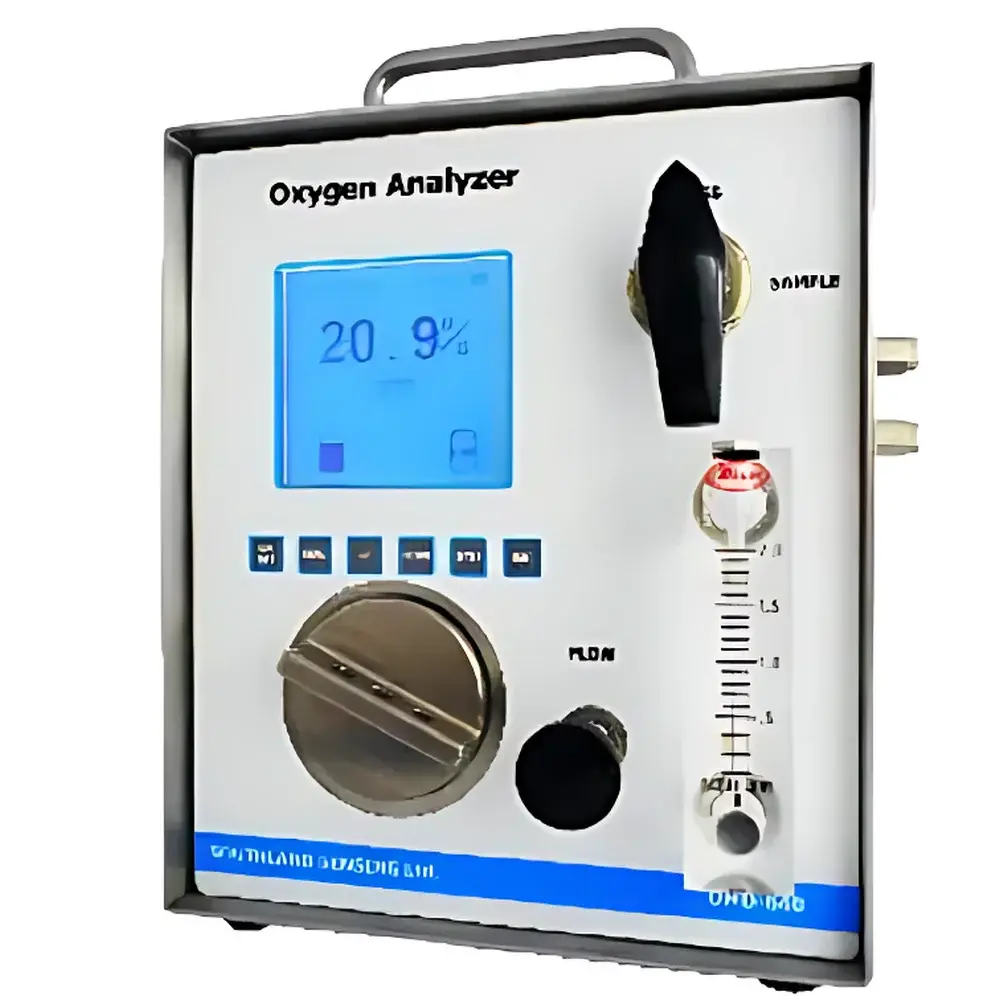
Southland MOMD-640 Portable Oxygen Analyzer
| Brand | Southland |
|---|---|
| Model | MOMD-640 |
| Origin | USA |
| Measurement Range | 0–1 ppm, 0–10 ppm, 0–100 ppm, 0–1,000 ppm, 0–25% O₂ |
| Accuracy | <1% FS |
| Response Time (T90) | 10 s |
| Operating Temperature | 0–50 °C |
| Dimensions | 10.9 × 10.0 × 4.9 in |
| Weight | 11.75 lb |
| Housing | Brushed Stainless Steel |
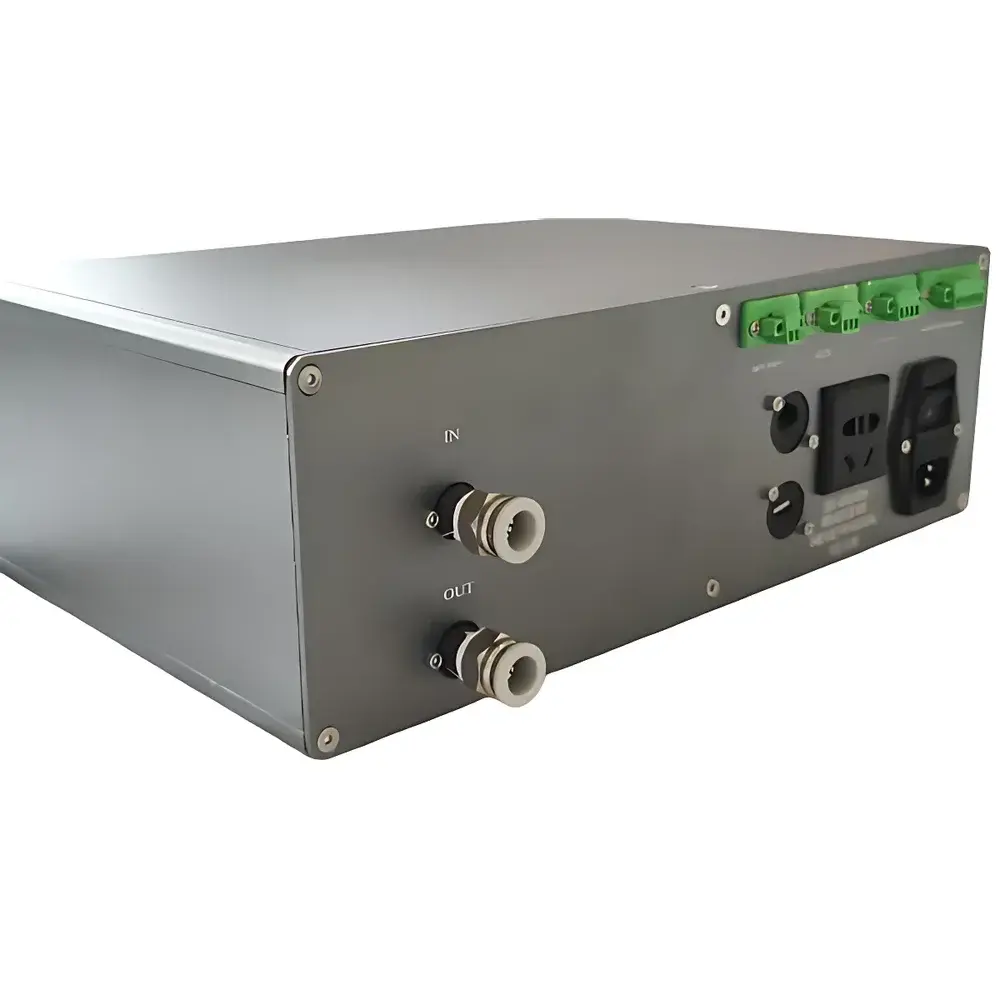
| Inlet Pressure Range | 0–50 PSI |
| Power | Rechargeable Battery + 100–240 VAC Adapter |
| Sensor Lifetime | 20–25 months |
| Analog Output | 0–1 VDC |
| Data Storage | Removable 8 GB USB Flash Drive (CSV format, supports >50 years of logging at 1-min intervals) |
| Display | Backlit, Sunlight-Readable LCD |
| Sensor Type | Electrochemical Fuel Cell (SSO2 series) |
| Warranty | 12 months |
| Compliance | Designed for GLP-compliant field use |
Overview
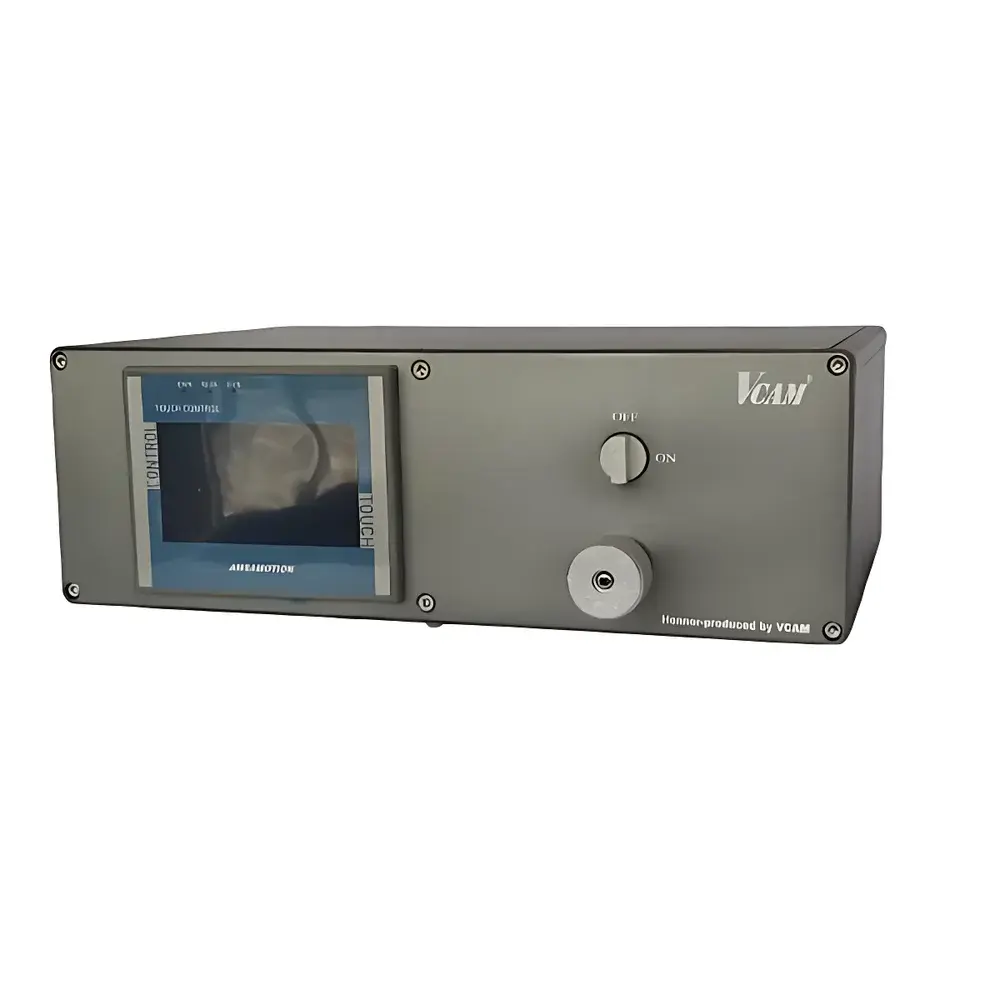
The Southland MOMD-640 Portable Oxygen Analyzer is an engineered solution for ultra-low-level oxygen quantification in demanding industrial and laboratory environments. Based on electrochemical fuel cell technology, the instrument delivers high specificity, long-term stability, and minimal drift—critical attributes for applications requiring trace oxygen detection down to 0–1 ppm full scale. Unlike paramagnetic or zirconia-based analyzers, the SSO2-series sensor employed in the MOMD-640 operates via a galvanic reaction between ambient O₂ and a proprietary electrolyte, generating a current linearly proportional to partial pressure. This principle ensures immunity to background gases such as hydrogen, helium, and non-reactive hydrocarbons when using the standard TO2-133 cell—eliminating cross-sensitivity artifacts common in semiconductor-grade purge verification or inert atmosphere monitoring. The analyzer’s compact, ruggedized chassis—constructed from brushed stainless steel—is rated for continuous operation across 0–50 °C and inlet pressures up to 50 PSI, making it suitable for both benchtop verification and field-deployed leak surveys.
Key Features
- Ultra-trace oxygen detection with selectable ranges: 0–1 ppm, 0–10 ppm, 0–100 ppm, 0–1,000 ppm, and 0–25% O₂—enabling single-instrument versatility across purity validation and safety monitoring tasks.
- Electrochemical fuel cell sensor (SSO2 platform) manufactured in Southland’s ISO 9001-certified facility in California, with strict in-process QA and final calibration traceable to NIST-standard reference gases.
- Sunlight-readable backlit LCD display—engineered for legibility under direct ambient illumination without shading or auxiliary optics.
- Integrated data logging via removable 8 GB USB flash drive; records timestamped O₂ concentration values in CSV format at user-defined intervals (default: 1 minute), supporting over five decades of continuous storage.
- Low-maintenance architecture: TO2-133 and TO2-233 sensor variants require no electrode cleaning, electrolyte replenishment, or periodic membrane replacement—reducing total cost of ownership and operational downtime.
- Flexible power system: rechargeable internal battery for cordless operation (typical runtime >8 hours), plus universal 100–240 VAC adapter for extended stationary use.
Sample Compatibility & Compliance
The MOMD-640 accommodates gaseous samples across a broad chemical matrix. The standard TO2-133 sensor exhibits negligible interference from H₂, He, CH₄, N₂, Ar, and CO—making it ideal for high-purity nitrogen or argon blanketing verification. For acidic process streams containing CO₂, sour natural gas, or fermentation off-gas, the optional TO2-233 acidic-cell variant maintains accuracy without signal suppression or accelerated degradation. All sensor configurations comply with ASTM D6349–22 (Standard Practice for Trace Oxygen Analysis in High-Purity Gases) and support audit-ready documentation per FDA 21 CFR Part 11 when paired with validated data export protocols. Instrument housing meets IP54 ingress protection requirements for dust and splash resistance during field deployment.
Software & Data Management
Data acquisition and archival are fully hardware-integrated: no external software installation is required. Upon insertion of the supplied 8 GB USB drive, the analyzer automatically initiates timestamped logging in comma-separated value (CSV) format—compatible with Excel, MATLAB, LabVIEW, and LIMS platforms. Each record includes date/time stamp, measured O₂ concentration, selected range, sensor status flag, and battery voltage. Exported files include embedded metadata headers for unambiguous interpretation during regulatory review. While the device lacks Bluetooth or Ethernet connectivity, its USB-driven workflow ensures air-gapped data integrity—a key requirement in controlled environments governed by ISO/IEC 17025 or GMP Annex 11.
Applications
- Pipeline and vessel leak detection: Quantify ingress oxygen in pressurized inert systems to identify micro-leak points prior to commissioning or maintenance.
- Head-space analysis in pharmaceutical and food packaging: Validate residual O₂ levels in blister packs, vials, and modified-atmosphere packaging (MAP) to ensure product shelf-life stability.
- Beverage-grade CO₂ certification: Monitor dissolved oxygen carryover in carbonation lines and bulk CO₂ storage tanks per USP and EC No. 1333/2008 requirements.
- Thermal processing atmospheres: Verify O₂ <10 ppm in bright annealing furnaces, brazing chambers, and sintering belts where oxide formation must be suppressed.
- Inert-gas welding shielding: Confirm purge gas purity (<5 ppm O₂) in titanium, zirconium, and superalloy weld backing zones to prevent embrittlement.
FAQ
What is the recommended calibration frequency for the MOMD-640?
Southland recommends initial zero and span calibration upon commissioning, followed by quarterly verification using certified O₂ standard gases (e.g., 0.5 ppm and 10 ppm N₂-balanced). Calibration certificates may be generated manually and archived with exported CSV logs.
Can the MOMD-640 measure oxygen in corrosive or high-humidity gas streams?
The TO2-233 acidic-cell variant is specifically designed for CO₂-rich or mildly acidic environments; however, prolonged exposure to condensate, SO₂, or Cl₂ is not advised. Sample conditioning (e.g., particulate filtration and refrigerated drying) is recommended upstream of the analyzer inlet.
Is sensor replacement a field-serviceable procedure?
Yes—the SSO2 sensor module is tool-free and hot-swappable. Replacement requires only physical insertion into the designated bay and automatic recognition by firmware; no manual coefficient entry or reconfiguration is needed.
Does the instrument support analog output integration with PLCs or DCS systems?
Yes—0–1 VDC analog output is isolated and scalable to match any selected measurement range, enabling seamless connection to industrial control systems for real-time process trending and alarm triggering.
How is measurement traceability maintained for regulatory audits?
Each unit ships with a factory calibration report referencing NIST-traceable standards. Users may retain raw CSV logs, calibration records, and sensor lot documentation to satisfy GLP, ISO 17025, or FDA inspection requirements.