
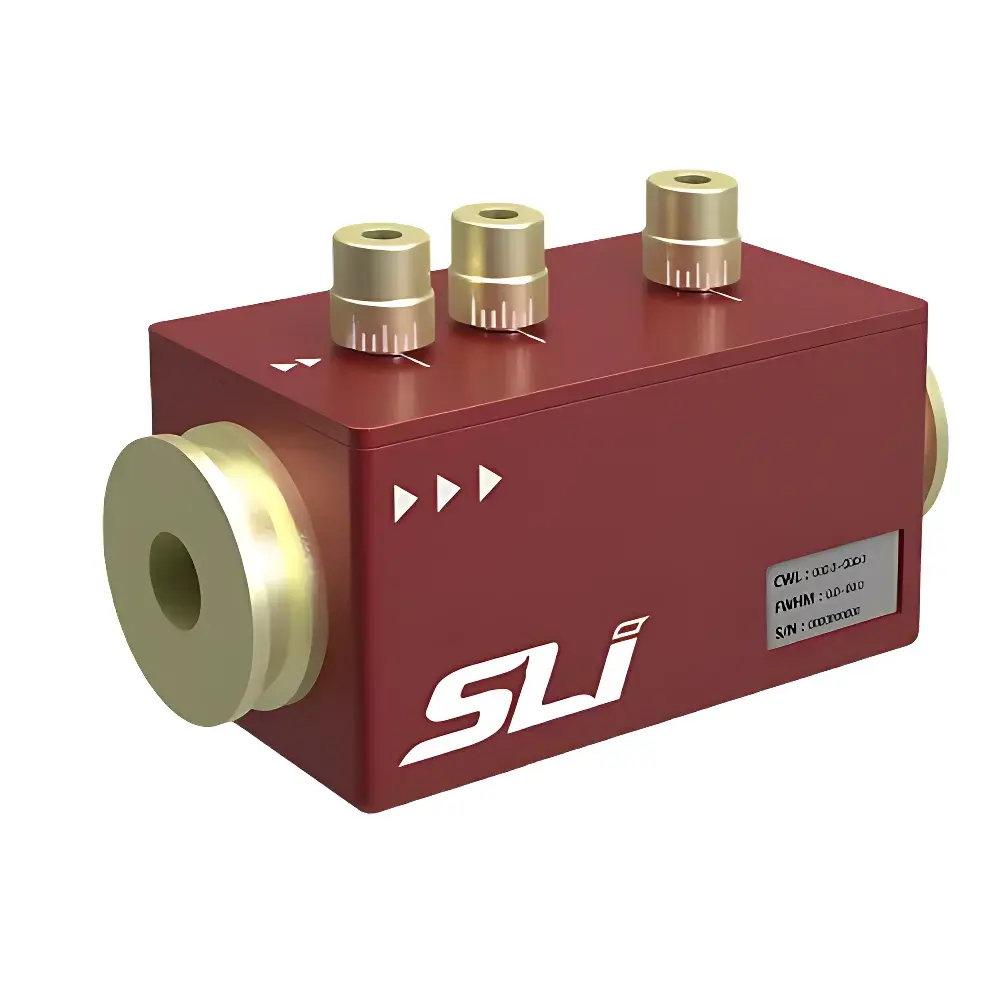
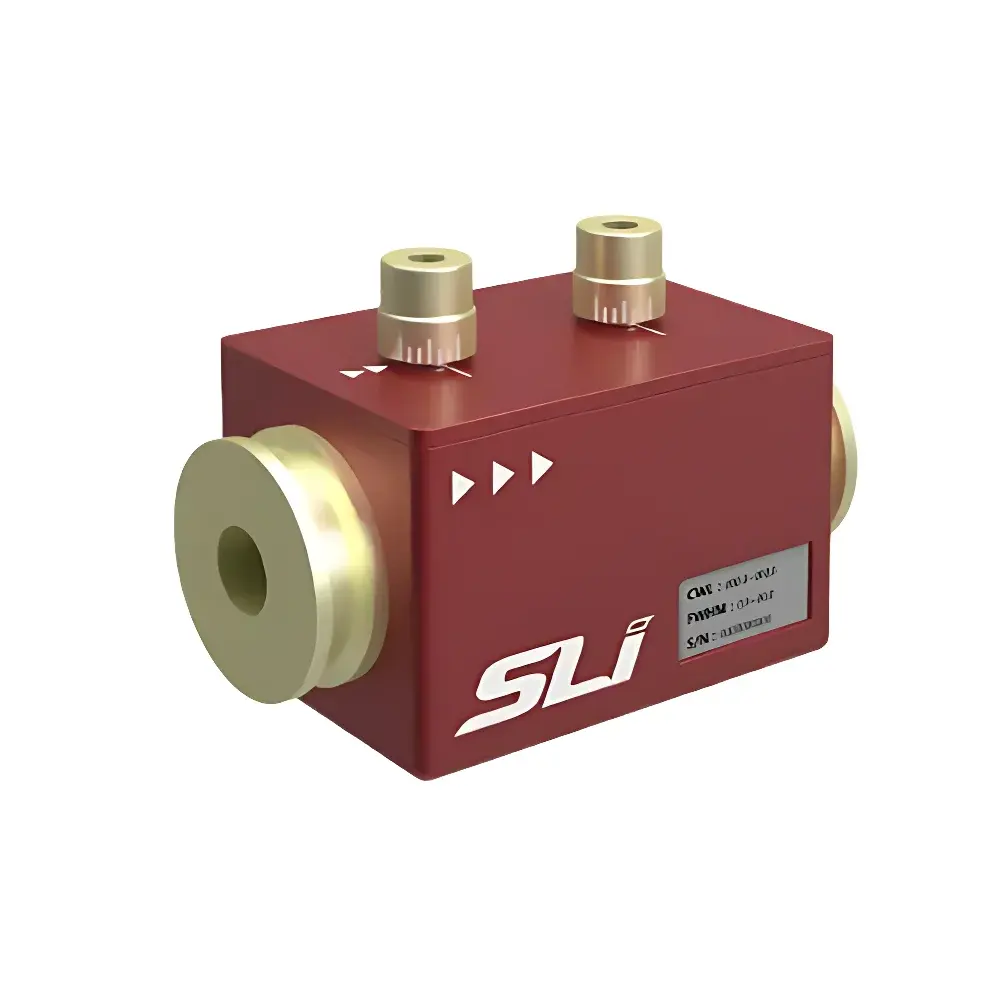
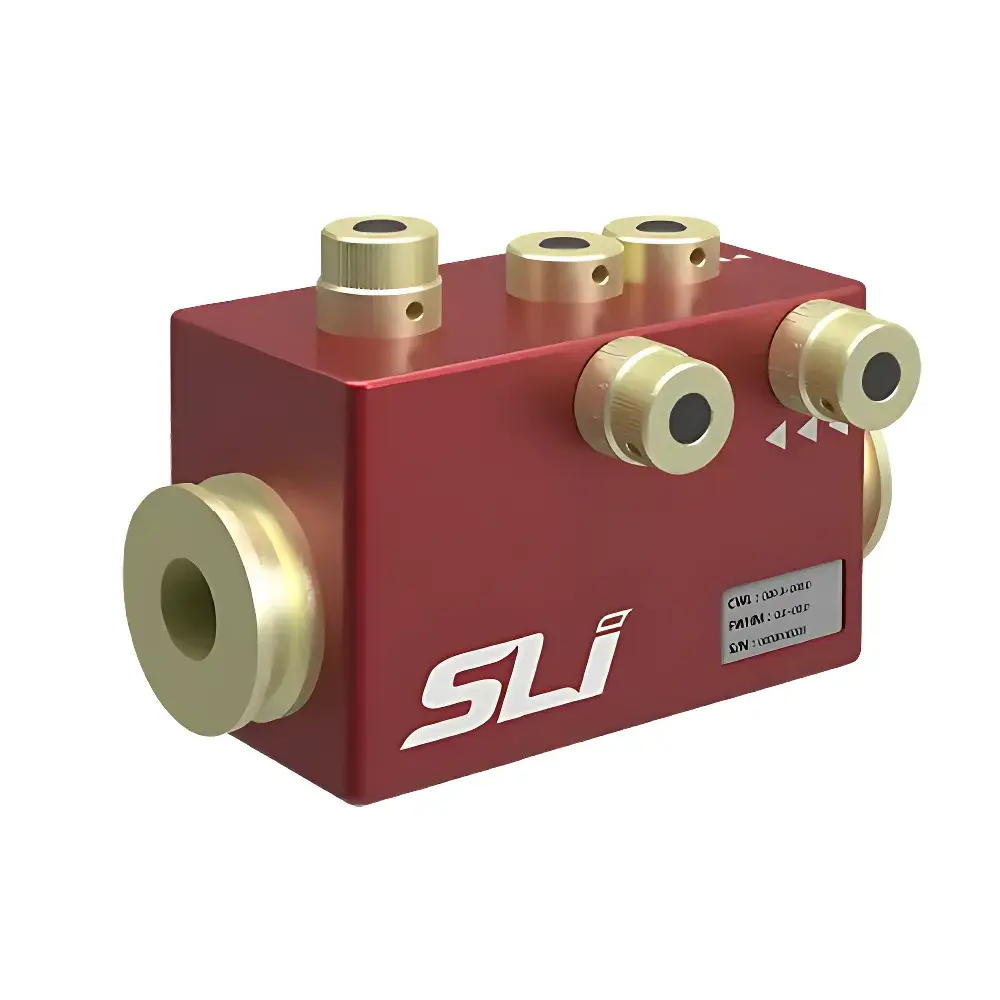
Spectrolight FWS Manual TwinFilm™ Manual Wavelength Selector
| Brand | Spectrolight |
|---|---|
| Origin | USA |
| Manufacturer Type | Authorized Distributor |
| Product Origin | Imported |
| Model | FWS Manual |
| Price Range | USD 0–7,200 (est.) |
| Wavelength Tuning Range | 358–900 nm |
| FWHM Tuning Range | 2–16 nm (model-dependent) |
| Aperture Diameter | 5 mm or 10 mm |
| Peak Transmission | >75% |
| Technology | TwinFilm™ Interference Filter Architecture |
| Beam Deviation | <0.5 mrad during tuning |
| Compliance | RoHS-compliant housing |
Overview
The Spectrolight FWS Manual TwinFilm™ Manual Wavelength Selector is a precision optical filtering device engineered for high-fidelity spectral control in imaging and photometric applications. Unlike conventional interference filters or monochromators, the FWS leverages Spectrolight’s proprietary TwinFilm™ technology—a dual-layer, mechanically tunable thin-film interference architecture—that enables continuous, repeatable adjustment of both center wavelength (CWL) and full width at half maximum (FWHM) bandwidth without introducing beam deviation, focus shift, or image plane displacement. This makes it uniquely suited for integration into fixed-optics systems such as fluorescence microscopes, hyperspectral camera platforms, and OEM life science instrumentation where optical path stability and spatial fidelity are critical. The device operates across the full visible to near-infrared spectrum (358–900 nm), supporting applications requiring narrowband spectral isolation with mechanical simplicity and long-term calibration stability.
Key Features
- TwinFilm™ Dual-Tuning Mechanism: Independent, backlash-free mechanical adjustment of CWL and FWHM via calibrated knurled knobs—no motorization or electronics required.
- Zero-Drift Optical Path: Optomechanical design ensures <0.5 mrad beam deviation during full spectral tuning, preserving alignment integrity in microscope objectives and telecentric imaging trains.
- Circular Uniform Aperture: 5 mm or 10 mm clear aperture with <±1.5% intensity non-uniformity across field—optimized for pixel-limited detectors and fiber-coupled systems.
- High Extinction Ratio: >OD 4.0 rejection outside passband (typical), minimizing out-of-band leakage in multi-channel fluorescence detection.
- Three Configurable Series: Basic (fully manual CWL + FWHM), CenterLine (factory-set FWHM ≈11–16 nm, manual CWL only), and High-Resolution (dual high-resolution dials for sub-nm CWL resolution and ±0.3 nm FWHM repeatability).
- Robust Mounting Interface: Standard SM1 (1.035″-40) threading and kinematic base plate compatibility for seamless integration into Thorlabs-, Newport-, or custom optical breadboards.
Sample Compatibility & Compliance
The FWS Manual is designed for use with collimated or near-collimated beams (f-number ≥ f/4 recommended). It maintains specified transmission and bandwidth performance under ambient laboratory conditions (15–30°C, <60% RH) and is rated for continuous operation with average power densities up to 1 W/cm² (CW, 532 nm). All models comply with RoHS Directive 2011/65/EU and meet ISO 10110-7 surface quality specifications (scratch-dig 60-40). While not inherently certified for GMP or FDA-regulated environments, the device supports traceable calibration workflows and is routinely deployed in GLP-compliant labs conducting USP spectrophotometric method development and ASTM E308-22 colorimetric validation protocols.
Software & Data Management
The FWS Manual is a fully manual, analog optical component—no firmware, drivers, or software dependencies are required. However, Spectrolight provides downloadable calibration datasets (CSV format) for each serial-numbered unit, including measured CWL vs. dial position curves, FWHM vs. bandwidth setting maps, and transmission spectra (350–900 nm, 0.5 nm step). These files integrate natively with MATLAB, Python (via NumPy/Pandas), and LabVIEW for automated spectral recipe generation. For users requiring audit trails in regulated environments, the mechanical dial positions can be logged manually or via external encoder add-ons (e.g., Thorlabs KDC101-compatible rotary encoders), enabling alignment with 21 CFR Part 11 electronic record requirements when paired with validated LIMS or ELN systems.
Applications
- Fluorescence Microscopy: Rapid switching between excitation/emission bands (e.g., DAPI/FITC/TRITC/Cy5) without filter cube replacement—reducing photobleaching and stage drift.
- Hyperspectral Imaging: Serving as a tunable line-filter front-end for push-broom or snapshot systems, enabling real-time band selection prior to sensor integration.
- Life Science Instrumentation: Embedded in flow cytometers, plate readers, and digital pathology scanners where space-constrained, vibration-insensitive spectral selection is mandatory.
- Machine Vision Inspection: Enabling material-specific contrast enhancement (e.g., polymer sorting, semiconductor wafer defect detection) via dynamic bandpass selection.
- Academic & Industrial R&D: Supporting spectral response characterization of photodetectors, quantum dot emitters, and OLED materials under controlled illumination conditions.
FAQ
Is the FWS Manual compatible with UV or deep-UV wavelengths below 350 nm?
No—the TwinFilm™ coating stack is optimized for 358–900 nm operation. Below 350 nm, transmission drops significantly and mechanical tuning repeatability degrades due to increased coating stress.
Can I retrofit an FWS Manual with motorized actuators?
Yes—Spectrolight offers OEM motorization kits (stepper + encoder) for FWS-HM models. Integration requires mechanical interface redesign and is subject to NDA-based engineering support.
What is the typical wavelength repeatability after repeated tuning cycles?
For FWS-B and FWS-CL models: ±0.8 nm over 10,000 full-range cycles. For FWS-HM: ±0.2 nm under identical conditions, verified per ISO 9001 calibration reports.
Do CWS fixed-wavelength variants share the same optical coatings and thermal stability as FWS units?
Yes—CWS devices use identical TwinFilm™ stacks and undergo the same environmental aging and thermal cycling validation (−10°C to +50°C, 1000-hour burn-in).
Is there a minimum beam diameter requirement for optimal FWHM performance?
A minimum collimated beam diameter of 3 mm is recommended to avoid vignetting effects; performance specifications assume uniform illumination across the full clear aperture.





