
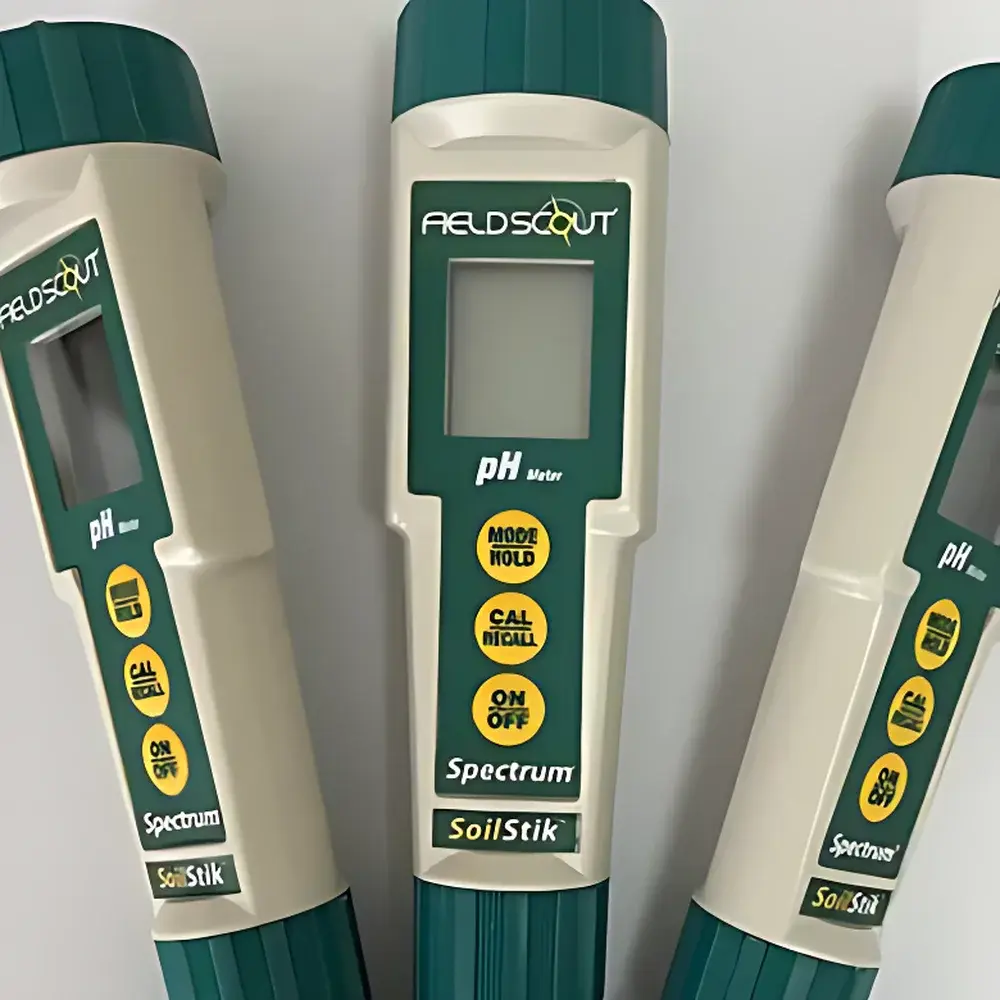
Spectrum Soilstik Portable Soil ORP (Oxidation-Reduction Potential) Meter
| Brand | Spectrum |
|---|---|
| Origin | USA |
| Manufacturer Type | Authorized Distributor |
| Import Status | Imported |
| Model | Soilstik |
| Instrument Type | Soil ORP Meter |
| ORP Range | –900 to +1000 mV |
| ORP Resolution | 1 mV |
| ORP Accuracy | ±4 mV |
| Display | Digital LCD |
| Data Storage | 15 sequential tagged readings |
| Operating Environment | 0–50 °C, <80% RH |
| Auto-off | After 10 min idle |
| Power | 4 × CR2032 batteries |
| Dimensions | 37 × 175 × 42 mm |
| Weight | 120 g |
| Ingress Protection | IP57 |
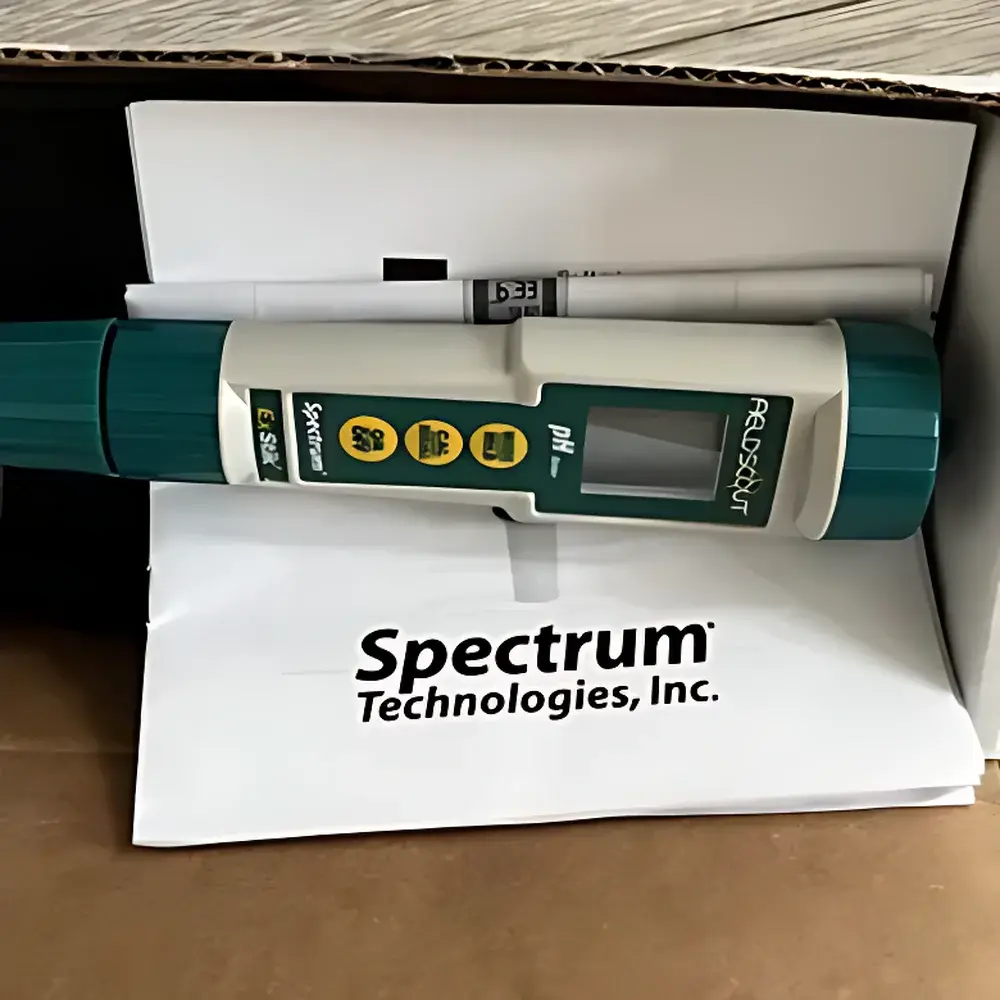
| Included Accessories | Sensor protective cap, rinse bottle, user manual |
Overview
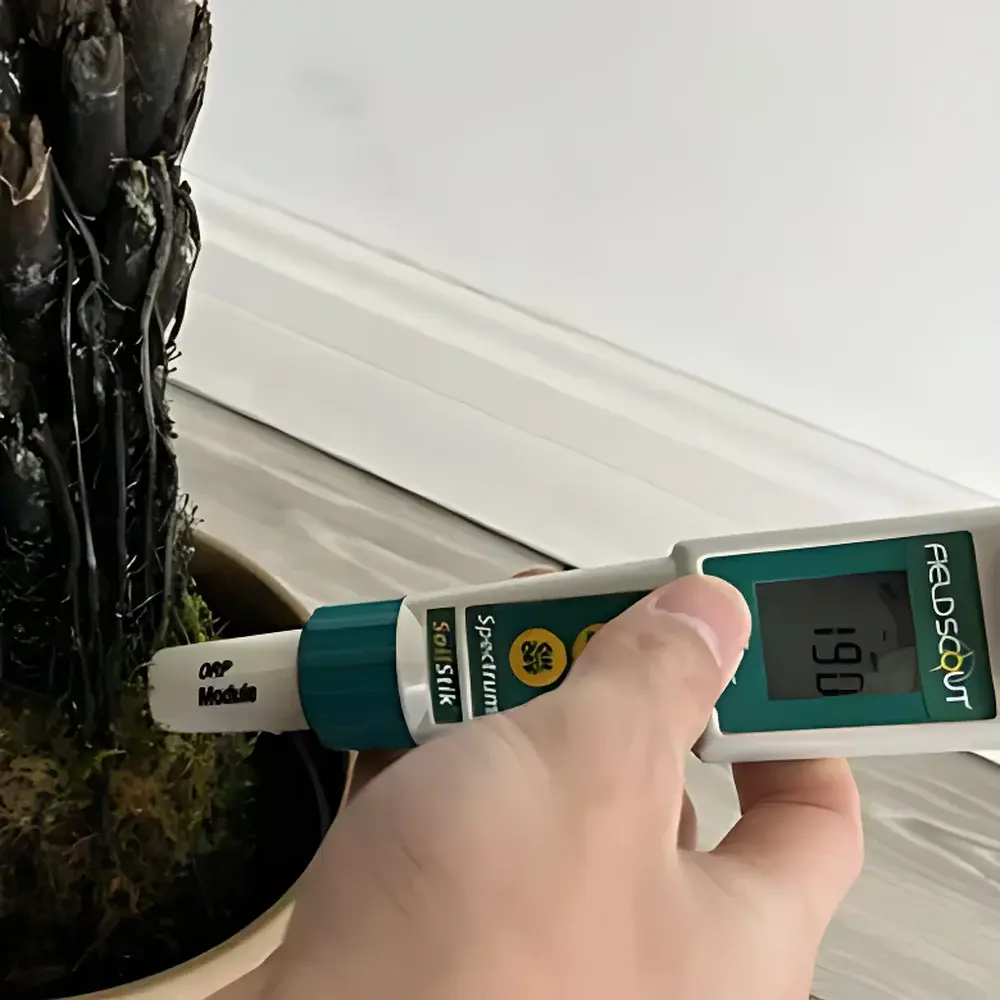
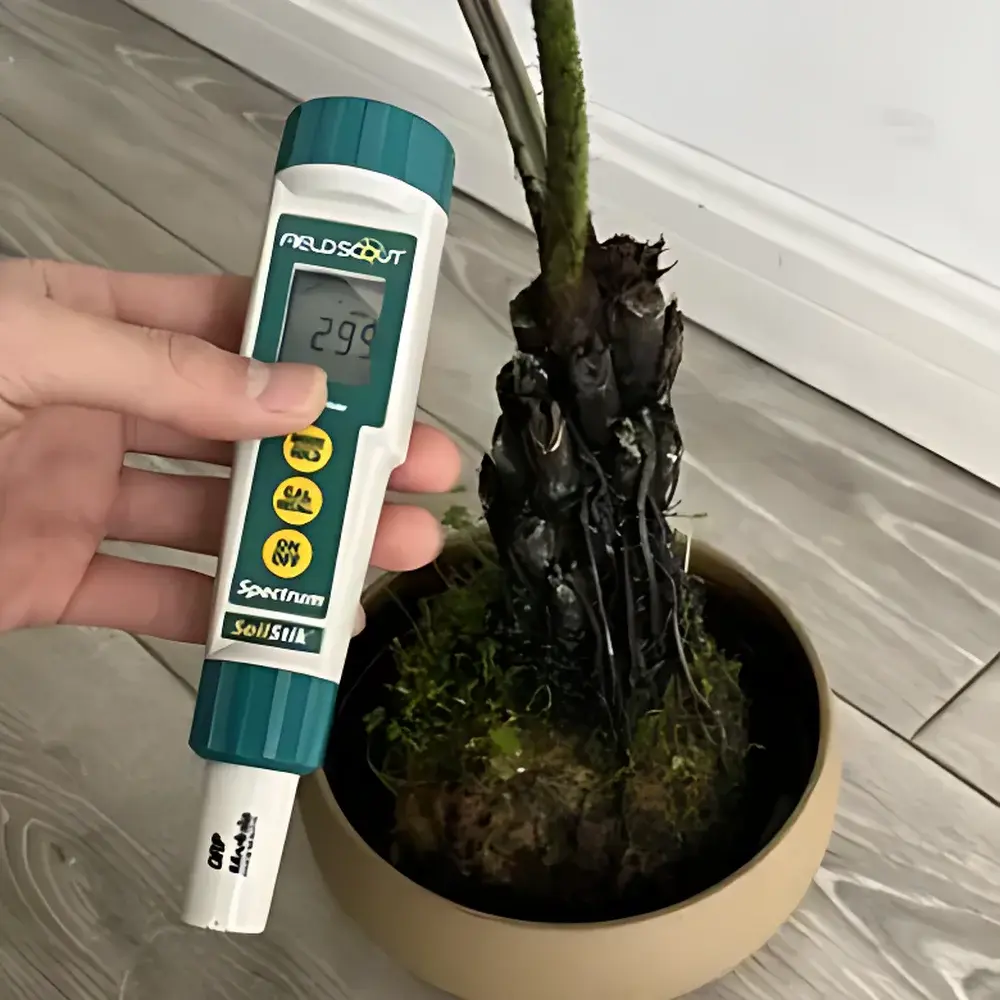
The Spectrum Soilstik Portable Soil ORP Meter is an engineered field instrument designed for direct, in-situ measurement of oxidation-reduction potential (Eh or ORP) in heterogeneous soil matrices. It operates on the fundamental electrochemical principle of potentiometric measurement: a platinum sensing electrode establishes a reversible redox interface with the soil matrix, while a built-in Ag/AgCl reference electrode provides a stable, temperature-compensated potential baseline. The resulting voltage difference—expressed in millivolts (mV)—quantifies the thermodynamic tendency of the soil environment to accept or donate electrons, serving as a critical integrative indicator of biogeochemical status. Unlike pH or conductivity meters, ORP reflects dynamic microbial and geochemical processes—including denitrification, sulfate reduction, iron/manganese cycling, and organic matter decomposition—making it indispensable for wetland characterization, contaminated site assessment, agricultural redox management, and landfill leachate monitoring. The Soilstik’s flat-profile probe geometry enables minimal soil disturbance during insertion, preserving natural pore structure and moisture distribution—key for representative Eh readings in unsaturated or stratified profiles.
Key Features
- Flat-profile platinum ORP sensor optimized for direct insertion into soils, sediments, sludges, and semi-solid media—eliminating clogging, mechanical breakage, or hydration lag common with cylindrical electrodes.
- Integrated Ag/AgCl reference system with gel-electrolyte junction, ensuring stable potential output across variable ionic strength and low-moisture conditions typical of field soils.
- Digital LCD display with real-time stability indicator and auto-hold function—freezes reading once signal drift falls below 1 mV/5 sec, confirming thermodynamic equilibrium at the electrode surface.
- Intelligent diagnostics: LED-based electrode life indicator alerts users when sensor performance degradation exceeds ASTM D3693–22 tolerance thresholds; calibration reminder triggers after 48 hours of cumulative use or prior to next measurement session.
- IP57-rated enclosure: fully protected against dust ingress and submersion up to 1 m for 30 minutes—validated per IEC 60529—enabling reliable operation in rain, high-humidity forest floors, or flooded paddy fields.
- Low-power architecture: 4 × CR2032 coin cells deliver >2,000 measurements per set; battery-level indicator activates at ≤2.8 V to prevent data corruption during logging.
Sample Compatibility & Compliance
The Soilstik is validated for use across a broad spectrum of soil physical states—from saturated clays and peat bogs to dry loams and compacted subsoils—as well as slurries, compost piles, and shallow groundwater interfaces. Its flat sensor geometry avoids preferential channeling in coarse-textured soils and maintains consistent contact pressure in low-cohesion sands. The device conforms to ASTM D3693–22 (Standard Test Method for Oxidation-Reduction Potential of Soils) and supports GLP-compliant workflows through timestamped, non-editable data storage. While not FDA 21 CFR Part 11 certified (as it lacks electronic signature capability), its read-only memory architecture ensures audit-trail integrity for environmental reporting under EPA Region 10 protocols and ISO 17025-accredited lab support activities.
Software & Data Management
Data are stored locally in non-volatile memory: 15 sequentially tagged readings, each including mV value, timestamp (YYYY-MM-DD HH:MM), and user-assigned alphanumeric label (e.g., “Plot_3A_Wet”). No proprietary software or USB interface is required—readings are retrieved via front-panel scroll navigation. All stored entries retain full traceability without metadata loss, satisfying minimum record-keeping requirements under US EPA SW-846 Method 9040C. The absence of wireless transmission or cloud sync eliminates cybersecurity exposure vectors—a design choice aligned with field-deployment risk assessments in critical infrastructure or defense-related environmental surveys.
Applications
- Wetland delineation and hydrologic regime classification per USACE Wetland Delineation Manual criteria.
- Redox zonation mapping in phytoremediation sites to guide plant species selection (e.g., identifying Fe²⁺-rich reducing zones suitable for *Typha* spp. planting).
- Monitoring anaerobic digestion efficiency in biosolids land application programs.
- Assessing nitrate attenuation capacity in riparian buffers using ORP–NO₃⁻ correlation models (e.g., –150 to +100 mV range indicating active denitrification).
- Long-term climate change studies tracking shifts in soil redox gradients across permafrost thaw transects.
FAQ
How does the Soilstik differ from standard ORP meters used in water testing?
Unlike aqueous ORP probes with porous ceramic junctions prone to clogging in particulate-rich soils, the Soilstik uses a sealed, flat-surface Pt electrode with no liquid junction—enabling direct solid-phase contact without electrolyte leakage or soil infiltration.
Is temperature compensation automatic?
No. The Soilstik reports raw mV values per ASTM D3693–22 convention; users must apply temperature-specific Nernst corrections manually if absolute Eh values (vs. SHE) are required for thermodynamic modeling.
Can the sensor be cleaned in the field?
Yes. The included rinse bottle contains deionized water; gentle wiping with a lint-free cloth is recommended after each use. Avoid abrasive cleaners or ultrasonic baths, which may damage the Pt surface microstructure.
What does the “electrode life indicator” actually monitor?
It evaluates internal impedance drift and open-circuit potential hysteresis across repeated measurement cycles—not just battery voltage—providing early detection of Pt surface passivation or reference electrode depletion.
Is calibration required before every use?
Calibration is recommended before first use and after any mechanical impact or exposure to extreme pH (11); the device retains calibration stability for ≥72 hours under normal field conditions, per manufacturer validation report S-ORP-2023-08.







