
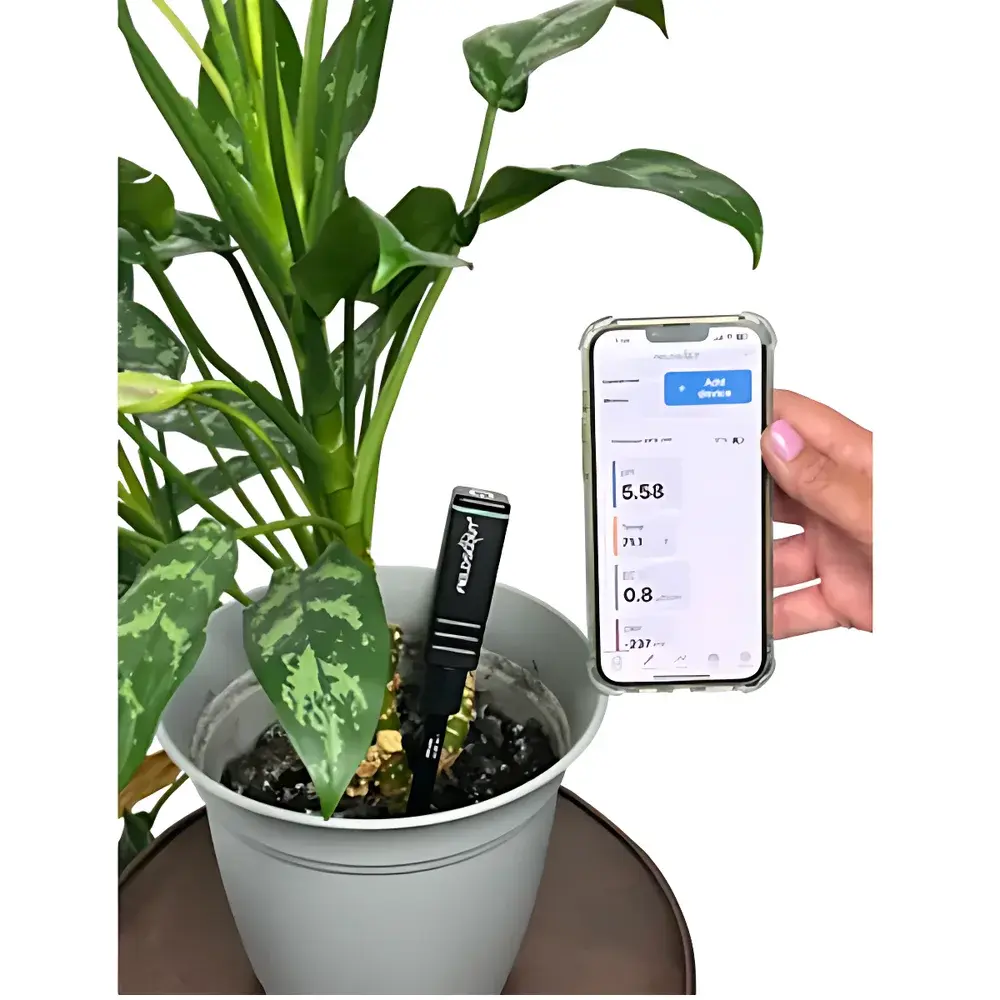
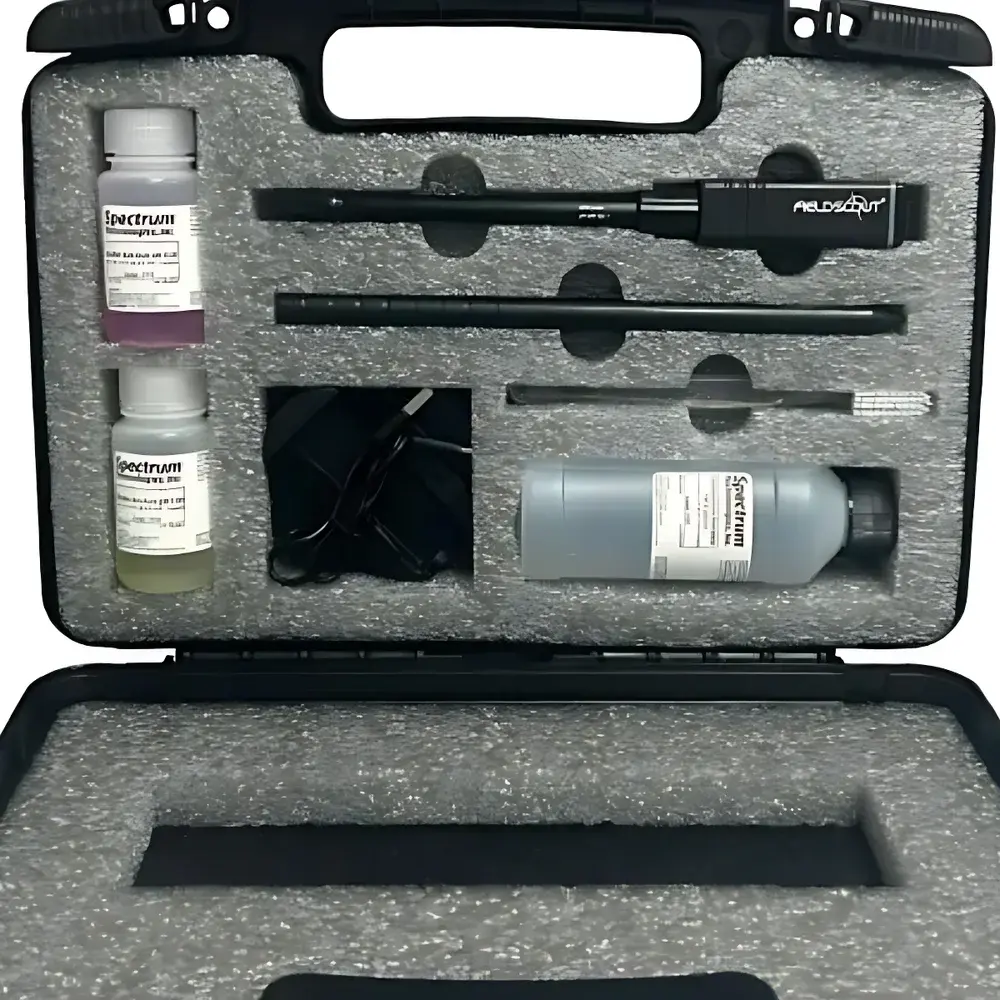
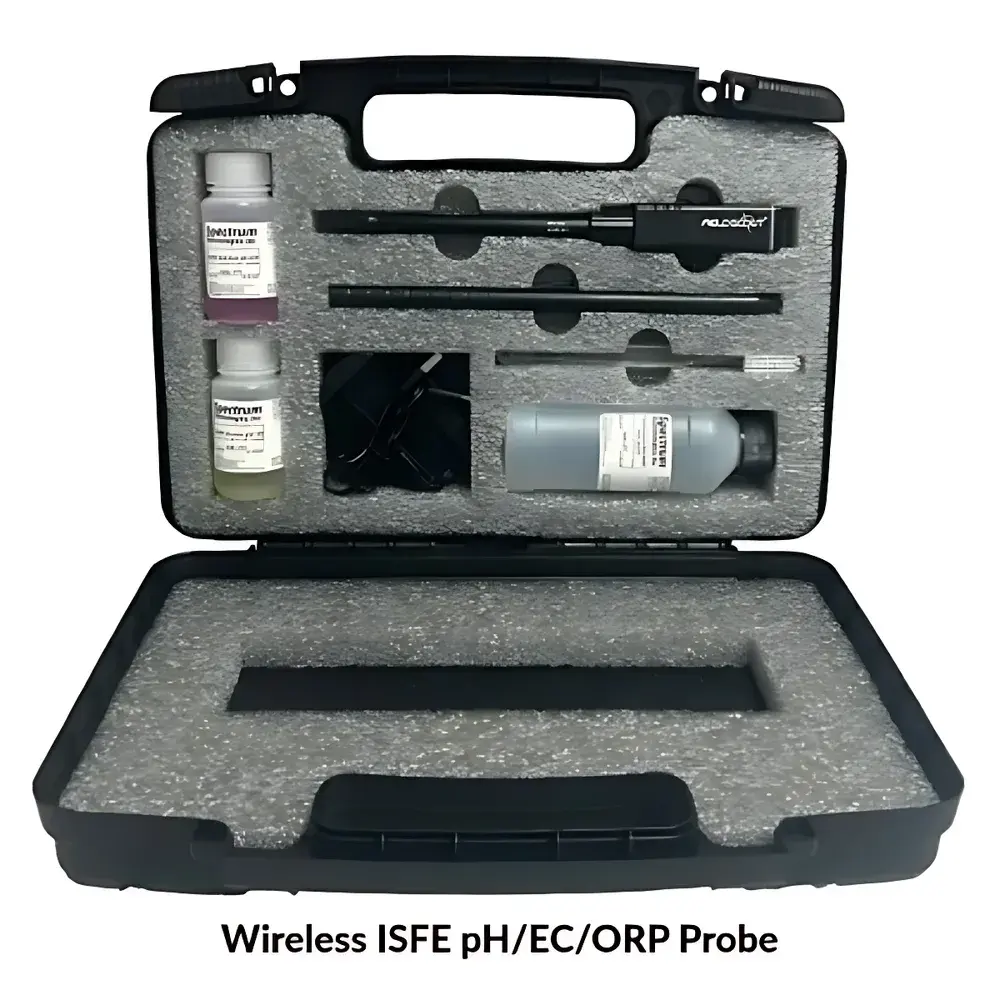
Spectrum Technologies 2128W Portable In-Situ Soil pH/ORP/EC Meter
| Brand | Spectrum Technologies |
|---|---|
| Model | 2128W |
| Origin | USA |
| Detection Principles | ISFET-based pH, Platinum-reference ORP, Four-Electrode Conductivity |
| pH Range | 0–14 |
| pH Accuracy | ±0.01 pH |
| pH Resolution | 0.01 pH |
| Temperature Compensation | Automatic (0–100 °C) |
| Temperature Range | −5–120 °C |
| Temperature Accuracy | ±0.5 °C |
| ORP Range | −2000 to +2000 mV |
| ORP Accuracy | ±0.2 mV |
| ORP Resolution | 0.1 mV |
| EC Range | 50–111,800 μS/cm |
| EC Accuracy | ±1% (50–12,880 μS/cm), ±10% (12,880–111,800 μS/cm) |
| EC Resolution | 0.5 nS/cm (low range), 50 nS/cm (full range) |
| Calibration | Auto 1-/2-point pH |
| Wireless Range | ≤50 m (Bluetooth 4.0+) |
| Enclosure Rating | IP65 |
| Power | 3× rechargeable AA batteries |
Overview
The Spectrum Technologies 2128W Portable In-Situ Soil pH/ORP/EC Meter is an integrated field-deployable instrument engineered for direct, real-time measurement of three critical soil electrochemical parameters—pH, oxidation-reduction potential (ORP), and electrical conductivity (EC)—without sample extraction or laboratory processing. Unlike conventional glass-electrode pH meters, the 2128W employs solid-state Ion-Sensitive Field-Effect Transistor (ISFET) technology in its stainless-steel pH probe, delivering mechanical robustness, rapid response, and immunity to breakage or liquid junction drift. The ORP sensor utilizes a platinum working electrode with a built-in Ag/AgCl reference system, ensuring stable redox potential readings across heterogeneous soil matrices. EC measurement is performed via a four-electrode (tetrapolar) configuration, minimizing polarization errors and contact resistance effects common in two-electrode systems—particularly essential when measuring variable-texture soils with high organic content or clay mineralogy. Designed for continuous in-situ deployment, the instrument supports true on-site profiling, enabling longitudinal monitoring of biogeochemical gradients in agricultural fields, remediation sites, wetlands, and ecological research plots.
Key Features
- Compact handheld form factor with ergonomic grip and ruggedized housing rated IP65 for dust ingress protection and water resistance against low-pressure jets
- Integrated Bluetooth 4.0+ module enabling wireless telemetry to iOS and Android devices within 50 meters line-of-sight
- Simultaneous multi-probe connectivity—up to six calibrated sensors can be paired and managed via the Spectrum Connect mobile application
- Intelligent auto-calibration wizard guiding users through single- or dual-point pH calibration using NIST-traceable buffer standards (pH 4.01, 7.00, 10.01)
- Real-time out-of-range alerting: visual and audible notifications triggered when pH falls outside user-defined thresholds (e.g., 8.0 for agronomic interpretation)
- Onboard temperature compensation algorithm compliant with DIN 19263 and ASTM D2777-20 for pH and EC, referencing internal thermistor measurements at the probe tip
- Rechargeable AA battery system supporting ≥12 hours of continuous operation under typical field duty cycles
Sample Compatibility & Compliance
The 2128W is validated for direct insertion into undisturbed mineral and organic soils—including loam, clay, sandy loam, peat, and compost-amended substrates—without pre-treatment. Its stainless-steel ISFET probe resists fouling from humic acids, iron oxides, and root exudates, maintaining signal stability over repeated insertions. The ORP electrode demonstrates reproducibility across redox-active environments such as flooded rice paddies, anaerobic bioremediation zones, and constructed wetland sediments. EC measurements conform to ISO 11265:1995 (soil electrical conductivity determination) and are traceable to NIST Standard Reference Materials (SRMs) 3192a and 3193. While not certified for GLP or GMP-regulated environments, the device supports audit-ready data logging (timestamped, GPS-tagged, operator-ID stamped) compatible with ISO/IEC 17025 documentation workflows.
Software & Data Management
The Spectrum Connect mobile application—available in English, Spanish, French, German, and Chinese—provides full instrument control, live graphing, and export functionality. All measurements are stored locally on the device and synchronized to cloud storage upon connection. Raw datasets include metadata fields for location (GPS), depth, soil texture class, ambient temperature/humidity, and operator ID. Export formats include CSV (for Excel and R/Python analysis), PDF summary reports (with embedded calibration logs), and KML for GIS integration. The software enforces data integrity via immutable timestamps and prevents post-acquisition editing—supporting basic ALCOA+ principles (Attributable, Legible, Contemporaneous, Original, Accurate) required in environmental monitoring programs.
Applications
- Agricultural nutrient management: Correlating pH/ORP/EC profiles with nitrogen mineralization rates, phosphorus solubility, and micronutrient bioavailability
- Phytoremediation site assessment: Tracking redox shifts during hydrocarbon degradation or heavy metal immobilization
- Turfgrass and horticultural substrate monitoring: Optimizing irrigation scheduling and acidification treatments in greenhouses and golf course fairways
- Soil health indexing: Contributing to USDA NRCS Soil Health Institute metrics including cation exchange capacity (CEC) proxies and salinity stress indicators
- Field-based education: Supporting undergraduate soil science laboratories and extension agent training modules on electrochemical soil characterization
FAQ
Does the 2128W require routine recalibration in the field?
Yes—pH calibration is recommended before each sampling session or after exposure to extreme pH conditions (e.g., pH 11). ORP requires no user calibration; it ships with factory verification against Zobell’s solution (225 mV ±5 mV at 25 °C). EC calibration is advised weekly when used in high-salinity environments (>5,000 μS/cm).
Can the instrument measure saturated paste extracts?
No—the 2128W is designed exclusively for in-situ, undisturbed soil measurements. For saturated paste analysis, use a benchtop meter with standardized extraction protocols per ASTM D4292 or USDA Handbook No. 42.
Is GPS data captured automatically during measurement?
Yes—when enabled in the Spectrum Connect app, geotagging occurs at the time of data capture using the host smartphone’s GNSS receiver (accuracy ±3–5 m under open-sky conditions).
What maintenance is required for long-term reliability?
Rinse probe tips with deionized water after each use; store pH and ORP probes hydrated in storage solution (pH 4 buffer or 3 M KCl); clean EC electrodes with dilute HCl (0.1 M) if scaling is observed. Avoid abrasive cleaning tools or ultrasonic baths.
Related Products







