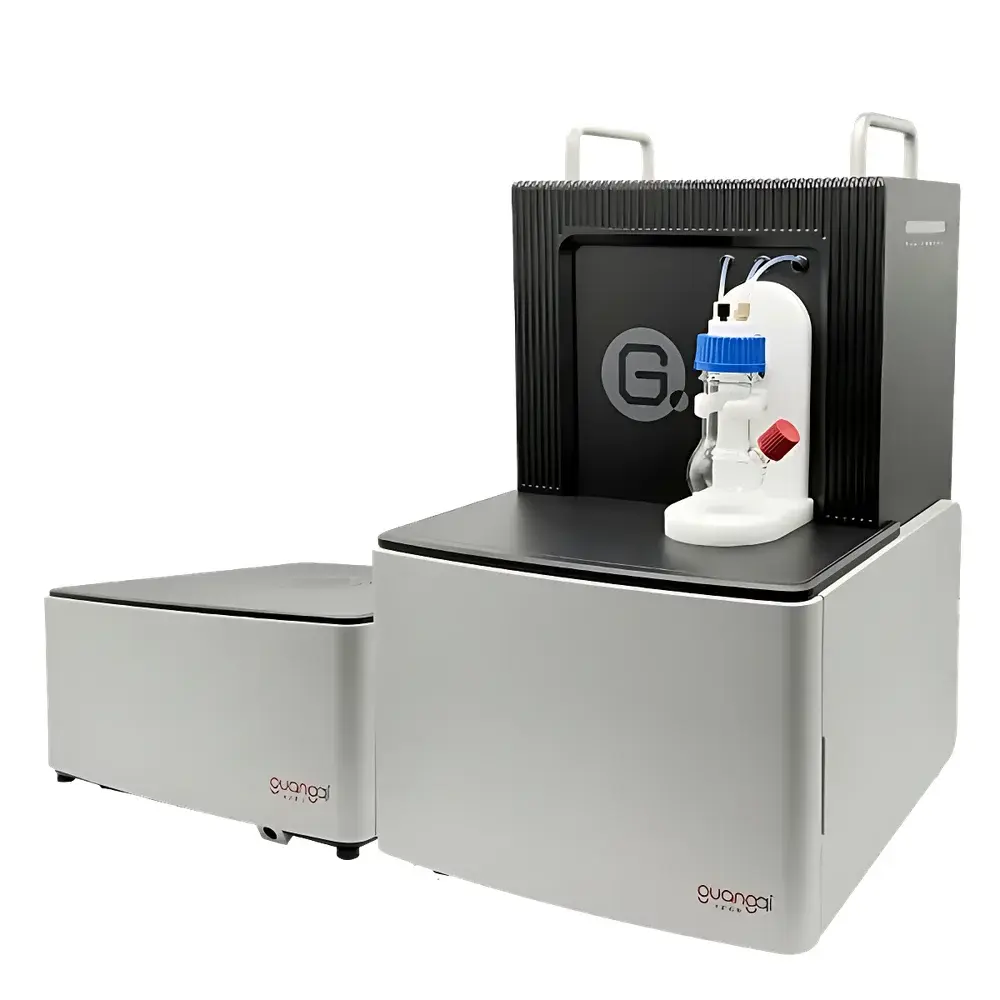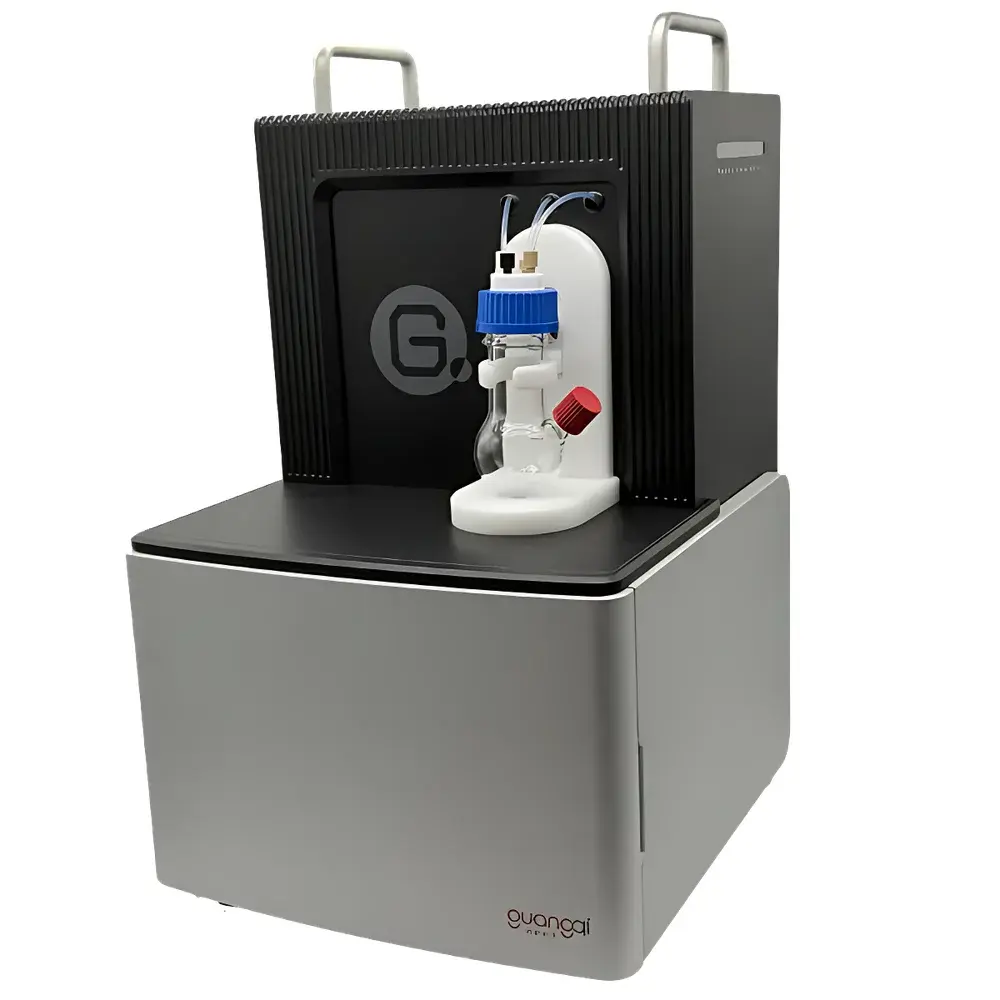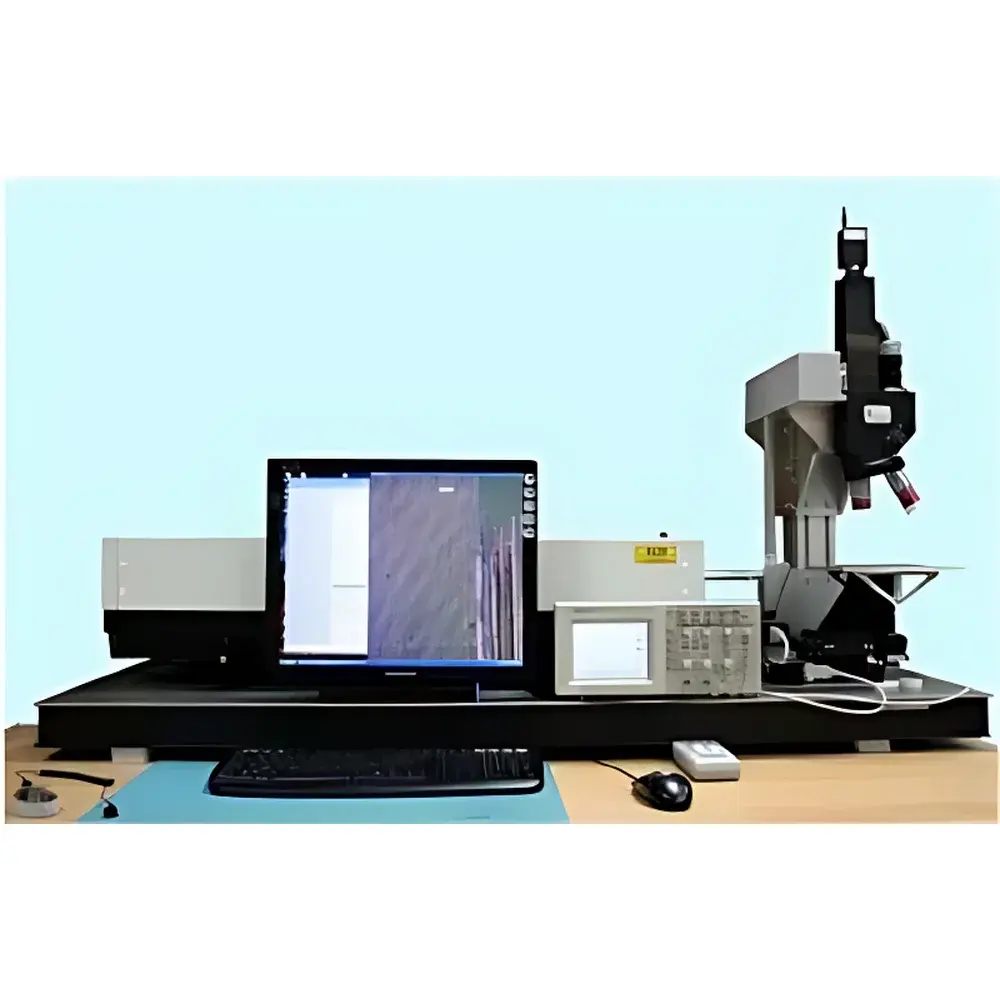
SPELS LSS-3 Laser-Based Single-Event Effect Simulation System
| Brand | SPELS |
|---|---|
| Origin | Imported |
| Manufacturer Type | Authorized Distributor |
| Model | LSS-3 |
| Pricing | Upon Request |
Overview
The SPELS LSS-3 Laser-Based Single-Event Effect (SEE) Simulation System is a precision-engineered platform designed for ground-based emulation of space radiation-induced transient faults in semiconductor devices and integrated circuits. Unlike broad-beam irradiation or radioactive source testing, the LSS-3 employs a sub-nanosecond (picosecond-class) pulsed laser—typically at 1064 nm or frequency-doubled 532 nm—as a highly localized, time-synchronized photon probe. The system operates on the principle of photoelectric carrier generation: when the ultrafast laser pulse is tightly focused through a high-numerical-aperture microscope objective onto a device-under-test (DUT), it generates dense electron-hole pairs within silicon or compound semiconductor junctions (e.g., CMOS, SOI, GaN, SiC). This localized charge deposition mimics the ionization track left by a single high-energy heavy ion or proton traversing a sensitive node—enabling deterministic, spatially resolved injection of single-event transients (SETs), single-event upsets (SEUs), latch-ups (SELs), or burnouts (SEBs). The LSS-3 is engineered for reproducible, traceable, and non-destructive fault injection under controlled laboratory conditions—critical for radiation-hardness assurance (RHA) programs in aerospace, defense, and high-reliability electronics development.
Key Features
- Sub-10 ps pulse width laser source with adjustable repetition rate (1 Hz–1 MHz), enabling precise temporal correlation with DUT clock cycles and logic state capture.
- Integrated beam homogenization and real-time energy monitoring via calibrated photodiode and thermal sensor array—ensuring dose accuracy within ±3% per pulse.
- Motorized XYZ translation stage with 100 nm closed-loop positioning resolution and 100 × 100 mm travel range, compatible with standard wafer carriers and packaged IC sockets.
- Dual-wavelength capability (1064 nm for bulk silicon penetration; 532 nm for shallow junction targeting), selectable via automated dichroic optics.
- Real-time optical alignment feedback via coaxial CCD imaging synchronized with laser trigger, supporting sub-micron spot placement verification.
- EMI-shielded enclosure with interlocked safety shutter and Class 1 laser classification compliance per IEC 60825-1:2014.
Sample Compatibility & Compliance
The LSS-3 supports bare die, flip-chip assemblies, wire-bonded packages (QFP, BGA, CSP), and full wafers up to 200 mm diameter. Device biasing is accommodated via programmable DC/AC sources (±10 V, 1 A) and high-speed digital pattern generators (up to 1 Gb/s) for functional test synchronization. All hardware and control firmware conform to ISO 9001 quality management standards. The system architecture supports audit-ready operation per DO-254 (avionics), ECSS-Q-ST-60-15C (space electronics), and NASA-HDBK-4002A (radiation effects testing guidelines). Optional integration with GLP-compliant electronic lab notebooks (ELN) enables full traceability of laser parameters, DUT configuration, and observed fault signatures per test point.
Software & Data Management
The proprietary SEEStudio™ control suite provides unified GUI-driven operation—including automated raster scanning, fault mapping, and cross-correlation of laser coordinates with layout databases (GDSII/OASIS import supported). Raw pulse timing, energy logs, stage position timestamps, and external oscilloscope/DCA acquisition triggers are stored in HDF5 format with embedded metadata (per IEEE 1857-2020). Built-in statistical analysis modules calculate upset cross-sections (σSEU), threshold fluence (Φth), and spatial sensitivity profiles. Export options include CSV, MATLAB .mat, and XML for downstream integration with TCAD simulation tools (e.g., Synopsys Sentaurus, Silvaco Atlas). Audit trail functionality meets FDA 21 CFR Part 11 requirements for electronic records and signatures when configured with role-based access control and digital certificate authentication.
Applications
- Radiation hardness assurance (RHA) qualification of ASICs, FPGAs, memory arrays, and power management ICs for LEO, GEO, and deep-space missions.
- Failure analysis of single-event induced timing violations, metastability, and analog-to-digital converter (ADC) offset shifts.
- Validation of error detection and correction (EDAC), triple modular redundancy (TMR), and layout-level hardening techniques.
- Correlation studies between laser-induced charge collection efficiency and heavy-ion LET spectra using calibrated fluence-to-LET conversion models.
- Development of fault-injection testbenches compliant with ISO 26262 ASIL-D and IEC 61508 SIL-3 functional safety standards.
FAQ
What laser wavelengths are supported, and how are they selected?
The LSS-3 offers dual-wavelength operation at 1064 nm (for deep junction penetration in bulk Si) and 532 nm (for surface-sensitive nodes in SOI or FinFET technologies), switched automatically via motorized filter wheel and collimation alignment.
Can the system be integrated with existing automated test equipment (ATE)?
Yes—standard SCPI over TCP/IP and PXIe-compatible trigger I/O allow seamless synchronization with commercial ATE platforms (e.g., Teradyne UltraFLEX, Advantest T2000) for high-throughput SEE screening.
Is calibration traceable to national metrology institutes?
Laser pulse energy calibration is NIST-traceable via accredited third-party certification (certificate provided with each system shipment); stage positioning accuracy is verified per ISO 230-2 Annex C protocols.
Does the system support real-time fault signature capture from high-speed interfaces?
Yes—integrated 40 GS/s digitizers (optional) or external oscilloscopes (via LVDS/USB-TMC) can be triggered synchronously with laser pulses to record transient waveforms on DDR5, PCIe Gen5, or SerDes links.
How is laser safety managed during operation?
The system includes interlocked enclosure doors, Class 1 emission certification via beam containment, redundant shutter control, and real-time power monitoring with automatic shutdown if energy exceeds user-defined thresholds.