
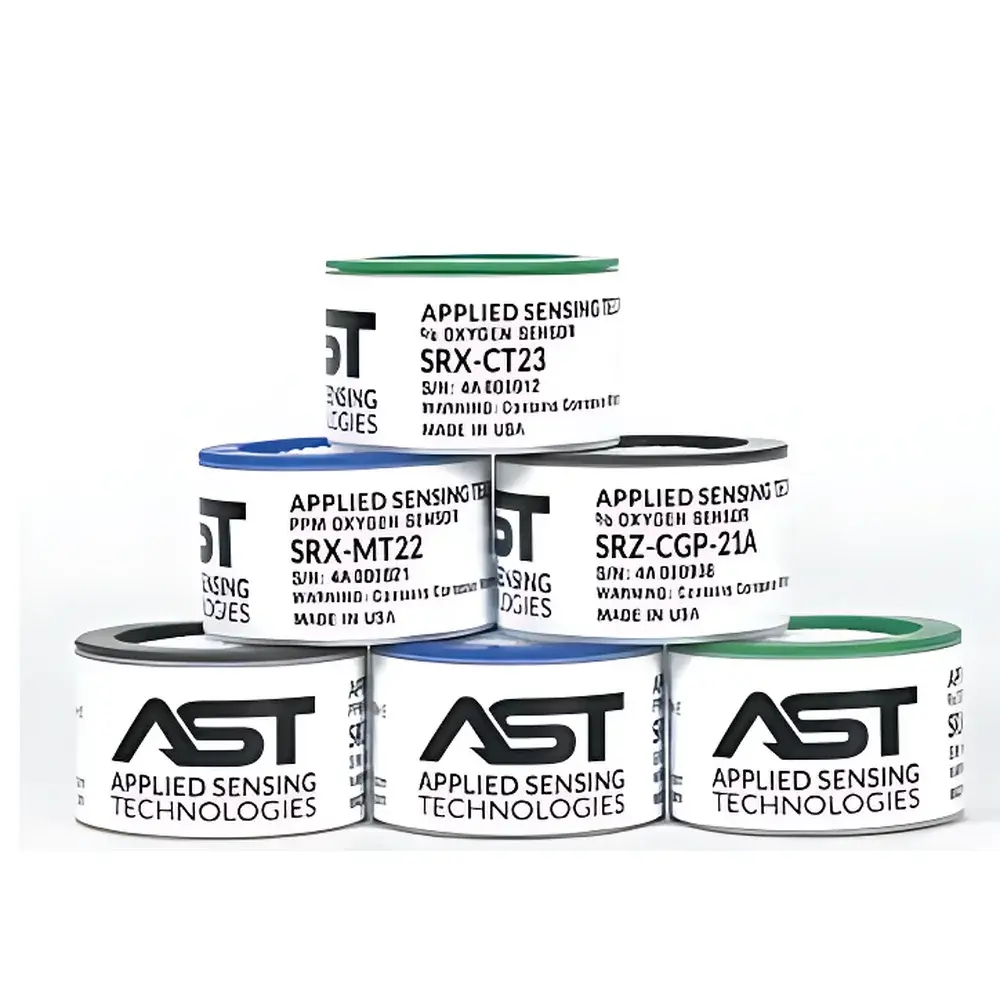
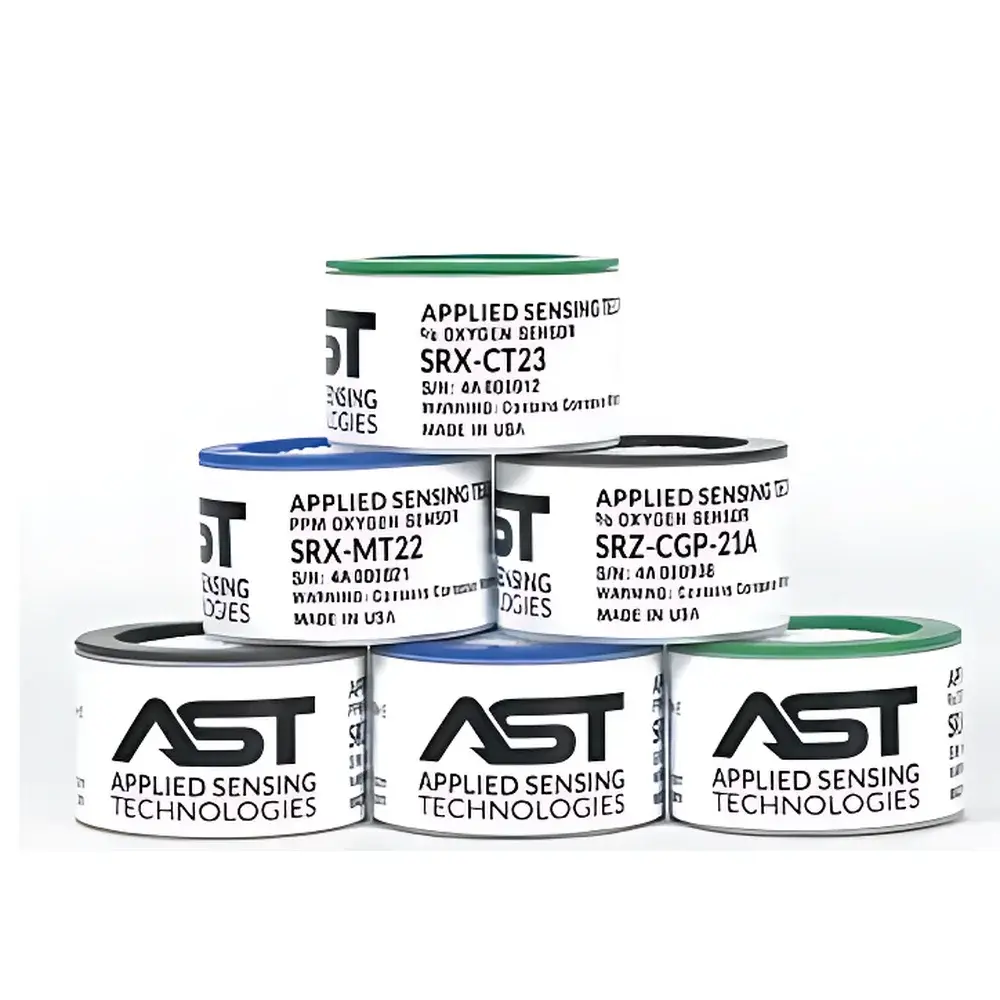
SRX-CT23 Electrochemical Oxygen Sensor
| Origin | USA |
|---|---|
| Manufacturer Type | Authorized Distributor |
| Origin Category | Imported |
| Model | SRX-CT23 |
| Price Range | USD 280–690 |
| Instrument Type | Electrochemical Electrode |
Overview
The SRX-CT23 Electrochemical Oxygen Sensor is a galvanic-type oxygen sensing element engineered for continuous, real-time measurement of dissolved or gaseous molecular oxygen (O₂) concentrations in industrial process streams, environmental monitoring systems, and laboratory-grade analyzers. Operating on the principle of spontaneous electrochemical reduction of O₂ at a noble metal cathode (typically gold or platinum), the sensor generates a diffusion-limited current proportional to the partial pressure of oxygen—enabling linear, low-maintenance quantification without external polarization voltage. Designed for integration into OEM and third-party electrochemical oxygen analyzers—including platforms from Teledyne Analytical Instruments, AII (Advanced Instruments Inc.), AMI (Analytical Measurement Instruments), GE Sensing, Panametrics (now Baker Hughes), and Figaro Engineering—the SRX-CT23 delivers stable zero-current output with inherent temperature compensation across standard ambient operating ranges. Its robust epoxy-sealed housing and PTFE hydrophobic membrane ensure long-term stability in humid, corrosive, or particulate-laden gas environments, while maintaining high selectivity against CO₂, SO₂, H₂S, and common VOCs.
Key Features
- Galvanic (self-powered) operation—no external bias required; eliminates drift associated with polarographic sensors
- PTFE membrane with controlled oxygen permeability, optimized for response time <15 seconds (t₉₀) in air-saturated conditions
- Linear output signal (nA to µA range) directly proportional to O₂ partial pressure, calibrated per ISO 8573-3 and ASTM D8274 for trace oxygen applications
- Operating temperature range: −20 °C to +50 °C; storage range: −30 °C to +70 °C
- Long service life (>24 months typical in clean air; >12 months in continuous industrial stack gas monitoring)
- Compatible with standard BNC or 4-pin mini-DIN analog interfaces; supports 2-wire current loop (4–20 mA) configurations via external transducer modules
- RoHS-compliant construction; no mercury or lead-based electrolytes
Sample Compatibility & Compliance
The SRX-CT23 is validated for use in both gaseous and liquid-phase oxygen measurement applications, including compressed air systems, nitrogen blanketing lines, bioreactor headspace analysis, flue gas desulfurization (FGD) bypass streams, and pharmaceutical inerting validation. It exhibits minimal cross-sensitivity to carbon monoxide (<0.5% signal interference at 1,000 ppm CO), hydrogen (<1% at 10% H₂), and chlorine (<2% at 50 ppm Cl₂), as verified per IEC 60079-29-1 for hazardous area suitability when housed in certified analyzer enclosures. The sensor meets material compatibility requirements for USP water-for-injection (WFI) monitoring when installed with sanitary tri-clamp fittings and autoclavable housings (not included). Full traceability documentation—including Certificate of Conformance (CoC) and factory calibration report—is provided with each unit, supporting GLP and GMP audit readiness.
Software & Data Management
While the SRX-CT23 itself is an analog transduction element, its signal output integrates seamlessly with industry-standard data acquisition and control platforms. When paired with OEM analyzers (e.g., Teledyne’s Oxymeter series or AII’s XLT-100), it supports full digital communication via Modbus RTU/ASCII over RS-485, enabling remote configuration, diagnostics, and firmware updates. Raw sensor output is compatible with LabVIEW™, MATLAB® Data Acquisition Toolbox, and Python-based SCADA frameworks using standard ADC drivers. All calibration and maintenance logs generated by host instruments comply with FDA 21 CFR Part 11 requirements when deployed with electronic signature-enabled software (e.g., Emerson DeltaV, Siemens Desigo CC, or custom-built ISA-88/ISA-95 compliant systems).
Applications
- Continuous oxygen monitoring in nitrogen purge systems for semiconductor fab tool chambers
- Leak detection and integrity verification in modified atmosphere packaging (MAP) lines
- O₂ residual control during lyophilization cycle validation per EU Annex 1 and USP
- Combustion efficiency optimization in industrial boilers and thermal oxidizers
- Environmental emissions monitoring (CEMS) for EPA Method 3A compliance
- Research-grade dissolved oxygen profiling in aquatic toxicology and sediment flux studies
FAQ
Is the SRX-CT23 interchangeable with other galvanic O₂ sensors in legacy analyzers?
Yes—mechanical footprint, electrical interface, and output scaling are designed to match industry-standard SRX-series form factors used by Teledyne, AII, and AMI. Verify pinout and membrane orientation prior to installation.
Does this sensor require periodic electrolyte refilling?
No. The SRX-CT23 uses a sealed, non-replenishable gel electrolyte system—eliminating maintenance downtime and operator exposure risk.
Can it be used in high-pressure gas lines (>10 bar)?
Only with appropriate pressure-rated sensor housings and flow restrictors. Direct exposure to pressures exceeding 3 bar may compromise membrane integrity and calibration linearity.
What is the recommended recalibration interval?
Annual calibration is advised under ISO/IEC 17025-accredited laboratories using NIST-traceable zero (nitrogen) and span (air or certified O₂ standards); more frequent checks are recommended for critical GMP applications.
Is explosion-proof certification available for field installation?
The bare sensor is not intrinsically safe. However, it is routinely deployed in Class I, Div 1 hazardous areas when mounted within UL/cUL-listed analyzer enclosures meeting NEC Article 500 requirements.
Related Products






