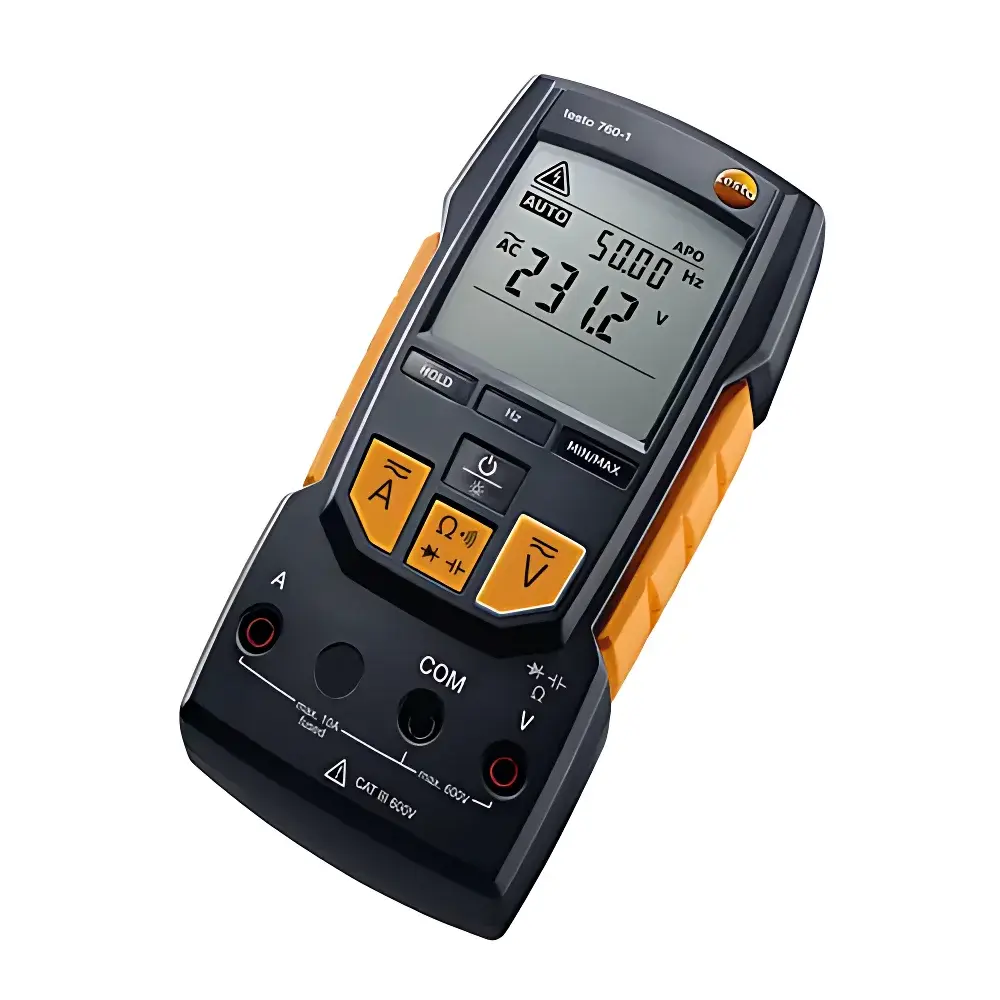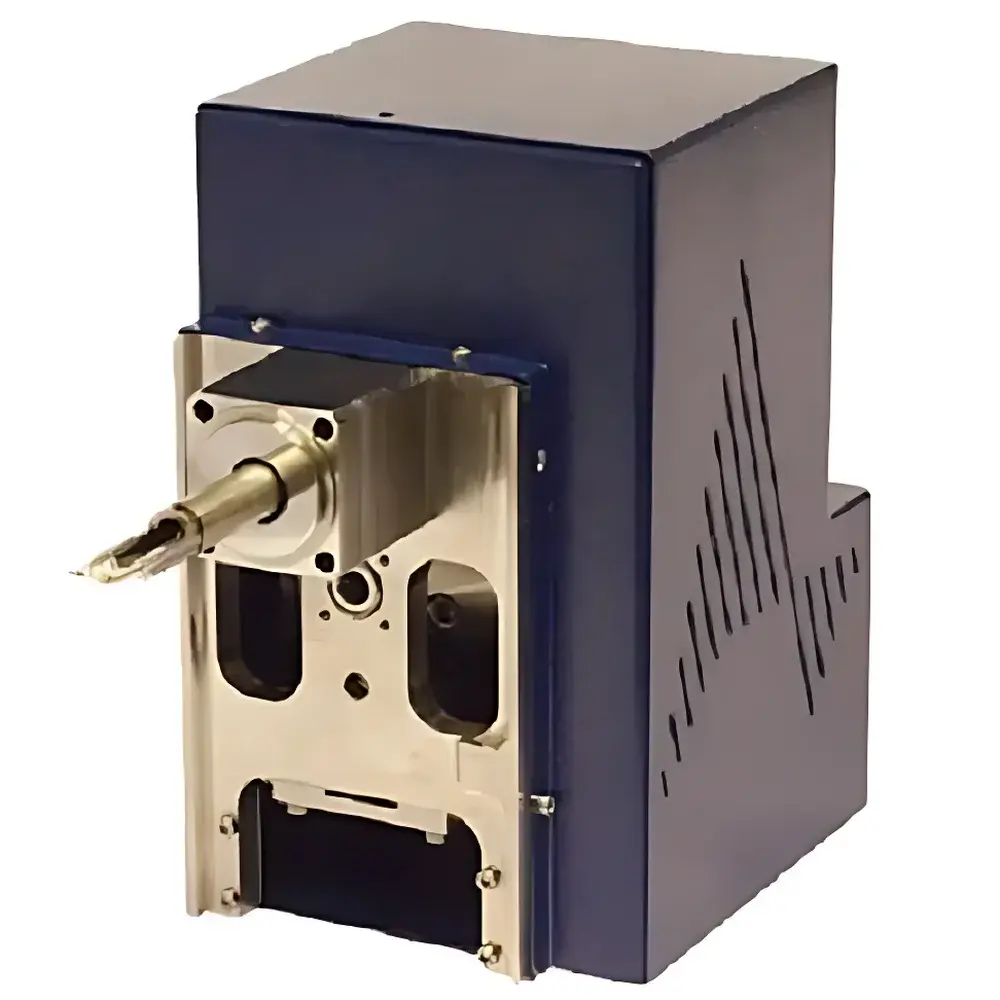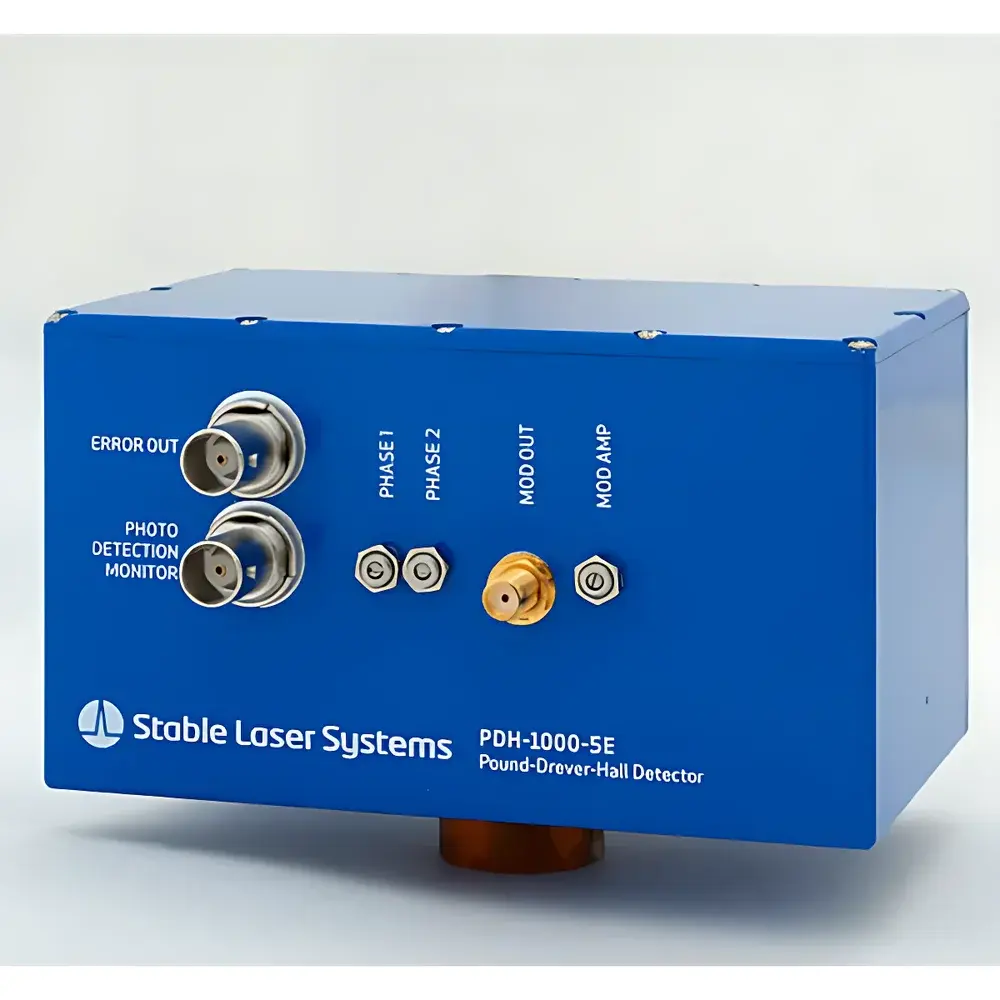
Stable Laser Systems PDH Error Signal Generator Unit
| Brand | Stable Laser Systems |
|---|---|
| Origin | USA |
| Manufacturer Type | Authorized Distributor |
| Origin Category | Imported |
| Model | PDH Error Signal Generator Unit |
| Instrument Type | Function/Arbitrary Waveform Generator |
| Operating Wavelength Range | 500–2050 nm (customizable) |
| Photodetector Input Noise | < 7 pA/√Hz |
| RF Modulation Output Frequency | 5 MHz (standard), up to 50 MHz (customizable) |
| RF Output Amplitude | 4 Vpp (adjustable) |
| PDH Error Signal Amplitude | 300 mVpp (typical), gain-adjustable |
| Error Signal Harmonic Content | < 15 mV (includes fₘₒ and 2fₘₒ components) |
| Dimensions | 75 × 125 × 70 mm (H) |
| Mounting | M6 threaded holes |
Overview
The Stable Laser Systems PDH Error Signal Generator Unit is a purpose-built electronic instrumentation module engineered for precision laser frequency stabilization using the Pound–Drever–Hall (PDH) technique. It implements the core analog signal processing chain required for high-fidelity PDH error signal generation—namely, low-noise photodetection, phase-modulated sideband generation via an external electro-optic modulator (EOM), heterodyne demodulation, and synchronous lock-in detection—all integrated within a compact, RF-shielded enclosure. Unlike conventional setups relying on discrete RF synthesizers, long lossy delay lines, and external lock-in amplifiers, this unit embeds a high-speed transimpedance amplifier (TIA), a stable RF oscillator with front-panel phase tuning (±160° range), and a balanced demodulation stage optimized for minimal amplitude-to-phase conversion and harmonic distortion. Its design targets ultra-low-noise error signals (<7 pA/√Hz input-referred noise) essential for sub-Hz linewidth laser stabilization in atomic physics, optical clock development, cavity quantum electrodynamics, and gravitational wave interferometry.
Key Features
- Monolithic integration of photodetector interface, RF oscillator, EOM driver, and lock-in detection circuitry in a single shielded chassis
- Adjustable RF modulation output (4 Vpp, 5 MHz standard; configurable up to 50 MHz) for driving external LiNbO₃ or resonant EOMs
- Front-panel accessible phase shifter enabling precise alignment of demodulation reference relative to optical sideband phase (range: >160°)
- Low-noise transimpedance amplifier optimized for silicon, InGaAs, and extended-InGaAs photodiodes (500–2050 nm wavelength coverage)
- Output error signal with typical amplitude of 300 mVpp, fully adjustable via calibrated gain control; harmonic content at fₘₒ and 2fₘₒ suppressed to <15 mV
- Mechanically robust aluminum housing (75 × 125 × 70 mm) with M6 mounting threads and EMI/RFI shielding compliant with CISPR 22 Class B requirements
Sample Compatibility & Compliance
The unit supports fiber-coupled or free-space optical inputs across the visible to near-infrared spectrum (500–2050 nm), accommodating common laser sources used in atomic spectroscopy (e.g., 780 nm Rb, 852 nm Cs, 1064 nm Nd:YAG, 1550 nm telecom DFB). Detector selection—silicon (350–1100 nm), standard InGaAs (900–1700 nm), or extended-InGaAs (1100–2050 nm)—is configured at order time to match spectral requirements. The analog signal path adheres to IEEE Std 1057–2022 guidelines for digitizer-based measurement systems, and its RF performance complies with FCC Part 15 Subpart B for unintentional radiators. While not a regulated medical or safety-critical device, its electrical isolation and grounding architecture meet IEC 61010-1:2010 requirements for laboratory measurement equipment.
Software & Data Management
This is a fully analog, hardware-based PDH signal generator with no embedded firmware or digital control interface. All operational parameters—including RF phase offset, TIA gain, and DC bias points—are adjusted manually via front-panel potentiometers and calibrated trimmers. No drivers, SDKs, or configuration software are required, ensuring deterministic real-time response and immunity to USB latency or OS-level jitter. For traceable calibration and system validation, users may integrate the error signal output into external data acquisition systems (e.g., National Instruments PXI, Zurich Instruments HF2LI) supporting IEEE 1788–2015-compliant uncertainty propagation frameworks. Audit trails for manual adjustments are maintained per GLP-aligned lab notebooks; no 21 CFR Part 11 electronic signature functionality is provided, as the device lacks programmable memory or network connectivity.
Applications
- Laser frequency stabilization in ultra-stable optical cavities (e.g., for LIGO-style interferometers or optical lattice clocks)
- Residual amplitude modulation (RAM) characterization and active cancellation in high-finesse cavities
- Lock acquisition and hold-in-range diagnostics for dual-laser heterodyne systems
- Teaching and prototyping of coherent optical feedback architectures in university advanced optics laboratories
- Integration into turnkey stabilized laser systems for quantum sensing platforms requiring compact, low-SWaP PDH electronics
FAQ
Is this unit compatible with my existing EOM and laser setup?
Yes—it accepts standard free-space or fiber-pigtailed optical inputs and provides a 50 Ω RF output to drive commercially available EOMs. Modulation frequency and detector type must be specified at purchase to ensure optimal impedance matching and responsivity.
Can I use it with a non-PDH stabilization scheme?
While optimized for PDH, the RF oscillator, phase shifter, and demodulator stages can be repurposed for other homodyne/heterodyne detection schemes such as FM spectroscopy or dispersion-based locking, subject to user calibration.
Does it include a photodetector?
No—the photodetector is selected separately (Si / InGaAs / extended-InGaAs) and integrated into the unit during manufacturing; options include fiber-coupled or free-space configurations.
What is the temperature stability of the RF oscillator?
The onboard TCXO delivers ±0.5 ppm frequency stability over 15–35 °C ambient; for applications requiring <100 Hz drift over 8 hours, oven-controlled OCXO upgrades are available upon request.
Is technical support available for system integration?
Stable Laser Systems provides application engineering documentation, schematic excerpts, and integration notes. As an authorized distributor,昊量光电 (Hangzhou Aunion Tech) offers localized pre-sales consultation and post-installation validation support in APAC regions.