
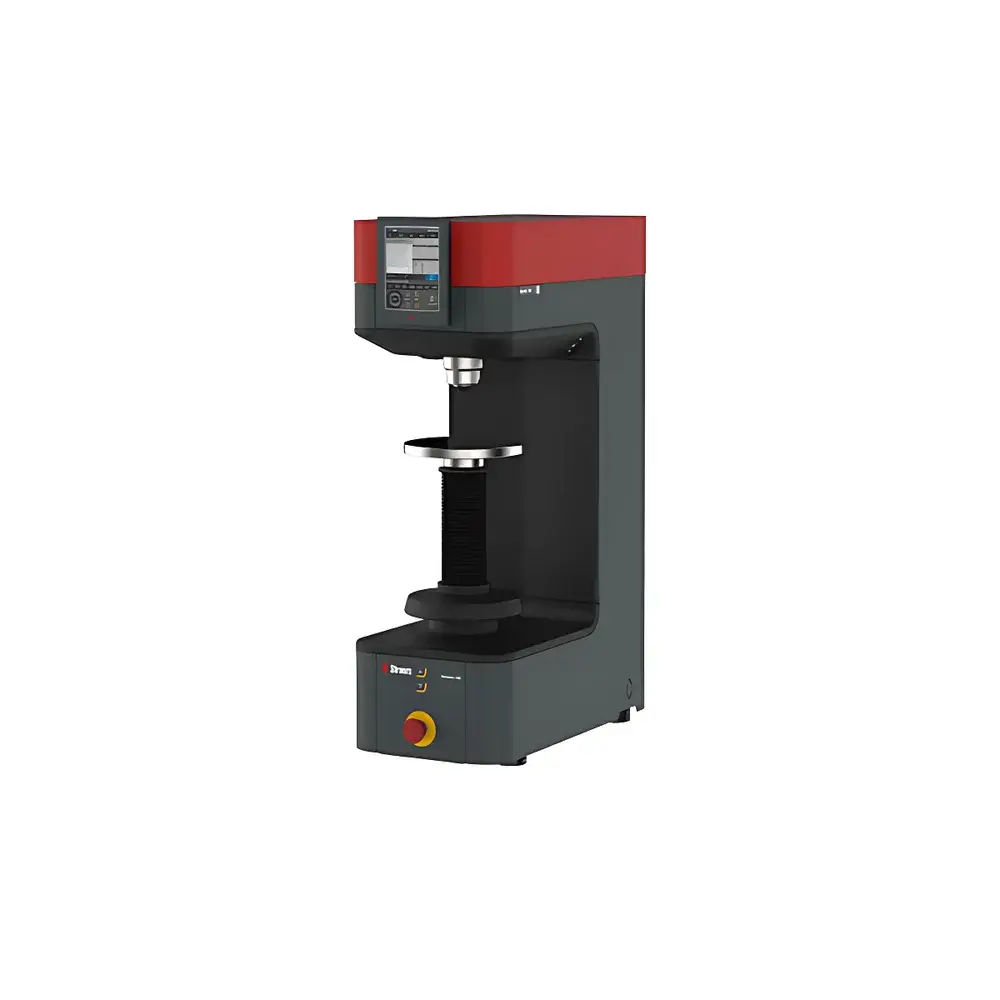
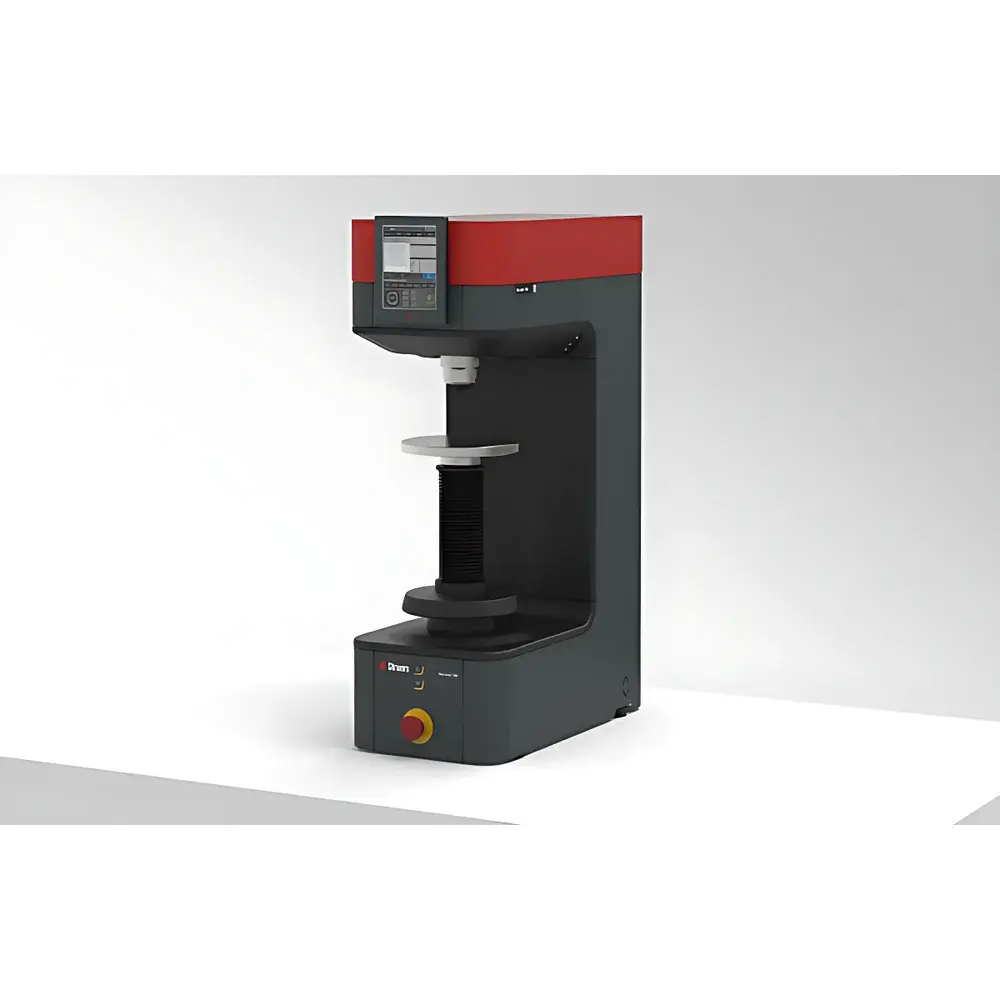
Struers Duramin-160 Advanced Rockwell Hardness Tester
| Brand | Struers |
|---|---|
| Origin | Denmark |
| Model | Duramin-160 |
| Hardness Test Method | Rockwell, Ball Indentation (HBT), Vickers Hardness (HVT) |
| Load Range (Major Load) | 1–250 kgf (9.8–2450 N) |
| Test Anvil | Ø80 mm, Removable |
| Max Specimen Height | 300 mm |
| Max Specimen Depth | 200 mm |
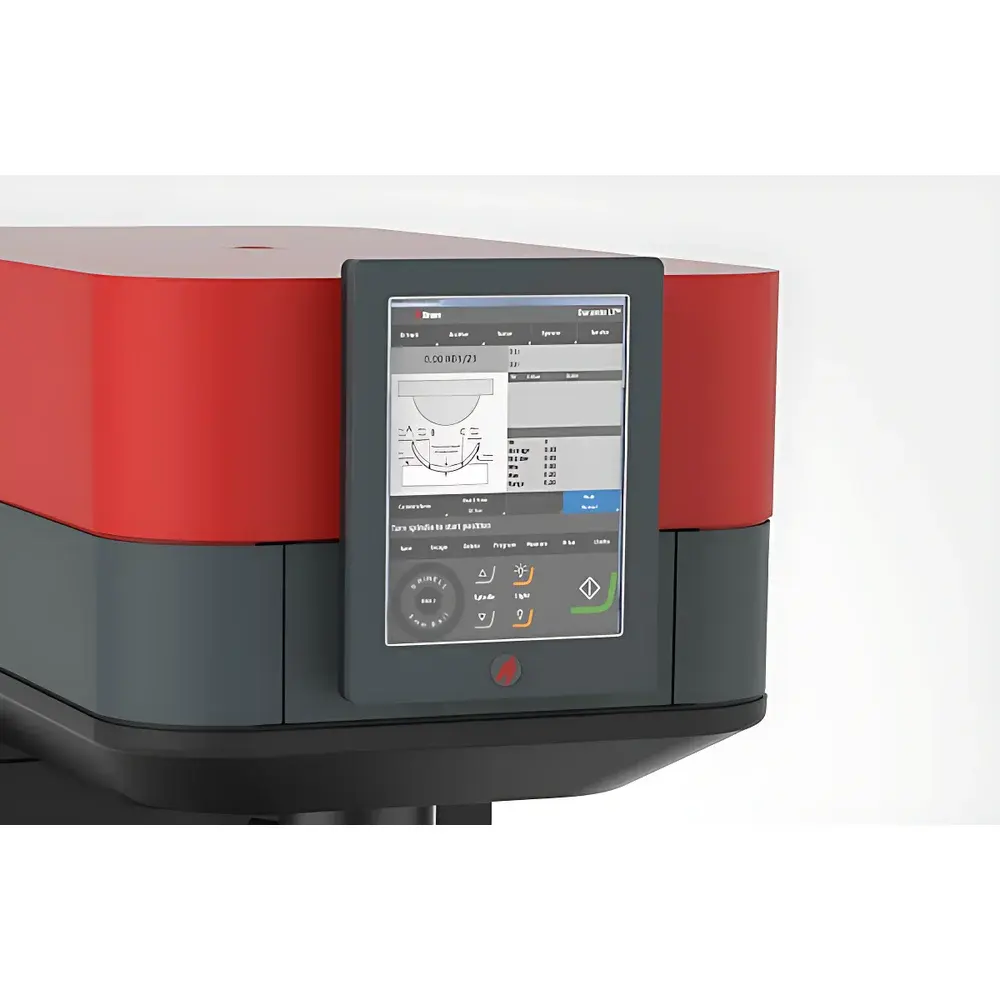
| Display | 7-inch Touchscreen Interface |
| Illumination | LED at Indentation Zone |
| Optional Feature | Motorized Z-axis (Duramin-160 Z) |
| Compliance | ASTM E18, ISO 6508, EN ISO 6508, JIS Z 2245 |
Overview
The Struers Duramin-160 is a precision-engineered Rockwell hardness tester designed for high-reproducibility mechanical property evaluation in quality control, metallurgical research, and industrial manufacturing environments. It operates on the fundamental Rockwell principle—measuring the depth of permanent indentation under controlled major and minor loads—while integrating modern load-cell-based force measurement technology to eliminate mechanical lever inaccuracies inherent in traditional dead-weight systems. Unlike conventional analog testers, the Duramin-160 employs a high-stability load cell calibrated traceably to national standards, enabling direct digital force feedback across its full 1–250 kgf major load range. This architecture ensures linearity, hysteresis-free loading, and real-time load monitoring throughout each test cycle. The instrument supports all standard Rockwell scales (A, B, C, D, E, F, G, H, K, L, M, P, R, S, T, W, X, Y, Z), as well as ball indentation hardness (HBT) and Vickers-type hardness (HVT) conversions, making it suitable for ferrous alloys, non-ferrous metals, case-hardened components, thin coatings, and heat-treated steels.
Key Features
- Load-cell-based force measurement system with ±0.5% accuracy across 1–250 kgf range, eliminating mechanical wear and calibration drift associated with traditional dead-weight mechanisms.
- 7-inch high-resolution capacitive touchscreen interface with intuitive icon-driven workflow—no external PC required for routine operation.
- Integrated LED illumination precisely focused on the indentation zone, enhancing operator visibility and reducing misalignment errors during manual positioning.
- Removable Ø80 mm anvil platform compatible with optional accessories including flat, V-block, and universal clamping fixtures for irregular or oversized specimens.
- Motorized Z-axis option (Duramin-160 Z) enables programmable height adjustment, repeatable positioning, and automated multi-point testing sequences—critical for statistical process control (SPC) applications.
- Onboard data management: automatic storage of indentation depth, load profile, hardness value, timestamp, operator ID, and test method per measurement; exportable via USB or Ethernet to CSV or PDF formats.
Sample Compatibility & Compliance
The Duramin-160 accommodates specimens up to 300 mm in height and 200 mm in depth, supporting both standardized test blocks (e.g., ASTM E18 reference blocks) and large-scale industrial components such as gear blanks, turbine discs, and forged shafts. Its modular anvil system allows rapid configuration for curved surfaces, threaded parts, and thin-walled sections using specialized support fixtures. All hardness measurements comply with internationally recognized standards—including ASTM E18 (Standard Test Methods for Rockwell Hardness of Metallic Materials), ISO 6508-1 (Metallic materials — Rockwell hardness test — Part 1: Test method), EN ISO 6508, and JIS Z 2245—ensuring data acceptance in third-party audits and regulatory submissions. When configured with audit-trail-enabled firmware and user access controls, the system meets GLP/GMP documentation requirements per FDA 21 CFR Part 11 for pharmaceutical or medical device manufacturing QA labs.
Software & Data Management
The embedded operating system provides native support for measurement templates, statistical analysis (mean, SD, Cp/Cpk, histogram generation), and customizable reporting. Users can define multi-step test protocols—including pre-load dwell, main load application, dwell time, and recovery—via the touchscreen interface without scripting. Data integrity is preserved through timestamped records, operator authentication (PIN or RFID badge integration), and immutable log files. Export options include structured CSV for SPC software integration (e.g., Minitab, JMP), PDF reports with embedded calibration certificates, and raw ASCII logs for traceability archives. Optional Struers LaboSoft connectivity enables centralized fleet management, remote diagnostics, and firmware updates across laboratory networks.
Applications
The Duramin-160 serves critical roles across aerospace component validation (e.g., landing gear heat treatment verification), automotive powertrain QA (camshaft and crankshaft surface hardness mapping), tool steel certification (HRC uniformity across cross-sections), and additive manufacturing post-process characterization (density-correlated hardness profiling). Its extended load range supports both shallow-depth testing of thin carburized layers (using superficial Rockwell scales) and deep-penetration evaluation of bulk structural alloys. In R&D settings, researchers leverage its HVT conversion capability to correlate Rockwell values with microhardness trends observed in optical microscopy or SEM-EDS workflows.
FAQ
Does the Duramin-160 require annual recalibration by an accredited lab?
Yes—Struers recommends annual traceable calibration per ISO/IEC 17025 guidelines, particularly for laboratories operating under ISO 9001 or IATF 16949 quality management systems.
Can the instrument perform sequential multi-point hardness mapping automatically?
Only with the motorized Z-axis (Duramin-160 Z) and preconfigured test templates; manual Z-axis models require operator repositioning between points.
Is the load cell certified to NIST or DKD traceability?
All factory-installed load cells are supplied with DKD-accredited calibration certificates (traceable to DFM, Denmark) and include uncertainty budgets compliant with EURAMET cg-18.
What specimen preparation standards apply to Rockwell testing on this system?
Specimen surfaces must meet ASTM E18 requirements: flatness ≤0.002 mm, roughness Ra ≤0.8 µm for hardened steels, and adequate thickness to prevent anvil deformation (minimum 10× indentation depth).
How is compliance with FDA 21 CFR Part 11 enforced in the software?
Through role-based user accounts, electronic signatures, audit trail logging (including all parameter changes and result deletions), and password-protected report generation—configurable during system setup.



