
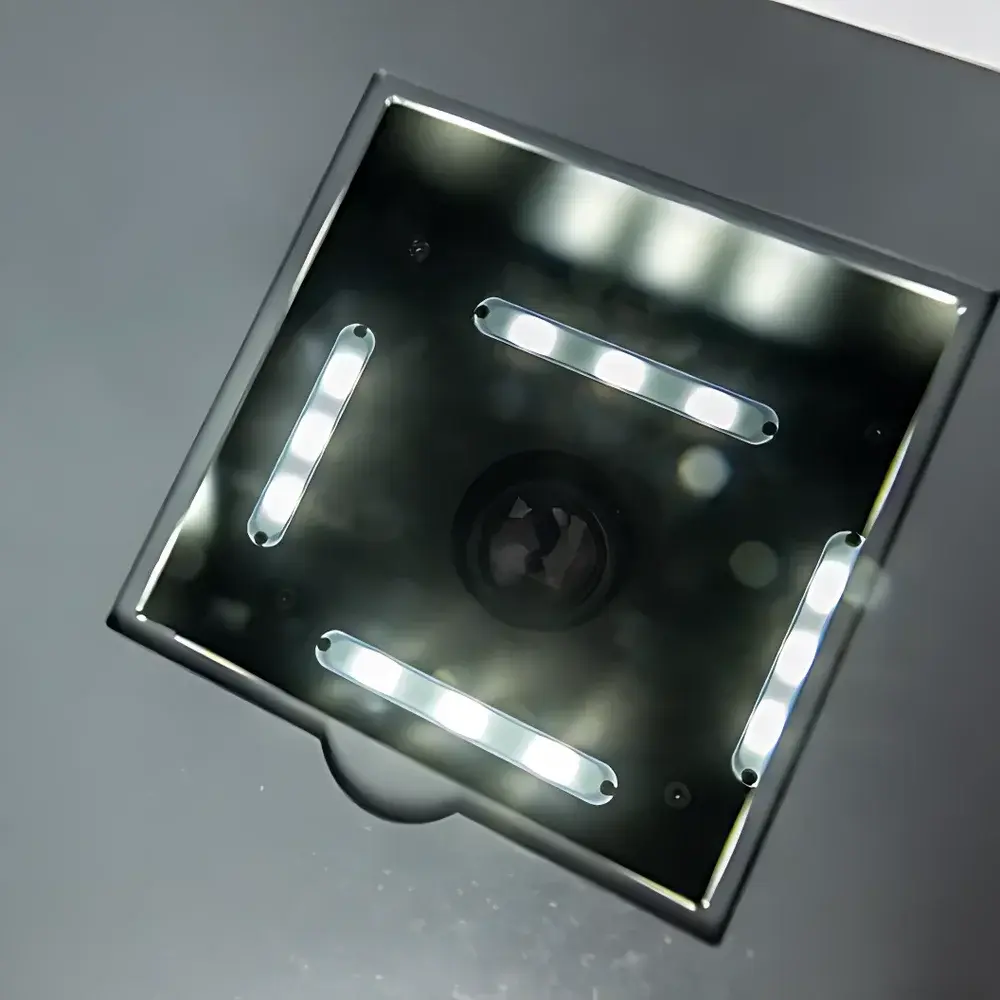
Struers StructureExpert Weld Microscopic Image Analysis System
| Brand | Struers |
|---|---|
| Origin | Denmark |
| Model | StructureExpert Weld |
| Type | Inverted Optical Imaging Platform for Automated Weld Inspection |
| Software Core | SewSoft AI-Powered Image Analysis Suite |
| Compliance | Designed for ISO 17025-accredited labs, supports GLP/GMP audit trails and FDA 21 CFR Part 11–compliant data integrity workflows |
| Deployment | On-premise (edge-based AI inference, no cloud dependency) |
| Integration | Native Power BI connector for enterprise-wide quality analytics |
Overview
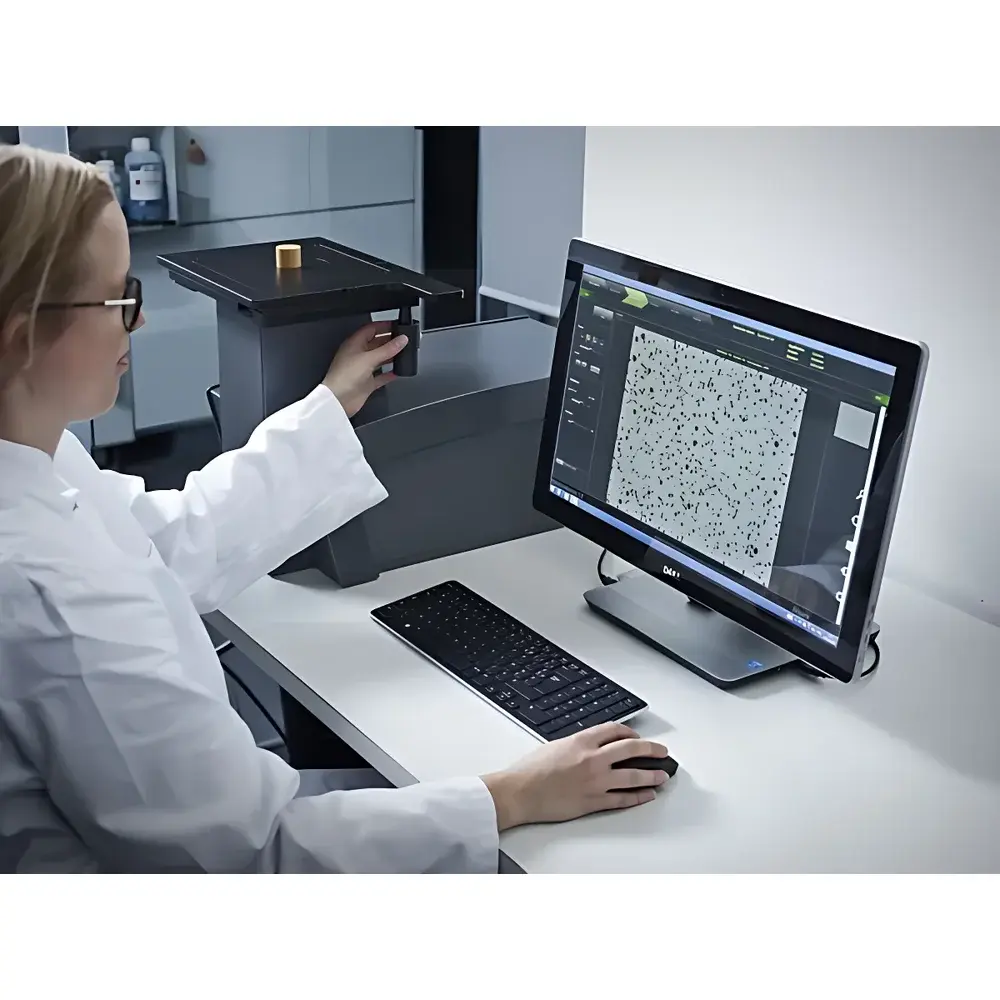
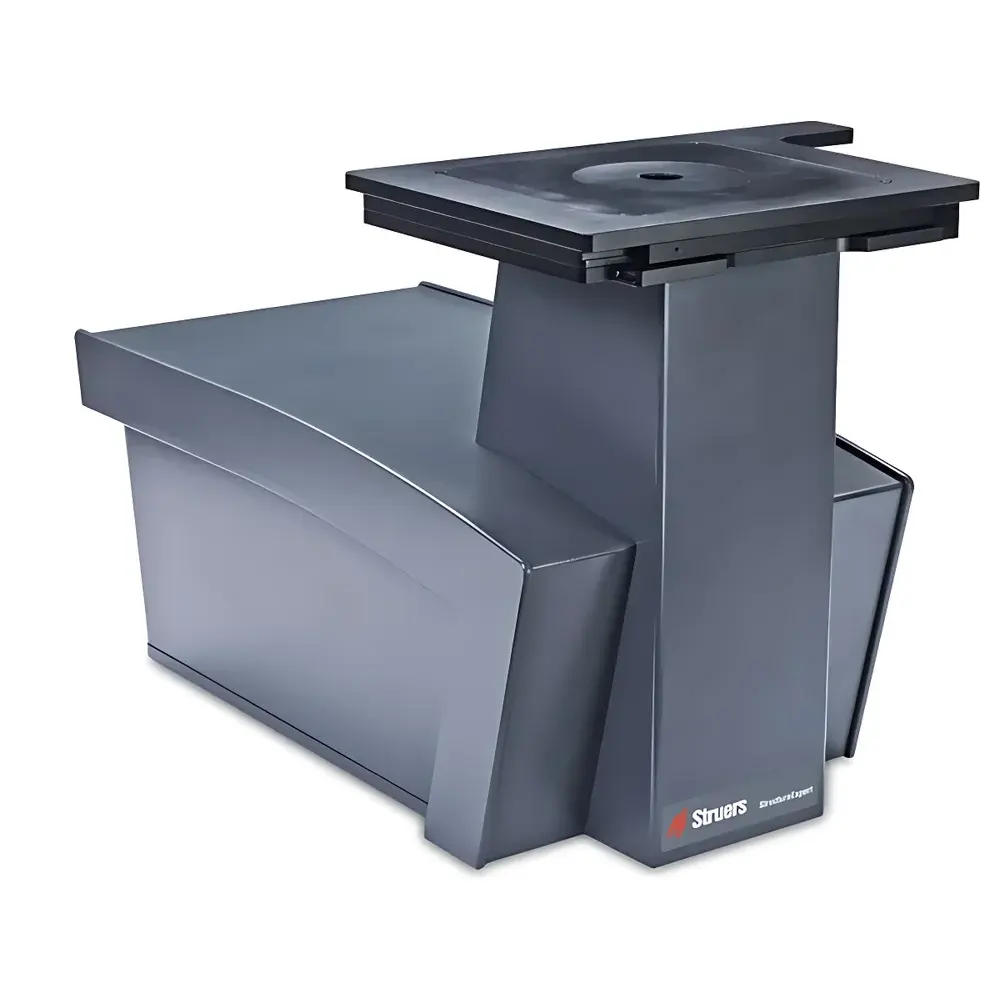
The Struers StructureExpert Weld is a purpose-built inverted microscopic image analysis system engineered for high-throughput, standardized weld inspection in industrial quality control laboratories. Unlike general-purpose optical microscopes, StructureExpert Weld integrates a fixed-optics inverted imaging architecture with motorized illumination, autofocus, and real-time geometric calibration—eliminating manual alignment, stage repositioning, and subjective focus adjustments. Its measurement principle is based on high-resolution digital photomicrography combined with pixel-accurate edge detection and AI-driven morphological segmentation. The system captures standardized cross-sectional images of metallographically prepared weld joints, then applies convolutional neural networks (CNNs) trained on >12,000 expert-annotated weld micrographs to identify fusion lines, heat-affected zones (HAZ), porosity, lack-of-penetration, and underfill with sub-micron spatial fidelity. Designed for routine use in ISO/IEC 17025-certified testing facilities, it delivers repeatable, operator-independent results compliant with ASTM E112 (grain size), ISO 14372 (weld macrostructure), and EN ISO 17639 (macroscopic examination of welded joints).
Key Features
- Inverted optical design with parfocal, long-working-distance objectives (5×, 10×, 20×, 50×) optimized for mounted weld specimens up to 100 mm × 50 mm
- Integrated LED illumination system with programmable intensity, uniformity correction, and multi-angle diffuse lighting for optimal contrast of etched weld interfaces
- Motorized Z-axis autofocus with ±0.1 µm repeatability and closed-loop feedback; auto-calibration against NIST-traceable stage reference grids
- SewSoft AI software suite running locally on an industrial-grade embedded PC—no internet connection or cloud dependency required
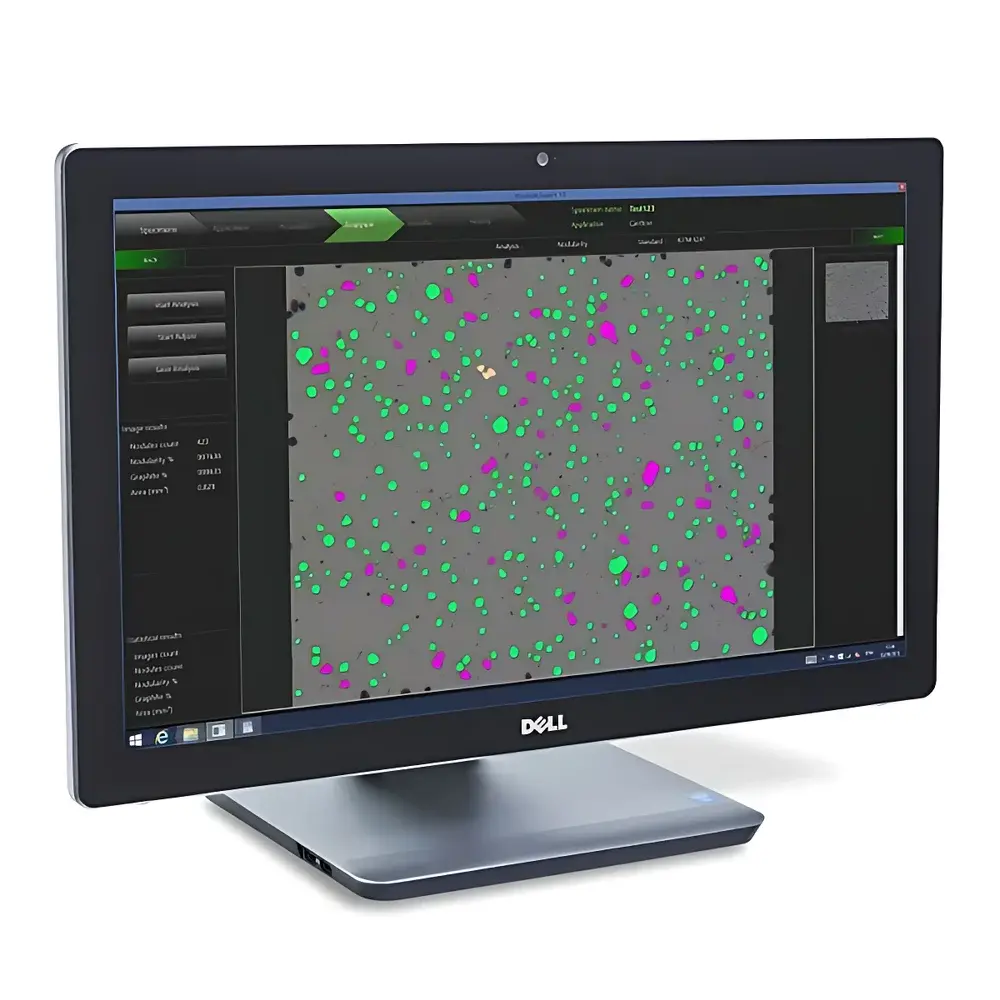
- Real-time AI inference engine performing full weld profile segmentation, dimensioning (leg length, throat thickness, reinforcement height), and defect classification in <1.8 seconds per image
- Configurable pass/fail logic based on user-defined tolerances aligned with AWS D1.1, ISO 5817, or internal QA specifications
Sample Compatibility & Compliance
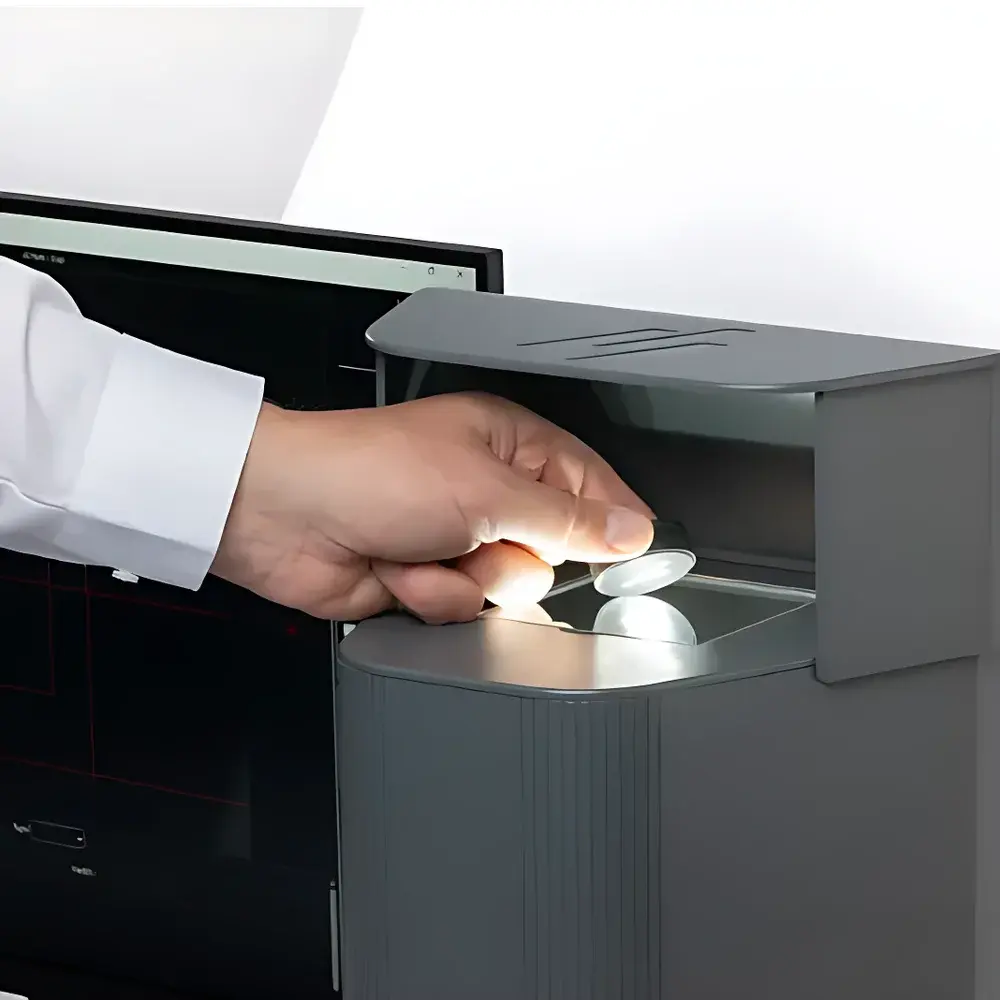
StructureExpert Weld accepts standard metallographic mounts (30 mm and 40 mm diameter) as well as rectangular specimens up to 100 mm in length. Compatible with all common etchants—including nital, picral, and Kroll’s reagent—and validated for ferrous alloys (carbon steels, stainless steels, duplex grades), aluminum alloys (5xxx, 6xxx, 7xxx series), and nickel-based superalloys. All measurement algorithms are validated per ISO/IEC 17025 Clause 5.4.5 for method verification, with documented uncertainty budgets traceable to national metrology institutes. System logs maintain immutable records of image acquisition parameters (exposure time, gain, white balance), AI model version, calibration timestamps, and user authentication—ensuring full compliance with GLP documentation requirements and FDA 21 CFR Part 11 electronic record controls.
Software & Data Management
SewSoft provides a secure, role-based desktop interface with three-tier access control (operator, supervisor, administrator). Each inspection session generates a structured .swe file containing raw TIFF images, annotated overlays, measurement tables (CSV export), and metadata JSON. Audit trails record every action—including parameter changes, report generation, and user logins—with SHA-256 hashing and timestamped digital signatures. Reports are fully customizable via XML templates and support multilingual output (EN, DE, FR, ES, CN). Native ODBC and REST API endpoints enable bidirectional synchronization with LIMS platforms. The Power BI connector exports normalized quality KPIs (e.g., defect density per mm², conformance rate by shift, HAZ width Cpk) directly into organizational dashboards without manual data re-entry.
Applications
- Routine macrostructural evaluation of arc-welded, laser-welded, and friction stir welds in automotive body-in-white and battery enclosure production
- Production line qualification of weld procedures (WPQR) per ASME IX and EN ISO 15614-1
- Supplier quality audits requiring objective, reproducible weld geometry verification
- Failure analysis labs performing root cause assessment of cracking or porosity in pressure vessel weldments
- Research institutions quantifying thermal cycle effects on grain structure evolution across multiple weld passes
FAQ
Does StructureExpert Weld require external calibration services?**
No—built-in self-calibration routines verify optical magnification, stage positioning accuracy, and illumination uniformity before each session using certified reference standards.
Can SewSoft AI models be retrained with proprietary weld datasets?**
Yes—Struers offers optional AI model fine-tuning services under NDA, leveraging customer-specific weld morphology libraries while maintaining ISO 17025 validation integrity.
Is remote diagnostics supported?**
Diagnostic telemetry is opt-in and encrypted; no image or measurement data leaves the local network unless explicitly exported by authorized users.
What is the minimum recommended specimen preparation standard?**
Specimens must conform to ISO 14372:2016—ground to 1200-grit SiC paper, polished with 3 µm diamond suspension, and etched per material-specific protocols prior to loading.
How does the system handle out-of-focus or poorly etched images?**
SewSoft includes automated image quality scoring (IQS); images failing sharpness or contrast thresholds trigger operator alerts and prevent invalid measurements from entering the report workflow.






