SUERC PPSL Food & Pharmaceutical Irradiation Residue Detector
| Brand | SUERC |
|---|---|
| Origin | Beijing, China |
| Manufacturer Type | Authorized Distributor |
| Product Category | Domestic |
| Model | PPSL |
| Pricing | Upon Request |
Overview
The SUERC PPSL Food & Pharmaceutical Irradiation Residue Detector is a dedicated analytical instrument engineered for rapid, non-destructive screening of ionizing radiation treatment history in food and pharmaceutical products. It operates on the internationally standardized PhotoStimulated Luminescence (PSL) principle—defined in EN 13751:2009, ISO/IEC 17025-accredited methods, and aligned with Codex Alimentarius guidelines for irradiated food detection. When foodstuffs containing naturally occurring mineral contaminants (e.g., silicates, calcium phosphates, or feldspar) are exposed to ionizing radiation (e.g., gamma rays, X-rays, or electron beams), trapped charge carriers accumulate in crystal lattice defects. Upon stimulation with visible light (typically blue or green LEDs), these charges recombine and emit characteristic luminescent photons—quantifiable as PSL signal intensity. The detector measures this photon emission in real time using a low-noise photomultiplier tube (PMT) housed in a light-tight, thermally stabilized sample chamber. Unlike destructive techniques such as thermoluminescence (TL) or electron paramagnetic resonance (EPR), PSL requires no sample preparation, grinding, or chemical extraction—preserving sample integrity for downstream analysis.
Key Features
- Compliant with EU Regulation (EC) No. 1881/2006 and FDA Guidance for Industry on Irradiated Foods—supports regulatory audit readiness.
- Dual-threshold decision logic: automatically classifies samples as “irradiated”, “non-irradiated”, or “inconclusive” based on statistically validated PSL count thresholds—achieving >95% correct classification rate per EN 13751 Annex B.
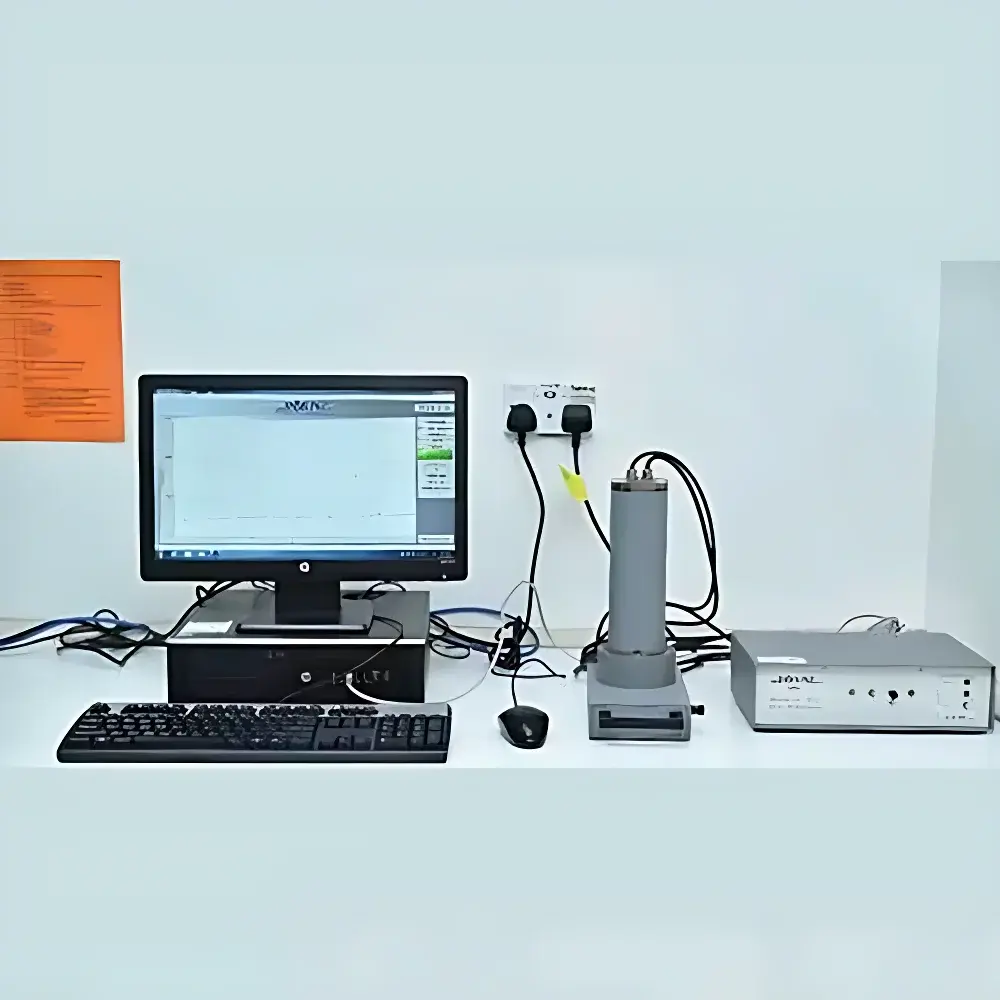
- Two operational modes: standalone rapid screening (15-second measurement, no PC required) and PC-controlled advanced analysis (customizable integration time, dark count subtraction, PMT gain calibration, and background chamber assessment).
- Integrated thermal stabilization and electromagnetic shielding minimize signal drift and ambient noise interference—ensuring reproducibility across shifts and laboratories.
- Sample chamber accommodates standard petri dishes (up to 90 mm diameter) and irregular solid matrices (e.g., dried herbs, spices, freeze-dried powders, capsules, tablets) without homogenization.
Sample Compatibility & Compliance
The PPSL detector is validated for use with a broad spectrum of irradiated commodities—including cereals, legumes, dried fruits, spices, herbal supplements, dietary ingredients, and sterile pharmaceutical excipients. It is not suitable for highly processed or irradiated liquids (e.g., milk, juice), oils, or low-mineral matrices (e.g., refined sugars, pure starches) due to insufficient intrinsic luminescent signal yield. Regulatory compliance includes full traceability to NIST-traceable light sources and PMT calibration standards. Instrument operation adheres to GLP principles: electronic audit trails, user access control, and timestamped result export (CSV/Excel) meet FDA 21 CFR Part 11 requirements when used with compliant software configuration. Method validation documentation supports ISO/IEC 17025 accreditation for testing laboratories.
Software & Data Management
The optional PC interface software provides full parameter configurability—including adjustable stimulation wavelength, integration window (1–60 s), threshold definitions, and automatic dark/blank subtraction routines. All measurements are timestamped and logged with operator ID, sample ID, and environmental metadata (chamber temperature, PMT voltage). Raw photon count data, background-subtracted net counts, and classification outcomes are exportable in CSV format for LIMS integration. Software supports batch reporting, statistical trend analysis (e.g., control charting of blank counts over time), and generation of audit-ready PDF certificates compliant with EU notification requirements for irradiated food labeling.
Applications
This instrument serves critical roles across food safety QA/QC, regulatory inspection agencies, contract testing laboratories, and pharmaceutical quality units. Typical use cases include verification of irradiation claims on organic spice imports; post-sterilization release testing of medical-grade botanicals; routine surveillance of irradiated animal feed additives; and forensic investigation of mislabeled or adulterated nutraceuticals. Its speed and portability also enable on-site screening at customs checkpoints or manufacturing facilities—reducing reliance on off-site TL or EPR confirmation testing.
FAQ
What types of food matrices yield reliable PSL signals?
Mineral-rich dry foods—such as black pepper, cumin, rice, lentils, and dried mushrooms—produce robust, reproducible PSL responses. Low-mineral or high-moisture samples require method adaptation or complementary TL analysis.
Can the same sample be re-measured multiple times?
Yes—but successive PSL measurements cause progressive signal depletion due to partial charge carrier release. For quantitative repeatability, single-use measurement is recommended.
Does the instrument require annual recalibration?
While no mandatory annual recalibration is stipulated by EN 13751, daily dark count verification and quarterly PMT sensitivity checks using certified reference light sources are advised for sustained accuracy.
Is training provided for laboratory personnel?
Yes—SUERC-certified application specialists deliver on-site or virtual training covering PSL theory, instrument operation, troubleshooting, and interpretation of borderline results in accordance with ISO/IEC 17025 documentation practices.
Related Products