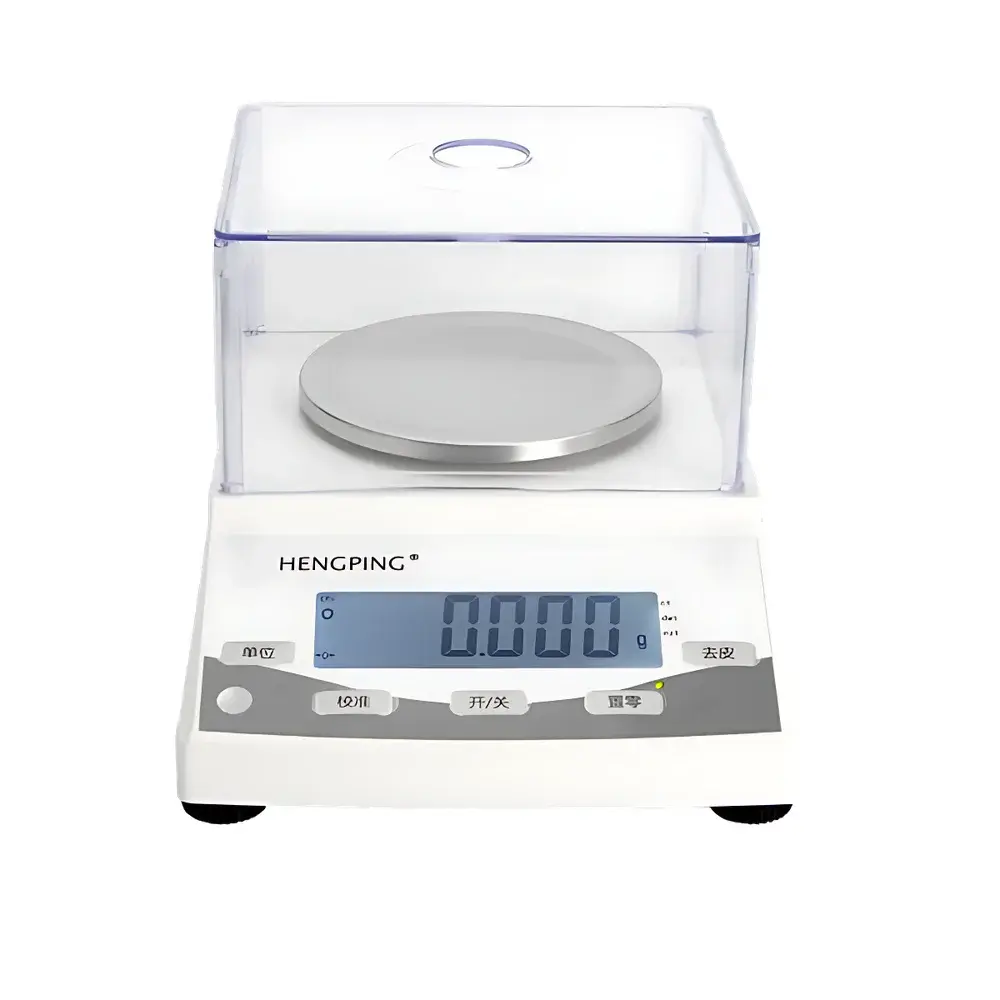
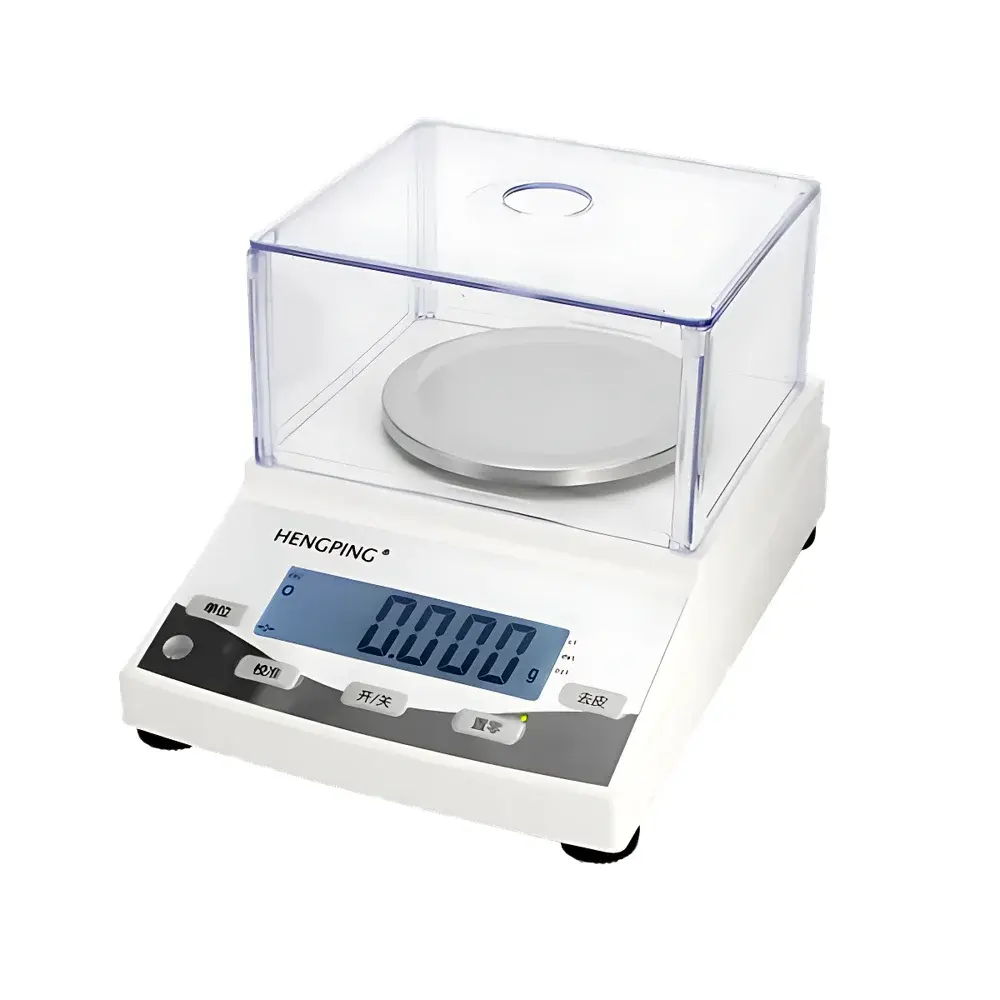
SUNNY HENGPING JY1003 Precision Balance
| Brand | SUNNY HENGPING INSTRUMENT |
|---|---|
| Origin | Shanghai, China |
| Manufacturer Type | Direct Manufacturer |
| Instrument Type | Precision Balance |
| Max Capacity | 1000 g |
| Readability | 0.01 g |
| Repeatability | ±0.01 g |
| Linearity Error | ±0.002 g |
| Calibration Method | External Calibration |
| Stabilization Time | ≤3 s |
| Operating Temperature | 5–40 °C |
| Relative Humidity | ≤85% RH |
| Pan Diameter | Φ130 mm |
| Draft Shield Dimensions (W×D×H) | 175×145×88 mm |
| Dimensions (L×W×H) | 257×295×75 mm |
| Net Weight | 1.2 kg |
| Gross Weight | 1.7 kg |
| Interface | RS232 |
| Power Supply | AC/DC Dual Mode |
Overview
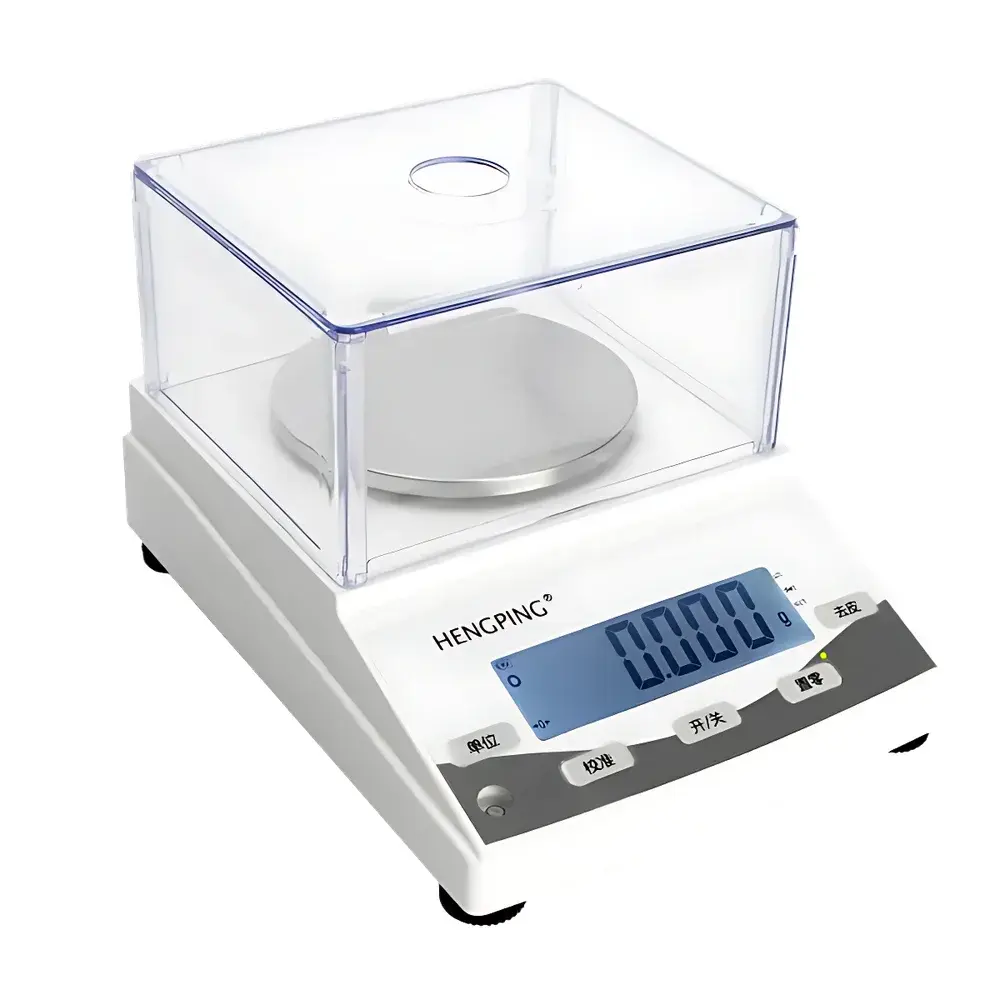
The SUNNY HENGPING JY1003 Precision Balance is an entry-level analytical-grade weighing instrument engineered for consistent accuracy and operational reliability in routine laboratory, quality control, and educational environments. Based on electromagnetic force compensation (EMFC) transduction technology, the JY1003 delivers high reproducibility across its 1000 g maximum capacity with a readability of 0.01 g — meeting the performance requirements for Class II precision balances per OIML R76 and ISO 9001-compliant weighing processes. Its compact footprint, integrated leveling bubble, and removable draft shield ensure stable operation under typical ambient lab conditions (5–40 °C, ≤85% RH non-condensing). Designed for direct integration into regulated workflows, the balance supports traceable calibration via external standard weights and conforms to fundamental metrological principles outlined in USP and ASTM E899 for mass measurement uncertainty estimation.
Key Features
- Electromagnetic force compensation sensor architecture ensuring long-term stability and minimal drift over time
- Backlit LCD display with intuitive icon-driven interface for rapid parameter navigation and status feedback
- Full-range tare function enabling zeroing at any point within the weighing range without mechanical reset
- Integrated spirit level and adjustable foot screws for precise horizontal alignment prior to use
- Removable acrylic draft shield (175 × 145 × 88 mm internal dimensions) to minimize air-current-induced fluctuations during low-mass measurements
- Built-in counting mode with automatic average piece weight calculation for discrete-part inventory and QC sampling
- Multi-unit conversion capability (g, mg, oz, ct, lb, etc.) supporting cross-functional reporting requirements
- RS232 serial interface compliant with standard ASCII protocol for bidirectional data exchange with LIMS, ELN, or Excel-based reporting systems
- Dual-power operation: compatible with both AC adapter (included) and DC battery backup (optional), enhancing portability and continuity during power interruptions
Sample Compatibility & Compliance
The JY1003 accommodates a wide range of solid samples — from powders and granules to small metallic components — on its 130 mm diameter stainless-steel weighing pan. Its open-frame design and shielded enclosure allow seamless handling of volatile, hygroscopic, or temperature-sensitive materials when used with appropriate environmental controls. While not certified for GLP/GMP production environments requiring full 21 CFR Part 11 compliance, the instrument supports audit-ready documentation through timestamped RS232 output and manual calibration log maintenance. It satisfies basic metrological traceability requirements when calibrated using NIST-traceable weights and adheres to ISO/IEC 17025 clause 6.4.7 for equipment verification in testing laboratories.
Software & Data Management
Data export is performed via ASCII-formatted RS232 transmission at 9600 baud rate, 8N1 configuration, with configurable print-out triggers (auto-print on stabilization, manual print, or continuous streaming). No proprietary software is bundled; however, the output format is natively compatible with third-party tools including LabArchives ELN, Thermo Fisher SampleManager, and custom Python/Excel automation scripts. Each transmitted record includes weight value, unit symbol, stability flag, and optional user-defined ID prefix — enabling structured parsing for statistical process control (SPC) charting and trend analysis. Calibration history, operator ID, and environmental notes may be manually appended to exported files to satisfy internal SOPs.
Applications
- Routine formulation checks in pharmaceutical pre-formulation labs where batch-to-batch consistency of excipients requires sub-10 mg repeatability
- Raw material verification in food and cosmetic manufacturing per ISO 22000 sampling protocols
- Student experiments in university chemistry and physics curricula involving stoichiometric calculations and density determinations
- Inventory management of small hardware components (e.g., screws, resistors, PCB assemblies) using built-in piece-counting functionality
- Calibration support for pipettes and volumetric glassware via gravimetric water delivery tests (ASTM E542, ISO 8655-6)
- Environmental monitoring sample preparation, including filter weighing for particulate matter (PM10/PM2.5) analysis
FAQ
What calibration standards are recommended for the JY1003?
External calibration must be performed using class M2 or better stainless-steel weights traceable to national metrology institutes (e.g., NIST, PTB, NIM). A 100 g weight is recommended for daily verification; full-range calibration requires weights covering 10%, 50%, and 100% of max capacity.
Does the JY1003 support internal calibration?
No — the JY1003 relies exclusively on external calibration. Internal motorized calibration mechanisms are absent; this design prioritizes mechanical simplicity and cost-effective serviceability.
Can the balance operate in a fume hood?
Yes, provided the draft shield remains installed and airflow velocity near the pan does not exceed 0.2 m/s. Avoid placement directly in front of hood sash openings or exhaust grilles.
Is the RS232 interface compatible with modern Windows/macOS systems?
Yes, when used with a USB-to-serial adapter (FTDI chipset recommended) and standard terminal emulation software (e.g., Tera Term, CoolTerm) or custom Python serial libraries.
How often should repeatability verification be conducted?
Per ISO/IEC 17025, repeatability checks should be performed at least once per shift when used for critical measurements, using a test weight equivalent to 30–50% of full scale under identical environmental conditions.