
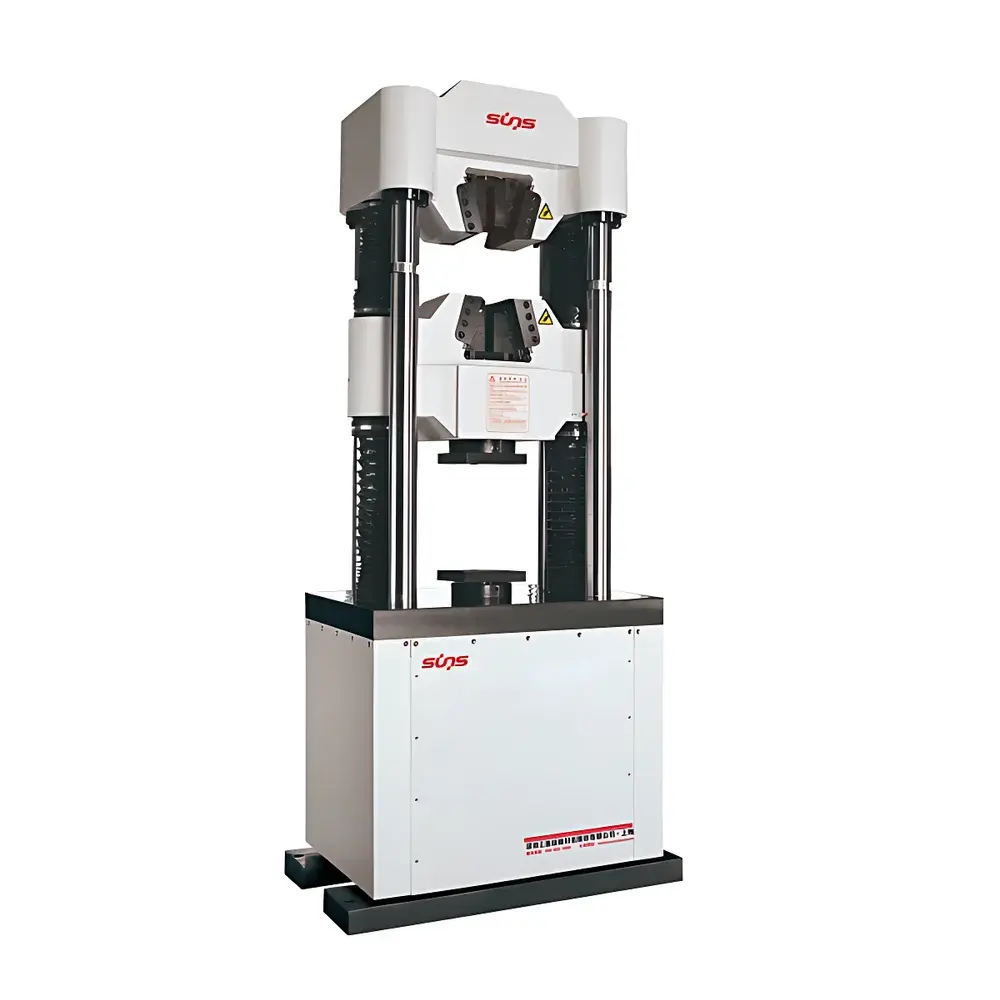
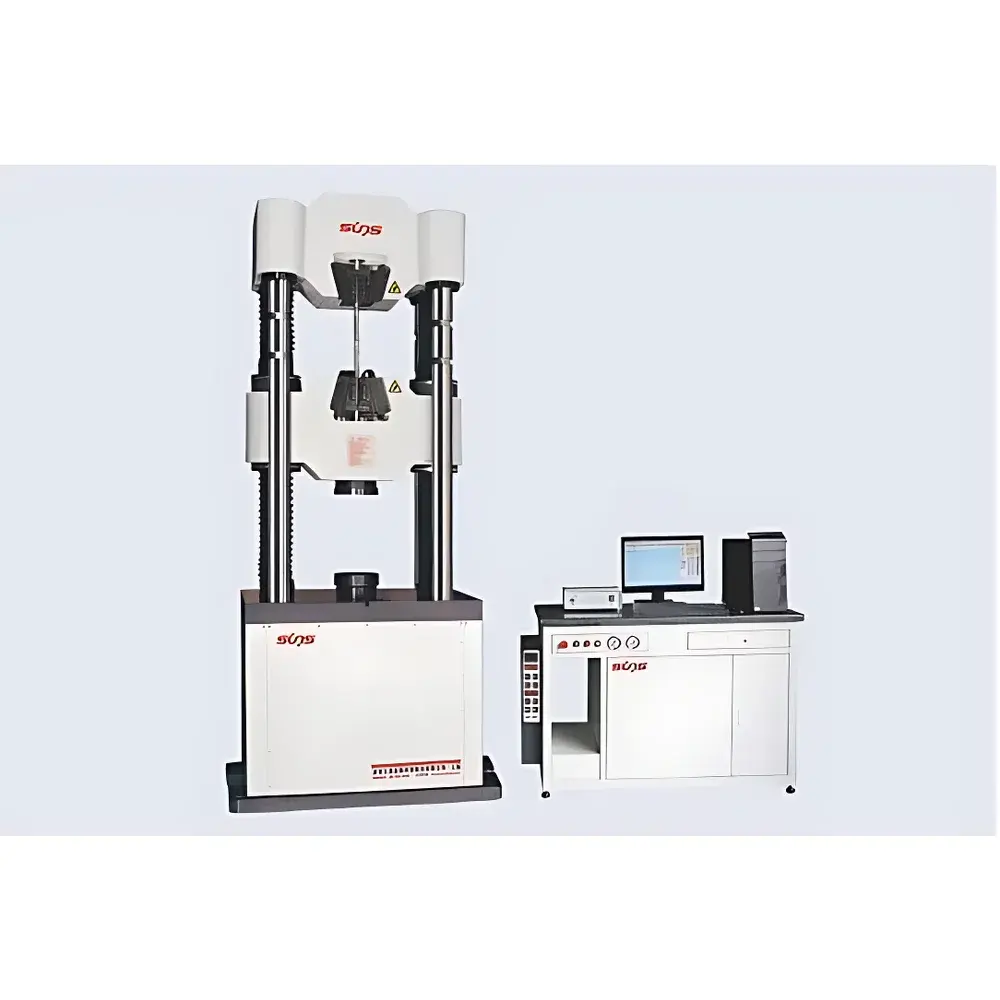
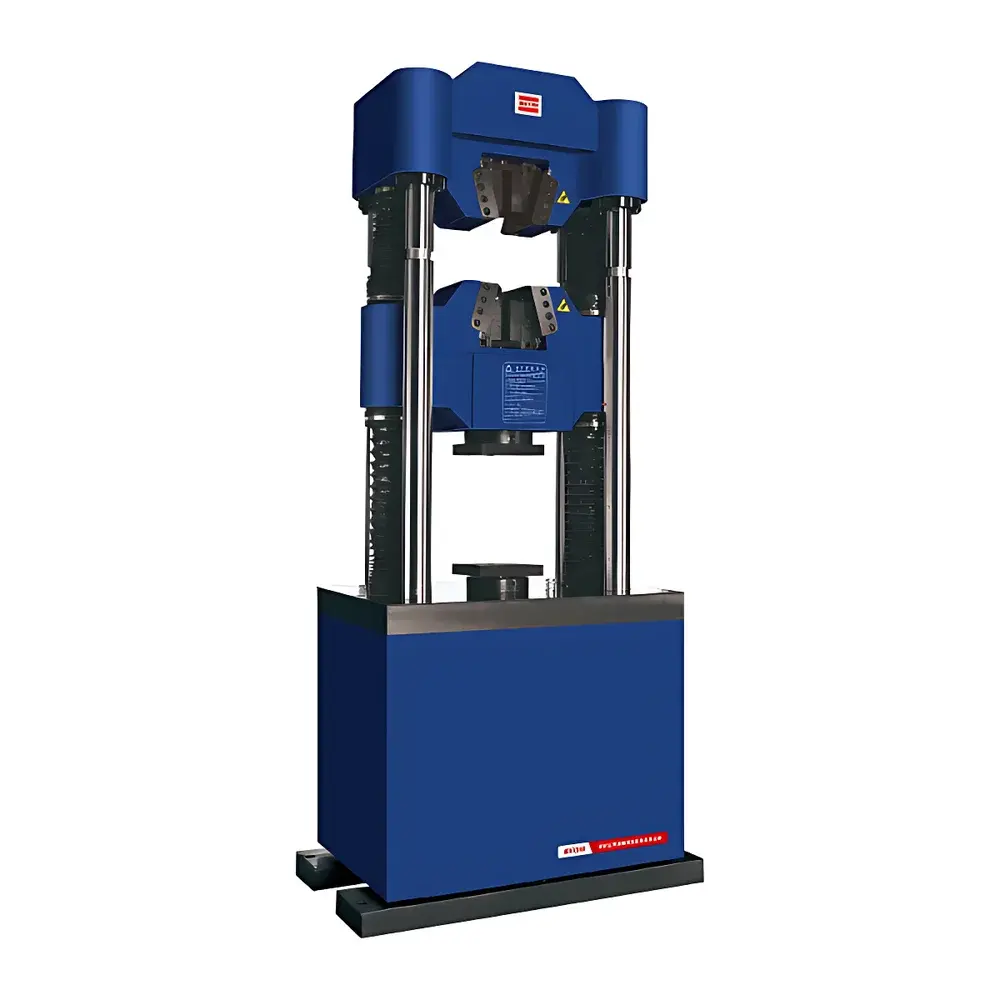
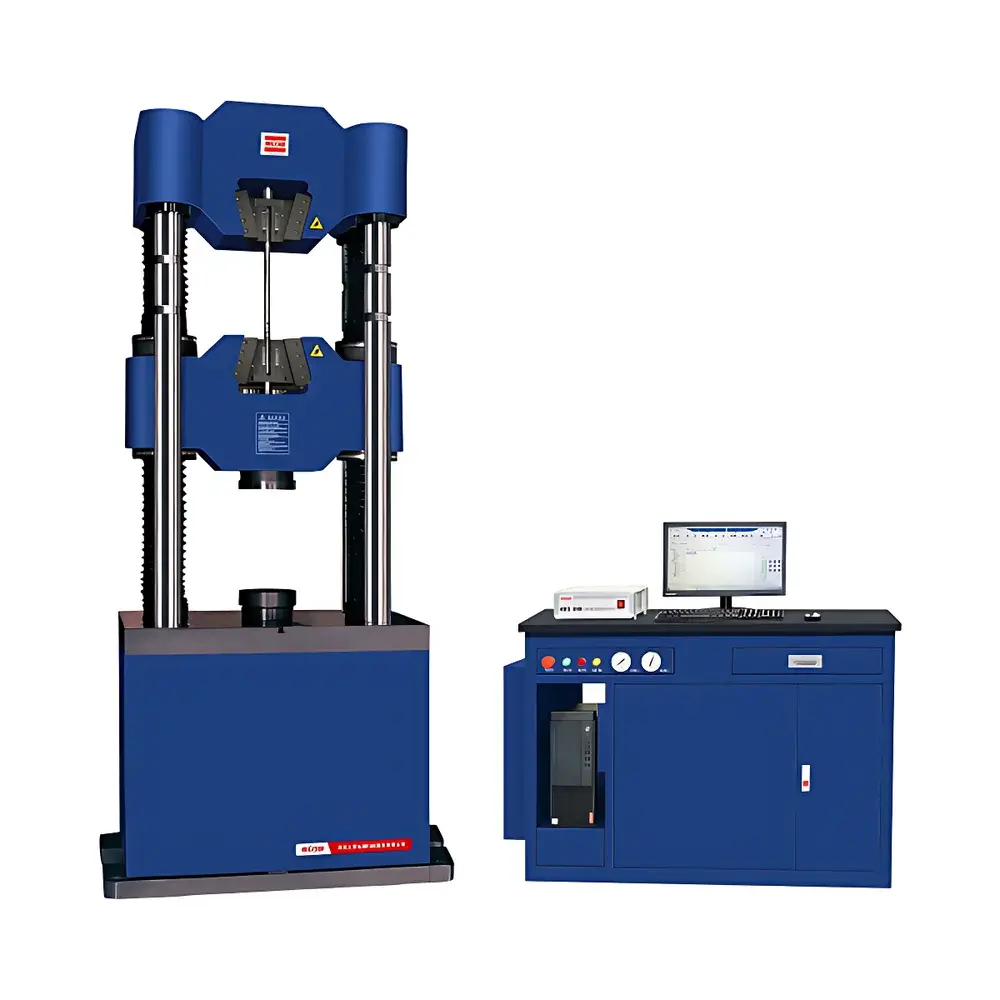
SUNS WAW Series Electro-Hydraulic Servo Universal Testing Machine with Q-Type Grips
| Brand | SUNS |
|---|---|
| Origin | Guangdong, China |
| Manufacturer Type | Direct Manufacturer |
| Country of Origin | China |
| Model | WAW |
| Instrument Type | Electro-Hydraulic Servo Testing Machine |
| Load Range | 0.02 N to 2000 kN |
| Load Accuracy | ±0.5% |
| Compliance Standards | GB/T 228.1–2010, ISO 6892-1, ASTM E4, ASTM E8, ASTM C39, ASTM C78, DIN 50125, JIS Z 2241 |
Overview
The SUNS WAW Series Electro-Hydraulic Servo Universal Testing Machine (Q-Type Grips) is a dual-zone, high-stiffness mechanical testing platform engineered for precision static mechanical characterization of structural and engineering materials. Utilizing a closed-loop electro-hydraulic actuation system, it applies controlled axial force—either tensile or compressive—to specimens while synchronously measuring load, displacement, and strain via integrated transducers and extensometry-capable interfaces. Its dual-space architecture separates the upper tensile zone (between moving crosshead and fixed upper beam) from the lower compression zone (between lower beam and base platen), enabling rapid mode switching without hardware reconfiguration. Designed for laboratory and industrial quality control environments, this system meets the metrological and operational requirements of international standard-compliant mechanical testing workflows—including those governed by ISO/IEC 17025-accredited laboratories.
Key Features
- Full digital closed-loop control architecture supporting simultaneous and independent regulation of force, displacement, and strain—enabling seamless transitions between control modes (e.g., force-controlled ramp, displacement-controlled hold, or strain-controlled cyclic loading) without signal interruption or hysteresis.
- High-rigidity twin-column frame constructed from medium-carbon steel columns with chromium-plated, mirror-finished surfaces—providing long-term dimensional stability, corrosion resistance, and minimal elastic deformation under rated load.
- Dual-space configuration: Tensile testing performed in the upper zone using Q-type wedge-action grips; compression and flexural testing conducted in the lower zone with interchangeable platens and bending fixtures.
- Integrated hydraulic power unit with pressure-compensated servo valve and low-noise pump assembly—ensuring smooth force application, reduced thermal drift, and repeatable loading profiles across full capacity range.
- Real-time data acquisition at ≥1 kHz sampling rate, synchronized across load cell, LVDT displacement sensor, and optional clip-on or video extensometer inputs.
Sample Compatibility & Compliance
The WAW series accommodates a broad spectrum of standardized and non-standard specimens: metallic rods (including threaded fasteners and rebar per ISO 15630-1), sheet metal coupons (per ASTM E8/E8M), cementitious mortars (GB/T 17671), concrete cylinders (ASTM C39), and prismatic beams for flexure (ASTM C78). Q-type grips utilize self-tightening wedge mechanisms that adapt to specimen geometry and surface finish—minimizing slippage and stress concentration during high-force tensile tests. The system is fully compliant with calibration and verification procedures outlined in ISO 7500-1 (Class 0.5), ASTM E4 (verification of force-measuring instruments), and GB/T 16825.1. It supports audit-ready documentation for GLP, GMP, and ISO 9001 quality systems when paired with validated software modules.
Software & Data Management
Control and analysis are executed via SUNS TestMaster™ software—a Windows-based platform compliant with FDA 21 CFR Part 11 requirements for electronic records and signatures. The software provides preconfigured test methods aligned with GB/T 228.1–2010, ISO 6892-1, ASTM E8, and EN 10002-1. It features real-time curve overlay, automatic yield point detection (0.2% offset, maximum slope), modulus calculation (secant/tangent), and fracture energy integration. All raw data—including timestamps, operator ID, environmental metadata (optional), and instrument calibration status—are embedded in .tdms or .csv exports. Audit trails record every parameter change, test start/stop event, and report generation action—retained for ≥36 months per internal QA policy.
Applications
- Mechanical property validation of structural steels, aluminum alloys, and titanium grades used in aerospace, rail, and energy infrastructure.
- Quality assurance of reinforcing bars (rebar), anchor bolts, and high-strength fasteners per ISO 898-1 and ASTM F568M.
- Compressive strength assessment of Portland cement mortars and ready-mix concrete—supporting mix design optimization and conformity testing.
- Three-point and four-point flexural testing of ceramic tiles, fiber-cement boards, and polymer composites per ISO 178 and ASTM D790.
- Calibration traceability services for secondary force standards up to 2000 kN, accredited to ISO/IEC 17025 by CNAS (China National Accreditation Service).
FAQ
What is the minimum resolvable load for the 2000 kN configuration?
The system achieves a resolution of 0.02 N across its full range, enabled by a 24-bit analog-to-digital converter and temperature-compensated load cell electronics.
Can the machine perform cyclic fatigue testing?
While optimized for quasi-static testing per ISO 6892-1 Annex A, the closed-loop controller supports low-frequency sinusoidal or trapezoidal waveforms up to 5 Hz—suitable for preliminary fatigue screening when paired with dedicated servo-hydraulic controllers and cooling systems.
Is third-party calibration certification included with delivery?
Yes—each unit ships with a factory calibration certificate traceable to NIM (National Institute of Metrology, China), with optional CNAS-accredited calibration available upon request.
Are Q-type grips compatible with non-metallic specimens such as composites or plastics?
Q-type grips are primarily designed for metallic specimens with high yield strength; for polymers or brittle materials, pneumatic or hydraulic side-acting grips with soft jaw inserts are recommended and available as accessories.
Does the system support integration into MES or LIMS environments?
TestMaster™ provides OPC UA and RESTful API interfaces for bidirectional data exchange with enterprise manufacturing execution systems (MES) and laboratory information management systems (LIMS), including automated result posting and sample ID synchronization.



