
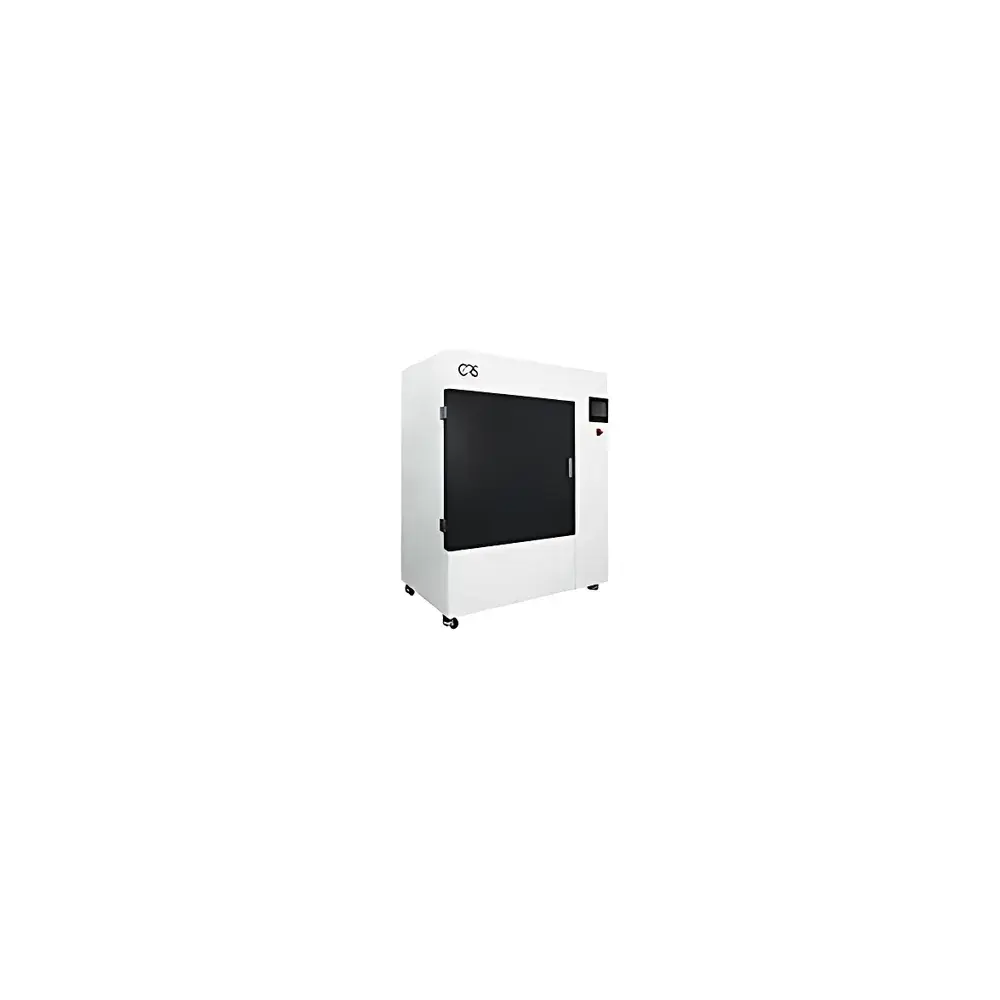
Suying CRS-1000 Advanced Cyclic Corrosion Test Chamber
| Brand | Suying |
|---|---|
| Model | CRS-1000 |
| Salt Spray Deposition Rate | 0.5–3.0 mL/h/80 cm² |
| Temperature Range | Ambient to +55°C |
| Chamber Interior Dimensions (W×D×H) | 1200 × 920 × 900 mm |
| Humidity Control Range (Condensation Mode) | 95–100% RH |
| Dry Mode Temperature Range | Ambient to +70°C |
| Dry Mode Humidity Range | 10–50% RH |
| Compressed Air Supply | Oil-free, 4.0–6.0 bar |
| Power Supply | AC 380 V, 3-phase |
| Deionized Water Supply Pressure | 0.5–5.0 bar |
| Solution Tank Capacity | 50 L with Agitator |
| Operating Ambient | 18–30°C, ≤85% RH |
Overview
The Suying CRS-1000 Advanced Cyclic Corrosion Test Chamber is an engineered solution for accelerated corrosion testing under dynamically controlled environmental sequences—specifically designed to replicate real-world atmospheric degradation mechanisms in laboratory settings. Unlike static salt spray chambers governed solely by ASTM B117, the CRS-1000 implements programmable multi-stage cycles that combine salt fog, high-humidity condensation, drying, and ambient stabilization phases. This capability aligns with internationally recognized cyclic corrosion test (CCT) protocols—including ASTM G85 Annexes A1–A5, ISO 14993, VDA 621-415, SAE J2334, and OEM-specific standards such as GMW 14872, VW PV 1209/1210, and Ford CETP 00.00-L-467. The chamber’s thermal and humidity control architecture employs PID-regulated heating elements, stainless steel jacketed humidification systems, and precision pneumatic nozzles to ensure repeatable phase transitions and stable parameter maintenance across extended test durations.
Key Features
- Programmable 4-phase cycle control: independent configuration of salt spray, 100% RH condensation, drying, and ambient stabilization stages via intuitive touchscreen interface
- Uniform salt fog distribution achieved through rotating fan-assisted nozzles generating consistent fan-shaped dispersion patterns over full test volume
- Titanium-coated interior chamber walls and stainless steel exterior with epoxy powder coating provide long-term resistance to chloride-induced pitting and stress corrosion cracking
- Integrated 50 L solution reservoir with mechanical agitator ensures homogeneous NaCl concentration (typically 5 wt% or user-defined) and minimizes sedimentation during prolonged operation
- Real-time display of chamber temperature, relative humidity, elapsed time, active cycle stage, and salt deposition rate (calibrated per ISO 9227)
- Compliance-ready data logging with timestamped parameter records, supporting GLP/GMP audit trails when paired with optional software modules
Sample Compatibility & Compliance
The CRS-1000 accommodates specimens up to 1200 mm (W) × 920 mm (D) × 900 mm (H), suitable for full-size automotive body panels, coated fasteners, electroplated components, and multi-material assemblies. Its chamber geometry and airflow design conform to ISO 9227 requirements for uniform fog deposition across standardized collection funnels (minimum 16 mm diameter, 80 cm² surface area). All operational parameters—including salt deposition rate (0.5–3.0 mL/h/80 cm²), temperature stability (±1.0°C), and humidity ramp rates—are traceable to NIST-calibrated reference instruments. The system meets structural and safety provisions outlined in IEC 61000-6-2 (EMC immunity) and IEC 61000-6-4 (EMC emissions), and supports validation documentation per ISO/IEC 17025 for accredited testing laboratories.
Software & Data Management
The embedded controller stores up to 100 user-defined test programs with customizable dwell times, transition delays, and alarm thresholds. Optional PC-based software enables remote monitoring, automated report generation (PDF/CSV), and export of time-stamped environmental logs compliant with FDA 21 CFR Part 11 requirements—including electronic signatures, audit trail activation, and user access level management. Data integrity safeguards include cyclic redundancy checks (CRC) on stored logs and automatic backup to external USB storage. Exported datasets are structured to align with LIMS integration standards (ASTM E1482, ISO 15197) for seamless transfer into enterprise quality management systems.
Applications
The CRS-1000 serves critical roles in R&D and QA/QC workflows across transportation, aerospace, electronics, and industrial coatings sectors. It is routinely deployed for evaluating: corrosion resistance of zinc-nickel and trivalent chromium platings; durability of automotive under-hood polymer composites exposed to road-salt aerosols; adhesion performance of e-coat primers after thermal-humidity cycling; and long-term stability of printed circuit board conformal coatings under combined chloride/humidity stress. Its ability to reproduce field-relevant failure modes—including white rust formation, red rust propagation, and intergranular attack—makes it indispensable for validating material substitutions and process changes prior to production release.
FAQ
What standards does the CRS-1000 support out-of-the-box?
The system includes preloaded test templates for ASTM G85 A1–A5, ISO 14993, VDA 621-415, SAE J2334, and major OEM specifications including GMW 14872, VW PV 1209, and Ford CETP 00.00-L-467.
Is calibration documentation provided with the unit?
Yes—each shipment includes a factory calibration certificate covering temperature, humidity, and salt deposition rate, traceable to national metrology institutes.
Can the chamber operate unattended for extended cycles (e.g., 1,000+ hours)?
Yes—designed for continuous operation with automatic solution replenishment, overflow protection, and dual-level fault detection (temperature/humidity deviation, air pressure loss, liquid level low).
Does the system meet regulatory requirements for ISO/IEC 17025-accredited labs?
Fully compliant when equipped with optional audit-trail-enabled software; hardware design satisfies ISO/IEC 17025 clause 6.4.1 (equipment suitability) and 6.4.4 (verification of fitness for purpose).
What maintenance intervals are recommended?
Daily visual inspection of nozzles and drain lines; weekly cleaning of solution tank and humidifier sump; quarterly verification of temperature/humidity sensors using certified references; annual full-system calibration.
Related Products



