
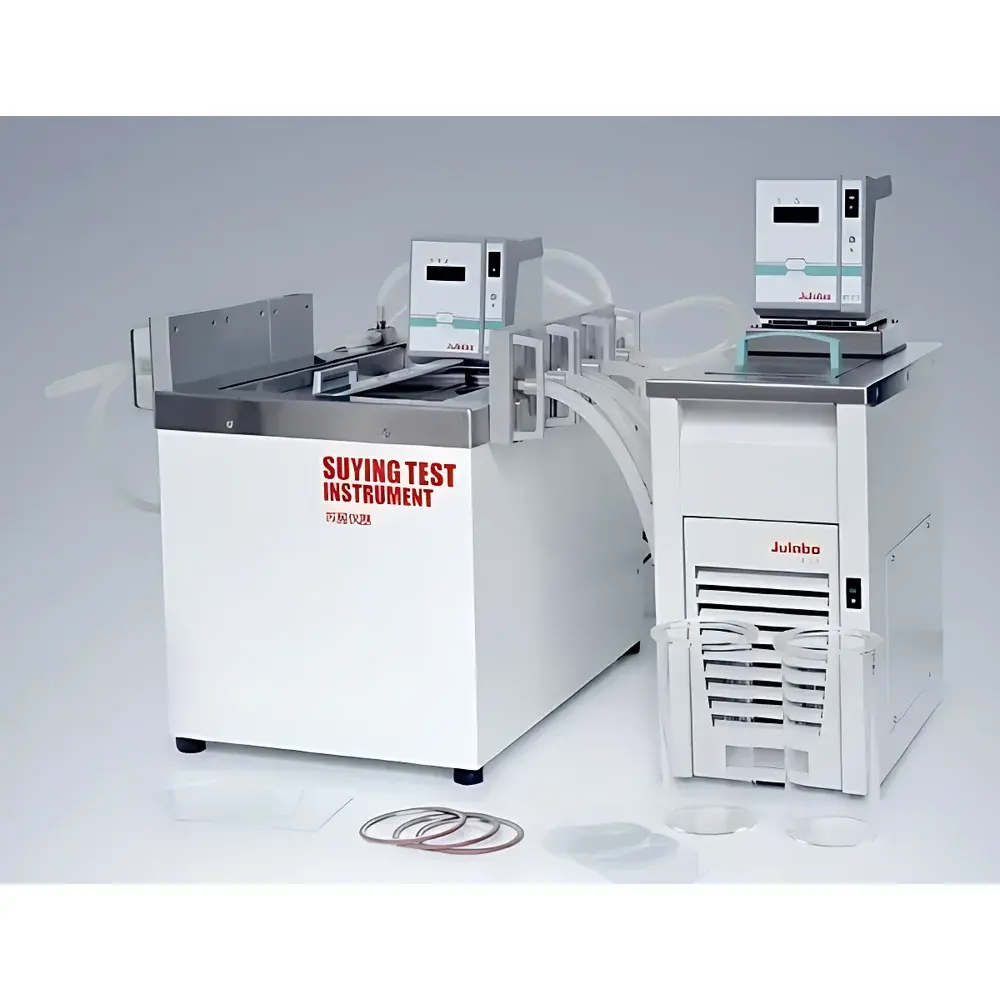
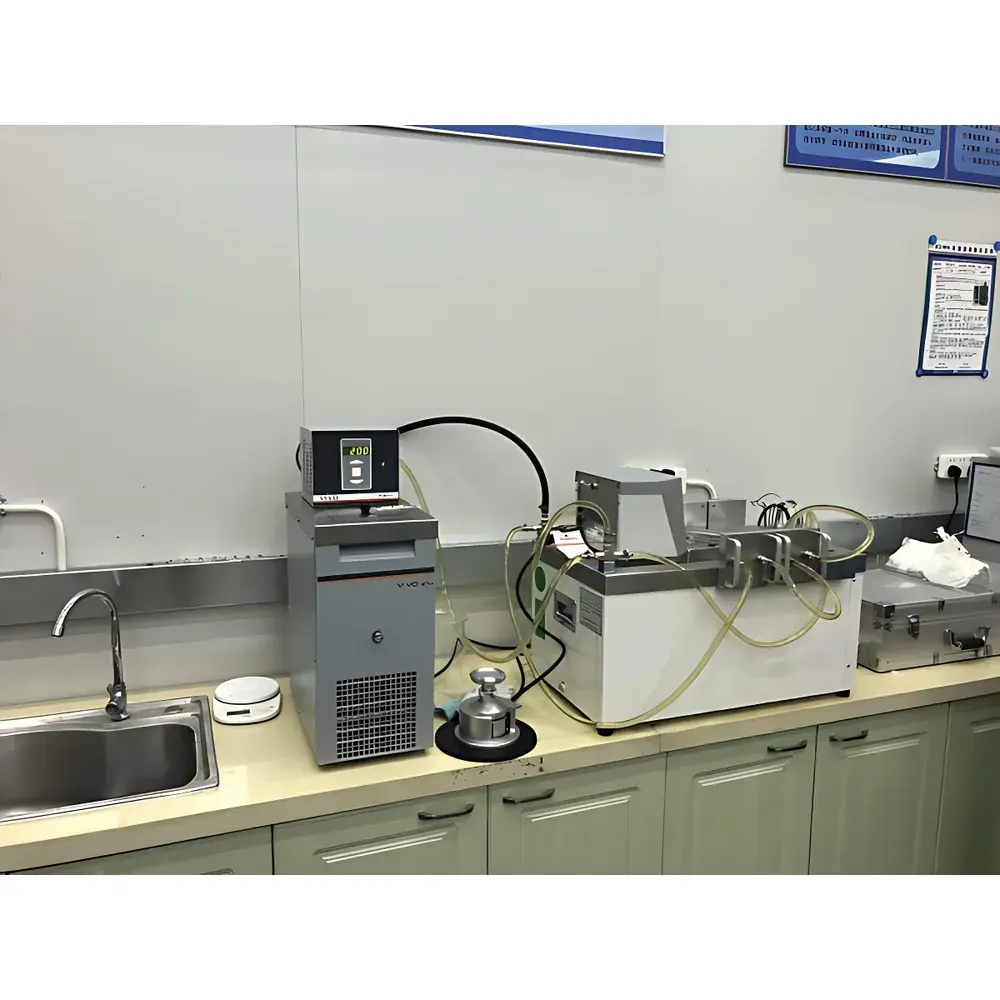
Suying FC-40 Automotive Fogging Tester
| Brand | Suying |
|---|---|
| Model | FC-40 |
| Origin | Shanghai, China |
| Temperature Range (Hot Chamber) | Ambient to 150 °C |
| Temperature Accuracy (Hot Chamber) | ±0.1 °C at 150 °C |
| Temperature Range (Cold Chamber) | 0–100 °C |
| Temperature Accuracy (Cold Chamber) | ±0.1 °C |
| Hot Chamber Dimensions (L×W×H) | 630 × 430 × 550 mm |
| Cold Chamber Dimensions (L×W×H) | 430 × 230 × 620 mm |
| Hot Chamber Net Weight | 35 kg (excl. heat transfer medium) |
| Cold Chamber Net Weight | 18 kg (excl. heat transfer medium) |
| Power Supply | AC 220 V, 50 Hz |
| Compliant Standards | ISO 6452, DIN 75201, SAE J1756, QB/T 2728, BS EN 14288, PV 3920, PV 3015, ES-X83231, NES M0161, D45 1727, GM 9305P, TSM 0503G |
Overview
The Suying FC-40 Automotive Fogging Tester is a precision-engineered instrument designed for quantitative evaluation of volatile condensable emissions from interior automotive and aerospace materials under controlled thermal conditions. It operates on the principle of thermal desorption followed by cold-surface condensation—a standardized physical separation method widely adopted in material compatibility testing. During operation, test specimens are heated in a sealed glass or metal cup within a thermostatically regulated hot chamber (up to 150 °C), inducing volatilization of low-molecular-weight compounds such as plasticizers, stabilizers, and residual solvents. These vapors migrate toward a cooled substrate—either a polished glass plate or aluminum foil—mounted in an adjacent cold chamber maintained between 0 °C and 100 °C. Condensate accumulation on the substrate is then quantified using one or more metrologically traceable methods: gloss reduction (ASTM D523), haze increase (ASTM D1003), or gravimetric mass gain (ISO 6452 Annex A). The resulting fogging value reflects the material’s propensity to generate optical interference or deposit contaminants on sensitive surfaces such as instrument panels, head-up displays, or camera lenses.
Key Features
- Independent dual-zone temperature control: hot chamber (ambient to 150 °C, ±0.1 °C stability at setpoint) and cold chamber (0–100 °C, ±0.1 °C accuracy), enabling precise simulation of real-world thermal gradients.
- Modular substrate interface supporting interchangeable glass plates (square and circular) and aluminum foil substrates, compatible with both optical and gravimetric measurement workflows.
- Integrated controller with PID algorithm and digital display ensures repeatable ramp-and-hold thermal profiles across sequential test cycles.
- Robust stainless-steel and anodized aluminum construction minimizes thermal drift and supports long-term operational stability in QC laboratory environments.
- Comprehensive standard configuration includes calibrated gloss meter (for ISO/DIN-compliant gloss loss calculation), DOP reference standard, fluororubber sealing components, sample holders, and thermal oil—reducing time-to-first-test deployment.
- Expandable architecture allows seamless integration of optional accessories including a high-resolution haze meter (per ASTM D1003), analytical balance (0.01 mg readability), and alternative plasticizer standards (e.g., DIDP).
Sample Compatibility & Compliance
The FC-40 accommodates a broad spectrum of non-metallic interior materials used in Tier-1 and OEM supply chains, including polyurethane foams, PVC and TPE elastomers, thermoplastic olefins (TPO), leather substitutes, needle-punched nonwovens, acrylic and polyester textiles, phenolic and epoxy adhesives, and solvent-borne coating systems. All test protocols adhere strictly to internationally harmonized fogging standards—including ISO 6452 (rubber and plastics), DIN 75201 (automotive interiors), SAE J1756 (light vehicle cabin air quality), and OEM-specific specifications such as Volkswagen PV 3920, General Motors GM 9305P, and Nissan NES M0161. The system supports full GLP documentation workflows, with configurable test logging, user access controls, and audit-ready parameter records—facilitating compliance with ISO/IEC 17025 and FDA 21 CFR Part 11 requirements when paired with validated software extensions.
Software & Data Management
While the base FC-40 operates via standalone hardware controls, it is fully compatible with Suying’s optional FogTest Suite v3.x—a Windows-based application that automates test sequencing, real-time temperature logging, substrate calibration tracking, and fogging index calculation per selected standard. The software generates PDF reports containing raw gloss/haze/weight data, deviation metrics, pass/fail flags against specification limits, and digital signatures for reviewer approval. All data files are stored in open-format CSV and XML structures, ensuring interoperability with LIMS platforms and enterprise QA databases. Instrument firmware supports UTC timestamping, event-driven alarms, and configurable data export intervals—critical for regulatory traceability in GMP-aligned production environments.
Applications
- Pre-release validation of polymer formulations for fogging resistance in dashboard modules, door trims, and center consoles.
- Root-cause analysis of optical haze formation on HUD combiners and rearview camera lenses during thermal cycling.
- Supplier qualification testing for adhesive tapes, foam gaskets, and sound-deadening composites used in EV battery enclosures.
- Regulatory submission support for REACH SVHC screening and U.S. EPA VOC emission profiling of interior trim systems.
- Material substitution studies comparing bio-based plasticizers (e.g., citrate esters) against conventional phthalates under identical thermal stress conditions.
- Environmental stress screening of recycled PET fabrics and PP-based nonwovens intended for premium cabin applications.
FAQ
What is the primary purpose of the FC-40 Fogging Tester?
It quantifies volatile condensable emissions from automotive and aerospace interior materials under elevated temperature conditions, generating objective fogging indices used for material selection and regulatory conformance.
Which international standards does the FC-40 support out-of-the-box?
The system meets the mechanical, thermal, and procedural requirements of ISO 6452, DIN 75201, SAE J1756, QB/T 2728, BS EN 14288, and multiple OEM specifications including PV 3920 and GM 9305P.
Is gravimetric measurement included in the standard configuration?
Yes—the FC-40 ships with aluminum foil substrates, foil cutters, and mounting fixtures required for weight-based fogging assessment; however, the analytical balance (0.01 mg resolution) must be procured separately.
Can the FC-40 accommodate custom test temperatures outside the specified range?
No—the hot chamber is certified for operation up to 150 °C and the cold chamber down to 0 °C; exceeding these limits voids calibration validity and may compromise safety interlocks.
How often should the thermal oil and DOP reference standard be replaced?
Thermal oil should be inspected quarterly and replaced annually or after 2,000 operating hours; DOP reference material must be renewed every six months or after 50 test cycles to ensure metrological integrity.
Related Products



