
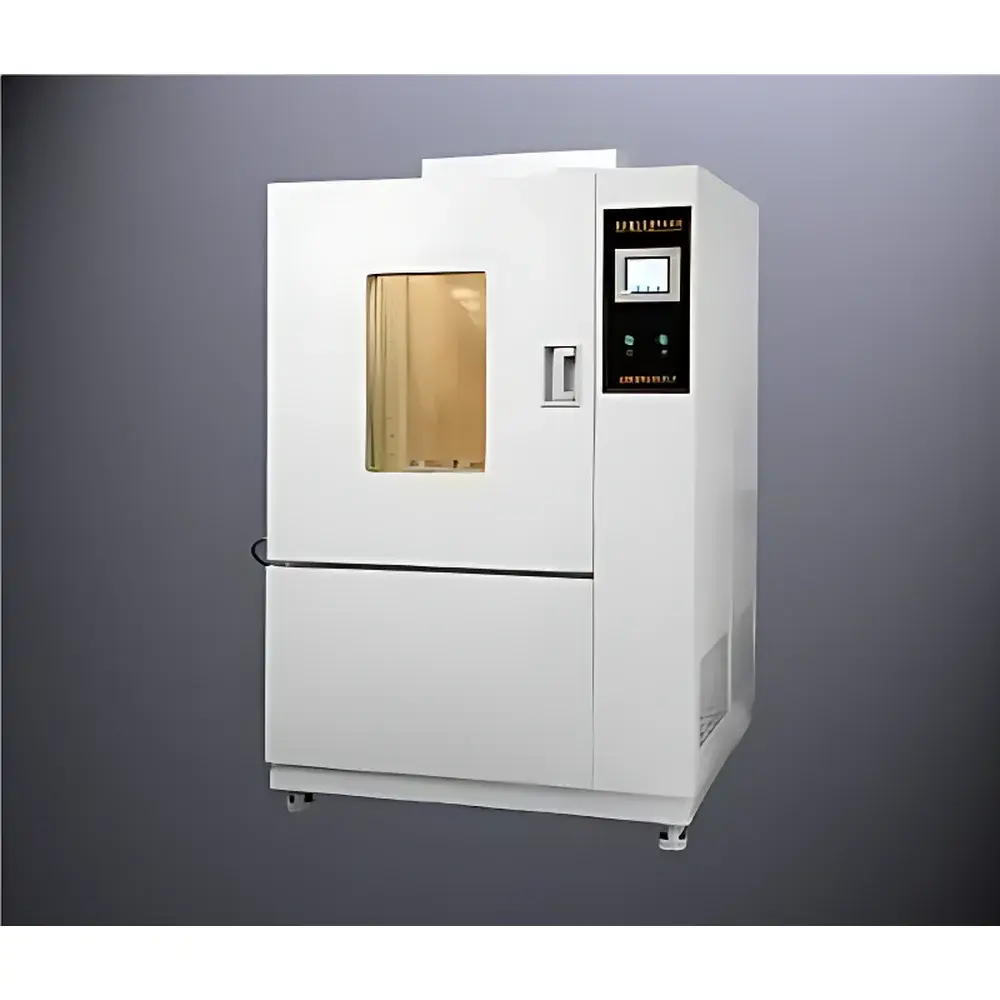
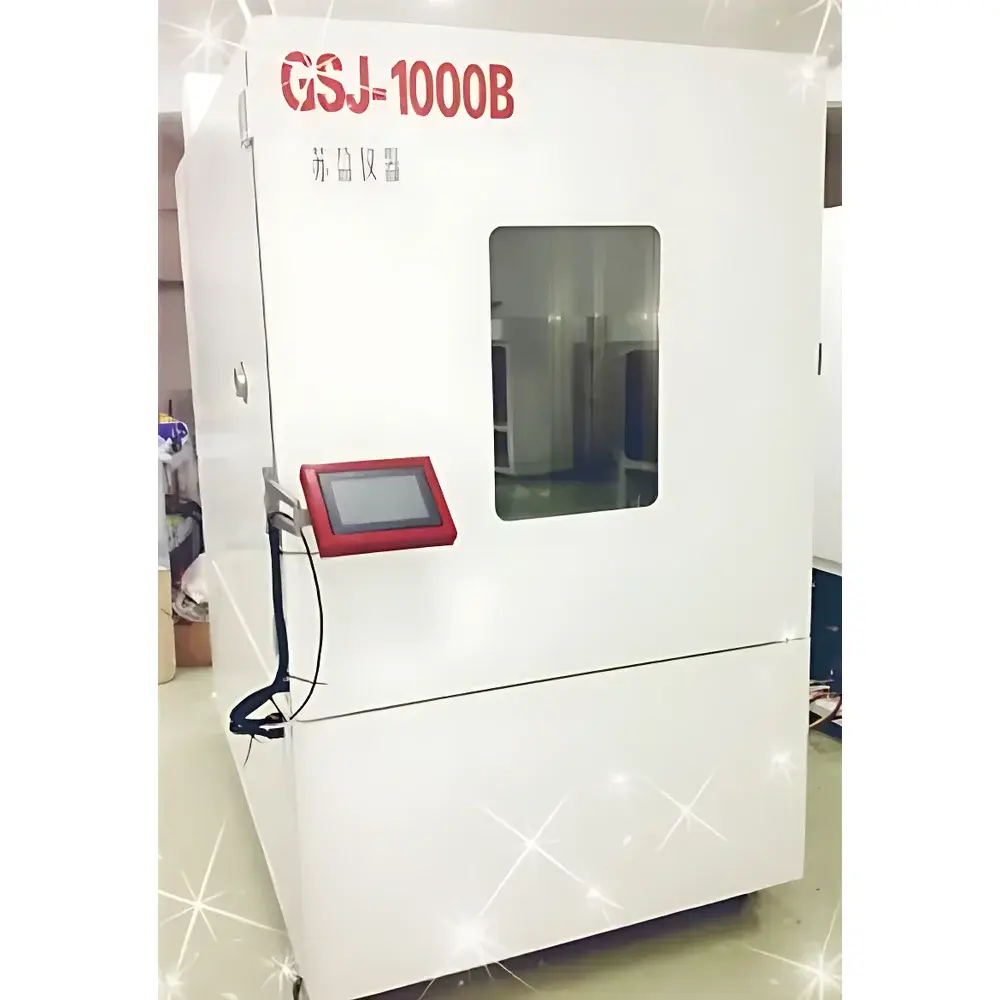
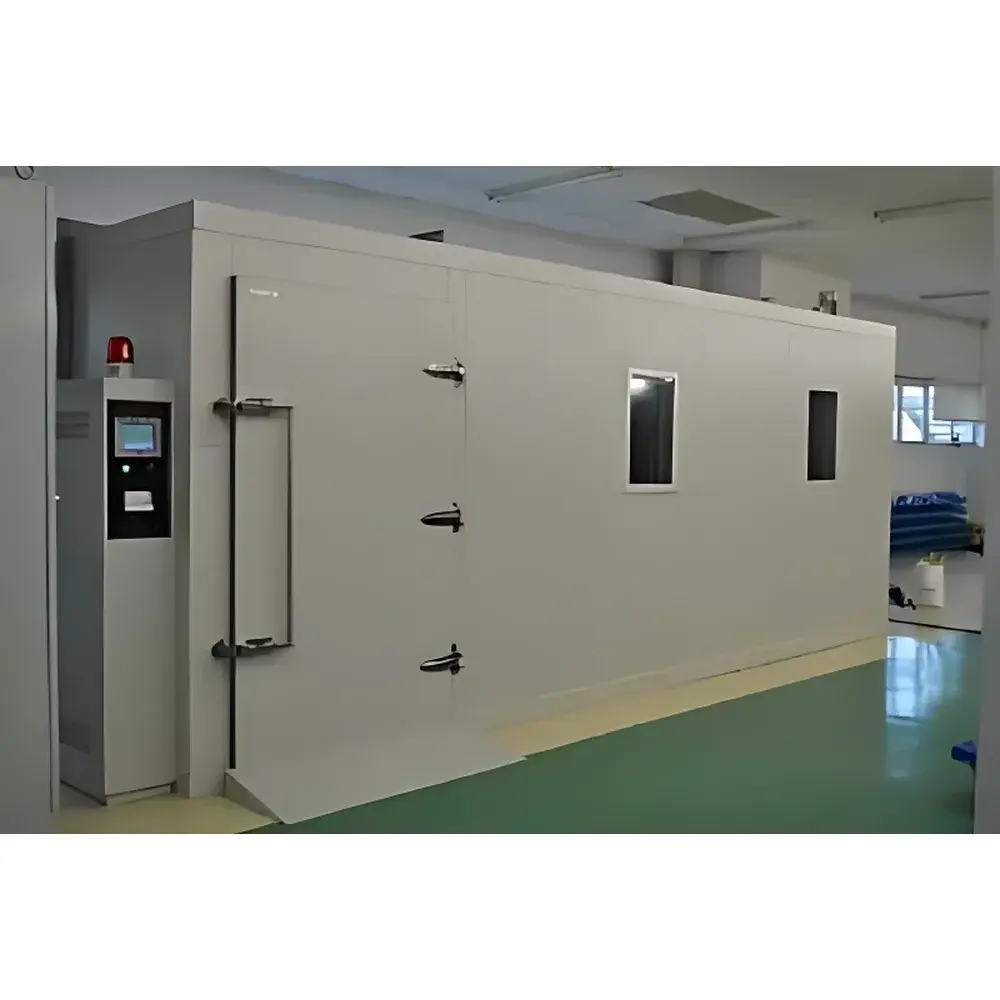
Suying GDJS Series Environmental Test Chamber – High-Low Temperature & Humidity Cycling Chamber
| Brand | Suying |
|---|---|
| Origin | Shanghai, China |
| Model | GDJS-100 / GDJS-225 / GDJS-500 / GDJS-800 / GDJS-1000 |
| Temperature Range | -20°C to 150°C (optional: -40°C, -60°C, -70°C) |
| Humidity Range | 30–98% RH |
| Temp. Uniformity | ±2°C |
| Temp. Stability | ±0.5°C |
| Humidity Deviation | +2 / -3% RH |
| Heating Rate | 1.0–3.0°C/min |
| Cooling Rate | 0.7–1.0°C/min |
| Control System | Imported Programmable Touchscreen Controller (5.7" LED, 100 programs × 1000 segments) |
| Compliance | GB/T 2423.1–2008, GB/T 2423.2–2008, GB/T 2423.3–2006, GB/T 2423.4–2008 |
Overview
The Suying GDJS Series Environmental Test Chamber is an engineered precision system designed for rigorous high-low temperature and humidity cycling tests in accordance with international environmental stress screening (ESS) and reliability qualification protocols. Based on dual-mode thermodynamic control architecture—integrating independent heating, refrigeration, and humidification subsystems—the chamber delivers stable, repeatable thermal-hygrometric profiles across wide operational ranges. Its core function is to replicate accelerated environmental conditions—including extreme cold, elevated heat, and controlled moisture exposure—to evaluate material integrity, dimensional stability, electrical performance, and functional reliability of aerospace components, electronic assemblies, automotive ECUs, semiconductor packages, and polymer-based materials. The system operates under closed-loop feedback control using platinum resistance (PT100) temperature sensors and capacitive humidity transducers, ensuring traceable metrological performance aligned with laboratory-grade validation requirements.
Key Features
- Robust dual-wall construction: Inner chamber lined with electropolished SUS304 stainless steel mirror finish; outer shell fabricated from A3 carbon steel with phosphating and electrostatic powder coating for corrosion resistance and long-term structural integrity.
- Advanced refrigeration architecture: Equipped with original French Tecumseh (or equivalent Tier-1 OEM) hermetic compressors, employing either single-stage or cascade low-temperature refrigeration circuits depending on model configuration (e.g., -70°C capability requires cascade design).
- Uniform airflow management: Multi-blade centrifugal fan system with adjustable laminar flow ducting ensures ±2°C temperature uniformity and ≤±3% RH deviation across the entire working volume, validated per IEC 60068-3-5.
- Intelligent humidity control: External isolation-type stainless steel surface evaporation humidifier coupled with dew-point-based mechanical dehumidification via evaporator coil contact, enabling precise 30–98% RH regulation without condensate carryover.
- Human-centered ergonomics: Large observation window with embedded heating element prevents fogging; integrated LED lighting; front-access service door for rapid maintenance; bottom-mounted heavy-duty locking PU casters for facility mobility.
- Fail-safe protection suite: Comprehensive safety logic includes over-temperature cutoff, compressor high-pressure shutdown, motor thermal overload detection, water shortage alarm with auto-shutdown, leakage current interruption, and phase-loss monitoring.
Sample Compatibility & Compliance
The GDJS chamber accommodates a broad spectrum of test specimens—from PCB subassemblies and sensor modules to full-size avionics enclosures—via configurable interior dimensions (100 L to 1000 L working volume) and optional 50 mm or 100 mm cable/port access ports. All models conform to national standard GB/T 2423 series for environmental testing of electrotechnical products, including GB/T 2423.1 (cold), GB/T 2423.2 (dry heat), GB/T 2423.3 (damp heat, steady state), and GB/T 2423.4 (damp heat, cyclic). While not pre-certified to ISO 16750 or MIL-STD-810H out-of-the-box, the chamber’s control repeatability, sensor accuracy (±0.1°C temp, ±1% RH), and programmable ramp/soak profiles support user-led validation against these standards. Data logging and audit trail functions meet GLP-aligned documentation expectations when paired with external PC-based acquisition software.
Software & Data Management
The embedded controller features a 5.7-inch high-resolution touchscreen interface supporting both English and Chinese language modes. It stores up to 100 multi-segment test programs (maximum 1000 steps per program, each step configurable for duration up to 99 h 59 min), with real-time graphical display of chamber temperature and humidity curves. Built-in RS-232 and RS-485 serial interfaces enable bidirectional communication with host PCs running Windows-based scheduling and data archiving applications. Optional Ethernet connectivity supports remote monitoring and centralized fleet management. Controller firmware implements automatic PID parameter self-tuning and dynamic compensation algorithms to maintain setpoint fidelity during transient load changes. All operational events—including power interruptions—are logged with timestamps, and the “screen lock” function prevents unauthorized modification during active test cycles.
Applications
This chamber serves as a critical tool in product development and quality assurance workflows across multiple regulated sectors. In electronics manufacturing, it validates solder joint reliability, conformal coating adhesion, and connector contact resistance under thermal cycling stress. For automotive suppliers, it supports component-level validation per ISO 16750-4 (climate resistance) and AEC-Q200 stress testing. Aerospace subcontractors utilize it for pre-flight environmental soak testing of flight-critical sensors and actuators. Materials scientists apply it to study hygrothermal aging effects on composites, elastomers, and battery electrolyte membranes. Additionally, it supports accelerated life testing (ALT) and failure mode analysis (FMEA) by inducing controlled degradation mechanisms such as oxidation, hydrolysis, and intermetallic growth.
FAQ
What temperature and humidity ranges are supported across GDJS models?
Standard configurations offer -20°C to +150°C with optional extensions down to -70°C; humidity range is consistently 30–98% RH across all variants.
Is the chamber suitable for continuous operation in production environments?
Yes—designed for 24/7 duty cycle with redundant safety systems, industrial-grade compressors, and modular service access points to minimize downtime.
Can test data be exported for regulatory submission (e.g., FDA, ISO 9001)?
Raw sensor logs and event histories can be exported via USB or serial interface in CSV format; full 21 CFR Part 11 compliance requires third-party validated software integration.
How is calibration traceability maintained?
Factory calibration uses NIST-traceable reference standards; users may perform field verification using portable PT100 and humidity probes compliant with ISO/IEC 17025 practices.
Are non-standard chamber sizes or custom port configurations available?
Yes—Suying offers engineering consultation and bespoke fabrication for walk-in chambers, vertical/horizontal orientation variants, and application-specific interface adaptations.



