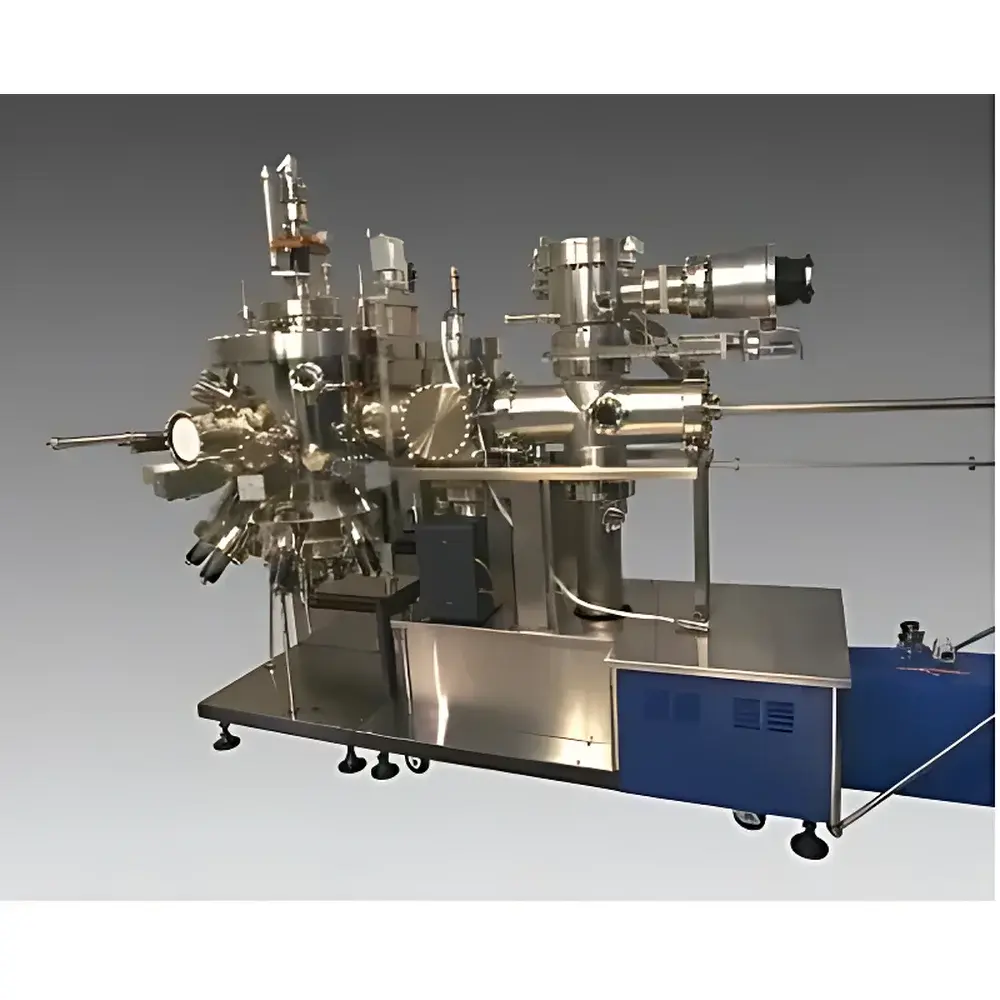
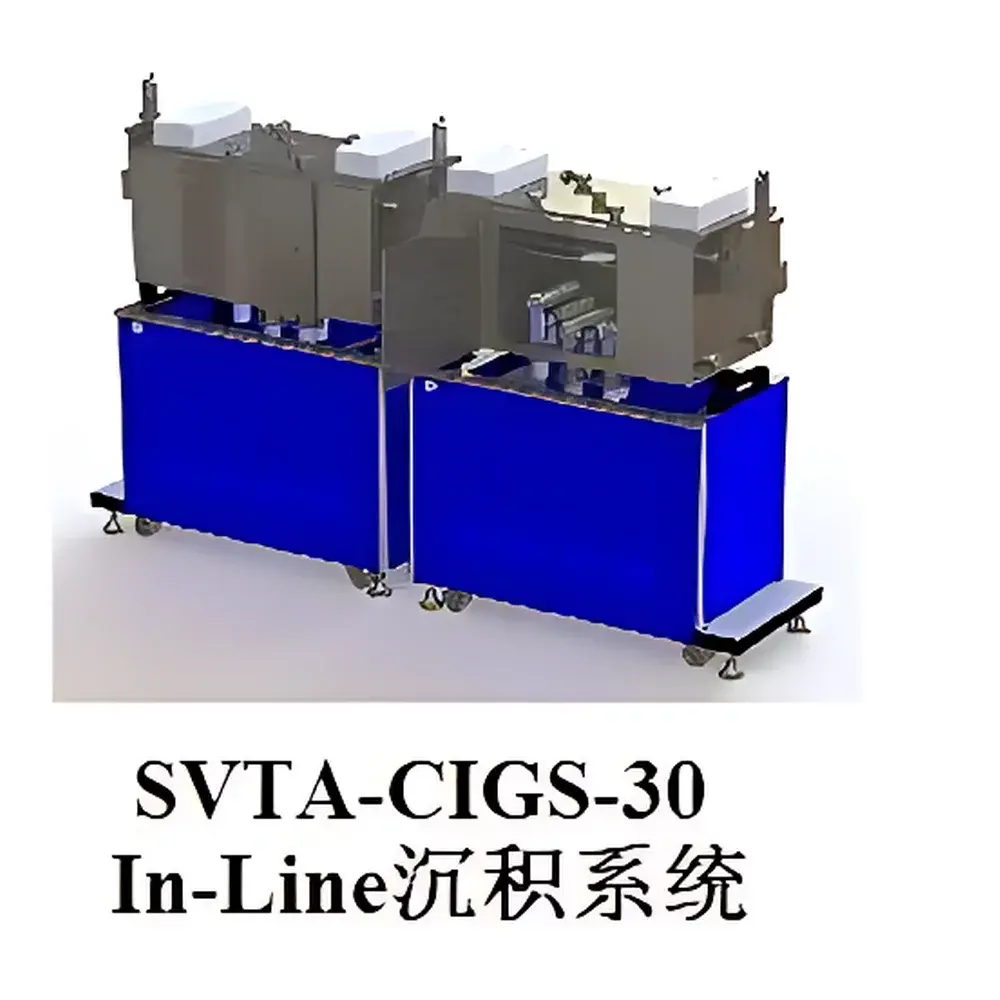
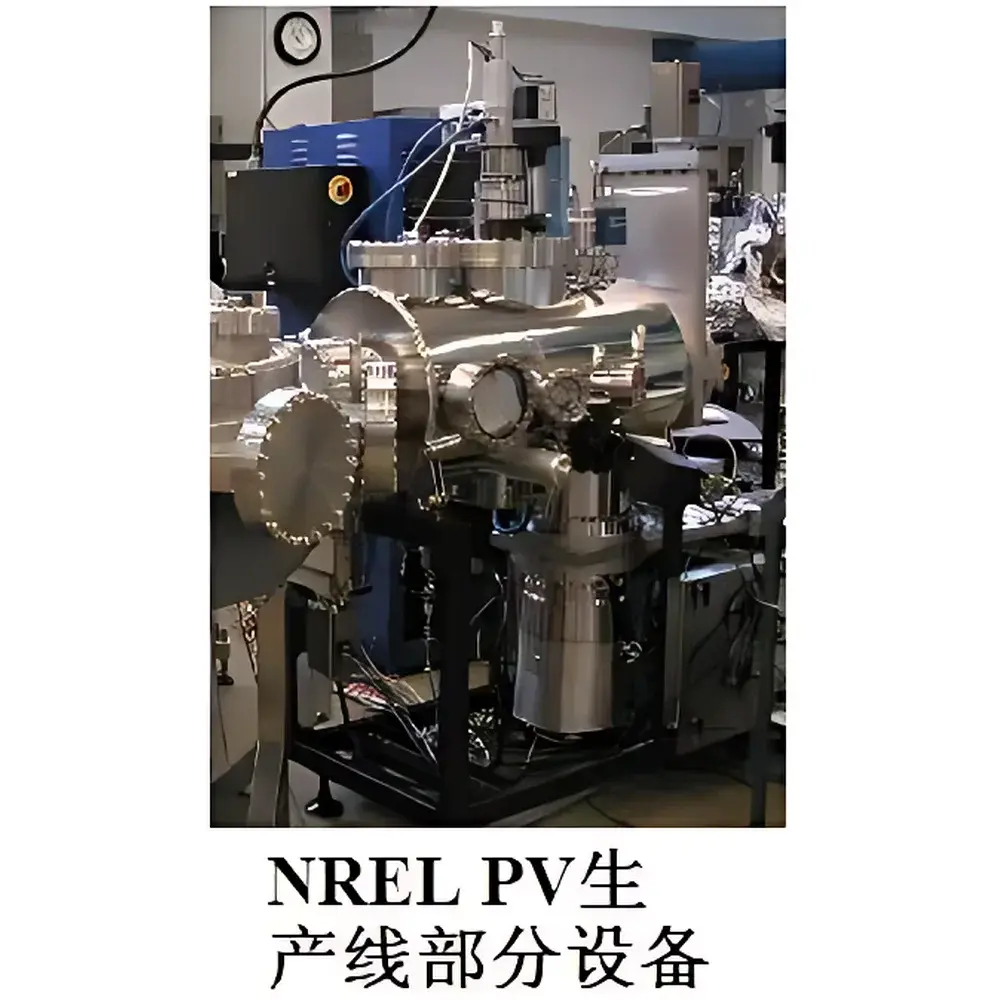
SVT Associates 35-V-100 CIGS Thin Film Deposition System
| Brand | SVT Associates |
|---|---|
| Origin | USA |
| Model | 35-V-100 |
| Substrate Size | 4-inch |
| Source Capacity | Up to 10 effusion cells |
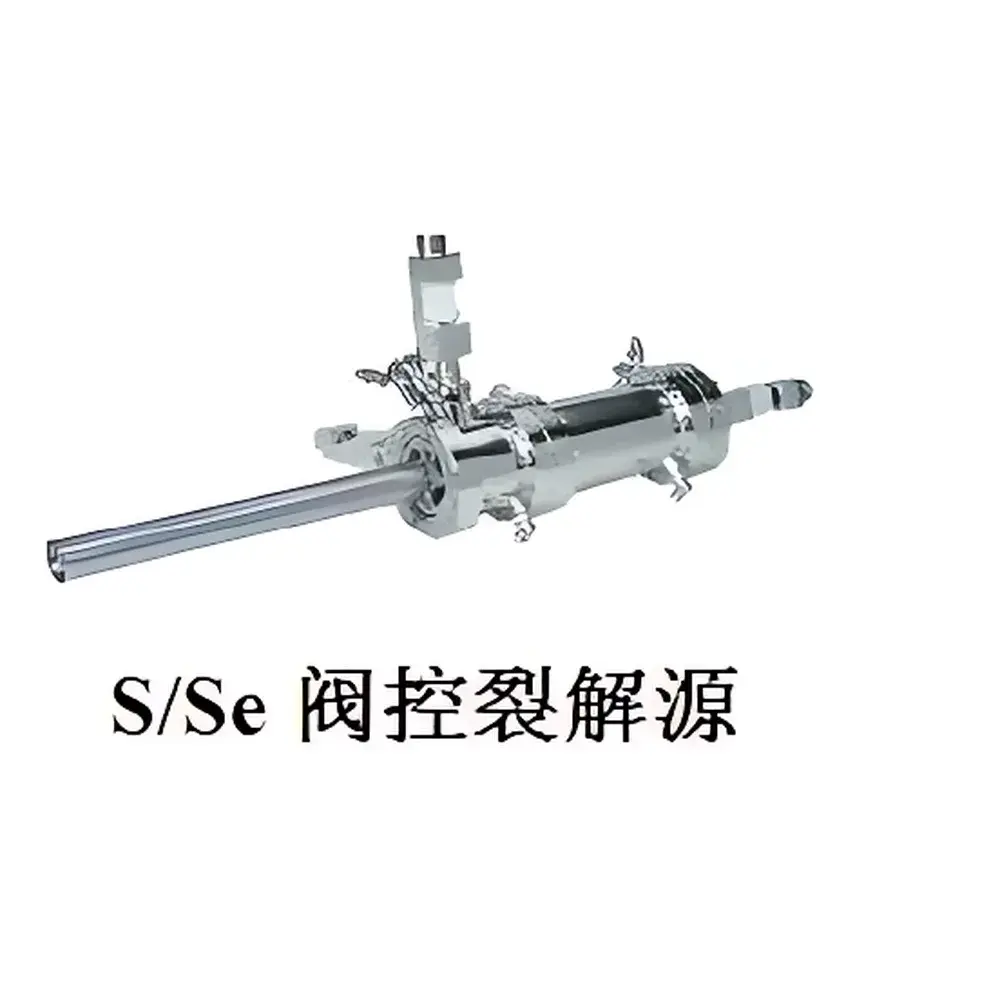
| Se Source Options | Point sources (200–2000 cm³), Linear source (8000 cm³) |
| Substrate Heater | High-temperature, uniform, programmable up to 700 °C |
| Vacuum System | Multi-pump configuration with integrated Se trap |
| Chamber Architecture | Modular design |
| In-situ Monitoring | Integrated quartz crystal microbalance (QCM) and optical emission spectroscopy (OES) |
| Compliance | Designed for GLP-compliant R&D environments |
Overview
The SVT Associates 35-V-100 is a high-precision, ultra-high-vacuum (UHV) thermal evaporation system engineered specifically for research-scale development of copper indium gallium selenide (CIGS) thin-film photovoltaic absorber layers. Based on resistive thermal evaporation principles, the system enables controlled, stoichiometric co-deposition of Cu, In, Ga, and Se onto 4-inch substrates under tightly regulated vacuum conditions (base pressure <5×10⁻⁸ Torr). Its modular UHV chamber architecture supports sequential or simultaneous multi-source evaporation, making it suitable for combinatorial process optimization, layer-by-layer growth studies, and interfacial engineering of chalcopyrite-based solar cell structures. The system is not intended for direct industrial production but serves as a critical platform for materials science validation prior to scale-up—providing reproducible deposition rates (0.01–2.0 Å/s), precise thickness control (<±1.5% run-to-run), and real-time feedback essential for correlating process parameters with device performance metrics such as open-circuit voltage (VOC) and quantum efficiency.
Key Features
- Modular UHV main chamber with all-metal sealing and bake-out capability (≤200 °C), ensuring long-term vacuum integrity and low hydrocarbon background.
- High-stability substrate heater assembly capable of uniform temperature distribution (±3 °C across 100 mm diameter) and programmable ramp/soak profiles up to 700 °C—critical for in-situ annealing and reaction-driven phase formation.
- Up to ten independently controlled effusion cells, including dual-zone Se point sources (200–2000 cm³) and a high-throughput linear Se source (8000 cm³), enabling both compositional grading and large-area uniformity studies.
- Dual-pump vacuum system comprising turbomolecular pump (≥2000 L/s for N₂) and cryogenic pump (≥10,000 L/s for Se vapor), integrated with a dedicated selenium condensation trap to minimize backstreaming and extend pump life.
- Real-time deposition monitoring via dual-channel quartz crystal microbalance (QCM) with ±0.1 Å resolution and optional optical emission spectroscopy (OES) for plasma-assisted or reactive evaporation modes.
- Cluster-ready interface flange set (CF150/CF200) supporting future integration of load-lock, pre-clean (RF sputter), or post-deposition annealing modules without chamber venting.
Sample Compatibility & Compliance
The 35-V-100 accommodates standard 4-inch (100 mm) substrates—including soda-lime glass, molybdenum-coated glass, flexible metal foils (e.g., stainless steel, titanium), and silicon wafers—with customizable substrate holders accommodating rotation, tilting (±15°), and planetary motion for enhanced film uniformity. All wetted materials conform to ASTM F568M Grade 8.8 stainless steel and oxygen-free high-conductivity (OFHC) copper specifications. The system meets ISO 14644-1 Class 5 cleanroom compatibility when operated within a controlled environment and supports audit-ready documentation per GLP (Good Laboratory Practice) frameworks. While not certified for GMP manufacturing, its hardware architecture and software logging capabilities align with foundational requirements for FDA 21 CFR Part 11 data integrity when paired with validated third-party SCADA systems.
Software & Data Management
Control is executed via SVT’s proprietary VACUUM-PRO™ software suite running on Windows 10 IoT Enterprise, offering synchronized PID regulation of heater temperature, source shutter timing, and pressure feedback loops. All process recipes—including deposition sequences, ramp rates, and sensor thresholds—are stored with user-defined metadata and time-stamped audit trails. Raw QCM and thermocouple data are logged at ≥10 Hz and exportable in CSV/HDF5 formats for post-processing in MATLAB, Python (Pandas), or PV analysis tools such as SCAPS-1D. Optional OPC UA server integration enables interoperability with enterprise MES platforms for traceable batch reporting in academic and industrial R&D settings.
Applications
- Development of graded-CIGS absorbers (e.g., Ga/(Ga+In) and Cu/(In+Ga) depth profiles) for tandem cell integration.
- Fundamental studies of Se incorporation kinetics, secondary phase formation (e.g., Cu₂₋ₓSe, In₂Se₃), and defect passivation strategies using in-situ annealing.
- Process transfer validation between lab-scale evaporation and industrial co-evaporation lines (e.g., for pilot-line qualification per IEC 61215 standards).
- Deposition of buffer layers (e.g., CdS, ZnS, Zn(O,S)) in stacked architectures using auxiliary source ports.
- Materials library generation for high-throughput screening of alternative chalcogenide compositions (e.g., CZTSSe, Sb₂Se₃).
FAQ
What vacuum level can the 35-V-100 achieve, and how is it maintained during Se evaporation?
The system achieves a base pressure of ≤5×10⁻⁸ Torr after bake-out and maintains ≤2×10⁻⁷ Torr during active Se evaporation using the cryo-pump + Se trap configuration.
Is remote operation supported, and what cybersecurity protocols are implemented?
Yes—VACUUM-PRO™ supports secure RDP and TLS-encrypted API access; firewall rules and local authentication comply with NIST SP 800-171 for controlled unclassified information.
Can the system be upgraded to include RF sputtering or PVD magnetron sources?
Not natively; however, the cluster interface allows integration of third-party sputter modules via CF200 ports and custom feedthroughs.
What calibration standards are provided for QCM sensors?
Each QCM head is factory-calibrated using evaporated Au films with thickness verified by cross-sectional SEM and XRR, traceable to NIST SRM 2031.
Does SVT provide application support for CIGS stoichiometry optimization?
Yes—application engineers offer remote process consultation, including RHEED-guided calibration, Se flux modeling, and VOC vs. [Se]/[Metal] correlation templates.