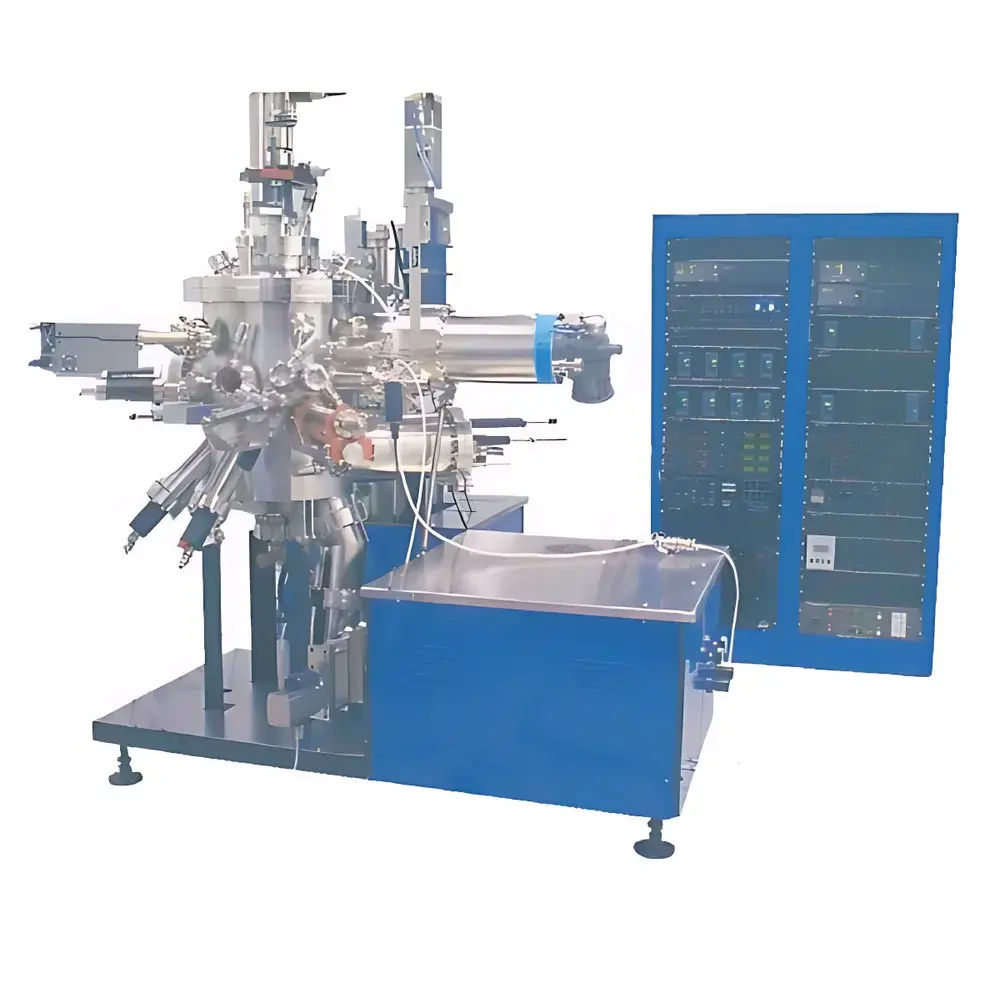
SVT Associates SVTA-LMBE Laser Molecular Beam Epitaxy System
| Brand | SVT Associates |
|---|---|
| Origin | USA |
| Manufacturer Type | Authorized Distributor |
| Origin Category | Imported |
| Model | SVTA-LMBE |
| Pricing | Available Upon Request |
Overview
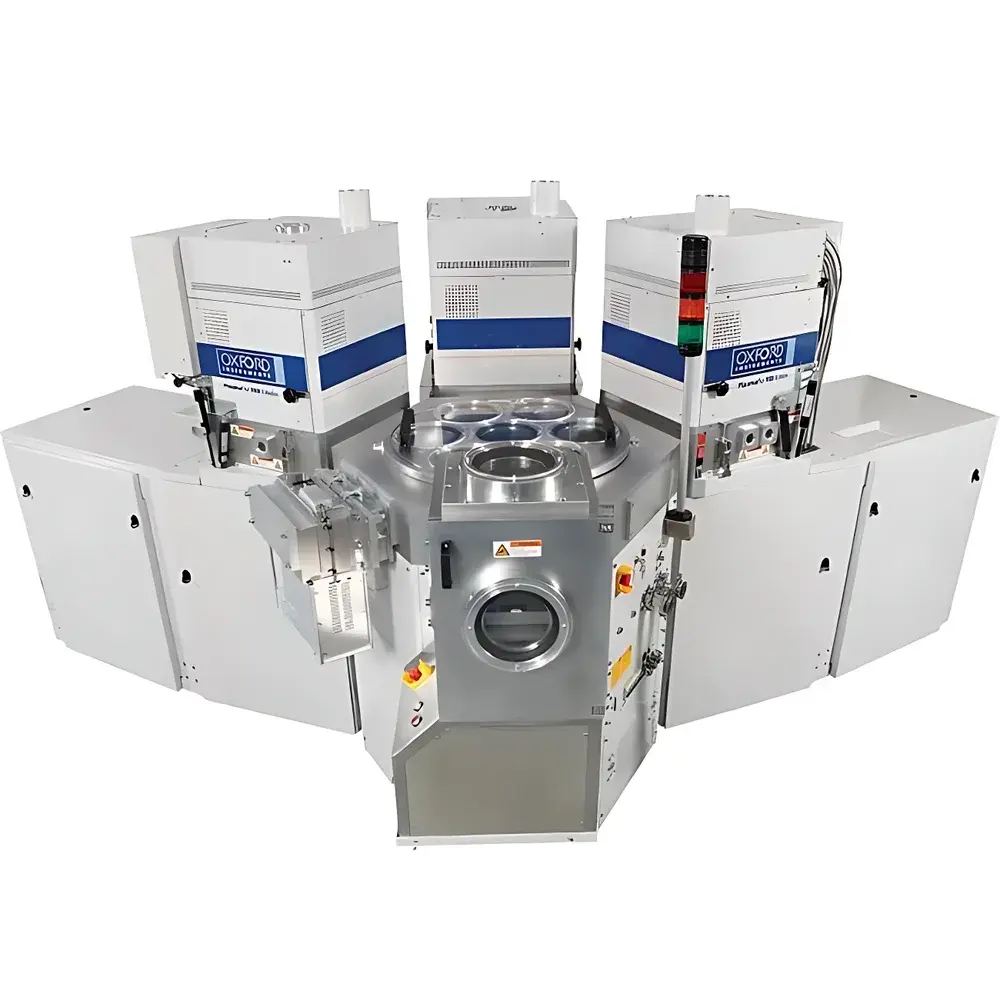
The SVT Associates SVTA-LMBE Laser Molecular Beam Epitaxy System is a hybrid thin-film growth platform engineered for atomic-layer-precision synthesis of complex functional materials. It integrates the controlled flux delivery and ultra-high vacuum (UHV) environment of conventional molecular beam epitaxy (MBE) with the pulsed laser ablation capability of pulsed laser deposition (PLD). This dual-mode architecture enables stoichiometric transfer of multi-element targets—including refractory oxides, high-Tc superconductors, ferroelectrics, and wide-bandgap semiconductors—without thermal decomposition or elemental segregation. The system operates under base pressures below 1 × 10⁻¹⁰ Torr, ensuring minimal background gas contamination and enabling growth of atomically sharp heterointerfaces critical for quantum well structures, oxide electronics, and spintronic devices.
Key Features
- Hybrid MBE/PLD architecture with synchronized shutter control for independent flux modulation of thermal, e-beam, RF plasma, and laser-ablated species
- High-repetition-rate excimer laser source (typically KrF or ArF, 248 nm or 193 nm) with adjustable fluence (0.1–5 J/cm²) and pulse duration (<25 ns), optimized for stoichiometric ablation of ceramic and metallic targets
- Six-axis rotating PLD target carousel with motorized positioning and in-situ target conditioning capability
- Multi-source integration: RF plasma source for active oxygen/nitrogen radical generation; resistive and electron-beam evaporation sources; ozone delivery module for oxidation-sensitive growth (e.g., SrTiO3, BiFeO3)
- Modular UHV chamber design (CF-flanged, all-metal sealed) supporting customizable port layout, cryoshielding, and differential pumping for laser beam path integrity
- Comprehensive pumping suite including turbomolecular pumps (≥800 L/s for main chamber), ion pumps, and titanium sublimation pumps to maintain long-term base pressure stability
Sample Compatibility & Compliance
The SVTA-LMBE accommodates substrates up to 3-inch diameter (standard) with optional expansion to 4-inch wafers. Substrate heating is achieved via resistive or radiation-based heaters with closed-loop temperature control (range: RT to 1100 °C, ±0.5 °C stability). Growth processes comply with ISO 27001-certified manufacturing protocols and support GLP/GMP-aligned documentation workflows. All vacuum components meet ASTM E595 outgassing specifications for space-qualified hardware. Optional RHEED system meets SEMI S2/S8 safety and electromagnetic compatibility standards. The ozone delivery subsystem conforms to OSHA PEL and ACGIH TLV exposure limits, with integrated leak detection and purge interlocks.
Software & Data Management
The system is controlled via SVT’s proprietary EPICONTROL™ software suite—a deterministic real-time operating system with millisecond-level I/O response. Software modules include: (1) recipe-driven growth sequencing with conditional logic (e.g., “hold at T = 750 °C until RHEED oscillation amplitude stabilizes”); (2) synchronized data acquisition from up to 32 analog/digital channels (RHEED intensity, substrate temperature, beam fluxes, pressure transducers); (3) audit-trail logging compliant with FDA 21 CFR Part 11 requirements, including electronic signatures, user access tiers, and immutable event timestamps; (4) export to HDF5 and CSV formats for integration with MATLAB, Python (NumPy/Pandas), or LabVIEW-based post-processing pipelines.
Applications
- Growth of epitaxial complex oxides: LaAlO3/SrTiO3 interfaces for 2D electron gases, YBCO high-Tc superconducting films, and multiferroic BiFeO3-based heterostructures
- Optoelectronic thin films: GaN-on-sapphire templates, perovskite halide absorbers (e.g., MAPbI3), and transparent conducting oxides (ITO, AZO)
- Quantum material synthesis: topological insulator Bi2Se3 and magnetic skyrmion-hosting MnGe thin films
- Defect-engineered dielectrics: Al2O3 and HfO2 gate stacks with controlled oxygen vacancy profiles via laser fluence tuning
- In-situ characterization-enabled process development: real-time RHEED oscillation analysis for growth rate calibration and layer-by-layer feedback control
FAQ
What vacuum level is achievable with the standard pumping configuration?
Base pressure ≤1 × 10⁻¹⁰ Torr is routinely achieved after 48-hour bakeout at 150 °C, verified by Bayard-Alpert and cold cathode gauges.
Can the system be upgraded to include reflection high-energy electron diffraction (RHEED)?
Yes—RHEED is available as a factory-integrated option with calibrated phosphor screen, CCD imaging, and real-time FFT analysis module.
Is ozone-compatible plumbing included for oxide growth?
The standard ozone delivery system includes VCR-sealed stainless-steel lines, mass flow controller (0–100 sccm), catalytic destruct unit, and residual ozone monitor with alarm interlock.
What training and support services are provided upon installation?
SVT provides on-site commissioning, five-day operator training (including UHV safety, laser alignment, and recipe development), and remote diagnostics support with SLA-backed response times.
Are custom chamber configurations supported for specialized research needs?
Yes—SVT offers engineering consultation for non-standard port layouts, integrated cryocooler integration, or magnetic field coil mounting (up to ±0.5 T).
Related Products