
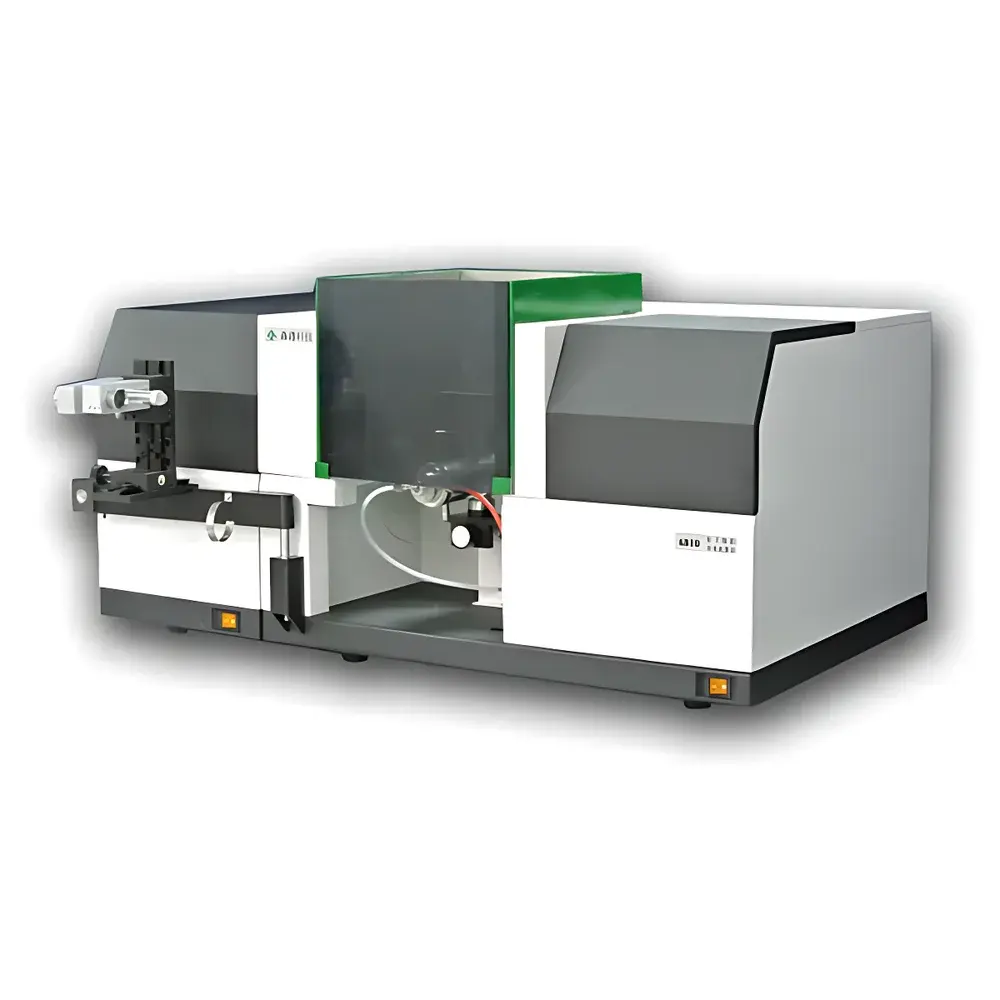
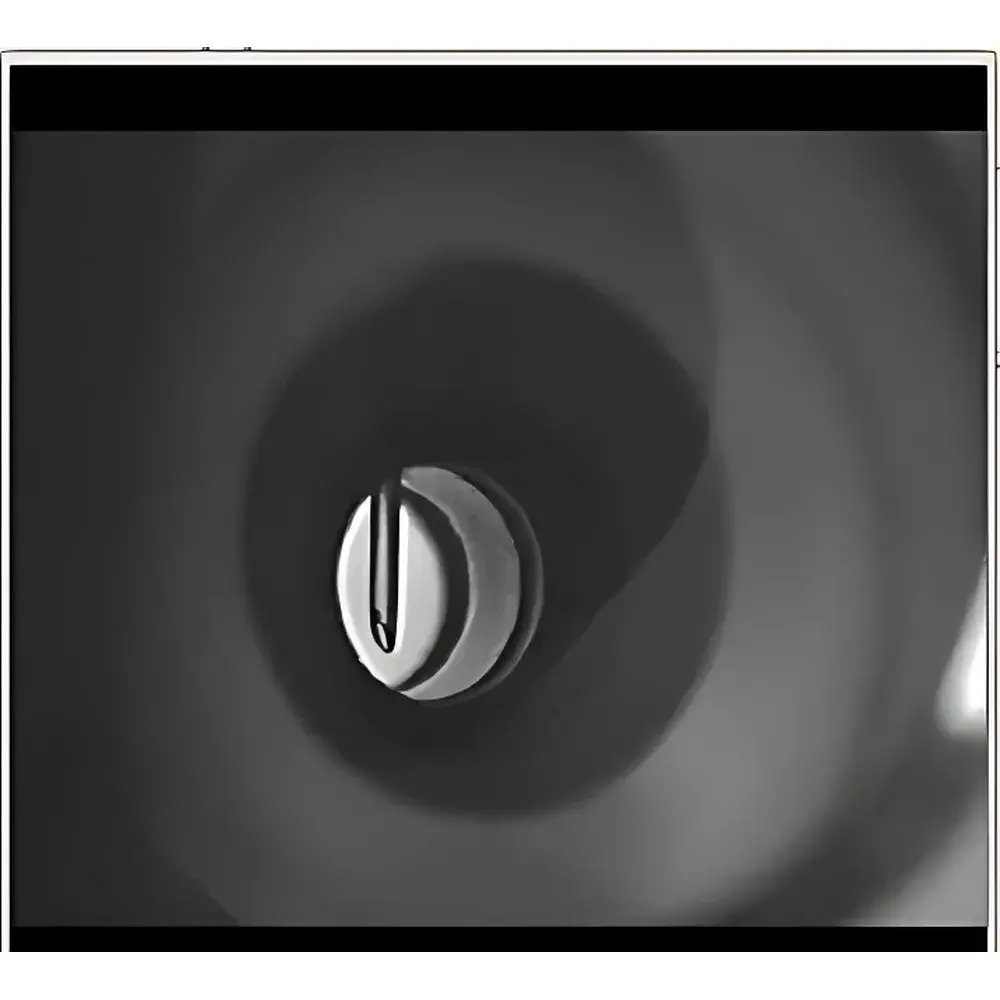
Synpec AA6810 Graphite Furnace Atomic Absorption Spectrometer with Integrated Visual Monitoring System
| Brand | Synpec |
|---|---|
| Origin | Shanghai, China |
| Manufacturer Type | Direct Manufacturer |
| Instrument Type | Graphite Furnace AAS |
| Model | AA6810 (Visual Graphite Furnace) |
| Monochromator | Plane Grating |
| Optical System | Single-Beam |
| Detector | Photomultiplier Tube (PMT) |
| Background Correction | D₂ Lamp + Self-Reversal Method |
| Resolution | 0.2 nm |
| Sensitivity | ≤0.5% (Cu, Absorbance >0.8 ABS) |
| Precision (RSD) | ≤0.5% |
| Detection Limit (Cd, GF-AAS) | <0.3 pg |
| Max Ramp Rate | ≥3000 °C/s |
| Temperature Range | Ambient to 3000 °C |
| Characteristic Mass (Cd) | ≤0.4×10⁻¹² g |
| (Cu) | ≤10×10⁻¹² g |
| Temperature Control Accuracy | ≤1% |
| Dimensions | 700 × 550 × 440 mm |
| Weight | 80 kg |
| Power Requirement | 6000 W (peak) |
| Safety Features | Overcurrent Protection, Argon Pressure Monitoring, Overtemperature Cut-off |
Overview
The Synpec AA6810 Graphite Furnace Atomic Absorption Spectrometer (GF-AAS) is an integrated analytical platform engineered for ultra-trace elemental quantification in complex matrices. It operates on the fundamental principle of atomic absorption spectroscopy: a hollow cathode lamp emits element-specific radiation, which passes through a graphite tube atomizer where the sample is thermally volatilized and atomized. The attenuation of this beam—measured by a photomultiplier tube—is directly proportional to the concentration of ground-state atoms in the optical path. The AA6810 distinguishes itself with its proprietary embedded visual monitoring system, enabling real-time observation of thermal pretreatment stages—including drying, pyrolysis, and atomization—within the graphite tube. This optical feedback loop supports precise positioning of the autosampler capillary tip and platform alignment, minimizing matrix-induced variability and extending graphite tube service life. Designed for compliance-critical environments, the instrument meets foundational requirements for method validation under ISO/IEC 17025 and supports audit-ready workflows aligned with GLP and GMP laboratory practices.
Key Features
- Integrated Visual Monitoring System: High-resolution coaxial optical pathway with LED illumination and CMOS imaging module provides live video feed of the graphite tube interior—enabling empirical optimization of temperature ramp profiles and injection depth without interrupting analysis sequences.
- PID-Controlled Graphite Furnace: Digital proportional-integral-derivative temperature regulation compensates for line voltage fluctuations, ensuring reproducible thermal programs across ambient to 3000 °C with ≤1% control accuracy and ≥3000 °C/s maximum heating rate.
- Vibration-Isolated Optical Architecture: Suspended monochromator platform decouples the optical train from mechanical and thermal perturbations, maintaining spectral stability during extended multi-element runs.
- Modular Flame/GF Hybrid Design: Stackable configuration allows shared base electronics and software infrastructure between flame and graphite furnace modules—reducing footprint to 700 × 550 × 440 mm while preserving independent operational integrity.
- 6-Lamp Auto-Selector Turret: Enables rapid sequential multi-element analysis without manual lamp changes; each position calibrated for optimal spectral output and current stability.
- 85-Position Autosampler with On-Line Dilution: Supports programmable micro-volume delivery (1–100 µL), matrix-matched standard addition, and automated dilution series generation—reducing manual handling errors and improving throughput consistency.
Sample Compatibility & Compliance
The AA6810 accommodates aqueous solutions, digested biological tissues, acid-leached environmental solids, and diluted industrial process streams. Its graphite furnace configuration is validated for regulatory methods including EPA Method 200.9, ISO 8288 (nickel, cobalt, cadmium), and ASTM D5600–22 (trace metals in petroleum products). Background correction via dual-mode D₂ lamp and self-reversal ensures robust performance in high-salt or organic-rich samples. All safety interlocks—including argon pressure verification, overtemperature shutdown, and electrical overcurrent cutoff—conform to IEC 61010-1:2010 requirements for laboratory electrical equipment. The system’s hardware architecture supports future integration with LIMS via RS-232/USB interfaces and enables full electronic record retention per FDA 21 CFR Part 11 when paired with compliant data acquisition software.
Software & Data Management
Control and data processing are executed via Synpec’s AAS Pro v4.x software suite, compliant with Windows 10/11 64-bit platforms. The interface provides real-time spectral display, step-by-step furnace program editor, kinetic absorbance plotting, and automatic peak integration using derivative-based deconvolution algorithms. Audit trails log all parameter modifications, calibration events, and user actions with timestamped entries and operator ID tagging. Quantitative reports include uncertainty estimation per GUM (JCGM 100:2008), limit of detection (LOD) calculation per IUPAC recommendations, and RSD statistics across replicate injections. Raw data files (.aasr) are structured in ASCII format for third-party statistical review and export to CSV, Excel, or PDF formats with customizable templates.
Applications
- Environmental testing: Cd, Pb, As, Se quantification in drinking water (EPA 200.9), soil extracts, and airborne particulate filters.
- Clinical toxicology: Trace metal profiling (e.g., blood Cd, urinary Al) supporting ISO 15197 and CLIA-aligned QA protocols.
- Pharmaceutical quality control: Catalyst residue screening (Pd, Pt, Ni) in active pharmaceutical ingredients per ICH Q2(R2).
- Food safety: Lead and cadmium monitoring in infant formula, seafood, and cereals per EU Commission Regulation (EC) No 1881/2006.
- Geochemical research: Ultra-low-level Cr, V, and Mo determination in silicate rock digests using matrix-matched calibration and Zeeman background correction alternatives.
FAQ
Does the visual monitoring system require external lighting or vacuum coupling?
No—the integrated coaxial illumination and imaging optics operate under standard argon purge conditions without optical viewport modifications or external light sources.
Can the AA6810 be upgraded to Zeeman background correction?
Not natively—the current design implements D₂ + self-reversal correction; Zeeman capability requires separate instrument configuration (e.g., AA7800 series) due to magnet assembly and polarization optics integration constraints.
What is the certified lifetime of the graphite tubes under routine use?
With optimized visual-guided injection and PID-controlled thermal cycling, typical tube longevity exceeds 300 heating cycles for Cd/Cu analysis when using platform-stabilized pyrolysis protocols.
Is method transfer supported from other AAS platforms?
Yes—wavelength, slit width, lamp current, and furnace temperature programs can be imported/exported as XML templates, facilitating cross-platform validation per ISO/IEC 17025 clause 7.2.2.
How does the system handle high-viscosity or particulate-containing samples?
The autosampler includes ultrasonic probe-assisted homogenization mode and optional filtration syringe adapters; however, samples must be filtered to ≤0.45 µm prior to introduction to prevent capillary clogging.
Related Products




