
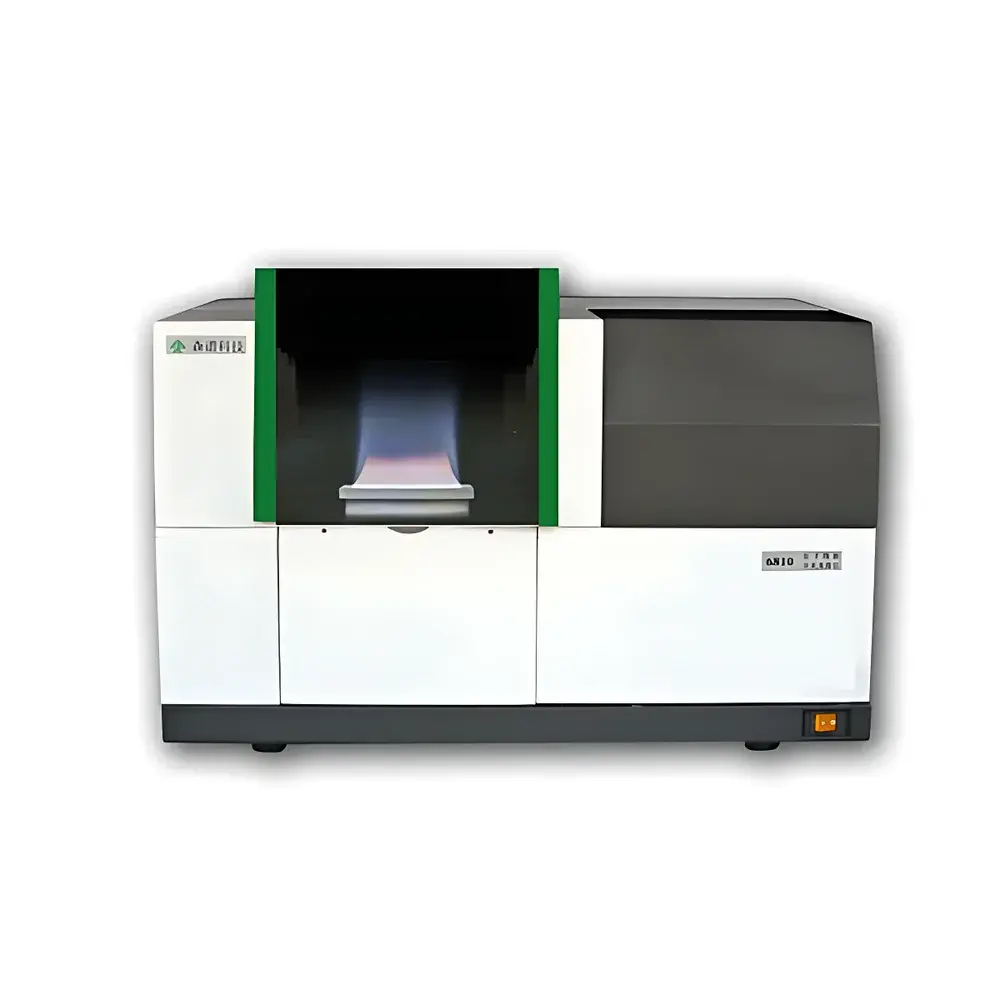
Synpec AA6810 Multi-Element Rapid Analysis Atomic Absorption Spectrometer
| Brand | Synpec |
|---|---|
| Origin | Shanghai, China |
| Manufacturer Type | Direct Manufacturer |
| Instrument Type | Flame and Graphite Furnace AAS |
| Monochromator | Plane Grating |
| Optical System | Single-Beam |
| Detector | Photomultiplier Tube (PMT) |
| Background Correction | Deuterium Lamp + Self-Reversal Method |
| Spectral Resolution | 0.2 nm |
| Sensitivity | Cu 5 ppm → Absorbance > 0.3 A |
| Repeatability (RSD) | < 0.3% |
| Detection Limit | Cu < 0.004 µg/mL |
Overview
The Synpec AA6810 Multi-Element Rapid Analysis Atomic Absorption Spectrometer is a dual-mode (flame and graphite furnace) atomic absorption system engineered for high-throughput, multi-element quantification in routine laboratory environments. It operates on the fundamental principle of atomic absorption spectroscopy—measuring the attenuation of characteristic hollow cathode lamp radiation as ground-state atoms in a flame or graphite furnace absorb specific wavelengths. Unlike conventional sequential AAS instruments, the AA6810 integrates a high-speed rotating plane grating monochromator with dynamically adjustable slits and synchronized lamp sequencing, enabling true multi-element analysis from a single sample introduction. This architecture delivers analytical speed approaching that of ICP-AES while retaining the cost efficiency, compact footprint, and operational safety advantages inherent to flame- and electrothermal-AAS platforms. Designed for laboratories requiring regulatory-compliant elemental analysis without the capital or operational overhead of plasma-based systems, the AA6810 supports trace metal determination across environmental, clinical, agricultural, and feed testing workflows.
Key Features
- Dual-mode operation: Integrated flame and graphite furnace atomization modules—switchable via software-controlled mechanical positioning for optimal sensitivity (sub-ppt detection for Cd, Pb, As) or throughput (flame mode for major/minor elements).
- High-speed wavelength selection: Motorized plane grating with real-time slit width adjustment (0.1–2.0 nm) and automatic lamp alignment ensures reproducible spectral isolation within ±0.02 nm accuracy.
- Multi-element sequence capability: Supports up to 6 elements per run with automated lamp turret rotation, current modulation, and background correction switching—no manual lamp changes required.
- ms-level gas flow control: Precision electronic mass flow controllers (MFCs) regulate acetylene, air, and N2O with ±0.5% full-scale repeatability; pneumatic “gas hammer” valves enable sub-10 ms valve actuation for optimized combustion stability.
- UV-optimized optical path: Low-stray-light monochromator housing with MgF2-coated optics ensures high photon transmission down to 190 nm—critical for As, Se, and Sb analysis.
- Modular element configuration: Users define custom element sets per application (e.g., Ca/Mg/K/Na for feed, Fe/Zn/Cu/Mn for blood)—method templates auto-configure lamp currents, gas flows, and integration times.
Sample Compatibility & Compliance
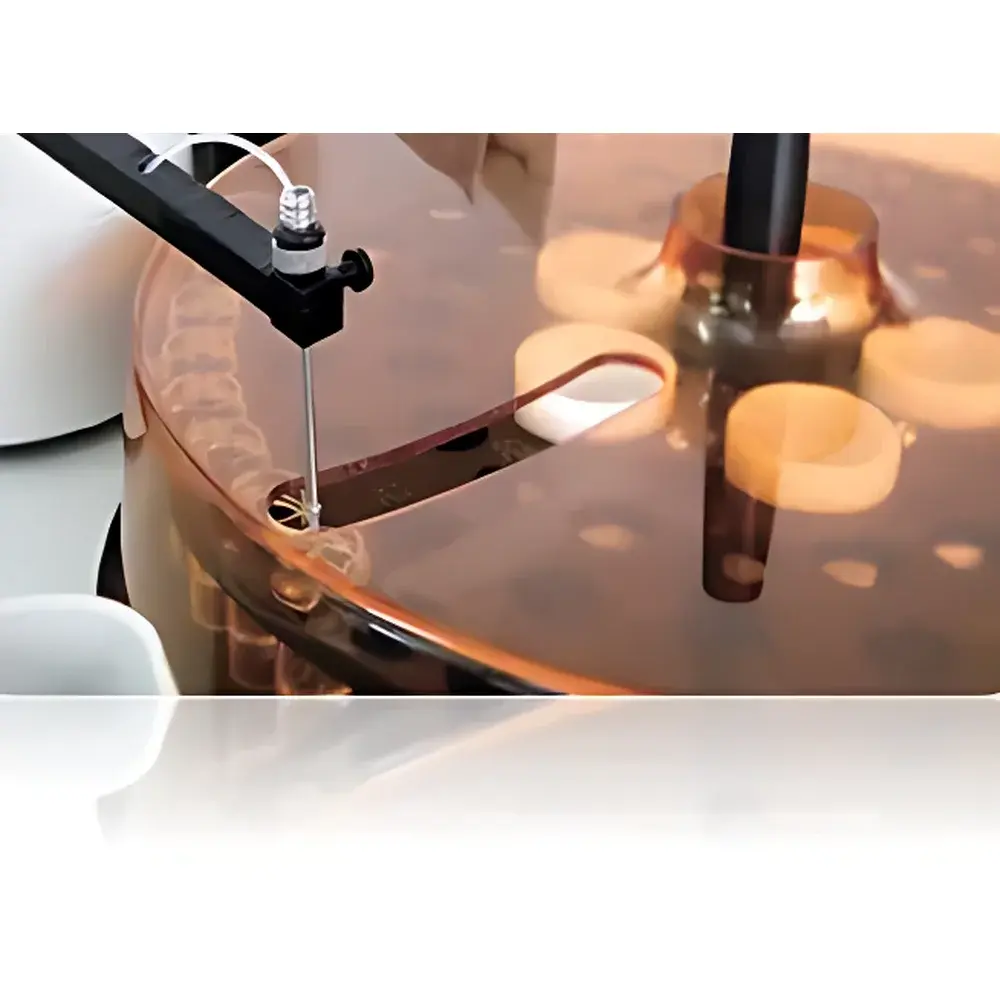
The AA6810 accepts aqueous solutions, acid-digested biological tissues (EPA 3050B/3052), soil extracts (DTPA, Mehlich-3), and diluted serum/plasma matrices. Sample introduction is compatible with standard nebulizers (e.g., concentric glass, high-solids), autosamplers (up to 144 positions), and hydride generation accessories (As, Se, Bi, Sb). The system complies with ISO 7027 (water quality), ASTM D1688 (copper in fuels), USP (heavy metals in pharmaceuticals), and GB/T 5009.12–2017 (food safety). All instrument parameters—including lamp current, integration time, background correction mode, and calibration curve fit—are logged with timestamped audit trails meeting FDA 21 CFR Part 11 requirements when paired with Synpec’s validated LIMS interface module.
Software & Data Management
Synpec SmartAAS v4.2 software provides method development, QC monitoring (Levey-Jennings, Westgard rules), and GLP-compliant reporting. Raw absorbance data is stored in vendor-neutral .csv and .xml formats; peak area, peak height, and derivative signals are simultaneously recorded. Calibration curves support linear, quadratic, and weighted least-squares regression with forced-zero intercept options. Software includes built-in uncertainty propagation per ISO/IEC 17025:2017 Annex A.3, automatically calculating combined standard uncertainty from pipetting error, dilution factor, and instrumental RSD. Data export supports direct integration with LabWare LIMS and Thermo Fisher SampleManager via ASTM E1384-compliant XML schema.
Applications
- Agricultural testing: Simultaneous quantification of Ca, Mg, K, Na, Fe, Zn, Mn, Cu in plant tissue digests and soil extractants—validated against AOAC 999.10 and ISO 11047.
- Clinical nutrition: Trace element profiling (Fe, Zn, Cu, Se) in whole blood lysates using graphite furnace mode—meets CLIA 88 precision requirements (CV < 4% at physiological levels).
- Feed and food safety: Rapid screening of heavy metals (Pb, Cd, As) in animal feed per EU Commission Regulation (EC) No 183/2005—detection limits comply with maximum residue levels (MRLs).
- Environmental monitoring: Analysis of Cr, Ni, Co, V in wastewater per EPA Method 7000B—automated matrix-matched calibration corrects for chloride interference.
FAQ
Does the AA6810 require separate calibration for flame and graphite furnace modes?
Yes—each atomization mode uses distinct calibration curves due to differences in atomization efficiency and matrix effects. Software enforces mode-specific calibration validation (e.g., bracketing standards, continuing calibration verification per CLSI EP29-A).
Can the system perform hydride generation for arsenic or selenium?
Yes—via optional HG-100 hydride generation accessory with integrated quartz cell and NaBH4 delivery pump; detection limits improve by 10–50× versus flame mode.
Is method transfer possible from other AAS platforms?
Yes—wavelengths, slit widths, and lamp currents are mapped to NIST SRM reference values; Synpec provides cross-platform method conversion utilities for PerkinElmer, Agilent, and Shimadzu instruments.
What maintenance intervals are recommended for the graphite furnace?
Graphite tube replacement every 200–300 firings; platform cleaning after each batch using integrated pyrolytic carbon removal protocol; annual PM includes monochromator alignment verification and PMT dark current calibration.




