
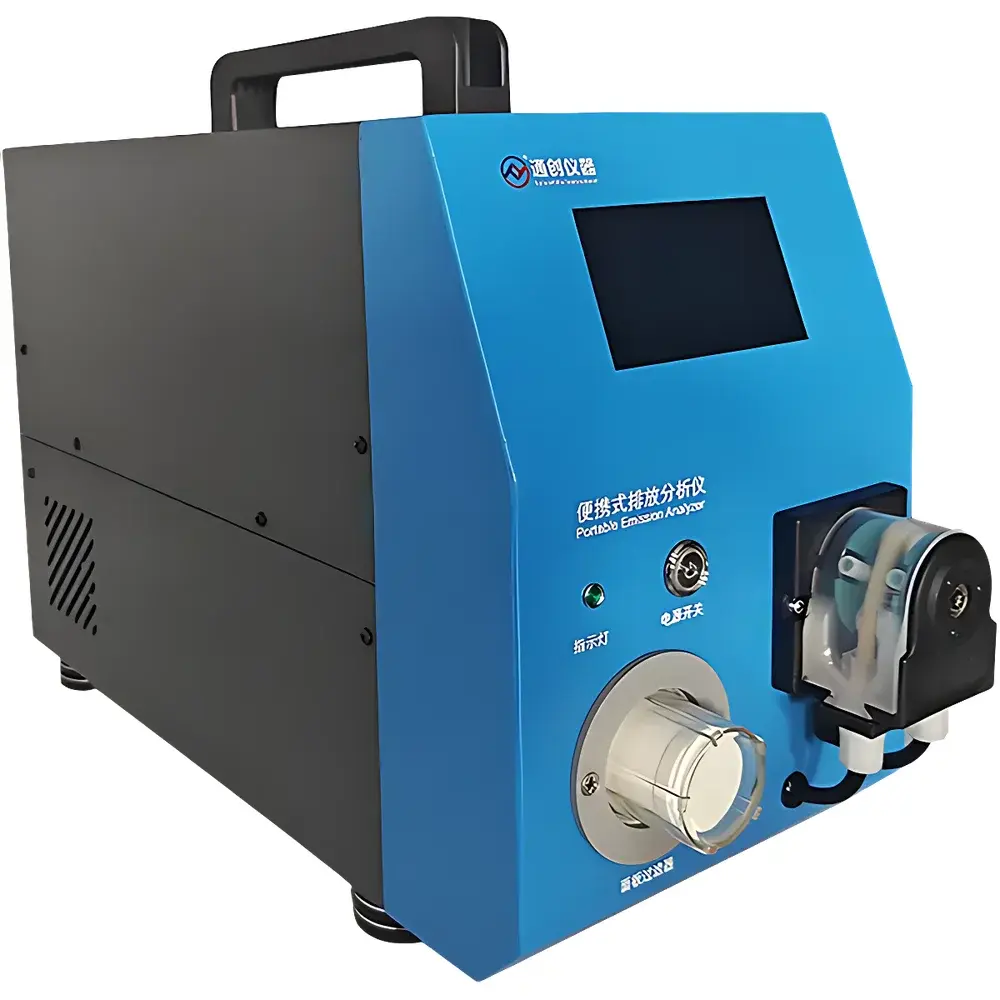
TCT PFGA1000 Portable UV Absorption Flue Gas Analyzer
| Brand | TCT |
|---|---|
| Model | PFGA1000 |
| Type | Portable Flue Gas Analyzer |
| Measurement Principles | UV Differential Absorption Spectroscopy (UV-DOAS) for NO, NO₂, SO₂, H₂S |
| Accuracy | ≤±1% F.S. |
| Repeatability | ≤±0.5% F.S. |
| Response Time | ≤5 s |
| Drift | ≤1% F.S. over 24 h |
| Measured Gases | NO, NO₂, SO₂, H₂S, CO, CO₂, O₂ |
| Compliance | GB/T 37186-2018, HJ 1131-2020, HJ 1132-2020, HJ 1045-2019, HJ 870-2017, HJ/T 44-1999, JJG 968-2002, DB37/T 2641-2015, DB37/T 2704-2015, DB37/T 2705-2015 |
Overview
The TCT PFGA1000 Portable UV Absorption Flue Gas Analyzer is an engineered field-deployable instrument designed for quantitative measurement of key combustion-related gases in flue gas streams from stationary emission sources. It employs dual-wavelength ultraviolet differential optical absorption spectroscopy (UV-DOAS) for selective and interference-resistant detection of nitrogen oxides (NO, NO₂), sulfur dioxide (SO₂), and hydrogen sulfide (H₂S); non-dispersive infrared (NDIR) spectroscopy for carbon monoxide (CO) and carbon dioxide (CO₂); and electrochemical sensing for oxygen (O₂). Unlike extractive cold-dry systems, the PFGA1000 implements a heated wet-gas sampling strategy—maintaining the entire gas path at ≥180 °C—to prevent condensation, eliminate aqueous-phase absorption losses, and preserve native gas-phase concentrations. This thermal integrity ensures metrological traceability under high-humidity, low-concentration conditions typical of post-SCR, post-FGD, or low-load boiler operation. The analyzer meets the structural, functional, and performance requirements defined in HJ 1045-2019 and GB/T 37186-2018 for portable UV-based multi-gas analyzers used in regulatory compliance monitoring.
Key Features
- Multi-principle detection architecture: UV-DOAS (NO, NO₂, SO₂, H₂S), NDIR (CO, CO₂), and electrochemical (O₂) sensors co-integrated within a single compact chassis
- Heated wet-gas sampling system with full-path temperature control (≥180 °C), eliminating water vapor condensation and minimizing analyte loss or artifact formation
- Dual-beam UV optical design with real-time baseline correction, delivering robust immunity to particulate scattering and spectral interferences from hydrocarbons or chlorine species
- Integrated parametric module supporting simultaneous measurement of flue gas temperature, static/dynamic pressure (via Pitot tube interface), volumetric flow velocity, and relative humidity
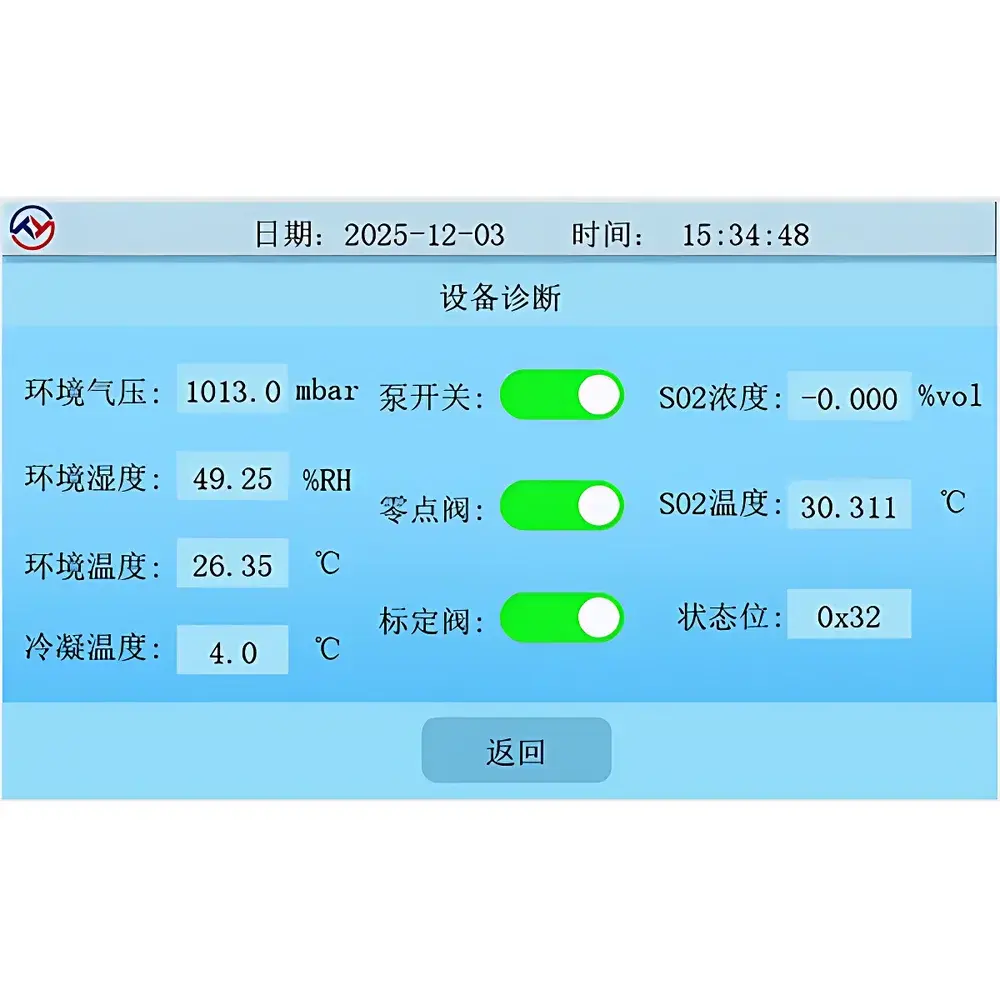
- High-resolution 7-inch capacitive touchscreen with IP65-rated front panel, ESD-hardened circuitry, and conformal-coated internal electronics for field durability
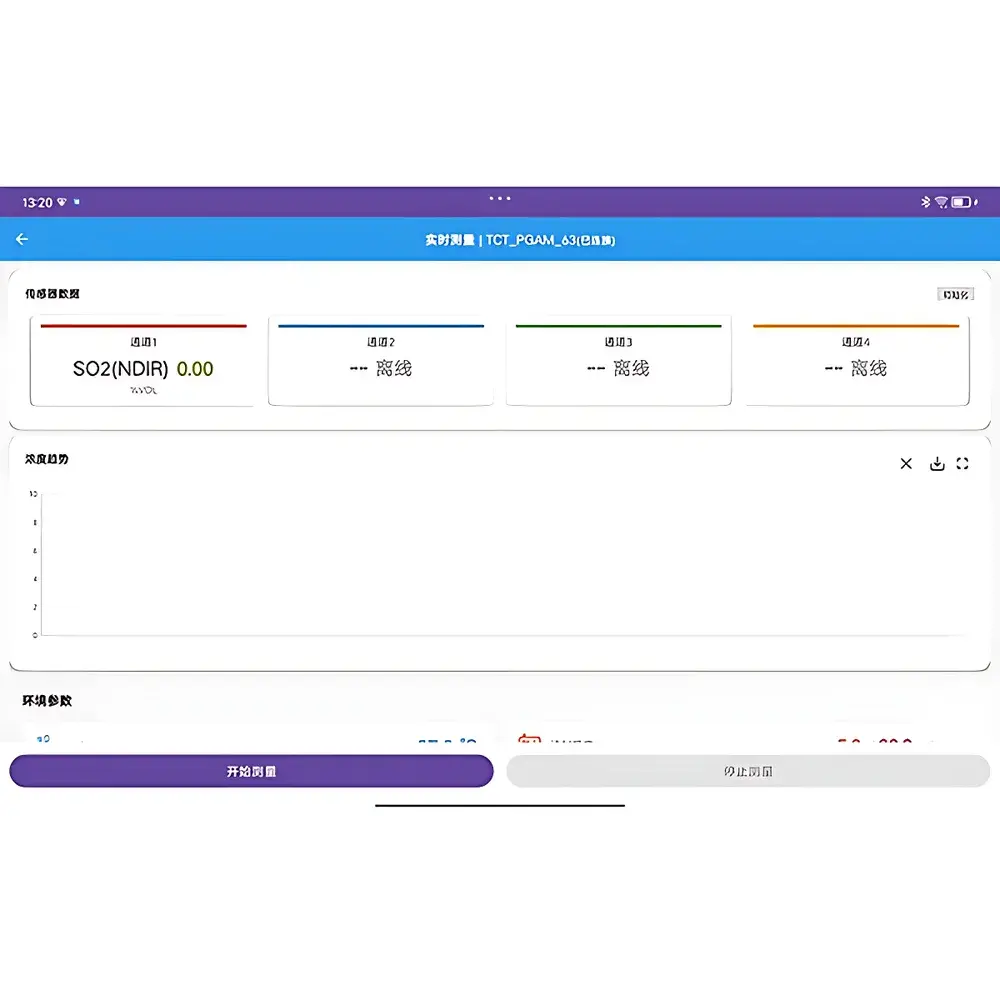
- Wireless remote operator interface (handheld controller) enabling standalone configuration, data review, and diagnostic access without physical cable connection
- Automated leak-check sequence with pressure decay validation, self-calibration verification, and fault-code logging compliant with HJ/T 397-2007 maintenance protocols
- Over-the-air (OTA) firmware update capability and native LIMS integration via TCP/IP and Modbus TCP, supporting audit-ready data export with timestamped metadata
Sample Compatibility & Compliance
The PFGA1000 is validated for use across a wide range of fixed-source exhaust environments—including coal-fired and gas-fired power plants, cement kilns, waste-to-energy incinerators, steel reheating furnaces, and chemical process heaters—where flue gas temperatures range from 60 °C to 200 °C and moisture content exceeds 15% v/v. Its heated sampling train accommodates particulate loadings up to 10 g/m³ without filter clogging or optical window fouling. All measurement algorithms and calibration procedures adhere to national standard methods: HJ 1131-2020 (SO₂), HJ 1132-2020 (NOₓ), HJ 870-2017 (CO₂), and HJ/T 44-1999 (CO). Instrument-level verification follows JJG 968-2002 metrological verification protocol, while system-level field validation aligns with HJ/T 397-2007 sampling and QA/QC requirements. Data integrity safeguards—including electronic signatures, immutable audit trails, and time-stamped calibration logs—support GLP-aligned workflows and are compatible with FDA 21 CFR Part 11–compliant LIMS deployments.
Software & Data Management
The embedded firmware provides real-time calculation of both wet-basis and dry-basis concentration values, automatically corrected to 11% O₂ reference for regulatory reporting (e.g., China’s “Emission Standard of Air Pollutants for Thermal Power Plants” GB 13223). Raw spectral data, sensor diagnostics, pressure/temperature logs, and calibration history are stored locally on industrial-grade microSD with 32 GB capacity and exported in CSV or XML format. The onboard software supports configurable averaging intervals (6–300 s), user-defined alarm thresholds per gas channel, and automatic zero/span validation scheduling. Remote data synchronization uses TLS 1.2–secured HTTP POST to cloud platforms or on-premise servers. All data files include cryptographic hash signatures and are timestamped using NTP-synchronized clocks traceable to national time standards.
Applications
- Regulatory stack testing and periodic compliance verification under China’s “Environmental Monitoring Management Measures”
- De-NOₓ (SCR/SNCR) and desulfurization (FGD) system efficiency assessment in thermal power generation
- Third-party verification audits for environmental inspection agencies and certification bodies
- Process optimization studies in cement clinker production, iron sintering, and glass melting furnaces
- Commissioning and performance acceptance testing (PAT) of new combustion equipment or retrofit installations
- Mobile laboratory support for emergency response teams during industrial emissions incidents
- Educational use in environmental engineering laboratories for hands-on flue gas characterization training
FAQ
What gas species does the PFGA1000 measure, and what are the underlying detection principles?
It measures NO, NO₂, SO₂, and H₂S via UV differential absorption spectroscopy (UV-DOAS); CO and CO₂ via non-dispersive infrared (NDIR); and O₂ via electrochemical cell. Each method is standardized per HJ 1045-2019 and GB/T 37186-2018.
Does the analyzer require gas drying before measurement?
No. The heated wet-gas sampling system maintains the entire sample path above dew point, eliminating the need for condensate removal and preserving thermodynamic equilibrium of target analytes.
How is measurement accuracy verified in the field?
The instrument performs automated zero/span checks using certified calibration gases, logs all validation events with timestamps, and generates compliance reports aligned with HJ/T 397-2007 QA/QC documentation requirements.
Can the PFGA1000 interface with existing plant DCS or central monitoring systems?
Yes. It supports Modbus TCP and OPC UA protocols for seamless integration into industrial SCADA architectures and enterprise-level environmental data management platforms.
Is the device suitable for outdoor use in extreme ambient conditions?
The analyzer operates continuously between −10 °C and 50 °C ambient temperature and features IP65-rated enclosure protection, making it suitable for unsheltered field deployment in most climatic zones across Asia, Europe, and North America.
Related Products







