Technoorg Linda GIB Integrated Low-Energy Argon Ion Beam System for SEM/FIB Sample Preparation

| Brand | Technoorg Linda |
|---|---|
| Origin | Hungary |
| Model | GIB |
| Ion Energy Range | 100 eV – 2 kV |
| Max Beam Current at 2 kV | 70 µA |
| Beam Diameter (FWHM) | 2 mm |
| Source Dimensions | Ø50 mm × 50 mm |
| Working Distance | 15–30 mm |
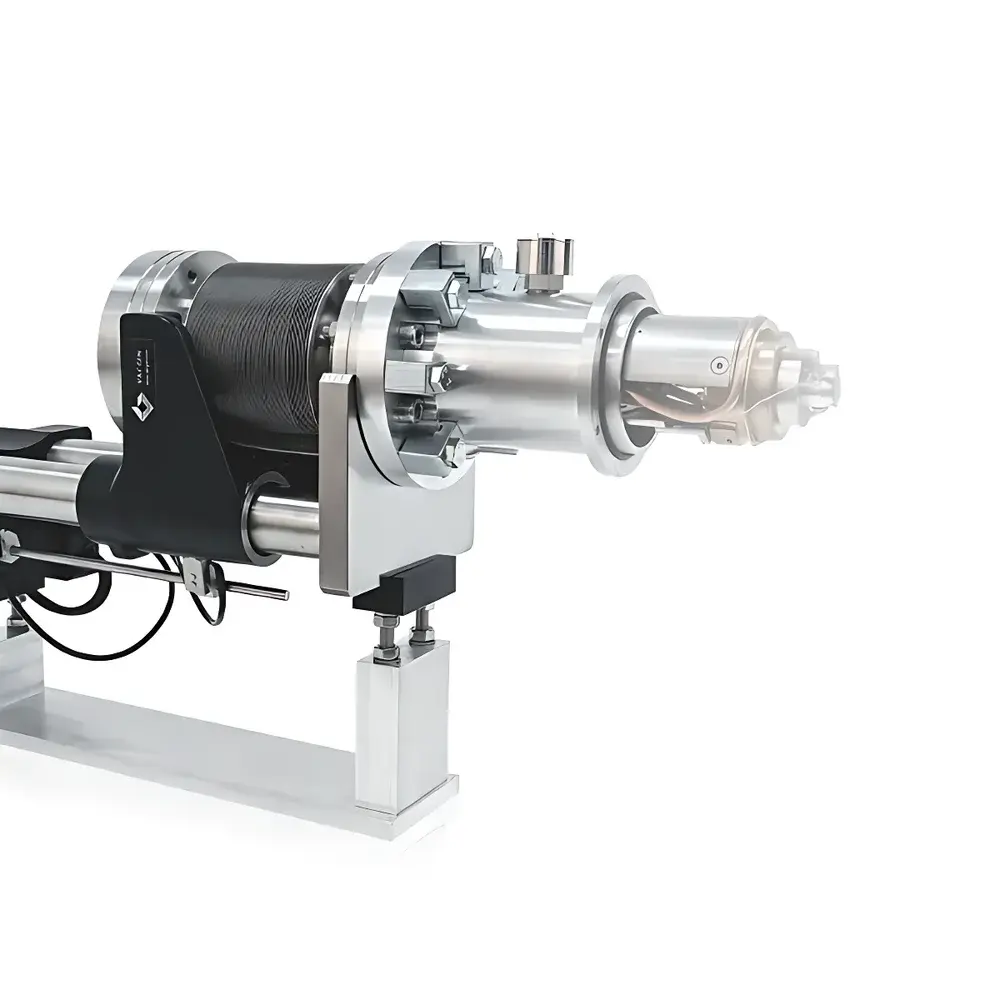
| Integration Interface | SEM/FIB-compatible flanged connection with bellows transmission system |
| Mounting | Semi-cylindrical support bracket |
Ask about pricing, availability and specifications.
Overview
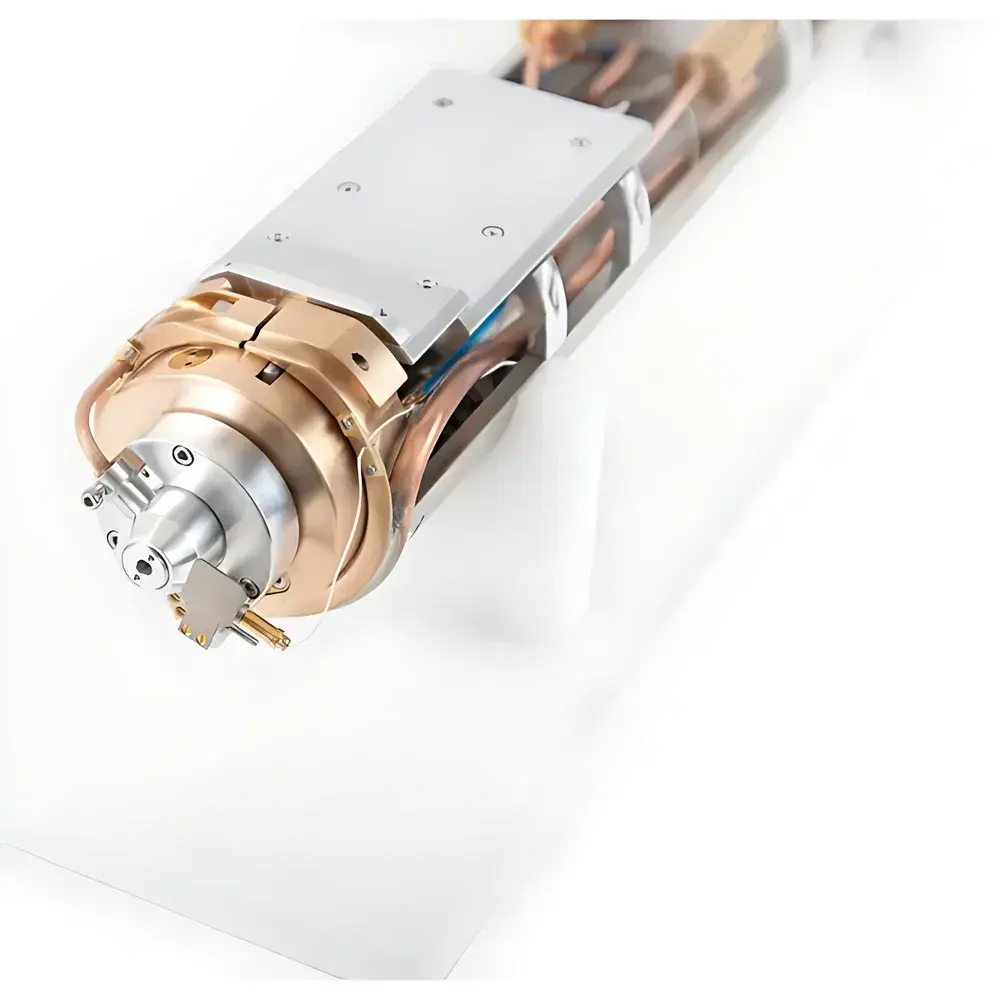
The Technoorg Linda GIB is a precision-engineered low-energy argon ion beam system designed for in-situ integration into scanning electron microscopes (SEM) and dual-beam focused ion beam–scanning electron microscopes (FIB-SEM). Unlike conventional ex-situ ion milling or plasma cleaning tools, the GIB operates on the principle of controlled physical sputtering using monoatomic argon ions accelerated at energies between 100 eV and 2 kV. This energy regime enables gentle, non-damaging surface modification—ideal for final-stage thinning of transmission electron microscopy (TEM) lamellae, removal of amorphous surface layers induced by FIB milling, and oxide layer elimination without inducing subsurface damage or preferential sputtering artifacts. Its integration architecture leverages standard UHV-compatible flanged interfaces and a bellows-coupled linear translation stage, ensuring precise positioning within the SEM chamber while maintaining vacuum integrity (<1×10⁻⁶ mbar typical operating pressure). The GIB is not a standalone instrument but a purpose-built module engineered to extend the analytical capability of existing SEM/FIB platforms—enabling correlative workflow continuity from site-specific FIB lift-out to atomic-resolution TEM characterization.
Key Features
- Low-energy argon ion source with continuously adjustable acceleration voltage (100 eV – 2 kV), optimized for minimal lattice disruption and high surface fidelity.
- Compact ion gun geometry (Ø50 mm × 50 mm) mounted on a semi-cylindrical support bracket for stable, vibration-damped alignment inside the SEM column envelope.
- Wide, uniform ion beam profile with full width at half maximum (FWHM) of 2 mm—ensuring homogeneous material removal across sample areas up to 100 µm in diameter.
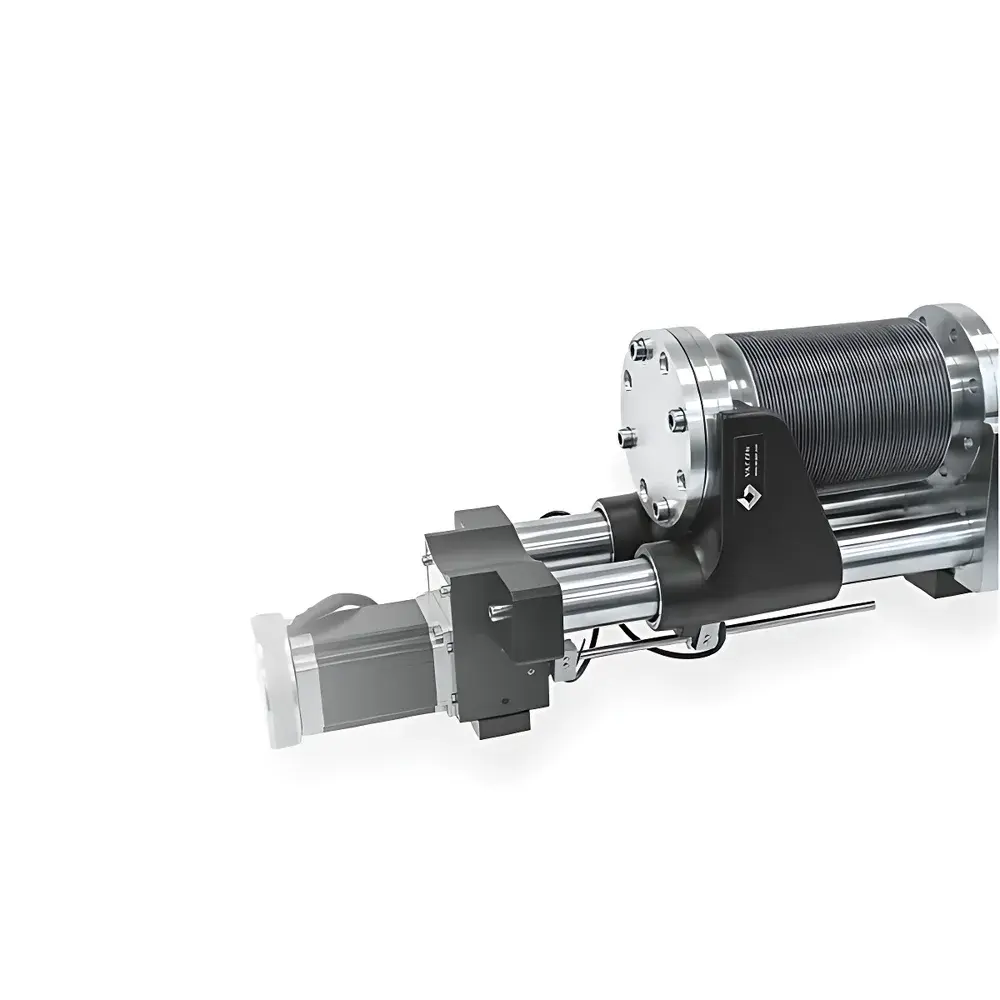
- Bellows-integrated transmission system enabling direct mounting to standard SEM/FIB chamber ports (CF40/CF63/CF100 flanges); no intermediate air breaks or transfer cassettes required.
- Motorized linear stage providing precise working distance control (15–30 mm), critical for balancing sputter rate, beam divergence, and signal-to-noise ratio during simultaneous SEM imaging.
- UHV-compatible construction (stainless steel body, all-metal seals) compliant with ISO 20483:2021 standards for vacuum interface design in electron microscopy systems.
Sample Compatibility & Compliance
The GIB accommodates a broad range of solid-state specimens including brittle ceramics, intermetallics, semiconductor wafers, geological thin sections, and biological TEM grids post-FIB preparation. It is especially effective for materials sensitive to gallium implantation artifacts (e.g., Si, GaAs, MoS₂) where residual FIB-induced damage must be removed prior to high-resolution imaging or EELS analysis. All hardware components meet CE marking requirements for electromagnetic compatibility (EMC Directive 2014/30/EU) and low-voltage safety (LVD Directive 2014/35/EU). Vacuum interface design adheres to ASTM E1557-22 guidelines for SEM accessory integration. While the GIB itself does not generate regulated data outputs, its operation within GLP/GMP-compliant laboratories may be documented via external log files synchronized with SEM acquisition timestamps—supporting audit readiness under FDA 21 CFR Part 11 when paired with validated SEM control software.
Software & Data Management
The GIB operates via a dedicated RS-485 or Ethernet-based controller interfaced with the host SEM’s auxiliary I/O port. No proprietary GUI is required; parameter setting (voltage, emission current, dwell time) is executed through the SEM’s native scripting environment (e.g., Python API in Thermo Fisher Avizo or Zeiss SmartSEM). Real-time beam current monitoring is logged alongside SEM acquisition metadata, enabling traceable correlation between ion dose and observed surface morphology evolution. All operational parameters—including cumulative charge (µC/mm²), total exposure time, and working distance—are exportable as CSV or HDF5 for integration into laboratory information management systems (LIMS). Firmware supports firmware revision logging and secure user-level access control (admin/operator tiers), aligning with ISO/IEC 17025:2017 clause 7.7 on equipment management.
Applications
- Final polishing of FIB-prepared TEM lamellae to eliminate amorphous surface layers and Ga implantation zones.
- In-situ surface cleaning of catalytic nanoparticles prior to EDS mapping or STEM-EDS quantification.
- Controlled top-layer removal for cross-sectional analysis of multilayer thin-film stacks (e.g., OLED, PV, MRAM).
- Pre-imaging surface decontamination of insulating samples (e.g., polymers, oxides) to reduce charging artifacts during high-magnification SEM.
- Site-specific ion beam-assisted etching for nanoscale feature definition in maskless lithography workflows.
- Surface activation of bio-TEM grids prior to cryo-FIB milling to improve ice adhesion and sectioning yield.
FAQ
Can the GIB be retrofitted onto an existing SEM without chamber modification?
Yes—the bellows-coupled transmission system allows installation via standard side or bottom ports without requiring chamber re-machining or vacuum bake-out beyond routine maintenance protocols.
What vacuum level is required for stable GIB operation?
The system requires base pressure ≤5×10⁻⁷ mbar; it is compatible with turbo-molecular-pumped SEM chambers meeting ISO 14644-1 Class 5 cleanroom-equivalent vacuum specifications.
Is the GIB compatible with cryo-SEM or environmental SEM configurations?
No—it is designed exclusively for high-vacuum SEM/FIB systems; integration into ESEM or cryo-stages would require custom thermal and pressure isolation engineering not covered under standard configuration.
Does the GIB support automated dose control during beam exposure?
Yes—via programmable current limiting and real-time Faraday cup feedback integrated into the SEM’s automation framework, enabling closed-loop dose delivery per pixel or region-of-interest.
What maintenance intervals are recommended for the ion source?
Source lifetime exceeds 2,000 hours under typical 500 eV–1 kV operation; Technoorg Linda recommends quarterly filament resistance verification and annual replacement of the alumina insulator sleeve per ISO 13322-2:2020 maintenance guidelines.
More from Technoorg Linda
View all Technoorg Linda products → Technoorg Linda SEMPREP SMART Ion Milling System
- Technoorg Linda UniMill Ion Milling System for TEM/XTEM Sample Preparation
- Technoorg Linda SEMPREP-SMART Ion Milling and Polishing System with Vacuum Transfer for Battery Sample Preparation
- Technoorg Linda SEMPREP SMART Ion Milling System for SEM/EBSD Sample Preparation