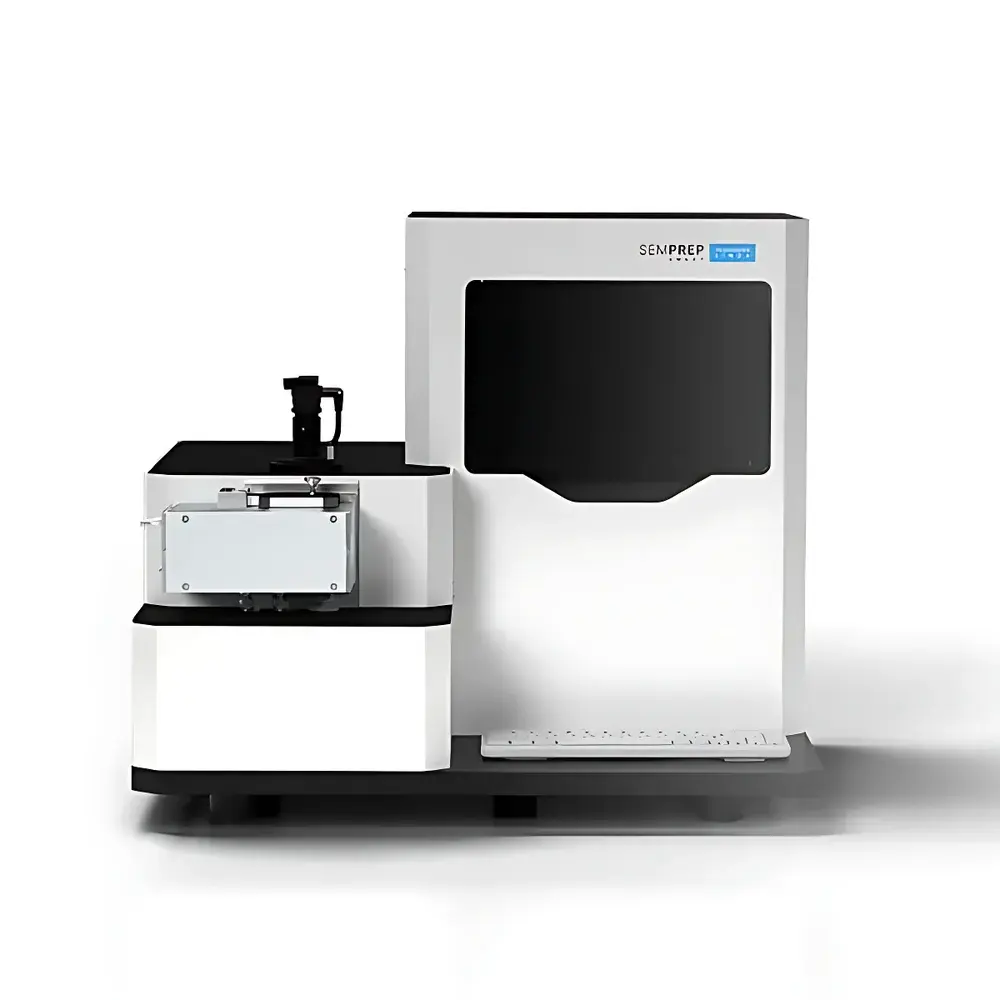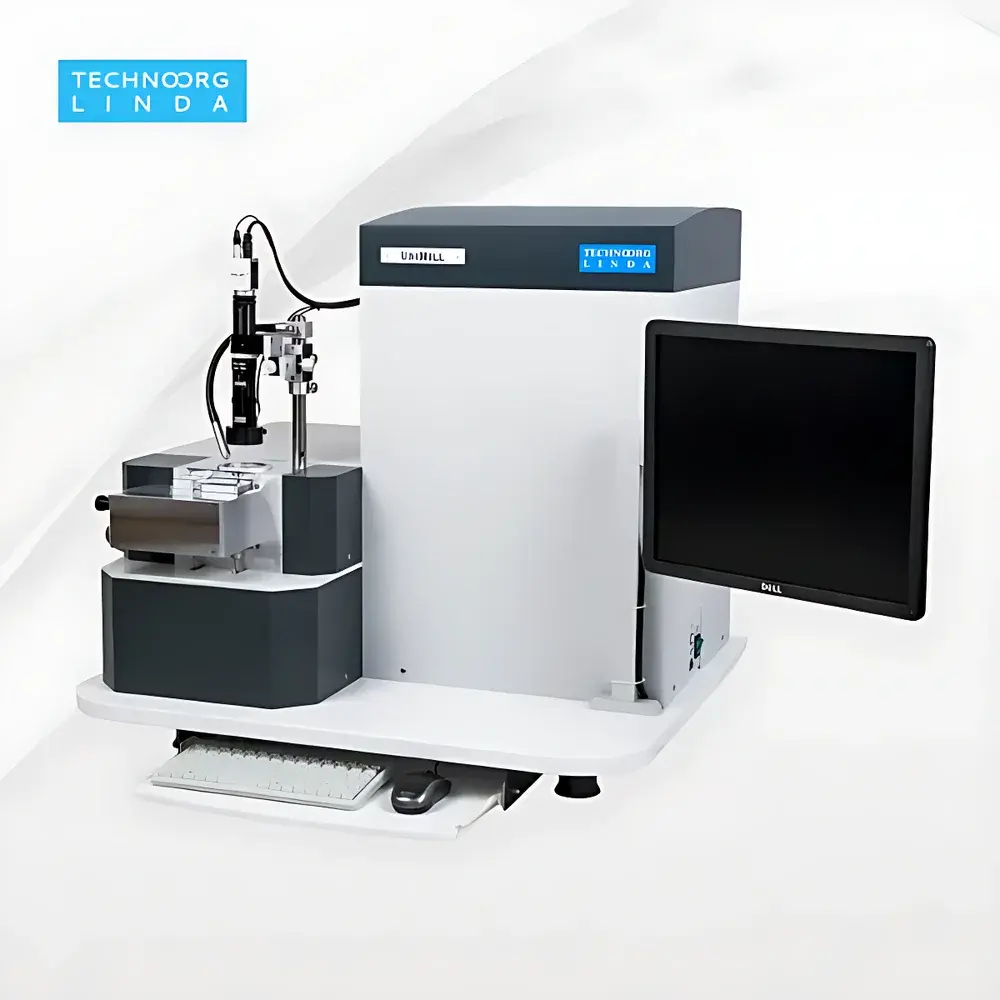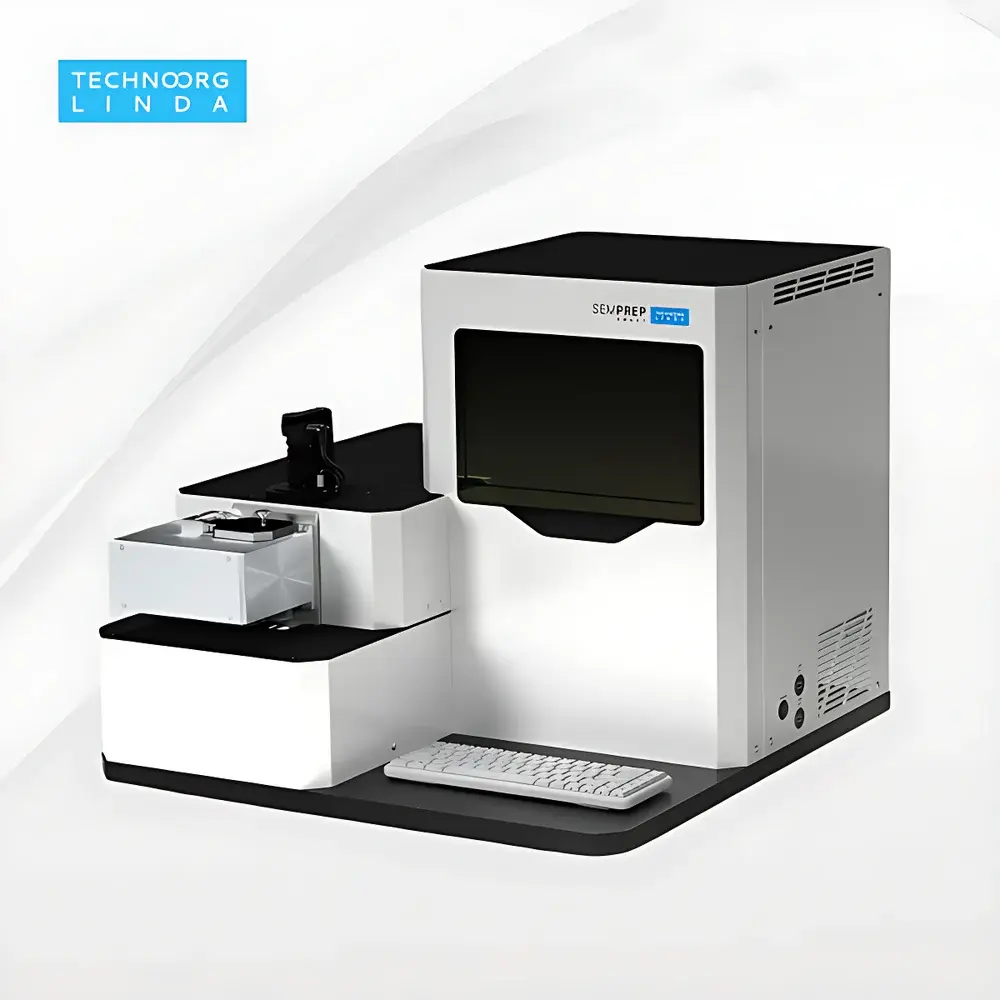
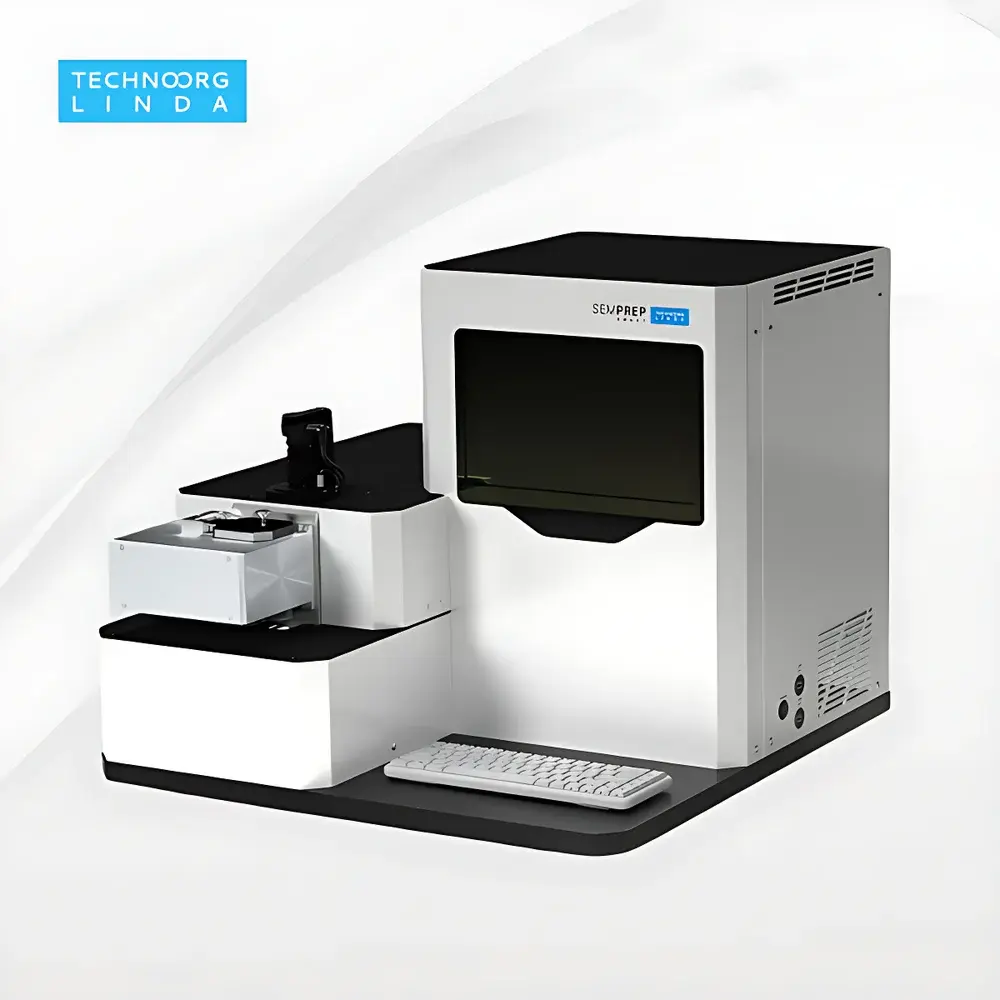
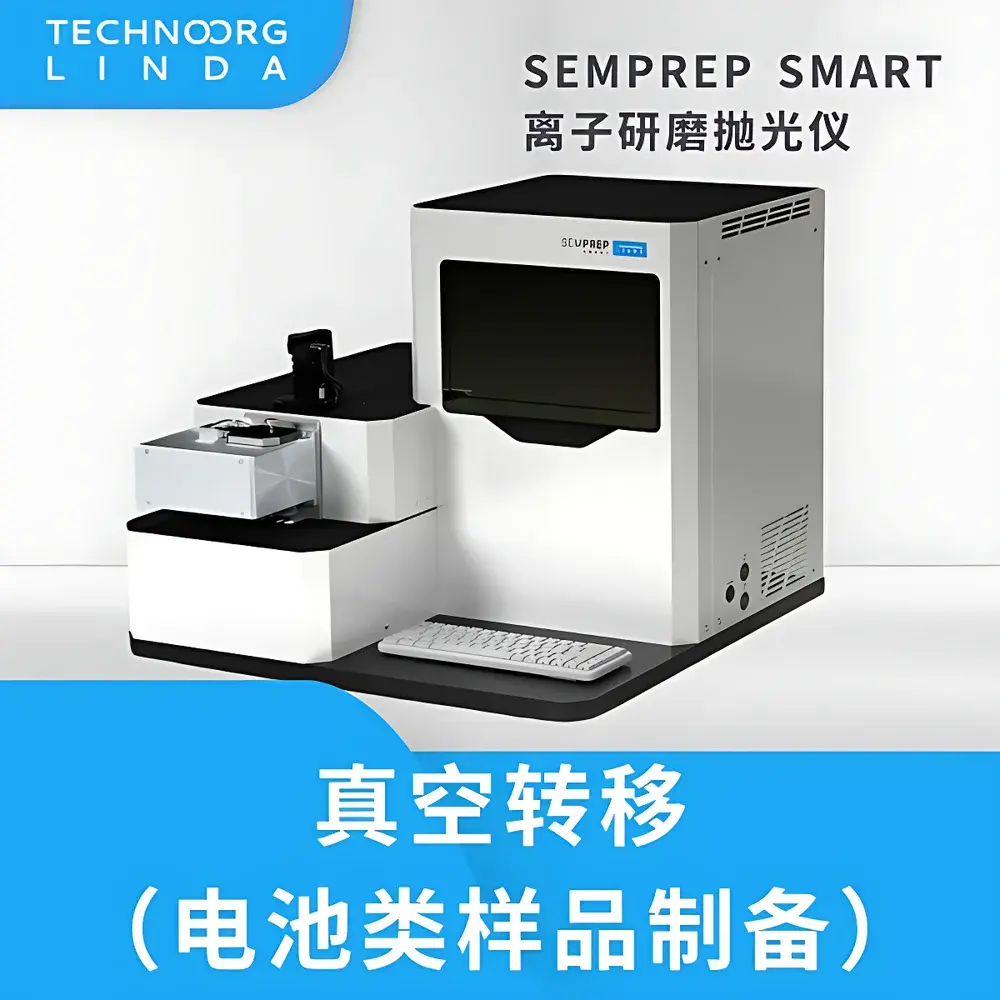
Technoorg Linda SEMPREP-SMART Ion Milling and Polishing System with Vacuum Transfer for Battery Sample Preparation

| Brand | Technoorg Linda |
|---|---|
| Origin | Hungary |
| Model | SEMPREP-SMART |
| Ion Gun Energy | Up to 16 keV (High-Energy) + Optional Low-Energy Gun (LEG) |
| Sample Stage Types | 30° Cross-section, 90° Cross-section, Planar (EBSD), with Three Head Options (Flat, Standard, Hollow) |
| Max Sample Dimensions | 18.6 × 16 × 6 mm (90° stage) |
| Tilt Range | 0–30° (0.1° increments) |
| Rotation | 360° continuous, variable speed |
| Swing Angle | ±10° to ±120° (5° increments) |
| Vacuum System | Oil-free diaphragm pump + HiPace 80 Neo turbomolecular pump |
| Gas Supply | 99.999% purity Ar, precision needle valve control |
| Imaging | 5 MP CMOS camera with on-image measurement |
| Cooling Options | LN₂ or Peltier |
| Optional Accessories | Vacuum Transfer Unit (VTU), Automated Stage Calibration via Ion Beam |
Ask about pricing, availability and specifications.
Overview
The Technoorg Linda SEMPREP-SMART is a high-precision ion milling and polishing system engineered specifically for the preparation of electron microscopy samples requiring artifact-free cross-sections and ultra-smooth surfaces—particularly critical for battery materials, solid-state electrolytes, and layered electrode architectures. Operating on the principle of physical sputtering using accelerated argon ions, the system enables controlled material removal at nanometer-scale resolution without introducing mechanical deformation, thermal damage, or preferential etching commonly observed in conventional polishing methods. Its dual-energy ion gun architecture—featuring a primary high-energy source (up to 16 keV) and an optional low-energy gun (LEG)—allows optimization across diverse material systems: high-energy beams enable rapid sectioning of dense cathode composites (e.g., NMC, LFP), while the LEG mode (<1 keV) preserves delicate interfaces in lithium metal anodes, SEI layers, or polymer-based separators. Integrated vacuum transfer capability ensures that air-sensitive battery components—including lithiated electrodes and moisture-reactive interphases—remain under inert conditions from sample loading through final SEM/EBSD analysis, eliminating oxidation and surface contamination.
Key Features
- Dual-energy ion gun configuration: Standard high-energy source (0–16 keV) plus optional Low-Energy Gun (LEG) for gentle surface finishing and interface preservation.
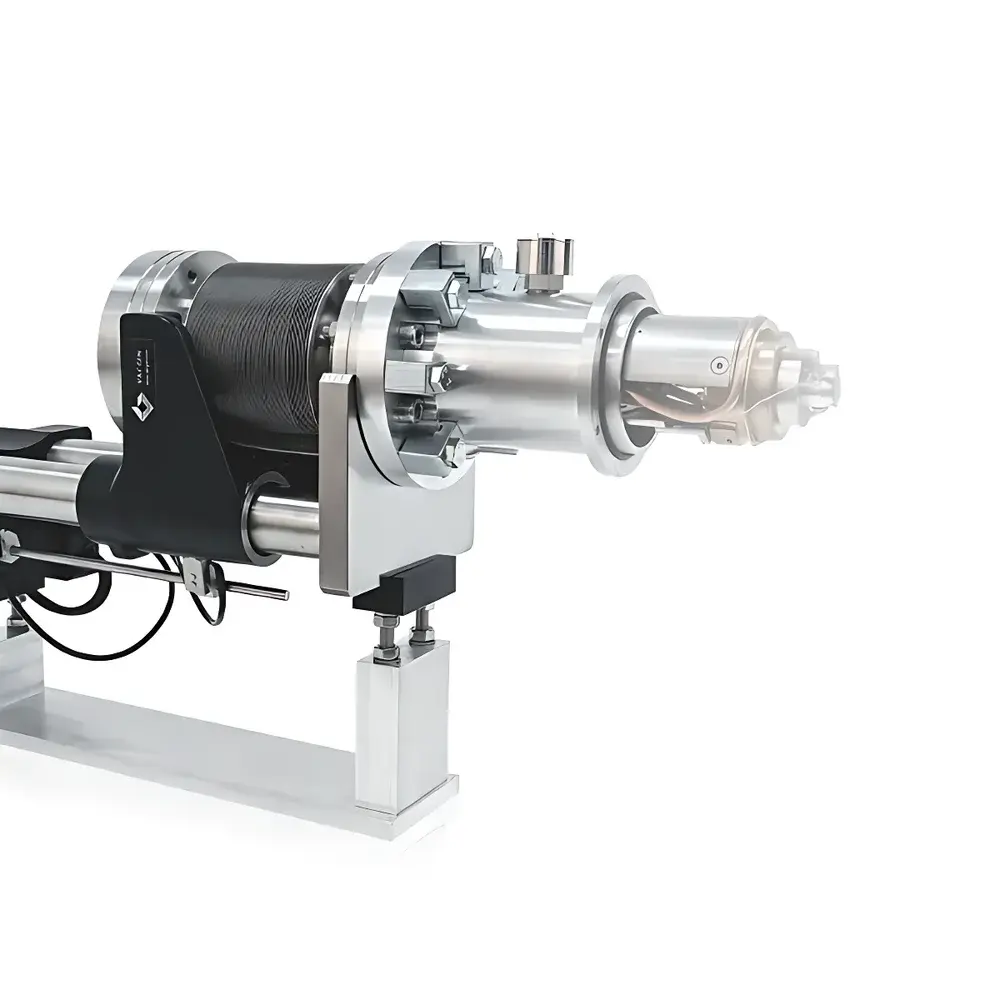
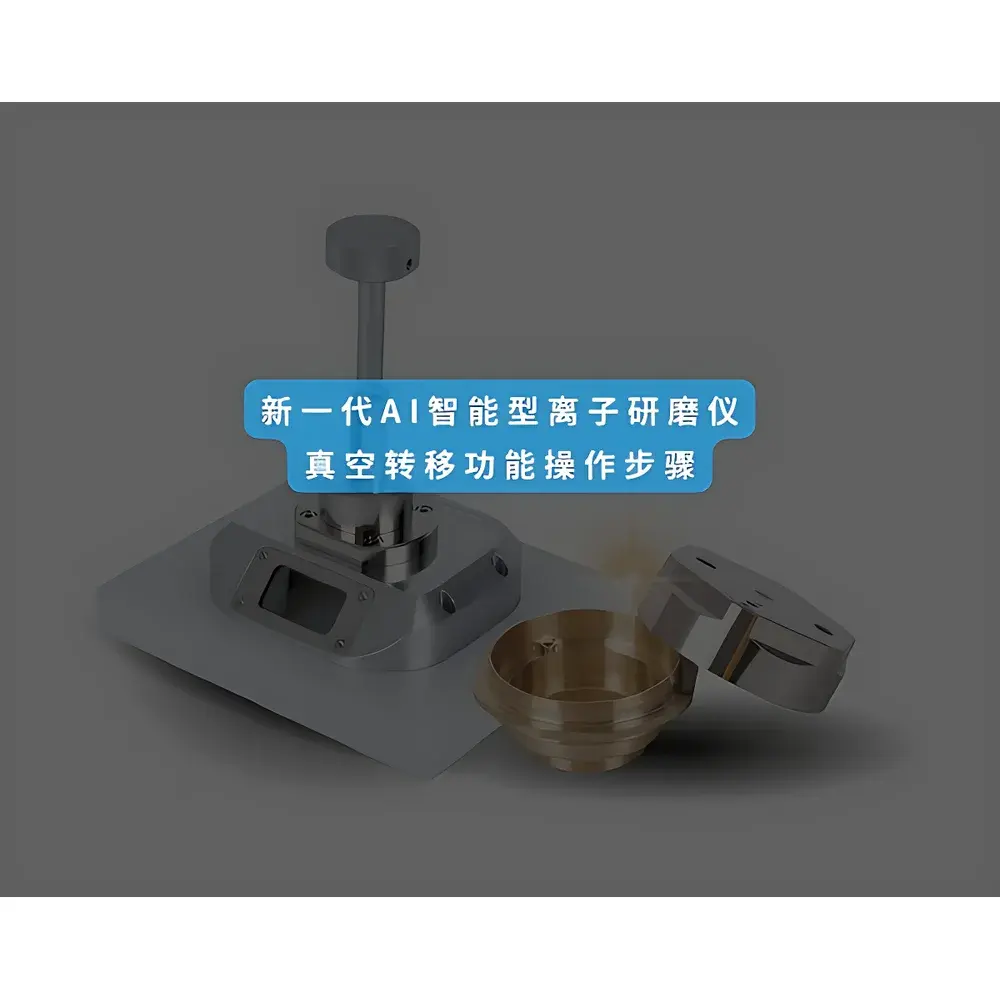
- Vacuum Transfer Unit (VTU): Enables seamless, atmosphere-free transfer of prepared samples directly into SEM or EBSD chambers, maintaining integrity of reactive battery materials.
- Modular sample stage system: Includes dedicated 30° and 90° cross-section holders, plus three planar stage heads (flat, standard, hollow) accommodating diameters up to 50 mm and thicknesses up to 23 mm.
- Precision motion control: Continuous 0.1° tilt adjustment, programmable 360° rotation with variable speed, and ±10° to ±120° swing oscillation (5° steps) for uniform ion beam incidence and minimized topographic artifacts.
- Advanced imaging and calibration: Integrated 5 MP CMOS camera with real-time on-screen measurement tools; automated stage alignment routines using ion beam-induced secondary electron contrast.
- Oil-free vacuum architecture: Combines a maintenance-free diaphragm roughing pump with a HiPace 80 Neo turbomolecular pump, achieving base pressures <5×10⁻⁷ mbar—essential for stable ion beam operation and contamination-free processing.
Sample Compatibility & Compliance
The SEMPREP-SMART is validated for preparation of heterogeneous, multi-layered battery specimens including LiCoO₂/NMC/LFP cathodes, graphite/silicon anodes, polyolefin and ceramic-coated separators, solid polymer electrolytes (SPEs), and sulfide-based inorganic electrolytes (e.g., Li₆PS₅Cl). Its low-energy ion milling mode meets ASTM E1558–22 requirements for non-destructive surface preparation of electrochemically sensitive phases. The VTU option supports ISO/IEC 17025-compliant workflows by enabling traceable, closed-environment handling—critical for GLP-regulated battery failure analysis labs. All vacuum and gas control subsystems comply with CE Machinery Directive 2006/42/EC and PED 2014/68/EU standards.
Software & Data Management
Controlled via a Windows-based graphical interface, the SEMPREP-SMART software provides full automation of ion gun parameters (energy, current, angle), stage motion profiles, and time-resolved process logging. Each session generates timestamped metadata—including beam settings, vacuum history, gas flow rates, and stage coordinates—exportable as CSV or XML for audit trail integration. The system supports 21 CFR Part 11-compliant user authentication, electronic signatures, and immutable operation logs when deployed in regulated QA/QC environments. Remote monitoring via Ethernet enables centralized lab management without compromising local instrument security protocols.
Applications
- Cross-sectional analysis of Li-ion battery electrodes to quantify particle cracking, binder delamination, and pore network evolution after cycling.
- Preparation of solid-state battery interfaces (e.g., LLZO|Li-metal, LPS|NMC) for high-resolution EBSD phase mapping and grain boundary characterization.
- Artifact-free sectioning of soft/hard multilayer stacks—such as SiOₓ/C composites or Sn-based anodes—for TEM lamella lift-out precursor preparation.
- Surface cleaning of corroded or oxidized battery terminals prior to X-ray photoelectron spectroscopy (XPS) or Auger electron spectroscopy (AES).
- Routine QC of separator integrity, coating uniformity, and electrode calendering effects in pilot-line manufacturing environments.
FAQ
Can the SEMPREP-SMART prepare samples for FIB-SEM lift-out?
Yes—the system produces flat, low-damage cross-sections with minimal curtaining, serving as ideal pre-thinning substrates for subsequent focused ion beam (FIB) thinning and lift-out.
Is liquid nitrogen cooling required for battery sample preparation?
LN₂ cooling is optional but recommended for heat-sensitive materials (e.g., lithium metal, organic electrolytes) to suppress beam-induced diffusion and decomposition during prolonged milling.
How does the vacuum transfer unit interface with common SEM models?
The VTU features standardized KF40 and CF63 flanges compatible with Thermo Fisher, Zeiss, JEOL, and Hitachi SEM load-lock systems; custom adapters are available upon request.
What argon gas purity is mandatory for stable beam operation?
99.999% (5N) argon is required; impurities >1 ppm O₂ or H₂O cause beam instability and oxide formation on reactive battery surfaces.
Does the system support automated recipe-based processing?
Yes—users can save, version-control, and recall complete parameter sets (ion energy, swing amplitude, rotation speed, duration) for repeatable preparation of standardized battery cell components.