
TEO RTS-HiR Micro-Raman Spectrometer
| Brand | TEO |
|---|---|
| Origin | Beijing, China |
| Manufacturer Type | Authorized Distributor |
| Product Category | Domestic |
| Model | RTS-HiR |
| Instrument Type | Confocal Micro-Raman Spectrometer |
| Spectral Range | 200–1100 nm |
| Spectral Resolution | <1 cm⁻¹ |
| Spatial Resolution | Lateral <1 µm, Axial <2 µm |
| Minimum Wavenumber | 0 cm⁻¹ |
| Spectral Reproducibility | ±0.2 cm⁻¹ |
Overview
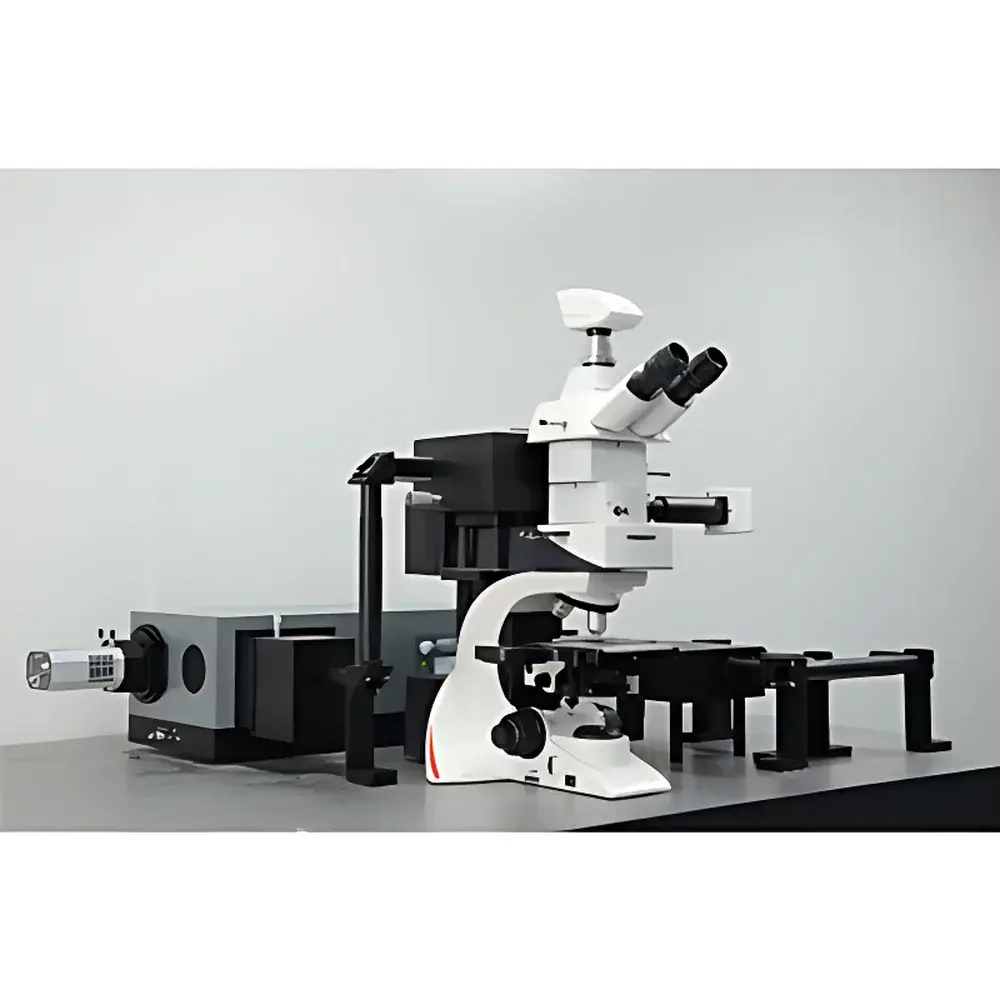
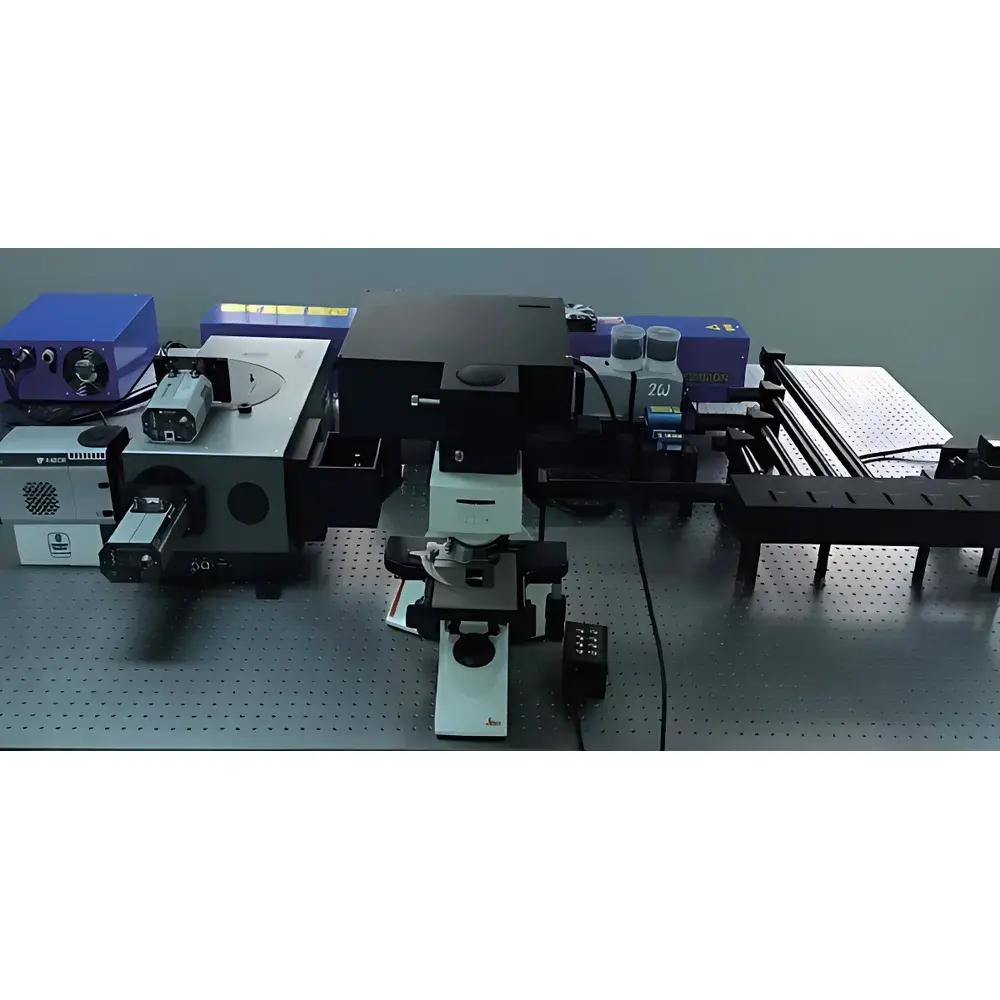
The TEO RTS-HiR Micro-Raman Spectrometer is a high-performance confocal Raman spectroscopy platform engineered for precision molecular fingerprinting at the micro- and sub-micron scale. Based on a robust open optical bench architecture, the system implements true confocal spatial filtering via slit-coupled CCD detection—enabling depth-resolved spectral acquisition with minimal out-of-focus background. Its core optical design adheres to first-principles Raman scattering theory: excitation photons interact with molecular vibrational modes, generating inelastically scattered light whose frequency shifts (cm⁻¹) directly correlate to bond stiffness, symmetry, and local crystal structure. The RTS-HiR supports full wavenumber coverage from 0 to >5000 cm⁻¹ (60–5000 cm⁻¹ typical operational range), making it suitable for characterizing carbon allotropes (graphene, nanotubes), semiconductors (Si, GaN, perovskites), pharmaceutical polymorphs, and heterogeneous catalytic surfaces under ambient or controlled environments.
Key Features
- Confocal optical architecture with adjustable pinhole-free slit-CCD coupling for optimal throughput (>50% system transmission) and axial sectioning capability
- High-stability horizontal beam path minimizing thermal drift; no daily wavelength calibration required
- Modular laser integration supporting up to eight independent sources (244–1064 nm), including CW/pulsed lasers and supercontinuum white-light sources
- Interchangeable grating turret (150, 600, 1800 grooves/mm) with selectable blaze wavelengths for optimized resolution/sensitivity trade-offs
- Dual-path optical configuration enabling seamless switching between micro-sampling (Olympus BX53 or Leica DM2700 research-grade upright microscope) and macro-sampling modes
- Multi-detector compatibility: deep-cooled scientific CCD (Raman/fluorescence), EMCCD (fast mapping), ICCD (time-resolved Raman, TCSPC), InGaAs array (NIR Raman), and PMT (ultra-low-light fluorescence lifetime)
Sample Compatibility & Compliance
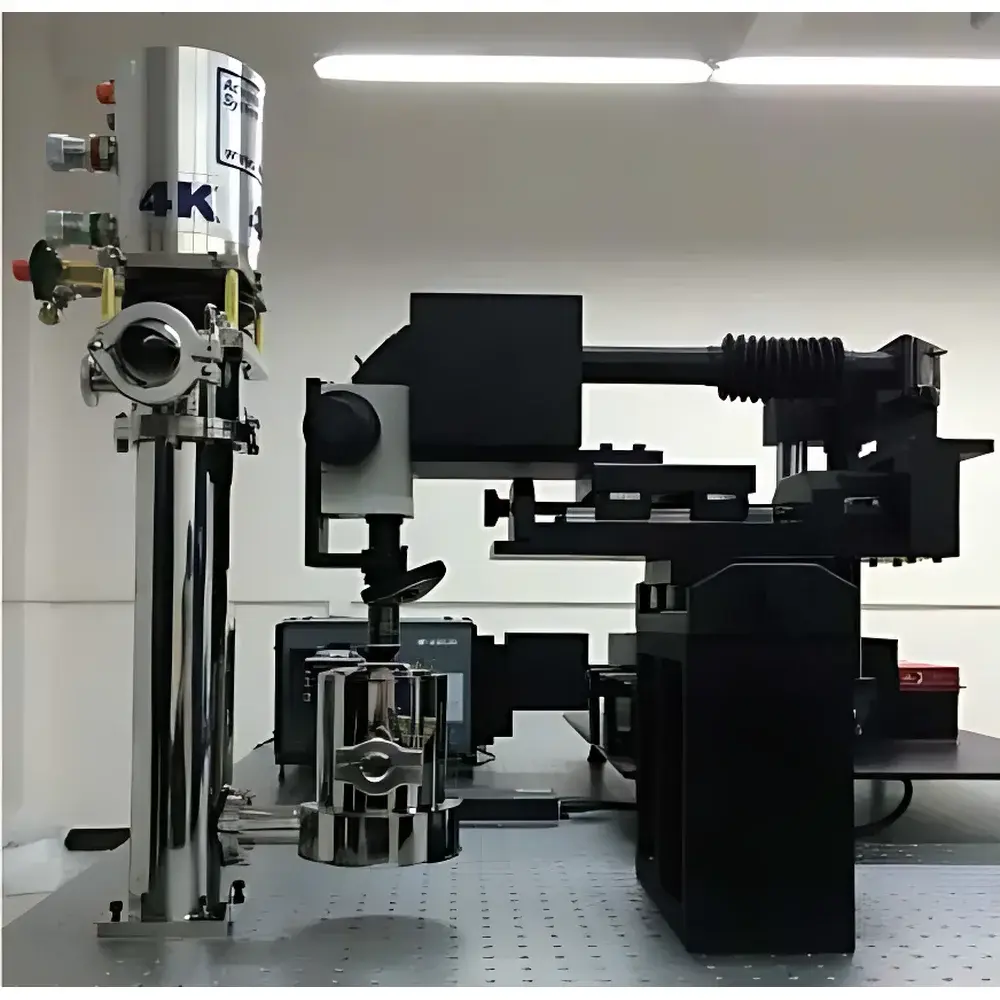
The RTS-HiR accommodates diverse sample geometries and experimental conditions through its expandable peripheral interface. Standard configurations include motorized XYZ stages and precision focus control; optional add-ons integrate cryogenic stages (4–300 K), variable-temperature probe stations, electromagnets (up to 9 T), scanning probe microscopy (SPM) couplers, diamond anvil cells (DAC), and in situ electrochemical/chemical reaction cells. All hardware and software modules comply with ISO/IEC 17025 requirements for analytical laboratory competence. Data acquisition workflows support audit-trail generation and electronic signature protocols aligned with FDA 21 CFR Part 11 and GLP/GMP documentation standards where applicable.
Software & Data Management
Acquisition and analysis are managed via TEO’s proprietary SpectraSuite Pro software—designed for reproducible, metadata-rich spectral workflows. The platform supports real-time spectral preview, automated multi-point mapping (including hyperspectral Raman imaging), batch processing with baseline correction (Asymmetric Least Squares), peak fitting (Voigt/Lorentzian models), and multivariate analysis (PCA, cluster analysis). Raw data is stored in HDF5 format with embedded instrument parameters, calibration history, and user-defined annotations. Export options include ASCII, CSV, and JCAMP-DX for cross-platform compatibility with third-party chemometrics tools (e.g., MATLAB, Python SciPy, Unscrambler).
Applications
- Materials science: Strain mapping in 2D materials, phase identification in battery cathodes (LiCoO₂ vs. NMC), defect quantification in SiC wafers
- Pharmaceuticals: Polymorph screening, API-excipient interaction analysis, counterfeit drug detection
- Geosciences: Fluid inclusion characterization, mineral phase transitions under pressure
- Life sciences: Label-free cellular imaging (lipid/protein distribution), tissue histopathology correlation, single-cell metabolic profiling
- Nanotechnology: Plasmon-enhanced Raman (SERS) substrate optimization, quantum dot surface ligand analysis
FAQ
What laser wavelengths are natively supported without modification?
The system ships with a 532 nm laser as standard; additional UV–NIR lasers (244–1064 nm) can be integrated via the modular port interface.
Can the RTS-HiR perform time-resolved Raman measurements?
Yes—when equipped with an ICCD detector and synchronized pulsed laser source, the system supports picosecond-to-nanosecond gated detection for transient species analysis.
Is spectral calibration traceable to NIST standards?
All factory calibrations use NIST-traceable neon and argon emission lines; users may perform secondary verification using silicon (520.7 cm⁻¹) or cyclohexane reference standards.
Does the software support automated GMP-compliant reporting?
SpectraSuite Pro includes configurable report templates with electronic signatures, change logs, and raw-data integrity checks compliant with 21 CFR Part 11 Annex 11 requirements.
What maintenance is required for long-term spectral stability?
No routine optical alignment is needed due to the monolithic optical baseplate design; annual verification of grating positioning and detector dark-current performance is recommended.





