
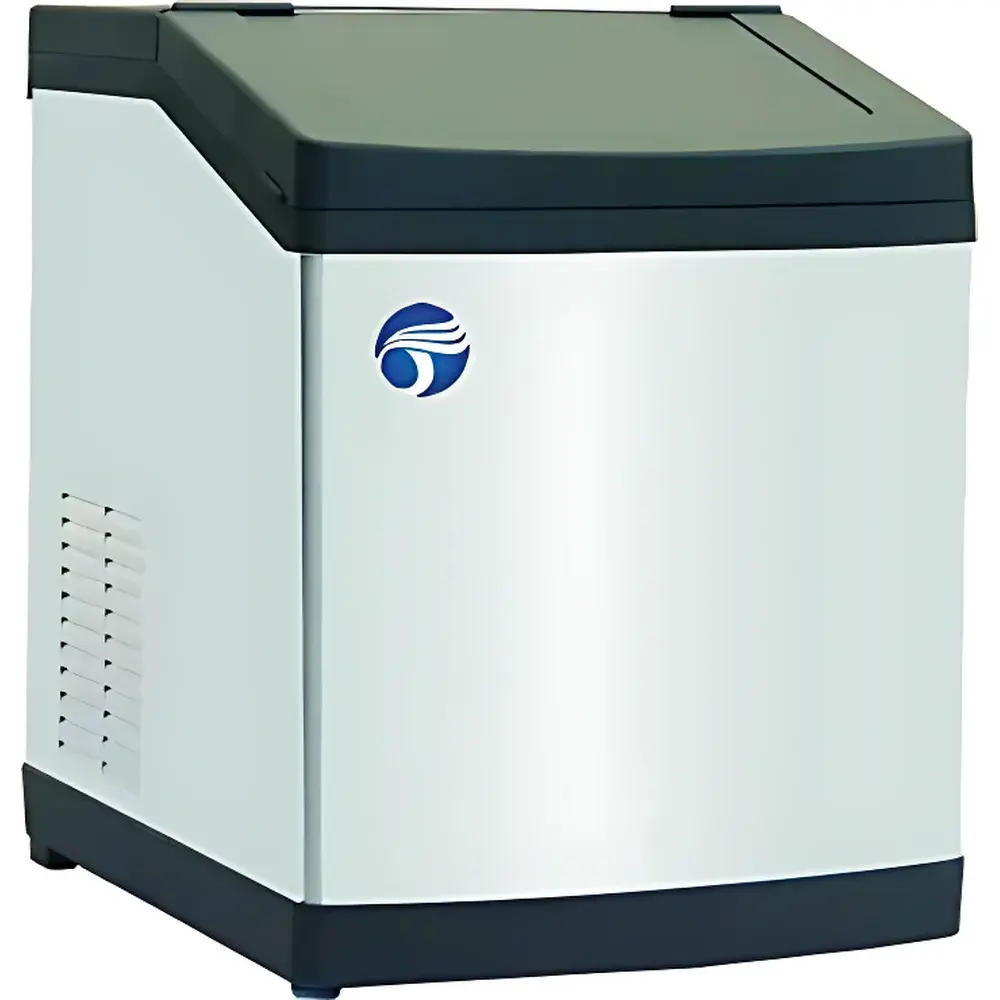
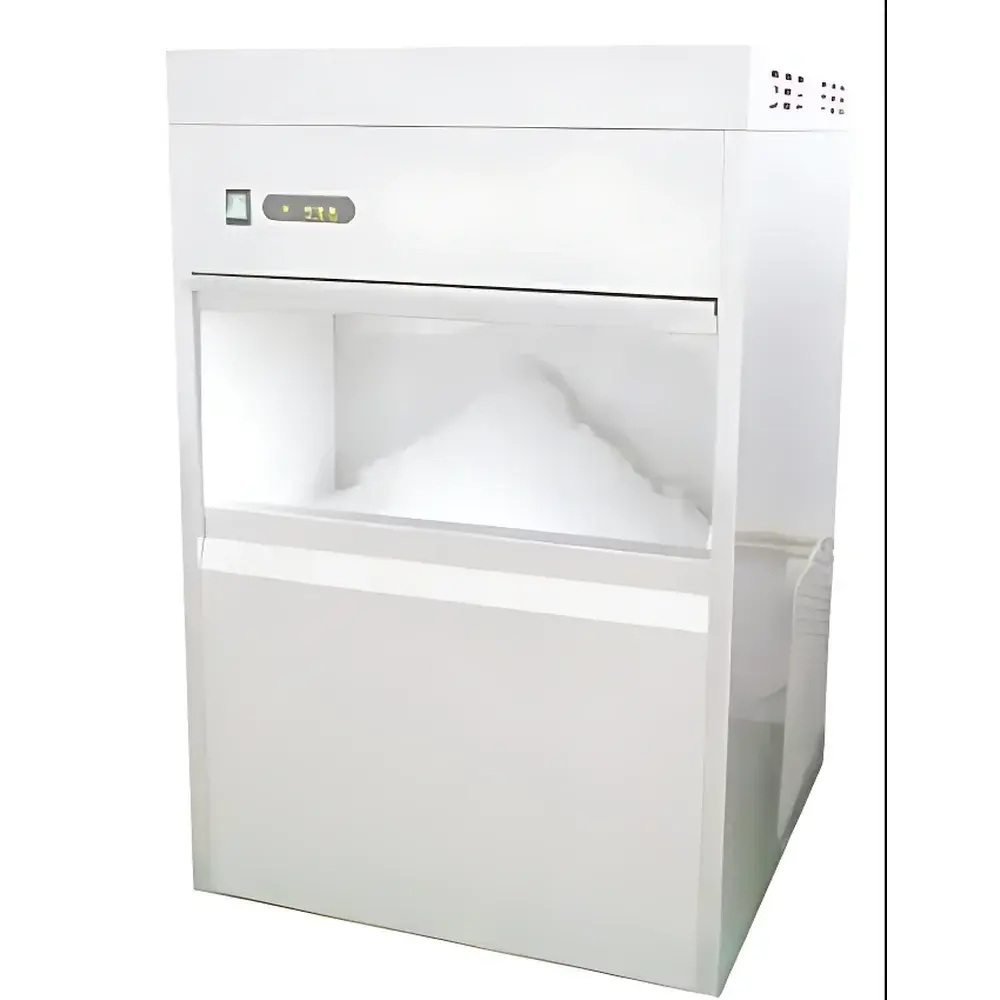
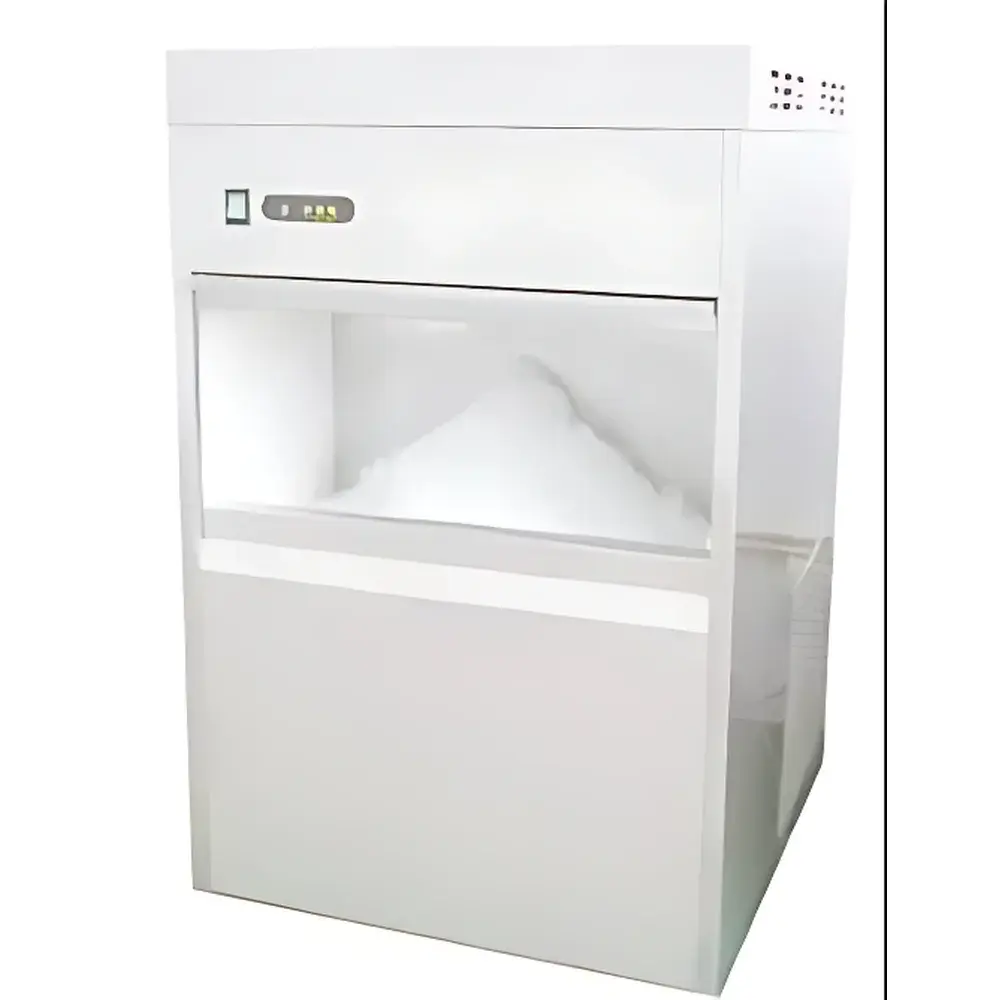
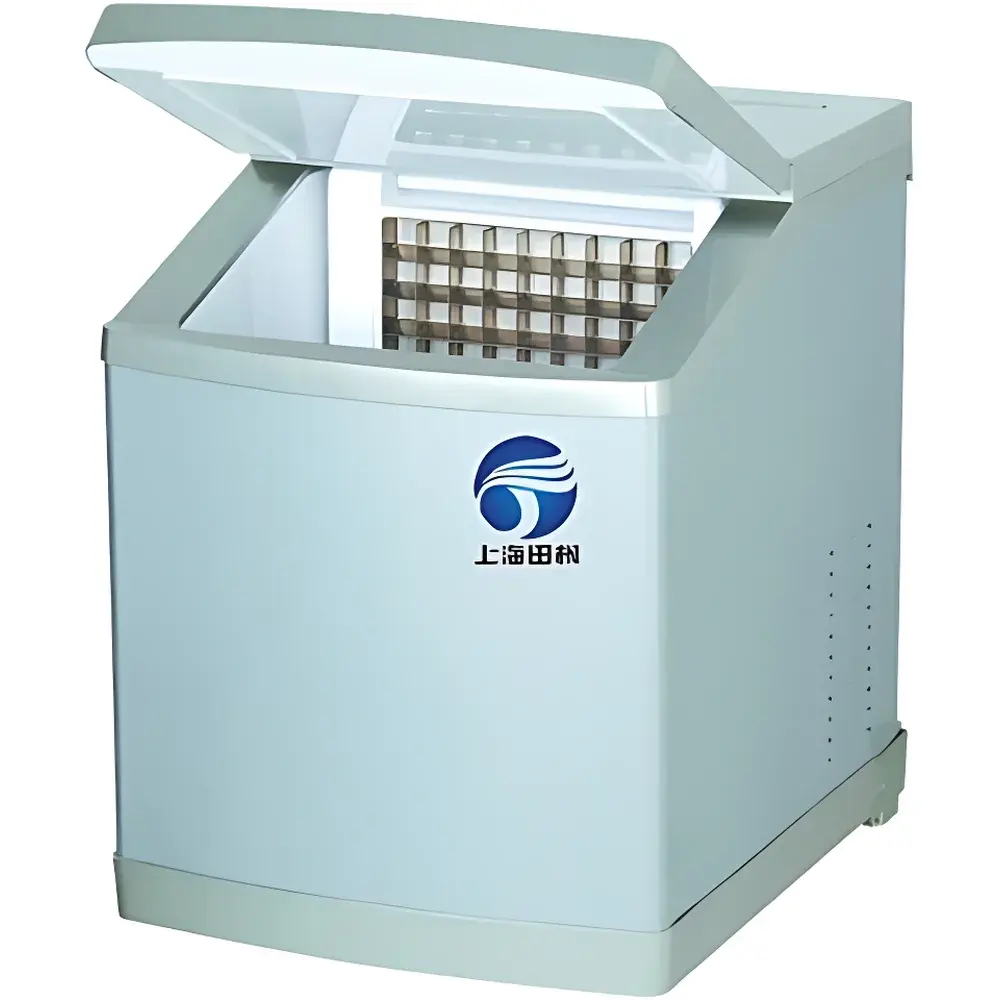
TF-ZBJ-20 Flake Ice Machine by Tianfeng
| Key | Brand: Tianfeng |
|---|---|
| Origin | Shanghai, China |
| Manufacturer Type | Direct Manufacturer |
| Product Type | Flake Ice Machine |
| Model | TF-ZBJ-20 |
| Ice Production Capacity | 150 kg/24h |
| Ice Storage Capacity | 80 kg |
| Water Consumption | 150 L/24h |
| Cooling Method | Direct Cooling |
| Ice Making Method | Spray-type Freezing |
| Construction | Stainless Steel Enclosure |
| Control System | Microprocessor-based Auto-control with Full-cycle Monitoring |
| Compliance | Designed for GLP-compliant laboratory environments |
Overview
The TF-ZBJ-20 Flake Ice Machine is a compact, laboratory-optimized refrigeration system engineered to produce high-purity, low-melting-point flake ice under controlled ambient conditions. Unlike conventional cube or nugget ice generators, this unit employs a spray-type freezing mechanism—where water is uniformly distributed over a vertically oriented, refrigerated stainless-steel drum surface. As the drum rotates, thin layers of water freeze instantaneously upon contact, forming brittle, dry, and highly surface-area-rich ice flakes (typically 1–2 mm thick, 6–12 mm in diameter). This morphology ensures rapid thermal transfer and superior bath homogeneity—critical for temperature-sensitive applications such as enzymatic assays, electrophoresis buffer cooling, sample pre-chilling prior to centrifugation or HPLC injection, and cryopreservation workflows. The machine operates on a direct-cooling architecture, eliminating secondary heat exchange losses and improving energy efficiency per kilogram of ice produced. Its sealed refrigeration loop supports both R22 and R134a refrigerants, enabling compliance with regional phase-out schedules and facility-specific HVAC integration requirements.
Key Features
- Stainless steel 304 enclosure with 45° sloped front panel—optimized for ergonomic ice retrieval and drip containment;
- Patented residual water evacuation system—mechanically purges condensate and standing water after each cycle to inhibit microbial growth and maintain ice hygiene;
- Microprocessor-based control board with real-time monitoring of water level, drum surface temperature, compressor duty cycle, and ice thickness;
- Auto-cleaning mode triggered via front-panel interface—circulates heated water through the spray manifold and drum surface to dissolve mineral deposits;
- No manual power switch: fully automated start/stop logic governed by optical ice-level sensors—machine resumes operation immediately after ice removal;
- Polyurethane foam insulation (≥45 mm thickness) surrounding the storage bin—extends ice retention time beyond 12 hours at 25°C ambient;
- Forced-air condenser cooling with high-efficiency axial fans—enables stable operation in non-air-conditioned lab spaces up to 35°C ambient.
Sample Compatibility & Compliance
The TF-ZBJ-20 is designed for use with deionized (DI), reverse osmosis (RO), or distilled water feed sources—minimizing scale formation and ensuring consistent flake morphology. It complies with ISO 9001:2015 certified manufacturing processes and incorporates design elements aligned with Good Laboratory Practice (GLP) documentation requirements—including timestamped operational logs (via optional RS-485 interface), fault-code history, and cycle counters. While not classified as medical-grade equipment, its hygienic construction, absence of stagnant water reservoirs, and automatic sanitation protocol support routine validation under internal SOPs for analytical laboratories performing ASTM E2912 (Standard Guide for Validation of Ice-Making Systems Used in Clinical and Research Laboratories) or equivalent institutional protocols.
Software & Data Management
The embedded controller stores up to 30 days of operational data—including daily ice output, average cycle duration, compressor run time, and error event timestamps. Data export is supported via USB flash drive (FAT32 format) or optional Modbus RTU communication for integration into centralized facility monitoring systems (e.g., LabVantage, Thermo Fisher SampleManager). Audit trail functionality records all user-initiated actions (e.g., cleaning mode activation, parameter overrides) with operator ID and timestamp—meeting traceability expectations under FDA 21 CFR Part 11 when paired with validated electronic signature modules. No cloud connectivity or proprietary software installation is required; configuration remains accessible via intuitive LED keypad navigation.
Applications
- Pre-chilling of biological samples prior to nucleic acid extraction or protein purification;
- Maintaining low-temperature stability during gel electrophoresis setup and running;
- Cooling reaction mixtures in PCR prep stations and qRT-PCR workflows;
- Buffer temperature control in chromatography mobile phase reservoirs;
- Temporary cold storage for tissue specimens awaiting histopathological processing;
- Calibration support for thermocouple verification baths and reference temperature mapping studies;
- On-demand ice supply for QC/QA labs performing ASTM D4052 density measurements or USP compounding environment monitoring.
FAQ
What type of water supply is recommended for optimal performance?
Deionized or reverse osmosis water with total dissolved solids (TDS) below 5 ppm is strongly recommended to prevent scaling on the drum surface and ensure uniform flake formation.
Can the TF-ZBJ-20 operate continuously in a 32°C ambient environment?
Yes—the forced-air condenser and optimized refrigerant charge allow uninterrupted operation up to 35°C ambient, provided adequate ventilation (minimum 15 cm clearance on all sides) is maintained.
Is the ice produced suitable for direct contact with food or clinical samples?
The unit is constructed to food-grade hygiene standards (stainless steel 304 wetted parts, NSF-certified components), but final suitability for direct human consumption or diagnostic use must be verified per local regulatory authority requirements and internal risk assessment.
How often should the automatic cleaning cycle be performed?
Under standard laboratory use (8–10 hours/day), bi-weekly cleaning is advised; in high-humidity or hard-water regions, weekly execution is recommended to sustain peak thermal efficiency.
Does the machine require external drainage or plumbing connections?
No—integrated condensate evaporation eliminates need for floor drains; only a standard 230 VAC / 50 Hz power outlet and potable water inlet are required.



