
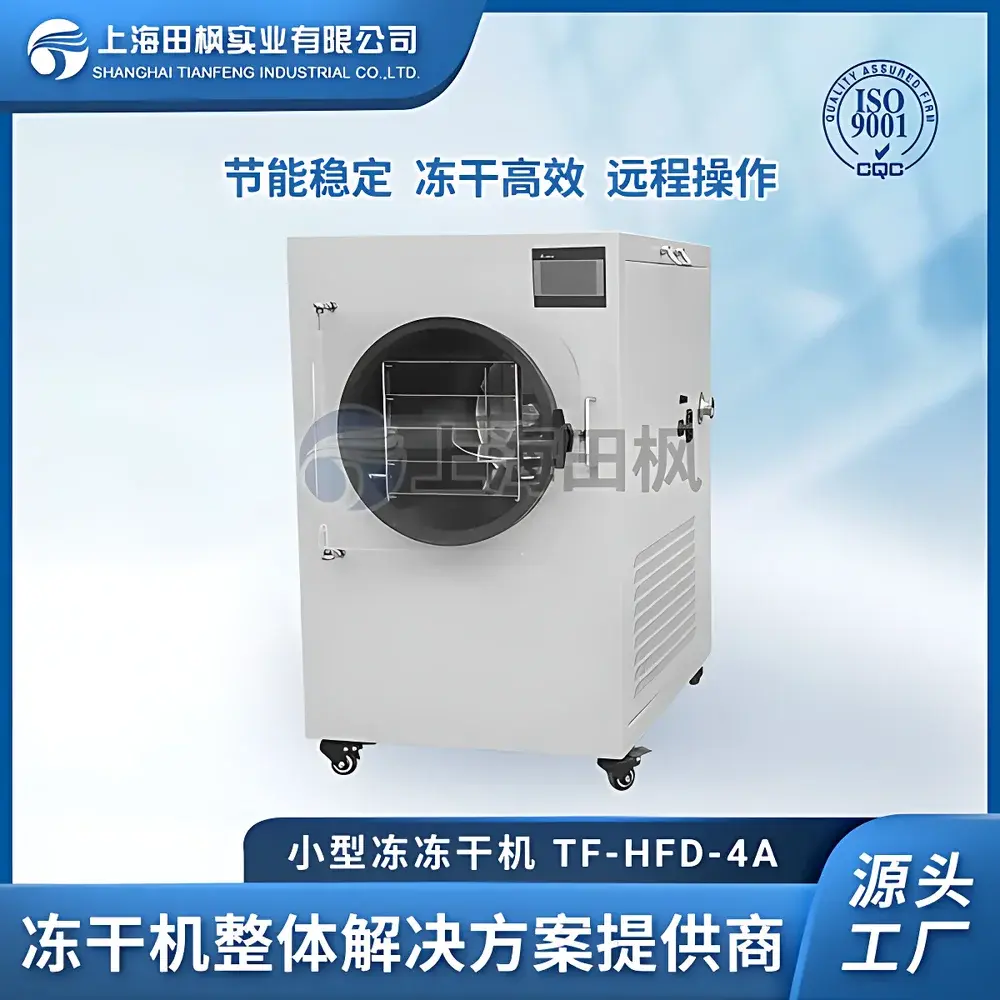
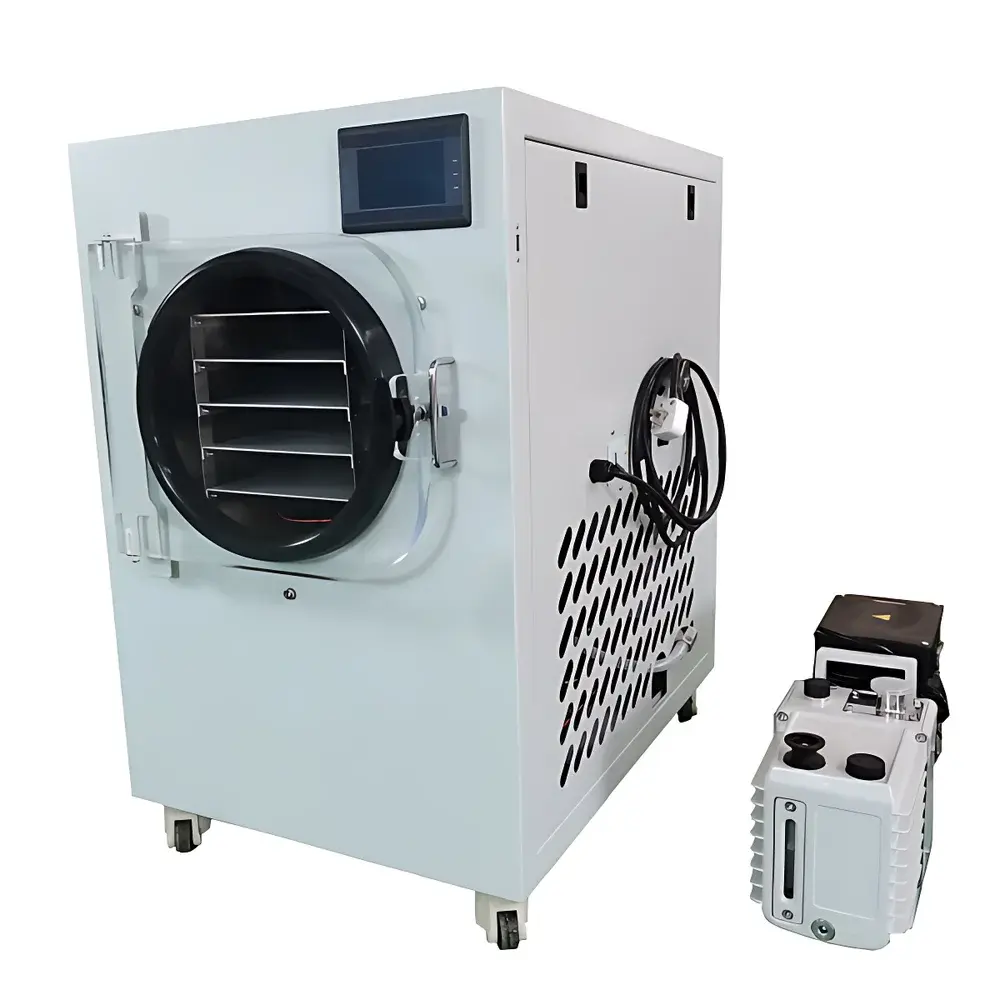
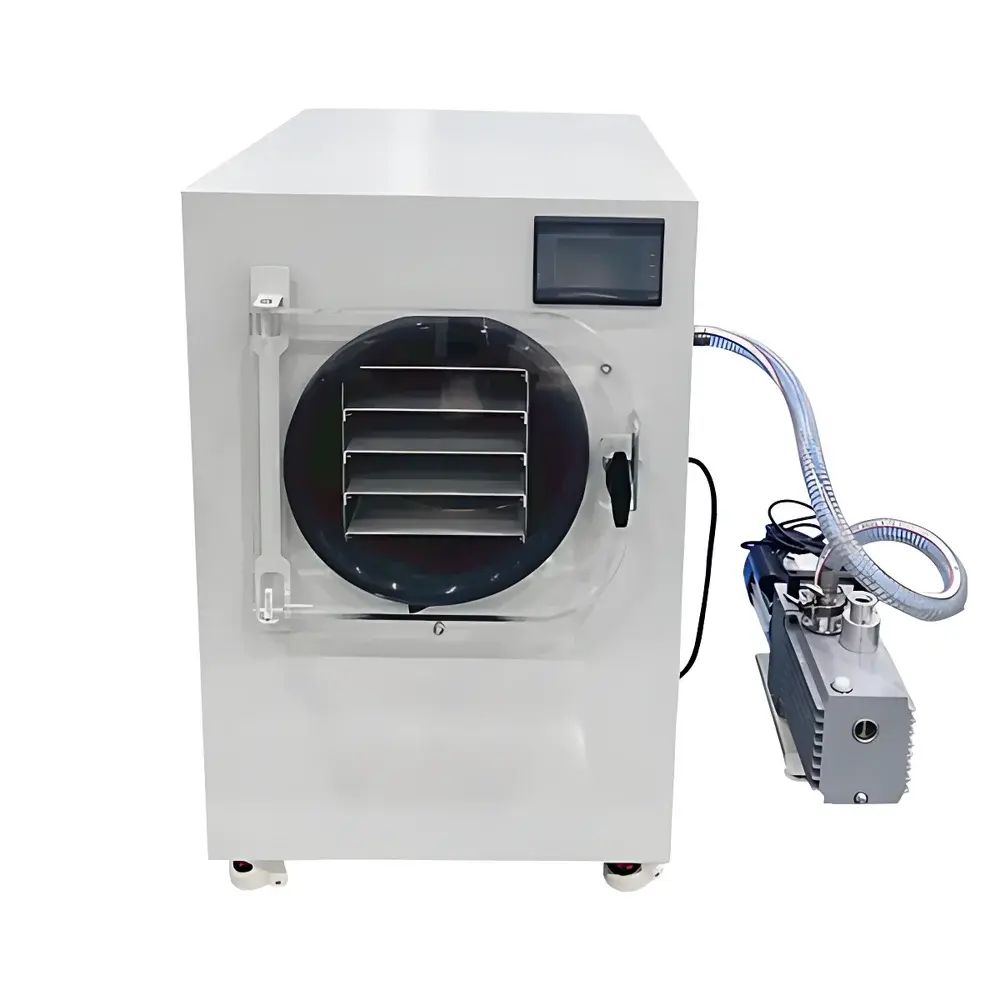
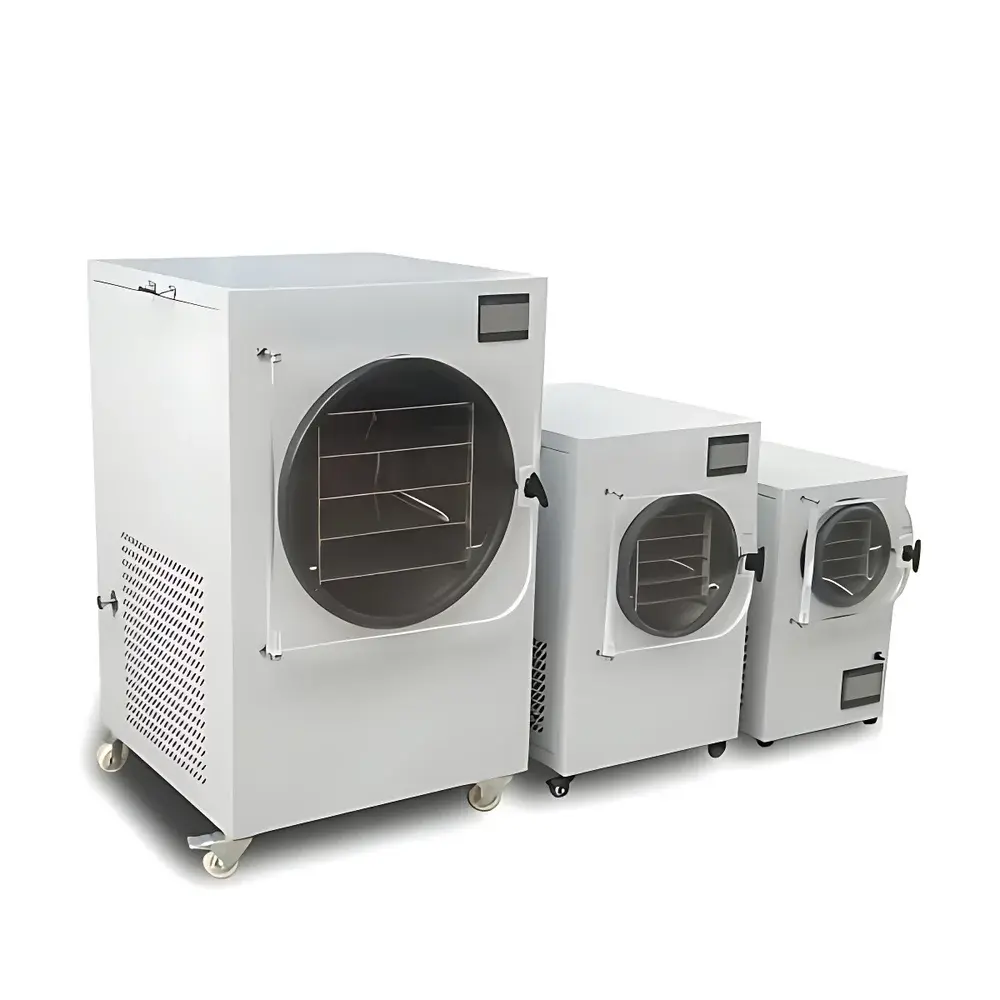
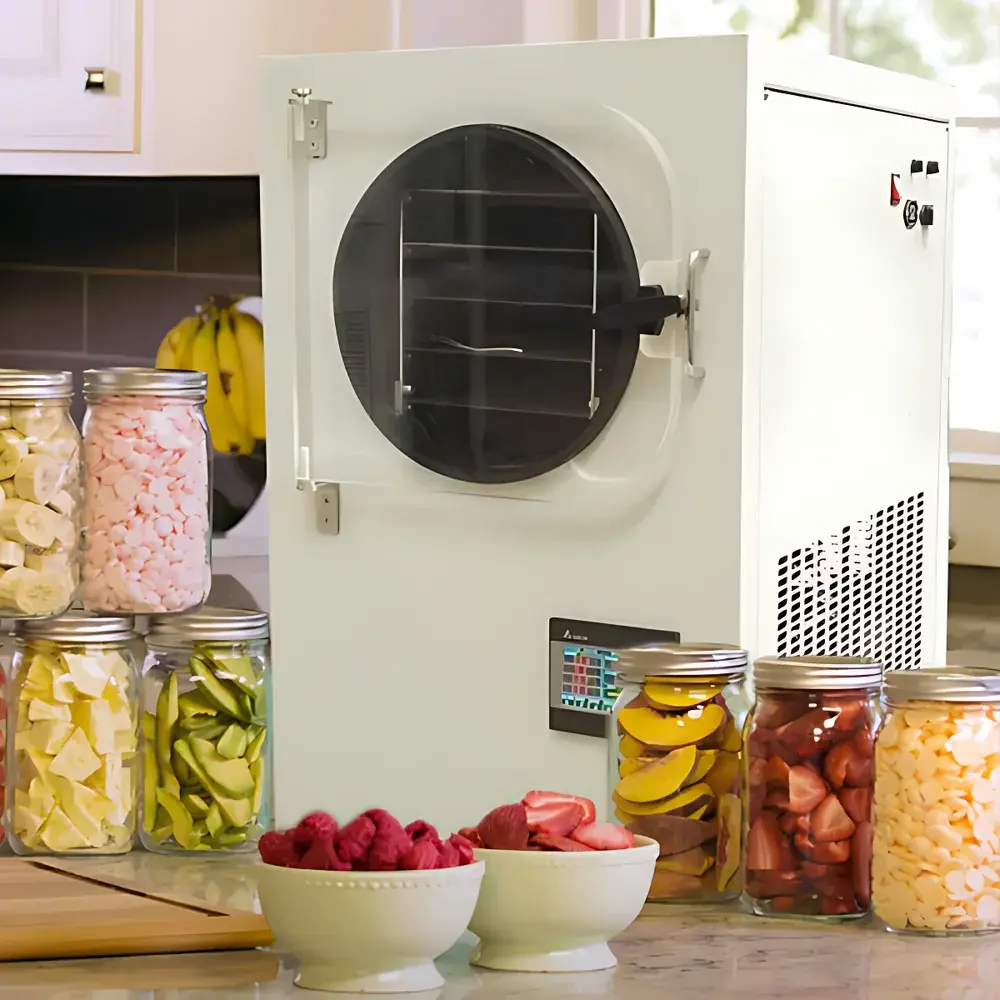
TFeng TF-HFD-4 Benchtop Pilot-Scale Freeze Dryer with In-Situ Freezing
| Brand | TFeng |
|---|---|
| Origin | Shanghai, China |
| Manufacturer Type | Direct Manufacturer |
| Instrument Type | Standard Shelf-Type Freeze Dryer |
| Application Scope | Pilot-Scale R&D and Small-Batch Processing |
| Lyophilization Area | 0.35 m² |
| Ultimate Vacuum (No Load) | 10 Pa |
| Condenser Capacity | 5 kg/24 h |
| Condenser Temperature | ≤ −40 °C |
| Chamber Dimensions (W×D×H) | 550 × 885 × 865 mm (excl. door & handles) |
| Shelf Temperature Range | −30 °C to +60 °C |
| Power Supply | 220 V, 50 Hz |
| Rated Power | 1700 W |
| Tray Dimensions | 195 × 445 × 20 mm |
| Construction | SUS304 Stainless Steel Interior & Trays |
| View Window | Transparent Acrylic Door |
| Control System | Touchscreen Interface with Real-Time Graphing & Programmable Cycle Editing |
| Defrost Mode | One-Touch Automatic Defrost |
| Safety Features | Over-Temperature Protection, Current Monitoring, Vacuum Interlock |
Overview
The TFeng TF-HFD-4 is a benchtop pilot-scale freeze dryer engineered for reproducible, scalable lyophilization under controlled low-temperature vacuum conditions. It operates on the fundamental principle of sublimation—removing water from frozen samples by transitioning ice directly into vapor without passing through the liquid phase. This process preserves thermolabile compounds, maintains structural integrity of biological matrices, and ensures high retention of volatile actives, making it indispensable in pharmaceutical formulation development, natural product stabilization, and food-grade functional ingredient processing. Designed for laboratory-to-pilot transition workflows, the TF-HFD-4 bridges the gap between analytical-scale freeze drying and production-line validation—supporting process parameter mapping, cycle optimization, and stability testing per ICH Q5C and USP .
Key Features
- In-situ freezing capability enables direct sample freezing within the drying chamber, eliminating transfer-related contamination or thermal shock—critical for sensitive biologics and live cultures.
- SUS304 stainless steel chamber and trays meet ISO 14644-1 Class 8 cleanroom compatibility standards and support routine autoclave-compatible cleaning protocols.
- High-transparency acrylic viewing door allows real-time visual monitoring of ice sublimation front progression and cake morphology evolution—essential for empirical cycle refinement.
- Intuitive 7-inch capacitive touchscreen interface supports full-cycle programming, including ramp rates, hold durations, pressure ramps, and shelf temperature profiles—each step logged with timestamped metadata.
- Integrated condenser operating at ≤ −40 °C ensures efficient water vapor capture across diverse eutectic points; verified condensation capacity of 5 kg/24 h supports multi-tray batch consistency.
- Low-noise scroll-type vacuum pump (imported component) achieves stable 10 Pa ultimate vacuum under no-load conditions—compliant with ASTM F2476-05 for residual gas analysis readiness.
- One-touch defrost function activates controlled heating of the condenser coil, minimizing downtime between batches while preventing thermal stress on refrigeration components.
- Real-time graphical display of shelf temperature, chamber pressure, and condenser temperature—exportable via USB as CSV for audit-ready documentation per FDA 21 CFR Part 11 requirements.
Sample Compatibility & Compliance
The TF-HFD-4 accommodates standard 195 × 445 mm trays, enabling uniform loading of vials, serum bottles, or flat-pack food matrices up to 0.35 m² total surface area. Its −30 °C to +60 °C shelf temperature range supports primary drying of high-concentration protein formulations (e.g., monoclonal antibodies), secondary drying of herbal extracts (e.g., ginseng, goji), and stabilization of probiotic cultures. The system conforms to ISO 22000–2018 for food safety management and supports GLP-compliant operation when paired with validated backup power and environmental monitoring systems. Vacuum integrity is verified per ISO 13485 Annex C for medical device sterilization process qualification.
Software & Data Management
The embedded control firmware records all operational parameters—including shelf setpoints, actual temperatures, chamber pressure (via Pirani gauge), and condenser load—at 1-second intervals. Cycle logs are stored internally and exportable to USB mass storage devices in timestamped, non-editable CSV format. Optional Ethernet connectivity enables integration into LabVantage or Thermo Fisher SampleManager LIMS environments. Audit trails include user login ID, parameter modification timestamps, and system event flags (e.g., vacuum breach, overtemp alarm)—fully traceable for regulatory submissions requiring ALCOA+ data integrity principles.
Applications
- Pharmaceutical R&D: Lyophilization cycle development for injectables, nasal sprays, and ocular suspensions—validated against USP and EP 2.9.40.
- Nutraceutical Processing: Stabilization of anthocyanin-rich bell pepper (Capsicum annuum) powders while retaining >92% original vitamin C and antioxidant capacity (measured by FRAP assay).
- Botanical Research: Preservation of volatile oils and glycosides in traditional Chinese medicinal herbs without solvent degradation.
- Microbiology: Long-term storage of lyophilized bacterial strains (e.g., Lactobacillus spp.) with ≥85% post-rehydration viability over 24 months at 4 °C.
- Academic Teaching: Hands-on demonstration of phase diagrams, eutectic melting behavior, and mass transfer kinetics in undergraduate physical chemistry labs.
FAQ
What is the maximum batch size supported by the TF-HFD-4?
With a lyophilization area of 0.35 m² and standard tray dimensions, the unit accommodates up to 12 × 100 mL serum bottles or 48 × 10 mL vials per cycle—optimized for pilot-scale reproducibility rather than throughput.
Does the system comply with FDA 21 CFR Part 11 for electronic records?
Yes—the firmware enforces user authentication, generates immutable audit trails, and supports electronic signatures when deployed with validated third-party identity management modules.
Can the shelf temperature be independently controlled during primary and secondary drying?
Yes. Dual-stage temperature programming allows distinct ramp/hold profiles for each drying phase, with real-time feedback control maintaining ±0.5 °C accuracy across the full −30 °C to +60 °C range.
Is external vacuum pumping required?
No. The integrated scroll pump achieves and sustains ≤10 Pa base pressure without auxiliary roughing stages—verified per ISO 21647:2020 test protocol.
What maintenance intervals are recommended for long-term reliability?
Condenser coil cleaning every 200 operating hours; vacuum pump oil replacement every 1,000 hours; annual calibration of temperature sensors traceable to NIST standards.



