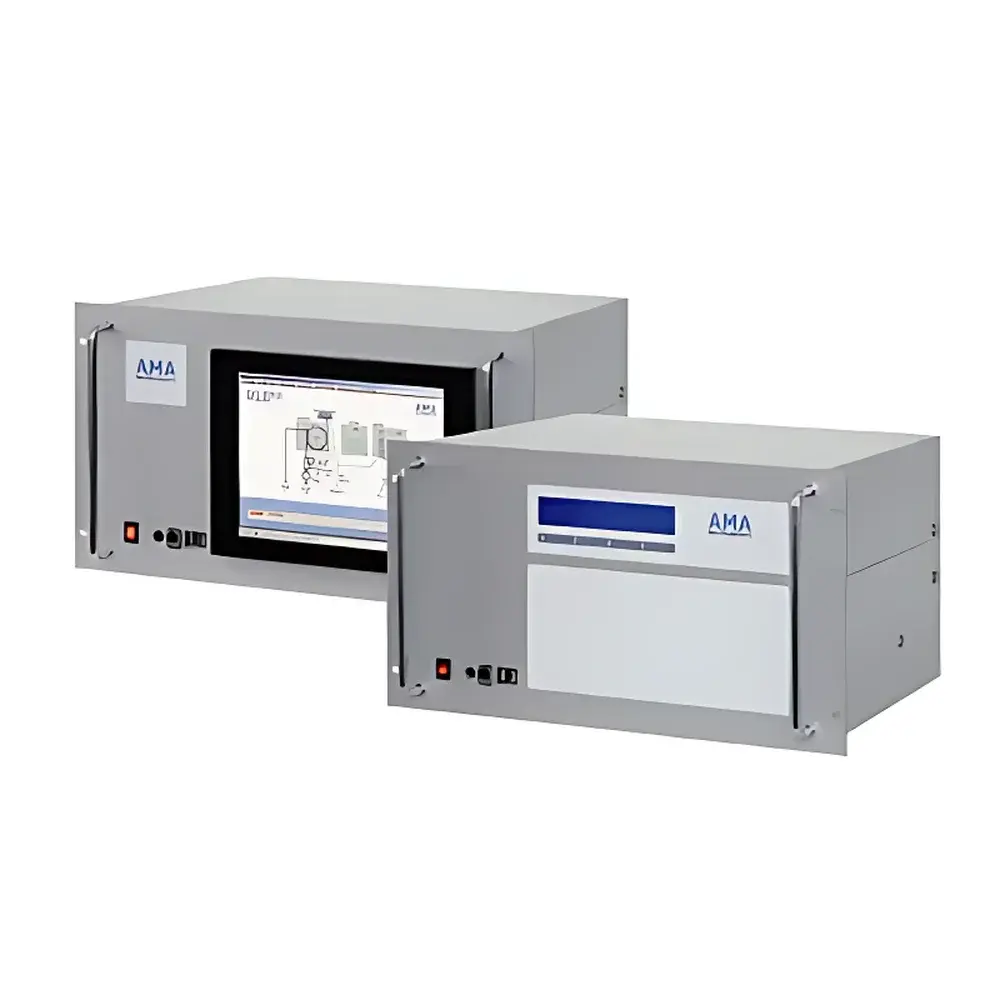
Thermo Fisher GC 5000 VOC Online Gas Chromatograph
| Brand | Thermo Fisher |
|---|---|
| Origin | USA |
| Manufacturer Type | Original Equipment Manufacturer (OEM) |
| Origin Category | Imported |
| Model | GC 5000 VOC |
| Pricing | Upon Request |
Overview
The Thermo Fisher GC 5000 VOC Online Gas Chromatograph is a purpose-built, fully automated analytical system engineered for continuous, unattended monitoring of volatile organic compounds (VOCs) in ambient air and emission streams. It operates on the principle of gas chromatography with flame ionization detection (GC-FID), optimized specifically for C2–C6 ozone precursor hydrocarbons—including ethane, ethylene, acetylene, propane, propylene, 1,3-butadiene—and low-molecular-weight chlorinated species such as chloromethane, chloroethane, dichloromethane, and vinyl chloride. Designed to meet stringent regulatory requirements—including EU Directive 2002/3/EC, VDI Guideline 2100, and U.S. EPA Technical Assistance Document EPA/600-R-98/161—the instrument delivers ppt-level detection limits through a dual-stage thermal desorption enrichment system, ensuring high sensitivity and reproducibility for trace-level atmospheric monitoring.
Key Features
- Dual-stage cryo-focused enrichment module enabling quantitative preconcentration of highly volatile C1–C6 compounds, with breakthrough volumes exceeding 800 mL for ethylene and acetylene
- Automated, PC-controlled sampling cycle including programmable sampling time (0–99 min), mass-flow-controlled sample volume (200–800 sccm at STP), and adjustable enrichment temperature (standard 10 °C, range up to 30 °C)
- High-speed thermal desorption: second-stage desorption up to 350 °C with heating rates up to 40 °C/s, ensuring sharp, symmetrical chromatographic peaks
- Back-flush functionality using a polar pre-column to remove water vapor and high-boiling interferences prior to analyte elution—enhancing retention time stability, reducing column contamination, and shortening cycle time
- Robust pneumatic architecture featuring GC-grade N2 carrier gas (≥3 bar), H2 (≥3 bar), and zero-air (≥3 bar), all regulated via electronic pressure readout and mass flow controllers
- Integrated FID detector with closed-loop temperature control (30–400 °C), linear dynamic range >107, and analog output (0–5 VDC)
- 19-inch, 6U rack-mount chassis (600 mm depth, ~33 kg), EMC-compliant (CE 89/336/EEC), rated for operation at 0–40 °C and 5–95% RH (non-condensing)
Sample Compatibility & Compliance
The GC 5000 VOC is validated for direct analysis of ambient air, stack emissions, and fugitive source samples without derivatization or solvent extraction. Its dual-stage enrichment eliminates humidity-induced condensation blockages by maintaining enrichment temperatures above 0 °C. The system complies with ISO 8573-1 (compressed air purity), ASTM D6420 (GC-FID for VOCs), and supports GLP/GMP-aligned data integrity through audit-trail-capable firmware. When deployed in fixed or mobile monitoring stations, it satisfies EU Air Quality Directive QA/QC requirements for automated VOC monitoring networks and aligns with U.S. EPA Method TO-15 and TO-17 performance criteria for speciated hydrocarbon analysis.
Software & Data Management
Instrument operation, method configuration, diagnostics, and real-time chromatogram visualization are managed via an optional integrated touchscreen control unit running embedded Linux-based GESYTEC II software. All acquisition parameters—including temperature ramps, valve sequences, flow setpoints, and calibration schedules—are editable through a graphical user interface. Raw chromatograms, quantified results, system status logs, and alarm histories are stored locally and accessible remotely via Ethernet (TCP/IP). Communication protocols include Modbus TCP, OPC UA, and custom ASCII over RS232/RS485 for integration into SCADA or central data acquisition systems. System health monitoring continuously logs hardware states; automatic recovery routines initiate reboot and resume analysis upon fault detection—ensuring >99.5% uptime in unattended operation.
Applications
- Ambient air quality monitoring networks targeting ozone precursor speciation (C2–C6 aliphatics and C1–C3 chlorocarbons)
- Industrial fence-line and fenceline monitoring for petrochemical, refinery, and chemical manufacturing facilities
- Mobile laboratory deployments for source apportionment studies and emission plume characterization
- Integration with GC 5000 BTX modules to extend analytical coverage to C2–C12 aromatic and saturated hydrocarbons
- Compliance reporting under national emission standards and EU Industrial Emissions Directive (IED) monitoring obligations
FAQ
What regulatory standards does the GC 5000 VOC support for ozone precursor monitoring?
It meets EU Directive 2002/3/EC, VDI 2100, and U.S. EPA EPA/600-R-98/161 for continuous C2–C6 VOC monitoring.
Can the instrument operate unattended for extended periods?
Yes—designed for >30-day autonomous operation with automated self-diagnostics, error logging, and failover recovery.
Is humidity compensation integrated into the sampling system?
Yes—dual-stage enrichment avoids condensation via above-zero enrichment temperature control and back-flush removal of water vapor.
How is calibration performed and documented?
Via optional gas selector valve supporting two calibration gases plus sample stream; all calibrations are timestamped and stored with audit trail in system logs.
What maintenance intervals are recommended for routine operation?
FID jet cleaning every 6 months; enrichment trap replacement annually; carrier gas filters every 3 months—guided by onboard maintenance scheduler.