
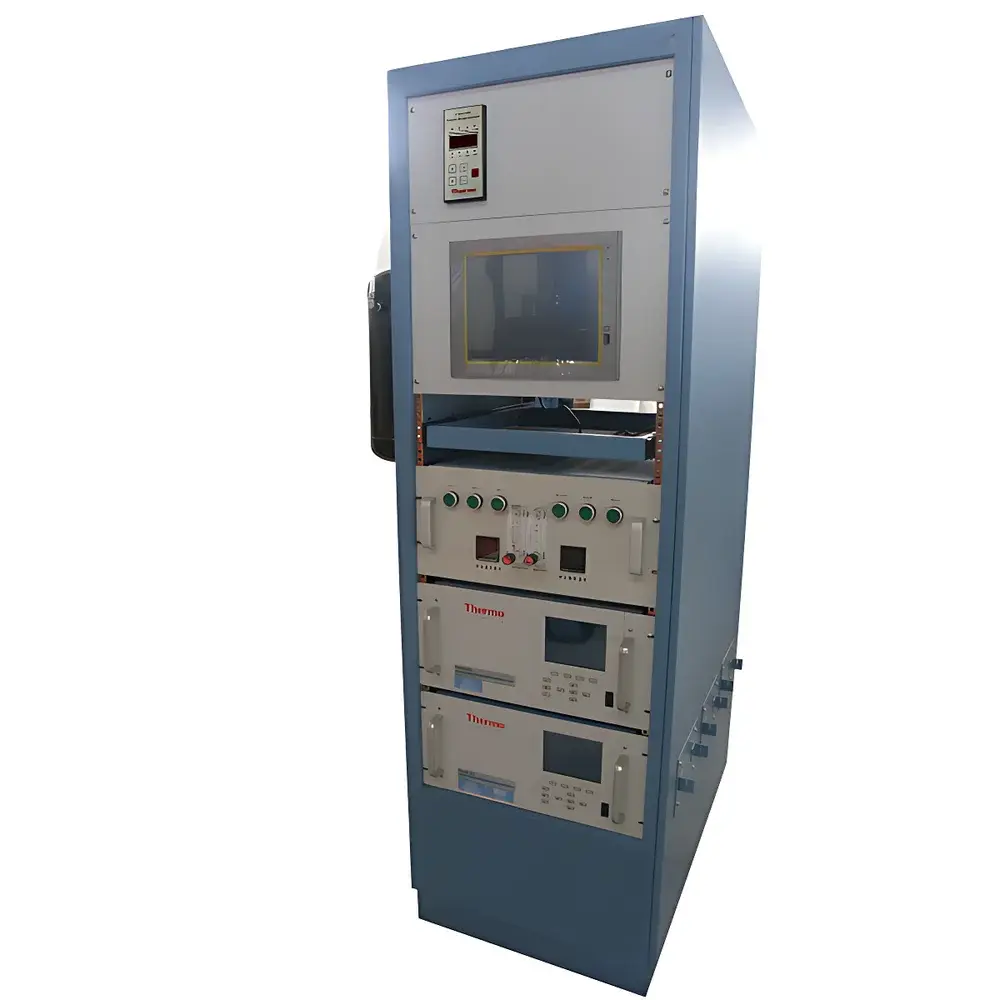
Thermo Fisher Scientific Model Low-Concentration CEMS for Continuous Emission Monitoring
| Brand | Thermo Fisher |
|---|---|
| Origin | USA |
| Manufacturer Type | Original Equipment Manufacturer (OEM) |
| Import Status | Imported |
| Model | Low-Concentration CEMS |
| Instrument Type | Continuous Emission Monitoring System (CEMS) |
| Measurement Parameters | SO₂, NOₓ, Particulate Matter (PM), Hg, NH₃ |
| Integrated with Thermo Fisher Analyzers | 43i (SO₂), 42i (NOₓ), 48i (CO), 410i (CO₂), 17i (NH₃), PM CEMS, Mercury Freedom™ |
Overview
The Thermo Fisher Scientific Low-Concentration Continuous Emission Monitoring System (CEMS) is an engineered solution for regulatory-compliant, high-fidelity measurement of flue gas pollutants under ultra-low concentration conditions—specifically designed to meet the stringent requirements of China’s latest emission standards, including GB 13223–2011 (coal-fired power plants), GB 16157–1996 (stationary source sampling), and the technical specifications outlined in HJ 75–2017 and HJ 76–2017. Unlike conventional extractive CEMS relying on direct hot-wet or cold-dry sampling, this system employs a precision dilution sampling methodology to eliminate condensation-related interference, enabling stable, trace-level quantification of gaseous and particulate species across highly variable stack environments—including high-temperature, high-humidity, high-dust, and low-temperature flue gas streams.
Key Features
- Dilution-based sampling architecture with fixed, gravimetrically verified dilution ratio (typically 1:50 to 1:100), inherently insensitive to fluctuations in sample temperature, pressure, or moisture content
- Multi-analyte capability: simultaneous real-time monitoring of SO₂ (detection limit ≤10 mg/m³), NOₓ (≤5 mg/m³), total suspended particulate matter (PM, ≤3 mg/m³), elemental and oxidized mercury (Hg⁰/Hg²⁺), NH₃, CO, CO₂, and O₂
- Integrated Thermo Fisher reference-grade analyzers: 43i UV fluorescence SO₂ analyzer, 42i chemiluminescence NOₓ analyzer, 17i tunable diode laser (TDL) NH₃ analyzer, Mercury Freedom™ cold vapor atomic fluorescence (CVAFS) mercury monitor, and certified PM CEMS using beta attenuation or light scattering principles
- Full-system automated calibration: integrated zero/span gas delivery, multi-point linearity verification, and dynamic dilution standard generation per HJ 76–2017 Annex D
- Robust probe and heated sample line design rated for continuous operation at up to 200°C, with corrosion-resistant Inconel 625 and ceramic filtration
- Redundant data acquisition architecture supporting dual-channel analog outputs, RS-232/485, Ethernet (Modbus TCP/IP), and optional OPC UA integration for plant-level DCS/SCADA connectivity
Sample Compatibility & Compliance
This CEMS platform is validated for use across diverse combustion sources—including coal-fired boilers, waste-to-energy incinerators, cement kilns, and industrial furnaces—where flue gas exhibits high particulate loading (>10 g/m³), saturated humidity (>80% RH), or rapid thermal transients. All constituent analyzers carry CE marking and comply with IEC 61266, EN 15267–3 (QAL1 certification), and US EPA Performance Specification 2 (PS-2) for SO₂/NOₓ. The system meets China’s mandatory QAL1 (Quality Assurance Level 1) and AST (Accuracy Standard Test) requirements under HJ 75–2017, and supports full auditability for GLP/GMP-aligned environmental reporting. Optional 21 CFR Part 11-compliant software modules are available for electronic signature, change control, and audit trail retention.
Software & Data Management
Operated via Thermo Fisher’s CEMS Manager v5.x software suite, the system delivers ISO/IEC 17025-aligned data handling: automatic calculation of mass emission rates (kg/h), volumetric flow correction (dry/wet, O₂-ref), and compliance flagging per hourly/daily/monthly averaging periods. Raw sensor outputs, calibration logs, maintenance records, and diagnostic events are timestamped, digitally signed, and stored locally with 12-month retention. Export formats include CSV, XML (compatible with national EIA platforms), and PDF reports pre-formatted for provincial EPB submission. Remote diagnostics, firmware updates, and alarm notification (SMS/email) are supported via secure TLS-encrypted cloud gateway (optional).
Applications
- Continuous compliance monitoring for desulfurization (FGD) and denitrification (SCR/SNCR) process optimization
- Mercury abatement verification in coal-fired units subject to GB 13223–2011 Annex A
- Ammonia slip monitoring downstream of SCR reactors to prevent secondary aerosol formation
- Low-concentration SO₂/NOₓ tracking during low-load or biomass co-firing operations
- Stack testing support for environmental impact assessments (EIA) and third-party verification audits
- Integration with digital twin frameworks for predictive maintenance and emissions forecasting
FAQ
What is the primary advantage of dilution sampling over direct extractive methods for low-concentration CEMS?
Dilution eliminates water condensation in sample lines, prevents acid gas adsorption on tubing walls, and decouples analyzer sensitivity from stack thermodynamic variability—enabling sub-5 mg/m³ detection limits with <±2% RSD repeatability.
Does the system support remote calibration verification and QA/QC reporting?
Yes. Automated daily zero/span checks, quarterly multi-point linearity tests, and annual QAL1 revalidation are fully scriptable within CEMS Manager, with auto-generated reports compliant with HJ 75–2017 Section 7.3.
Can this CEMS be retrofitted into existing monitoring infrastructure?
The modular architecture allows phased integration: probe + dilution unit can be installed independently, with analyzer cabinets and data acquisition upgraded incrementally while maintaining legacy signal compatibility.
Is mercury speciation (Hg⁰ vs. Hg²⁺) supported out-of-the-box?
The Mercury Freedom™ analyzer provides total mercury quantification; optional thermal conversion modules enable speciated Hg analysis per ASTM D6784–22, with separate calibration protocols for oxidized and elemental fractions.
How is data integrity ensured during power interruption or network downtime?
Local embedded controller retains ≥72 hours of high-resolution data (1-second intervals) with battery-backed real-time clock; all critical events trigger non-volatile flash storage writes prior to shutdown.







