
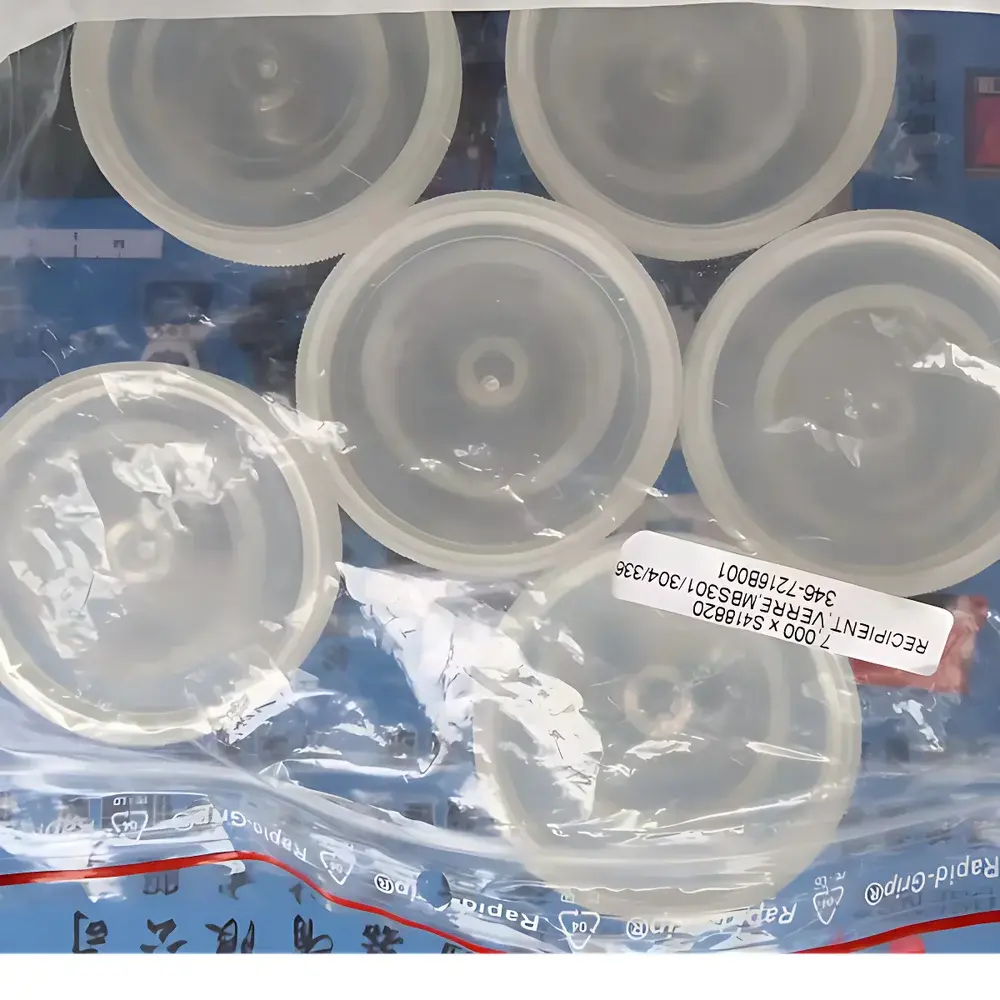
Thermo Fisher Scientific S418820 Optical Component for ARL 8860 and Multi-Technique Analytical Platforms
| Brand | Thermo Fisher Scientific |
|---|---|
| Origin | USA |
| Model | S418820 |
| Category | Optical Instrument Component for Spectroscopic & Microanalytical Systems |
| Compliance | Designed for integration with ASTM E1999, ISO 11573, and IEC 62321-compliant instrumentation |
Overview
The Thermo Fisher Scientific S418820 is a precision-engineered optical component designed for seamless integration into high-performance analytical platforms, including the ARL 8860 Direct Reading Optical Emission Spectrometer (OES), wavelength-dispersive X-ray fluorescence (WDXRF) spectrometers, X-ray diffraction (XRD) systems, inductively coupled plasma (ICP) optical emission spectrometers, scanning electron microscopes (SEM), and electron probe microanalyzers (EPMA). This component functions as a calibrated optical interface—typically a spectral filter assembly, collimating lens mount, or grating alignment subassembly—optimized for maintaining photometric stability, spectral resolution, and long-term radiometric fidelity across extended operational cycles. Its design adheres to the mechanical and thermal interface specifications defined in Thermo Fisher’s ARL 8860 service architecture and is manufactured under controlled cleanroom conditions to minimize particulate-induced signal drift. Unlike generic optical spares, the S418820 undergoes factory-level spectral throughput validation at discrete wavelengths (e.g., 180–800 nm range) and is traceably certified against NIST-traceable reference standards.
Key Features
- Optical-grade fused silica and low-thermal-expansion ULE glass substrates ensure minimal wavelength shift under thermal cycling (±0.002 nm/°C typical)
- Multi-layer dielectric coatings optimized for high transmission (>92%) in UV-VIS-NIR bands relevant to OES plasma line detection (e.g., Mn 257.610 nm, Cr 267.716 nm, C 193.091 nm)
- Mechanically registered mounting interface compatible with ARL 8860 optical bench kinematic constraints and vacuum-tight housing flanges
- Pre-aligned and factory-verified angular tolerance ≤ ±2 arcseconds for collimation-critical applications
- Compliant with RoHS 2011/65/EU and REACH Annex XVII restrictions on hazardous substances
- Serialized for full traceability; includes calibration certificate referencing ISO/IEC 17025-accredited verification procedures
Sample Compatibility & Compliance
The S418820 is not a standalone instrument but an integral subsystem supporting quantitative elemental analysis of solid metallic samples (alloys, castings, welds), geological matrices, and certified reference materials (CRMs) per ASTM E415, ISO 11573-1, and JIS G 1253. Its optical performance directly impacts detection limits, precision (RSD < 0.8% for major elements at 10 s integration), and inter-laboratory reproducibility. The component meets electromagnetic compatibility requirements per EN 61326-1:2013 and is qualified for use in GLP- and ISO/IEC 17025-accredited laboratories performing routine QC/QA in foundries, aerospace OEMs, and third-party testing facilities. It supports method validation under USP , EP 2.2.44, and FDA 21 CFR Part 11-compliant data integrity frameworks when deployed within validated Thermo Fisher software environments.
Software & Data Management
While the S418820 operates at the hardware layer, its performance is monitored and documented via Thermo Fisher’s ARL SpectraGraph™ and OMNI-Tool™ software suites. These platforms log real-time optical throughput diagnostics, lamp intensity decay trends, and spectral baseline stability metrics—enabling predictive maintenance scheduling and automated recalibration flagging. Audit trails are generated in accordance with ALCOA+ principles (Attributable, Legible, Contemporaneous, Original, Accurate, Complete, Consistent, Enduring, Available), with electronic signatures compliant with 21 CFR Part 11 Annex 11 requirements. Raw spectral data exports support ASTM E1318-compliant CSV and JCAMP-DX formats for secondary analysis in MATLAB, Python (SciPy), or commercial chemometrics packages.
Applications
- High-accuracy grade certification of stainless steels, aluminum alloys, and superalloys in metal production and recycling
- Trace element quantification (ppm-level) in catalysts and battery cathode materials using WDXRF coupling
- In-situ monitoring of plasma excitation stability during ARL 8860 daily performance checks
- Reference standard validation for CRM producers operating under ISO Guide 34 accreditation
- Inter-instrument comparability studies across multi-site metallurgical labs using harmonized optical path configurations
- Supporting ISO 14001 environmental compliance through precise heavy metal screening in scrap feedstock
FAQ
Is the S418820 interchangeable with legacy ARL 4460 or ARL 3460 optical modules?
No. The S418820 is mechanically and optically specific to the ARL 8860 platform and newer Thermo Fisher WDXRF/XRD architectures. Cross-platform installation is not supported due to revised beam path geometry and detector pixel pitch alignment.
Does this component require periodic recalibration after installation?
Yes. While factory-calibrated, post-installation verification against certified CRMs (e.g., NIST SRM 2165) is required per ISO/IEC 17025 clause 6.4.3 before release for routine analysis.
Can the S418820 be used in non-Thermo Fisher instruments?
Only if the host system’s optical interface dimensions, focal length, and spectral bandpass match the S418820’s published mechanical drawings and transmission curve—such integration requires formal engineering review and voids Thermo Fisher warranty.
What documentation accompanies the S418820 upon shipment?
Each unit ships with a Certificate of Conformance (CoC), NIST-traceable calibration report, RoHS/REACH declaration, and detailed installation torque specifications aligned with ISO 15775 mechanical fastening standards.



