
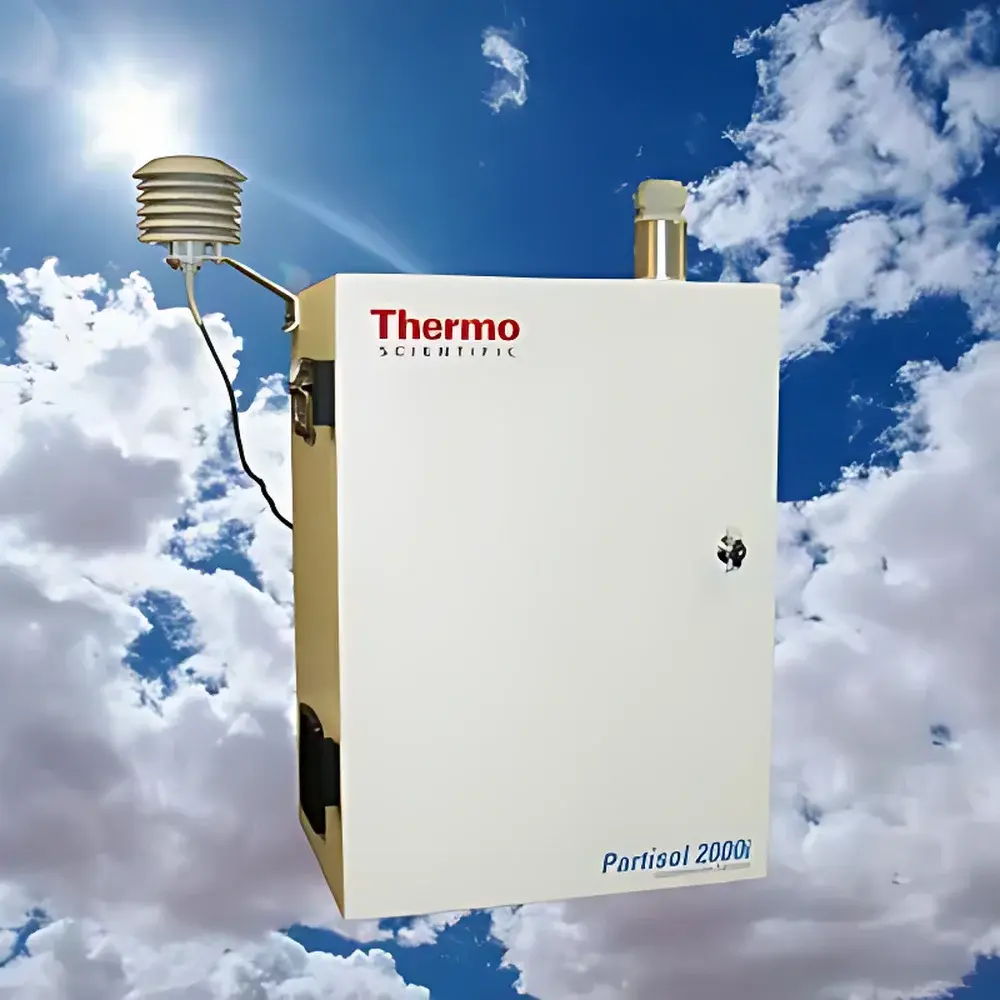
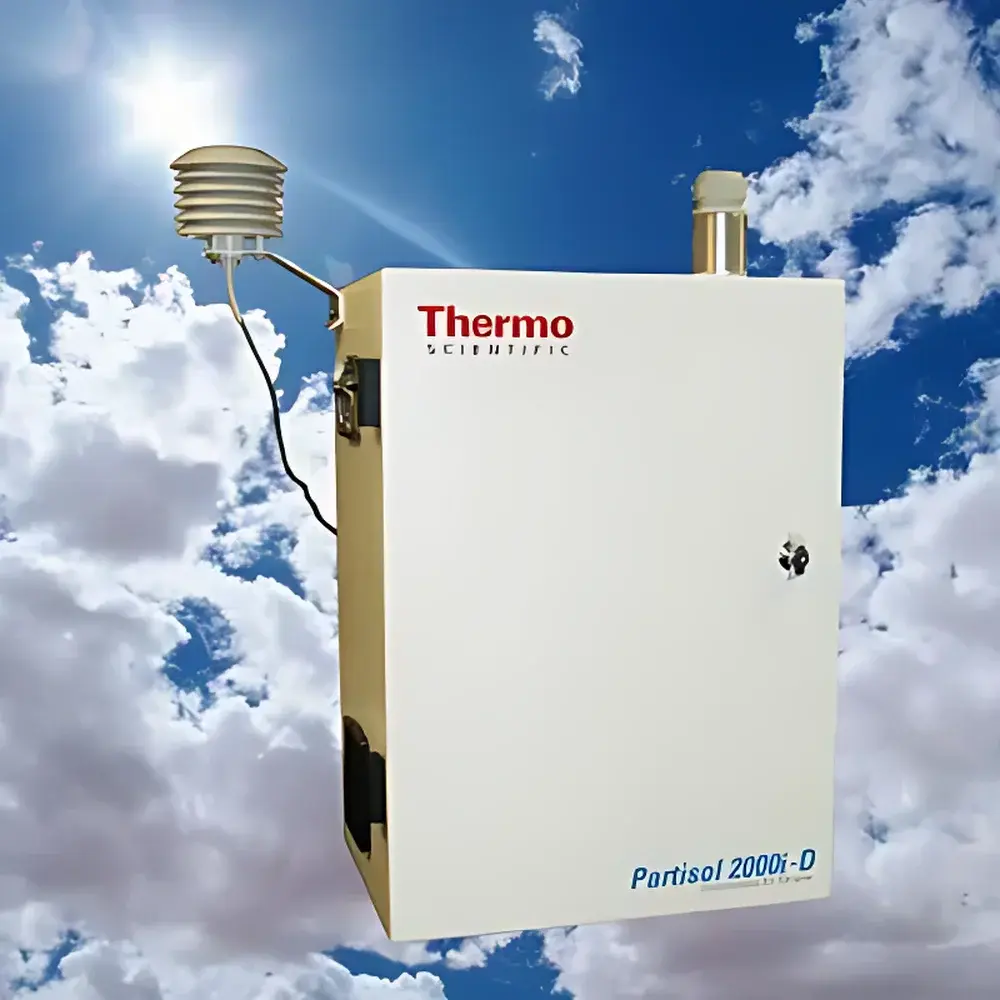
Thermo Scientific Partisol 2000i-D Dual-Channel Particulate Matter Sampler
| Brand | Thermo Fisher Scientific |
|---|---|
| Origin | USA |
| Manufacturer Type | Original Equipment Manufacturer (OEM) |
| Product Category | Imported Instrument |
| Model | 2000i-D / 2000i |
| Typical Configuration | EPA Reference/Equivalent Method PM₂.₅ and Coarse PM Sampler |
| Flow Control | Mass Flow Controller (MFC) |
| Fine Particle Flow Rate | 15 L/min |
| Coarse Particle Flow Rate | 1.67 L/min |
| Filter Format | Dual 47 mm membrane holders |
| Data Logging Interval | 5 min |
| Internal Memory Capacity | 86 days @ 5-min intervals + 32 filter records |
| Communication Interfaces | RS-232, USB, Enhanced Ethernet (iPort™) |
| Operating Temperature Range | −40 °C to +50 °C |
| Compliance | U.S. EPA Reference Method for PM₂.₅ (40 CFR Part 53), Equivalent Method for PM₁₀ and Coarse PM (PM₁₀–PM₂.₅), ASTM D6216, ISO 7708 |
Overview
The Thermo Scientific Partisol 2000i-D Dual-Channel Particulate Matter Sampler is an EPA-equivalent method-certified instrument engineered for simultaneous, gravimetric collection of fine (PM₂.₅) and coarse (PM₁₀–PM₂.₅) particulate matter fractions from ambient air. Based on the proven i-Series platform architecture, the 2000i-D implements a calibrated inertial separation principle using a precision-machined virtual impactor to split the incoming aerosol stream at the 2.5 µm aerodynamic diameter cutpoint—ensuring physical fidelity to U.S. EPA regulatory definitions. Unlike single-channel samplers requiring sequential or surrogate estimation, the 2000i-D delivers co-located, time-synchronized mass concentration data for both fractions under identical meteorological and operational conditions. Its robust thermal management system maintains stable internal temperature gradients across the −40 °C to +50 °C operating envelope, minimizing condensation artifacts and preserving filter integrity during high-humidity deployments. Designed for unattended field operation exceeding 30 days per filter change cycle, the system meets long-term monitoring requirements under U.S. EPA’s Air Quality System (AQS) network protocols and supports compliance reporting for National Ambient Air Quality Standards (NAAQS) implementation.
Key Features
- Dual independent sampling channels with dedicated mass flow controllers (MFCs): 15 L/min for PM₂.₅ and 1.67 L/min for coarse PM, each with real-time volumetric flow display and automatic pressure compensation
- Integrated virtual impactor meeting U.S. EPA performance specifications for PM₂.₅ cutpoint sharpness (σg ≤ 1.2) and loading stability
- Modular pump assembly with quick-release mounting and tool-free replacement—reducing mean time to repair (MTTR) to under 5 minutes
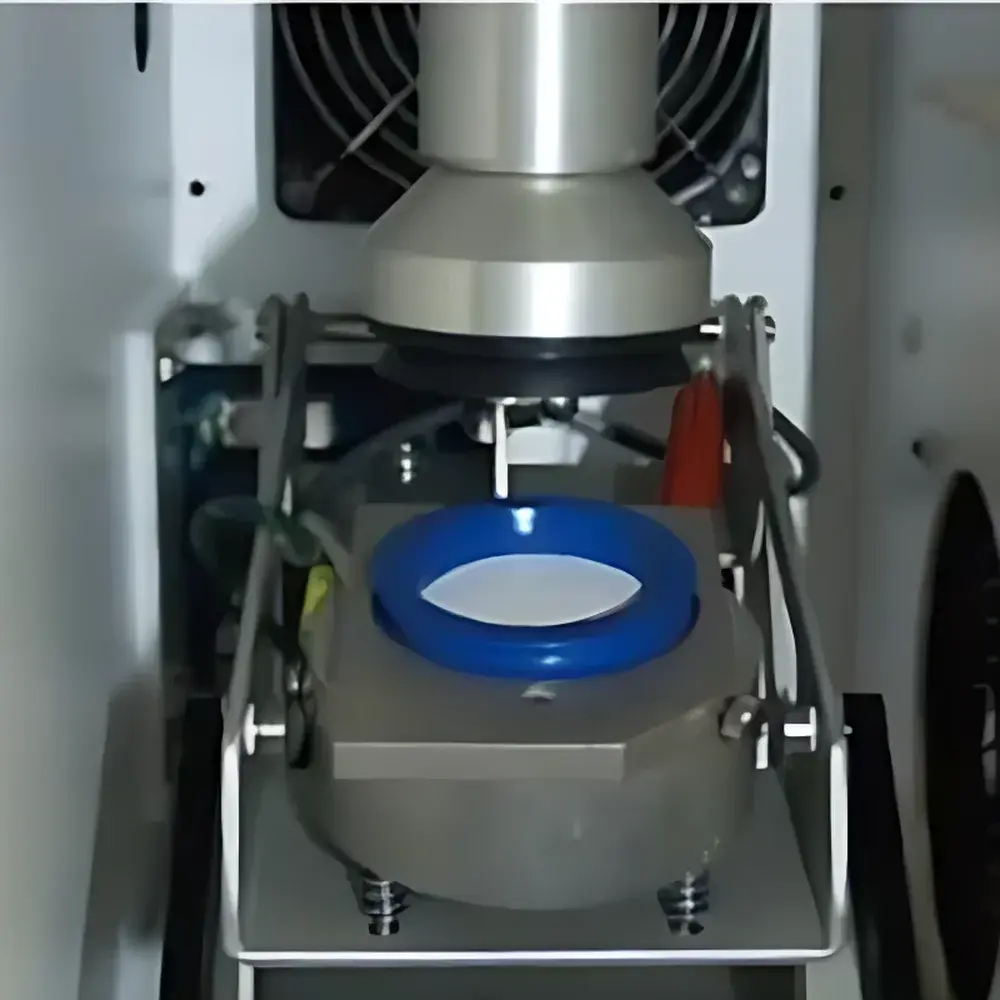
- Single-motion filter exchange mechanism enabling full filter cassette replacement without disassembling flow paths or recalibrating sensors
- Enhanced i-Series user interface featuring a high-contrast 320 × 240 pixel LCD, intuitive menu navigation, and on-device programmable start/stop schedules
- Flash-based internal memory storing up to 86 days of 5-minute interval telemetry—including flow, temperature, pressure, voltage, and status flags—plus metadata for 32 filter sets
Sample Compatibility & Compliance
The Partisol 2000i-D accepts standard 47 mm membrane filters compatible with gravimetric, elemental, and ion chromatographic analysis. For U.S. EPA reference method compliance, Teflon® 2 µm pore polytetrafluoroethylene (PTFE) filters are required for PM₂.₅ and PM₁₀ measurements; quartz fiber and Pallflex™ TX-40 filters are supported for speciated carbon analysis. All filter media mount in precision-machined stainless steel cassettes with silicone gasket sealing to prevent edge loading and bypass leakage. The instrument is certified under 40 CFR Part 53 as an equivalent method for PM₂.₅ and coarse PM, and its flow control subsystem satisfies ASTM D6216 Annex A1 verification criteria. Hardware and firmware design incorporate traceable calibration pathways aligned with ISO/IEC 17025 laboratory accreditation requirements and support audit-ready documentation for GLP/GMP-regulated environmental testing laboratories.
Software & Data Management
Data acquisition and configuration are managed via the iPort™ communications suite—a Windows-based application supporting secure remote access over TCP/IP networks. iPort enables encrypted firmware updates, automated daily data pull via scheduled FTP/SFTP, and direct integration with EPA’s AirNow and AQS databases through standardized XML schema export. Audit trails log all user-initiated parameter changes, filter load/unload timestamps, and calibration events with ISO 8601 timestamps and operator ID fields. The embedded operating system complies with FDA 21 CFR Part 11 requirements for electronic records and signatures when configured with password-protected user roles and digital certificate authentication. Raw sensor outputs (analog and digital) are stored alongside processed flow-corrected volume data, permitting retrospective reprocessing if analytical methods evolve.
Applications
- Long-term NAAQS compliance monitoring at federal reference and equivalent method (FRM/FEM) sites
- Source apportionment studies requiring concurrent fine/coarse mass and chemical speciation
- Health effects research investigating differential toxicity of PM size fractions
- Regional transport modeling where coarse PM serves as a tracer for crustal resuspension or sea salt
- Method validation and intercomparison campaigns against beta attenuation monitors (BAM) and tapered element oscillating microbalances (TEOM)
- Indoor-outdoor exposure assessment in urban epidemiology cohorts
FAQ
Does the 2000i-D require annual factory recalibration to maintain EPA equivalency?
No—EPA equivalency is maintained through user-performed multi-point flow audits using NIST-traceable primary standards. The instrument’s MFCs retain calibration stability for ≥12 months under typical field conditions; however, quarterly verification is recommended per 40 CFR Part 53 Appendix C.
Can the 2000i-D operate continuously during precipitation events?
Yes—the inlet assembly includes a heated, aerodynamically optimized rain cap and particle-free purge airflow that meets EPA’s wet weather performance criteria (40 CFR Part 53.30). Internal desiccant and thermal regulation prevent condensation on filter surfaces.
Is raw analog sensor output accessible for third-party data logging systems?
Yes—RS-232 serial output provides continuous streaming of unprocessed voltage signals from all transducers (differential pressure, temperature, motor current), enabling custom integration with SCADA or industrial IoT platforms.
What filter handling protocols does Thermo recommend for PM₂.₅ gravimetric analysis?
Per EPA Method IO-2.2, filters must undergo 24-hour equilibration in a Class 100 cleanroom at 20–23 °C and 30–35% RH prior to pre- and post-weighing. The 2000i-D’s filter cassettes are designed for seamless transfer into certified weighing environments without mechanical disturbance.
How is coarse PM mass calculated when using the virtual impactor?
Coarse PM mass equals total collected mass on the coarse channel filter minus the theoretical fine fraction mass derived from the fine channel measurement and validated splitter efficiency curves—not a simple subtraction of PM₂.₅ from PM₁₀.







