
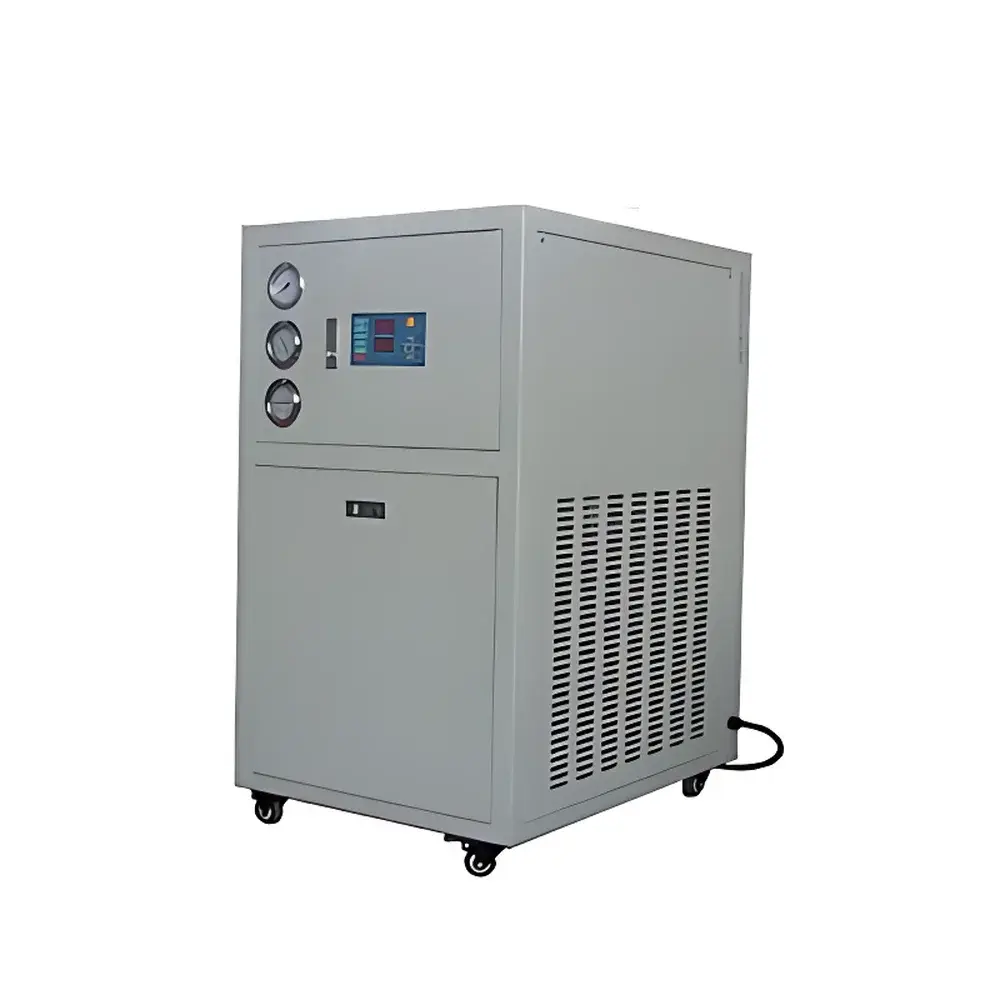
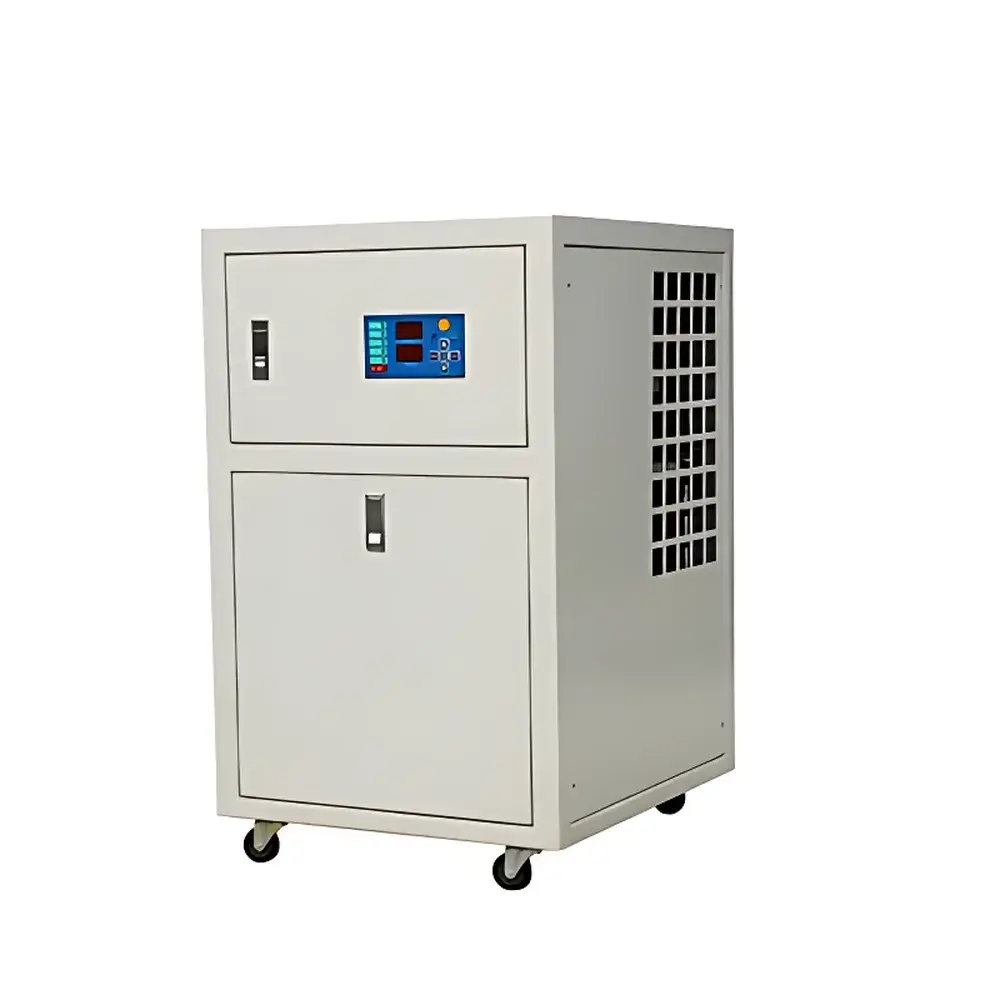
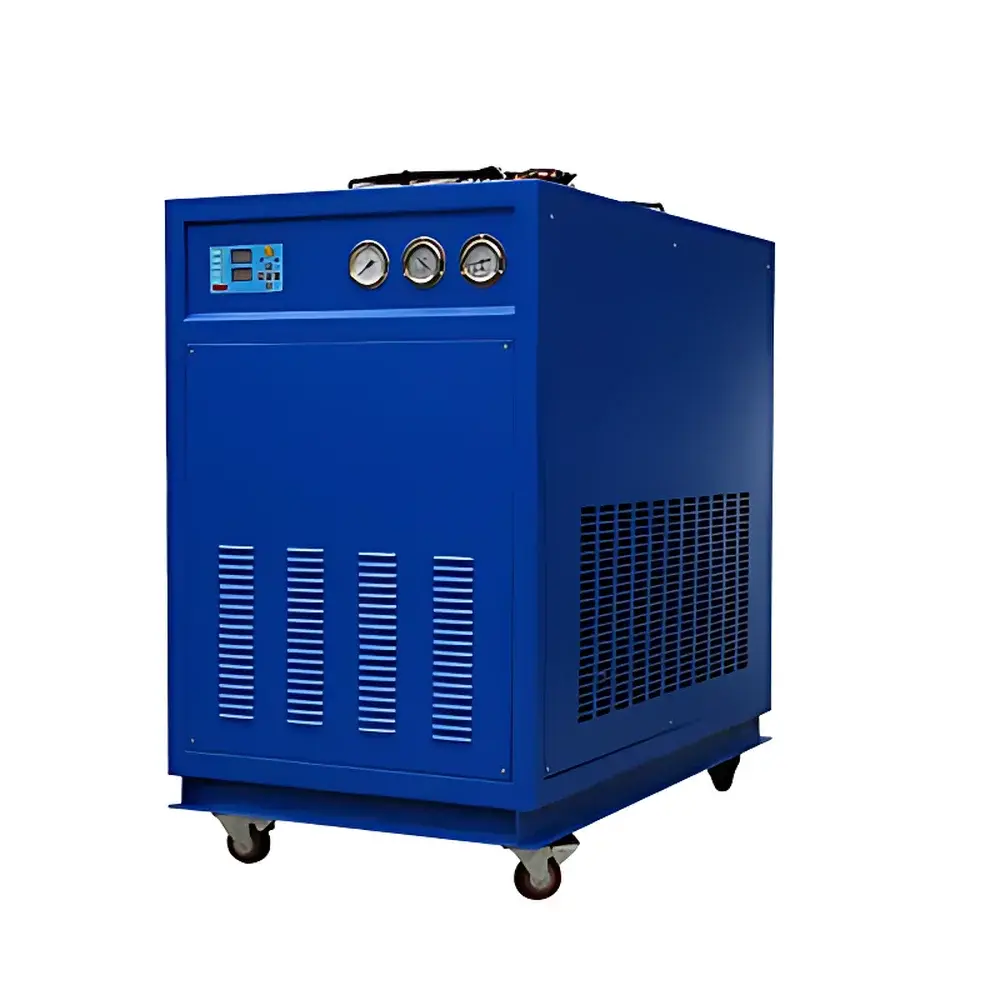
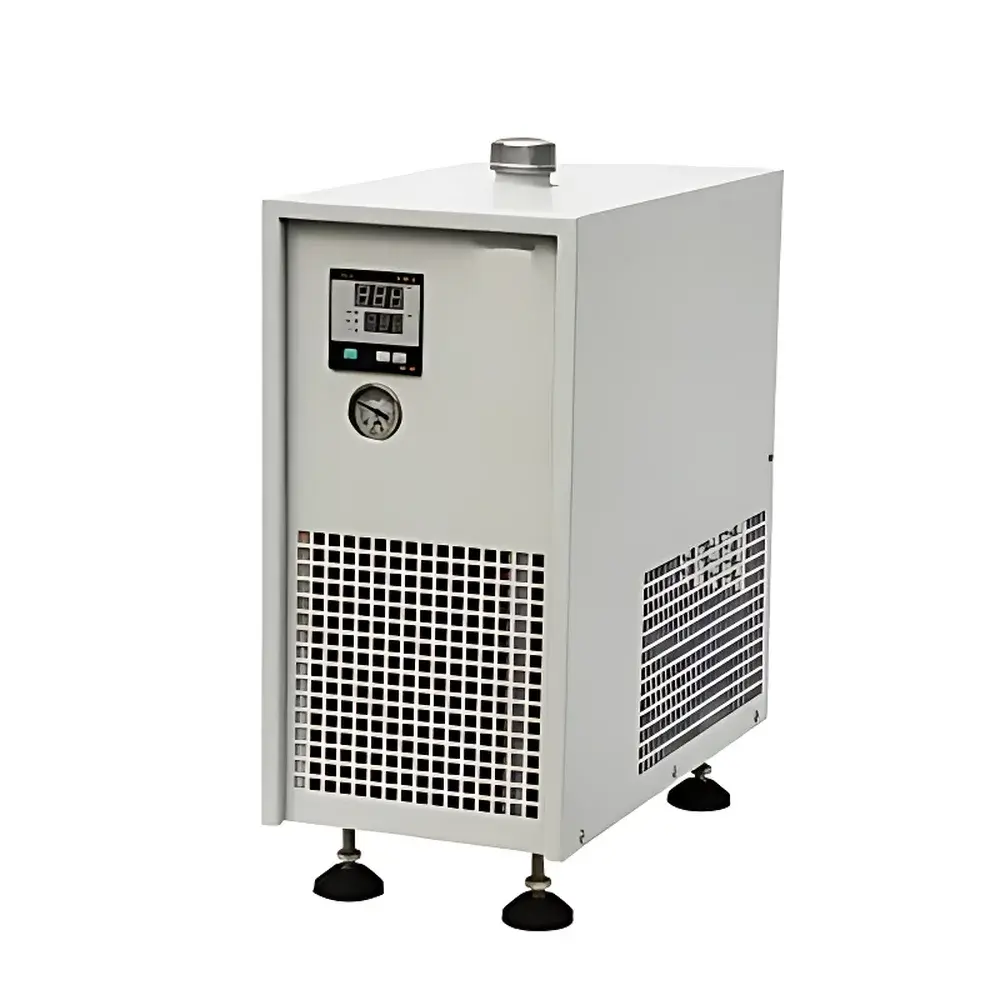
Tianfeng LS-4500W Integrated Circulating Chiller
| Brand | Tianfeng |
|---|---|
| Origin | Shanghai, China |
| Manufacturer Type | Direct Manufacturer |
| Equipment Type | Integrated Circulating Chiller |
| Cooling Method | Water-Cooled |
| Temperature Control Range | 0–10 °C |
| Refrigeration Capacity | 4.5 kW |
| Temperature Stability | ±0.1 °C |
| Circulating Pump Pressure | 2.0 bar |
| Circulating Flow Rate | 2 L/min |
| Reservoir Volume | 45 L |
| Duty Cycle | Continuous Operation |
| Compressor Type | Scroll Compressor |
| Safety Protections | Compressor Overheat Protection, Overcurrent Protection, High/Low Pressure Switches, Overtemperature Alarm |
| Power Supply | 220 V, 50 Hz |
| Dimensions (L×W×H) | 800 × 600 × 1065 mm |
| Weight | Approx. 125 kg |
| Construction | Stainless Steel Reservoir & Pump |
| Controller | Digital PID Temperature Controller (Optional RKC Japan Unit) |
| Compliance | ISO 9001:2000 Certified Manufacturing |
Overview
The Tianfeng LS-4500W Integrated Circulating Chiller is an industrial-grade, water-cooled temperature control system engineered for precision thermal management of heat-generating laboratory and industrial equipment. Unlike general-purpose cooling units, this chiller employs a closed-loop refrigeration cycle based on vapor-compression thermodynamics, utilizing a high-efficiency scroll compressor, imported expansion valves (Italy/Germany), and a PID-controlled digital thermostat to maintain stable coolant temperatures within ±0.1 °C across its operational range of 0–10 °C. Its design prioritizes long-term continuous operation under variable thermal loads—critical for applications requiring uninterrupted thermal stability, such as analytical instrumentation cooling, laser source thermal regulation, and vacuum system condensation control. The unit integrates all core components—including refrigeration circuit, stainless steel reservoir (45 L), circulation pump (2 L/min @ 2.0 bar), and electronic control panel—into a compact footprint (800 × 600 × 1065 mm), enabling flexible placement in constrained laboratory or production environments.
Key Features
- Stainless steel reservoir and pump housing ensure corrosion resistance and compatibility with deionized water, glycol-water mixtures (up to 30% concentration), and other non-aggressive coolants.
- Digital PID temperature controller with real-time display and adjustable setpoint resolution of 0.1 °C; optional upgrade to RKC (Japan) controller for enhanced repeatability and logging capability.
- Multi-layer safety architecture: integrated high/low pressure switches, compressor overheat protection, overcurrent cutoff, and independent overtemperature alarm with dry-contact fault signal output.
- Low-noise scroll compressor (rated <65 dB(A) at 1 m) delivers stable refrigeration capacity of 4.5 kW under standard conditions (inlet water 12 °C, outlet 7 °C; ambient cooling water 30 °C → 40 °C).
- Configurable flow and pressure: adjustable pump output (0–2 L/min typical, up to 60 L/min with external booster) supports both low-flow precision instruments and high-capacity heat exchangers.
- Compliance-ready construction: CE-marked electrical components (Siemens, Schneider, Omron), ISO 9001:2000 certified manufacturing process, and documentation traceability for GLP/GMP-aligned lab infrastructure.
Sample Compatibility & Compliance
The LS-4500W is validated for thermal coupling with a broad spectrum of laboratory and industrial equipment requiring active coolant circulation. It interfaces reliably with graphite furnace atomic absorption spectrometers (GFAAS), inductively coupled plasma optical emission spectrometers (ICP-OES), ICP-mass spectrometers (ICP-MS), X-ray fluorescence (XRF) and X-ray diffraction (XRD) systems, scanning and transmission electron microscopes (SEM/TEM), and high-power laser sources (e.g., CO₂, fiber, and diode-pumped solid-state lasers). Its 0–10 °C operating window aligns with manufacturer-specified coolant inlet requirements for most semiconductor fabrication tools, vacuum deposition chambers, and plasma etching systems. From a regulatory perspective, the unit’s electrical architecture meets IEC 61000-6-3 (EMC emissions) and IEC 61000-6-2 (immunity) standards. While not intrinsically rated for hazardous locations, its design supports integration into ISO/IEC 17025-accredited laboratories where documented calibration, preventive maintenance logs, and audit-trail-capable controllers (with optional RKC unit) facilitate compliance with FDA 21 CFR Part 11 data integrity expectations.
Software & Data Management
The base configuration features a standalone digital controller with LED temperature readout, manual setpoint adjustment, and visual status indicators for power, pump operation, and alarm conditions. For laboratories requiring electronic recordkeeping, the optional RKC controller provides RS-485 Modbus RTU interface, enabling integration with LabVIEW, MATLAB, or LIMS platforms for remote monitoring, setpoint scheduling, and automated data logging. All controller variants support configurable alarm thresholds and latching/non-latching fault behavior. Audit trails—including timestamped setpoint changes, temperature deviations exceeding ±0.3 °C, and safety interlock activations—are retained in non-volatile memory for minimum 30 days. Firmware updates are performed via USB port without hardware modification, ensuring ongoing alignment with evolving cybersecurity and data governance policies.
Applications
This chiller serves critical thermal regulation functions across multiple domains. In analytical laboratories, it maintains optimal detector and source temperatures in ICP-MS systems to minimize polyatomic interferences and improve mass resolution; stabilizes X-ray tube anodes in XRD/XRF instruments to prevent thermal drift in Bragg angle measurements; and cools SEM/TEM cold stages to reduce beam-induced specimen charging and contamination. In materials processing, it controls mold temperature in high-precision injection molding—reducing internal stress, improving surface finish, and shortening cycle times by up to 22%. For CNC machining centers and high-speed spindles, it regulates hydraulic oil and bearing temperatures to limit thermal growth, preserving positional accuracy within ±1.5 µm over 8-hour shifts. Additional validated use cases include cooling ultrasonic cleaning tanks (to inhibit solvent degradation), stabilizing fermentation bioreactors (±0.2 °C setpoint hold), and supplying chilled water for concrete precooling in civil engineering test protocols per ASTM C1064.
FAQ
What is the maximum allowable return water temperature for continuous operation?
The unit is rated for continuous duty with return water ≤40 °C. Sustained inlet temperatures >40 °C may trigger high-pressure cutout and reduce compressor service life.
Can the chiller operate with ethylene glycol solutions?
Yes—compatible with aqueous glycol mixtures up to 30% v/v. Viscosity increase must be accounted for when sizing external piping and heat exchangers.
Is remote monitoring supported out-of-the-box?
Standard configuration includes local control only. RS-485 Modbus interface and data logging require optional RKC controller upgrade.
Does the unit comply with FDA 21 CFR Part 11 for electronic records?
The base controller does not provide electronic signatures or audit trail export. The RKC option supports Part 11–aligned features including user access levels, electronic signatures, and encrypted CSV log export.
What maintenance intervals are recommended for laboratory-grade reliability?
Compressor oil and refrigerant charge verification every 24 months; filter drier replacement every 18 months; full system leak check and calibration validation annually—per ISO/IEC 17025 clause 6.4.6.



