
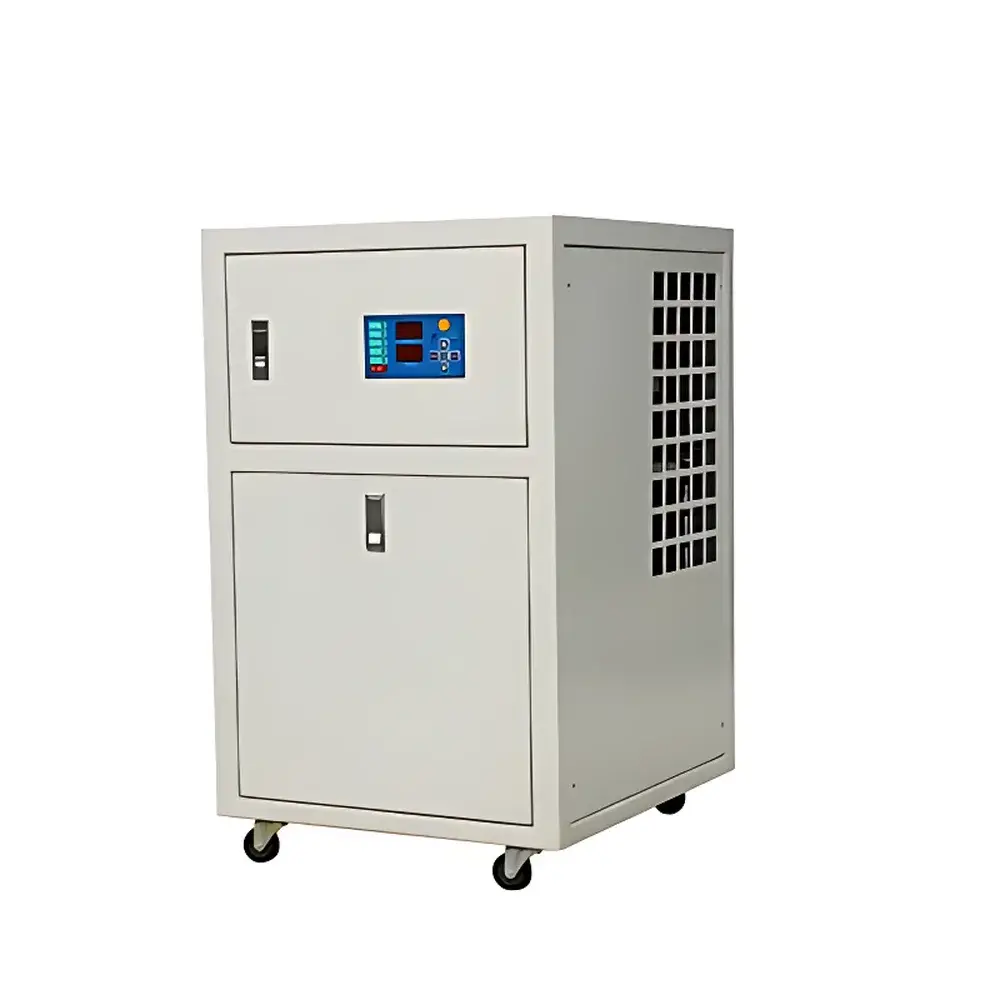
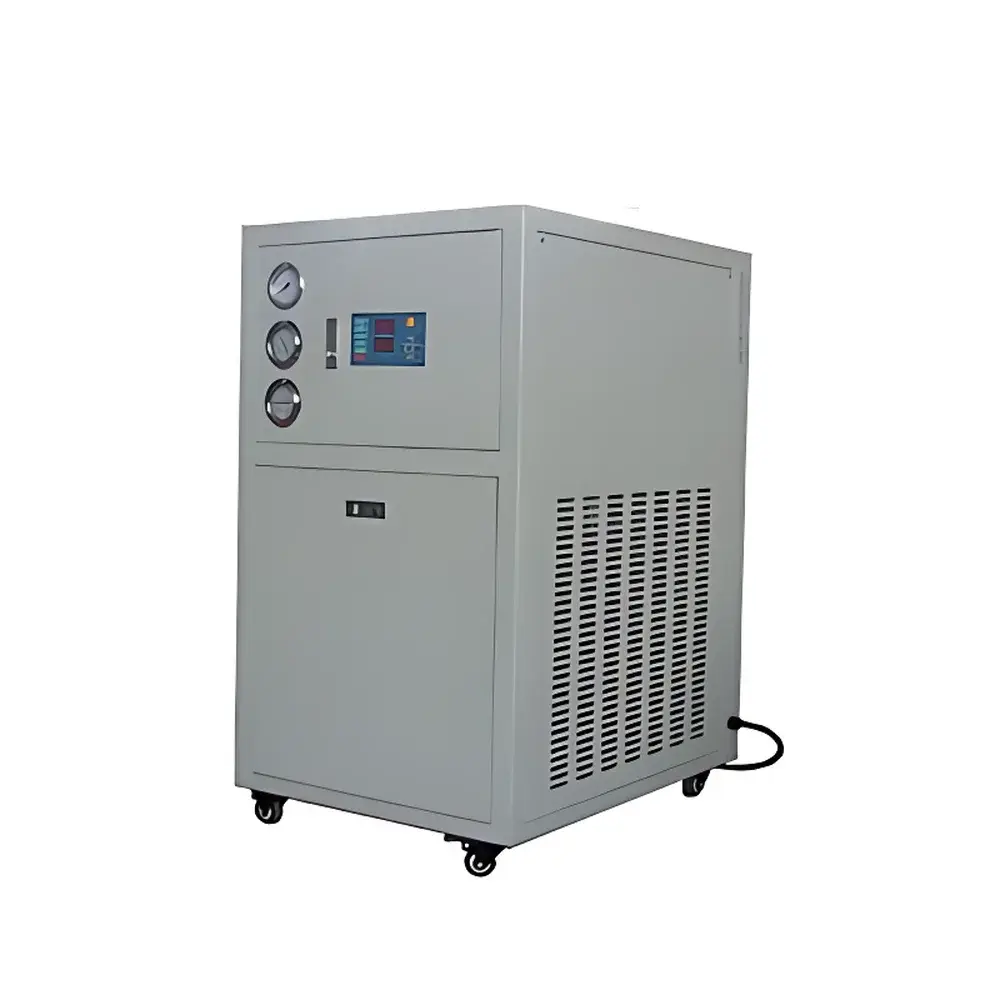
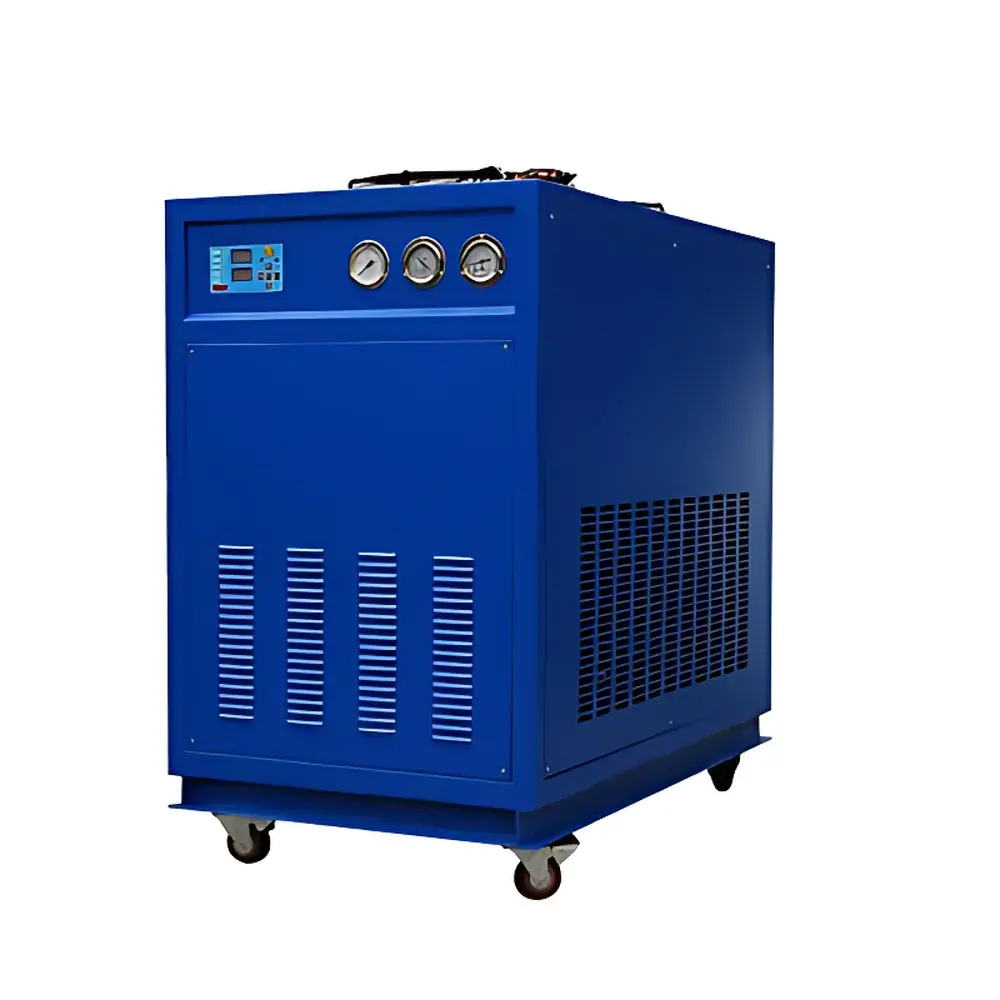
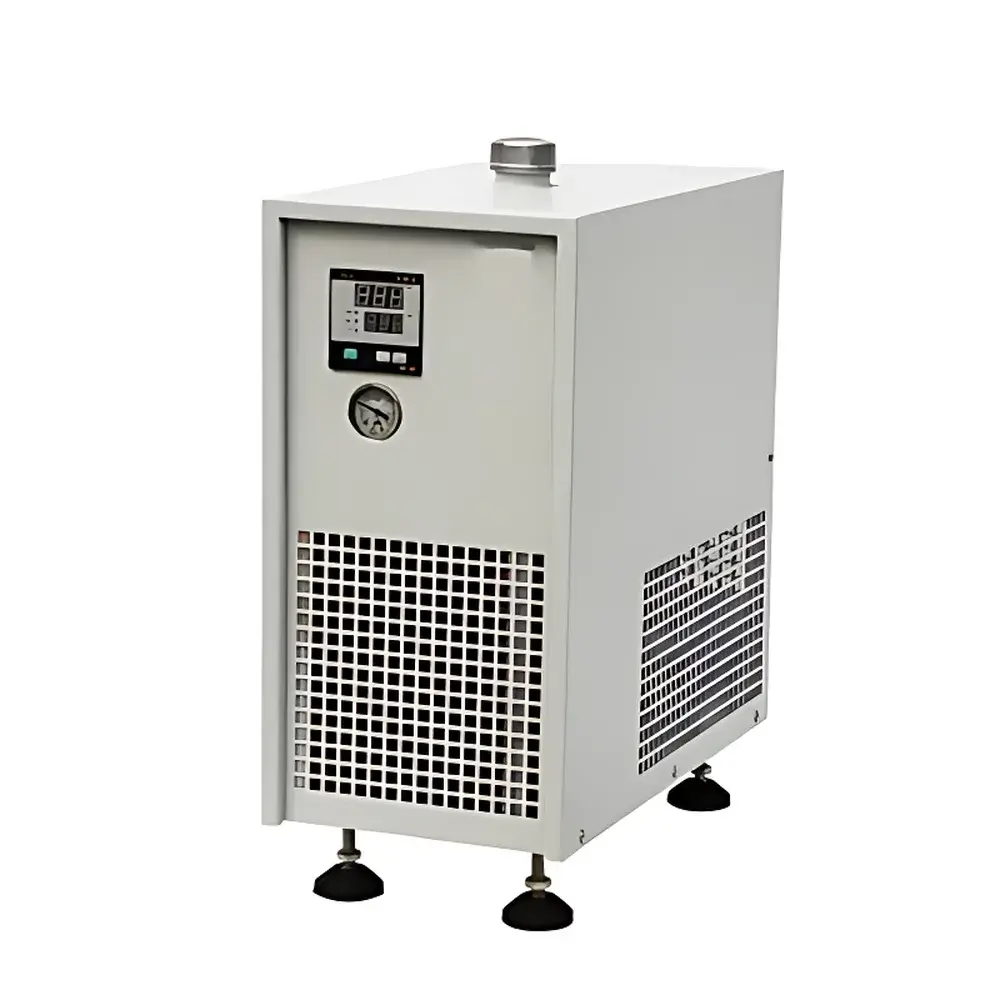
Tianfeng Shanghai LS-0.6HP Integrated Air-Cooled Circulating Chiller
| Brand | Tianfeng |
|---|---|
| Origin | Shanghai, China |
| Manufacturer Type | Direct Manufacturer |
| Equipment Type | Integrated Circulating Chiller |
| Cooling Method | Air-Cooled |
| Temperature Control Range | 0–50 °C |
| Temperature Stability | ±0.1 °C |
| Refrigeration Capacity | 1.7 kW |
| Circulating Pump Pressure | 0–2 bar |
| Circulating Flow Rate | 2 m³/h (33.3 L/min) |
| Reservoir Volume | 15 L |
| Power Supply | 220 V, 50 Hz |
| Compressor Type | Scroll Compressor |
| Safety Protections | High/Low Pressure Switch, Overcurrent Protection, Compressor Overheat Protection, Overtemperature Alarm |
| Construction | Stainless Steel Reservoir & Pump |
| Noise Level | Low-Noise Design |
| Control System | Digital PID Temperature Controller (Standard Chinese OEM |
| Electrical Components | Siemens / Schneider / Omron |
| Refrigeration Components | Imported Expansion Valve & Solenoid Valve (Italy/Germany) |
| Operating Mode | Continuous Duty |
| Certifications | ISO 9001:2000 Certified |
Overview
The Tianfeng Shanghai LS-0.6HP Integrated Air-Cooled Circulating Chiller is an engineered thermal management solution designed for precision temperature stabilization of heat-generating laboratory and industrial equipment. It operates on the vapor-compression refrigeration cycle, utilizing a high-efficiency scroll compressor and optimized refrigerant circuitry (R410A or equivalent) to deliver stable cooling across a wide operational range (0–50 °C). Its compact, all-in-one architecture integrates condenser, evaporator, circulation pump, stainless steel reservoir, and PID-based digital controller into a single footprint—ideal for space-constrained lab environments or integration with analytical instrumentation requiring consistent coolant delivery. The chiller maintains thermal equilibrium through closed-loop recirculation of deionized or treated water/glycol mixtures, minimizing thermal drift and ensuring long-term operational repeatability under continuous duty conditions.
Key Features
- High-precision temperature control with ±0.1 °C stability over the full 0–50 °C setpoint range, achieved via dual-sensor feedback and adaptive PID algorithm.
- Stainless steel reservoir (15 L capacity) and wetted pump components ensure corrosion resistance and compatibility with deionized water, low-conductivity coolants, and 20% ethylene glycol solutions.
- Adjustable flow rate (0–2 m³/h / 0–33.3 L/min) and pressure output (0–2 bar) support diverse instrument interface requirements—from low-flow spectrometers to high-pressure laser cooling circuits.
- Dual-mode operation: fixed-setpoint constant-temperature mode and intelligent adaptive mode that dynamically modulates refrigeration output in response to real-time load fluctuations.
- Comprehensive safety architecture includes high/low refrigerant pressure monitoring, compressor winding overtemperature detection, motor overcurrent cutoff, and reservoir overtemperature lockout—all with relay-based fault signaling outputs for integration into facility SCADA or lab automation systems.
- Low-noise acoustic design (<65 dB(A) at 1 m), compliant with ISO 3744 standards for laboratory ambient noise limits.
- Modular electrical platform featuring CE-marked Siemens, Schneider, or Omron contactors, relays, and power distribution components—fully traceable per IEC 61000-6-2/6-4 EMC requirements.
Sample Compatibility & Compliance
This chiller is validated for thermal coupling with a broad spectrum of laboratory instrumentation, including graphite furnace atomic absorption spectrometers (GFAAS), inductively coupled plasma optical emission spectrometers (ICP-OES), inductively coupled plasma mass spectrometers (ICP-MS), X-ray fluorescence (XRF) analyzers, X-ray diffractometers (XRD), scanning electron microscopes (SEM), and transmission electron microscopes (TEM). It meets mechanical and electrical safety requirements per GB 4706.1–2005 (China National Standard, equivalent to IEC 60335-1), and its quality management system is certified to ISO 9001:2000. While not inherently 21 CFR Part 11 compliant, the optional RKC controller (with audit trail logging and user-level access control) enables configuration for GLP/GMP environments when deployed with validated SOPs and periodic calibration against NIST-traceable references.
Software & Data Management
The standard unit features a front-panel digital display with real-time readouts of setpoint temperature, actual outlet temperature, flow status, and active alarm codes. No embedded firmware-based data logging is included in base configuration; however, analog 0–10 V or 4–20 mA process outputs are provided for external DAQ integration. For laboratories requiring electronic recordkeeping, the optional RKC PG series controller adds RS-485 Modbus RTU communication, event-driven alarm logging (with timestamps), password-protected parameter editing, and configurable ramp/soak profiles—supporting alignment with FDA 21 CFR Part 11 Annex 11 principles when implemented within a validated infrastructure.
Applications
- Instrument Cooling: Stabilizes detector housings, RF generators, X-ray tubes, and laser diode mounts in analytical platforms where thermal expansion-induced misalignment degrades resolution or signal-to-noise ratio.
- Plastics Processing Support: Maintains mold temperature consistency during lab-scale injection molding trials, reducing part warpage and improving surface finish reproducibility per ASTM D955 and ISO 294.
- Machine Tool Thermal Management: Regulates spindle oil and hydraulic fluid temperatures in CNC milling and grinding systems, mitigating thermally induced positioning errors per ISO 230-3.
- Vacuum & Thin-Film Systems: Controls cryopump foreline temperatures and sputtering target cooling in PVD/CVD setups to maintain deposition rate stability and film stoichiometry.
- Pharmaceutical Process Support: Provides controlled cooling for small-batch fermentation vessels and lyophilizer condenser plates in R&D settings, aligning with ICH Q5C stability guidelines.
FAQ
What is the maximum recommended return water temperature for continuous operation?
For optimal compressor longevity and refrigeration efficiency, inlet water temperature should not exceed 40 °C. Sustained return temperatures above this threshold increase discharge pressure and accelerate refrigerant oil degradation.
Can this chiller be integrated with building management systems (BMS)?
Yes—via optional analog I/O (0–10 V or 4–20 mA) or Modbus RTU (RS-485) with the RKC controller, enabling remote setpoint adjustment, status monitoring, and alarm forwarding.
Is the unit suitable for use with organic solvents or aggressive coolants?
No. The wetted materials (304 stainless steel, EPDM seals, brass fittings) are rated for water, aqueous glycol mixtures, and inhibited coolants only. Halogenated or chlorinated solvents will cause seal swelling and corrosion.
What maintenance intervals are recommended for laboratory-grade operation?
Biannual inspection of condenser coil cleanliness, refrigerant charge verification, and pump impeller integrity check. Annual calibration of temperature sensor against a NIST-traceable reference thermometer is advised for GLP-compliant applications.
Does the chiller include freeze protection for sub-ambient operation?
Yes—integrated low-temperature cut-off prevents reservoir freezing below 0 °C; however, operation below 5 °C requires ≥20% propylene glycol mixture to avoid ice formation in the circulation loop.



